
Writing
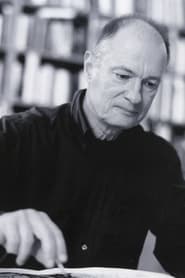
Per Kirkeby
Born — Died
1938-09-01 — 2018-05-09
Place of birth
Copenhagen, Denmark
Known for
Writing
Credits
9 titles
Per Kirkeby was a Danish painter, poet, filmmaker and sculptor. His works have been exhibited worldwide and are represented in many important public collections, including the Tate, Metropolitan Museum of Art, Museum of Modern Art, and the Centre Pompidou. Kirkeby became a member of the Danish Academy in 1982. In 1990 he received the Art Prize of NORD/LB, which is endowed for outstanding efforts in the subject of contemporary art. In 1996 he received the Coutts Contemporary Art Foundation Award and the Henrik Steffens Award. In 1997 he became a Knight of the Order of the Dannebrog and in 2003 he received the Herbert Boeckl Prize for his lifetime of work.
Known for
 8.5
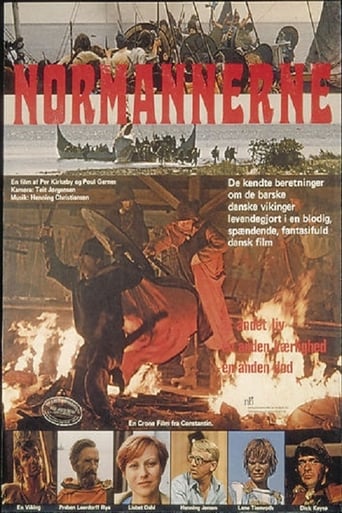
8.5With "The Normans," painters Paul Gernes and Per Kirkeby wanted to make a film about the Viking Age, but not a traditional fiction film set in that period. Instead, the film has a contemporary setting, in which a guide shows various historical sites and tries to bring the past to life, even though she has only one interested listener. Within this framework, episodes from Danish mythology are brought to life: King Skjold, Rolf Krake, Regnar Lodbrog, the Battle of Svold, etc. The film mainly follows the account in Saxo's chronicle, but also dramatizes a story by the Arab author Ibn Fadlan. He described the cremation of a Viking chieftain in Russia around the year 900, where, among other things, a slave woman was sacrificed after ritual intercourse. The film is based on a number of historical and archaeological studies. The loose form is intended to emphasize how fragmentary our knowledge of the Viking Age actually is.
Normannerne
1976
 NR
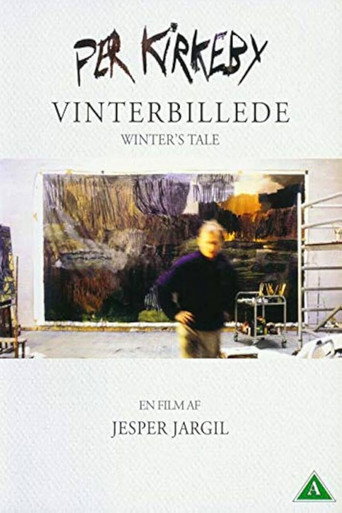
NRIn just a few shots, the film portrays Per Kirkeby’s work on a large oil painting, from the first brushstroke to the last. It is a simple film that conveys an intense drama with a touch of humour. The director spent several years following the Danish painter at work in Denmark, Germany, and Italy, and the numerous interviews form the basis of the film’s soundtrack. In them, Per Kirkeby shares his thoughts and feelings throughout the creative process.
Winterscene
1996
 NR
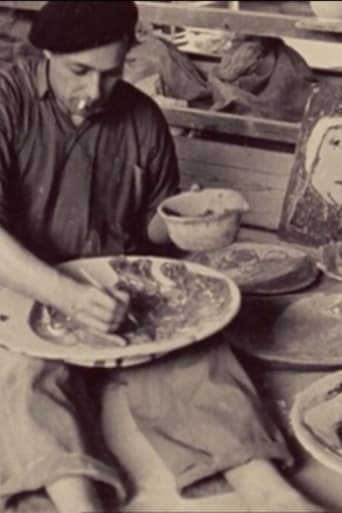
NRPortrait about the legendary abstract painter Asger Jorn told by painter and poet Per Kirkeby.
Asger Jorn
1977
 7.5
7.5Anthology of six experimental films. 1) Allan de Waal: Investigation of an abandoned hippie house. 2) Bjørn Nørgaard and Lene Adler Petersen: The female Christ. Five subsections. a) The female Christ crucified by Roskilde Fjord. b) The female Christ on the Stock Exchange. c) The female Christ exposes herself in front of a cross in a backyard in Nørrebro. d) Female body with breasts and shot bare on a lawn. e) Exhibition of Bjørn Nørgaard's "fucking machines". The female Christ is hung naked in it and eventually has intercourse with Nørgaard. 3) Per Kirkeby: The primitive life in the forest. 4) Jørgen Leth: Interview with a hippie girl. 5) Vagn Lundbye: Paraphrase of spaghetti western. 6) Peter Louis-Jensen: Revolver section of picture and sound noise.
Frændeløs
1970
A documentary and series of interviews about the ABCinema movement/production group.
ABCinema
2009
 6.5
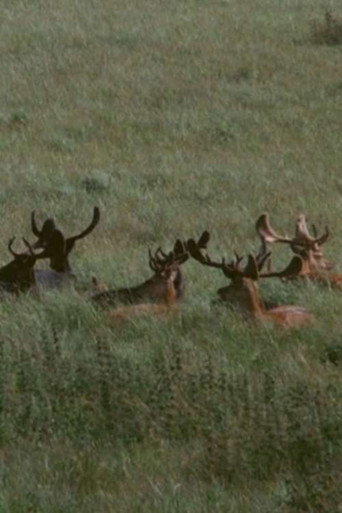
6.5Portraying the four seasons of the nature in the famous Danish garden Dyrehaven.
The Deer Garden: The Romantic Forest
1970
Film credits
2000s · 1 titles
Behind the camera
8.5With "The Normans," painters Paul Gernes and Per Kirkeby wanted to make a film about the Viking Age, but not a traditional fiction film set in that period. Instead, the film has a contemporary setting, in which a guide shows various historical sites and tries to bring the past to life, even though she has only one interested listener. Within this framework, episodes from Danish mythology are brought to life: King Skjold, Rolf Krake, Regnar Lodbrog, the Battle of Svold, etc. The film mainly follows the account in Saxo's chronicle, but also dramatizes a story by the Arab author Ibn Fadlan. He described the cremation of a Viking chieftain in Russia around the year 900, where, among other things, a slave woman was sacrificed after ritual intercourse. The film is based on a number of historical and archaeological studies. The loose form is intended to emphasize how fragmentary our knowledge of the Viking Age actually is.
Normannerne
1976
8.5With "The Normans," painters Paul Gernes and Per Kirkeby wanted to make a film about the Viking Age, but not a traditional fiction film set in that period. Instead, the film has a contemporary setting, in which a guide shows various historical sites and tries to bring the past to life, even though she has only one interested listener. Within this framework, episodes from Danish mythology are brought to life: King Skjold, Rolf Krake, Regnar Lodbrog, the Battle of Svold, etc. The film mainly follows the account in Saxo's chronicle, but also dramatizes a story by the Arab author Ibn Fadlan. He described the cremation of a Viking chieftain in Russia around the year 900, where, among other things, a slave woman was sacrificed after ritual intercourse. The film is based on a number of historical and archaeological studies. The loose form is intended to emphasize how fragmentary our knowledge of the Viking Age actually is.
Normannerne
1976
NRPortrait about the legendary abstract painter Asger Jorn told by painter and poet Per Kirkeby.
Asger Jorn
1977
7.5Anthology of six experimental films. 1) Allan de Waal: Investigation of an abandoned hippie house. 2) Bjørn Nørgaard and Lene Adler Petersen: The female Christ. Five subsections. a) The female Christ crucified by Roskilde Fjord. b) The female Christ on the Stock Exchange. c) The female Christ exposes herself in front of a cross in a backyard in Nørrebro. d) Female body with breasts and shot bare on a lawn. e) Exhibition of Bjørn Nørgaard's "fucking machines". The female Christ is hung naked in it and eventually has intercourse with Nørgaard. 3) Per Kirkeby: The primitive life in the forest. 4) Jørgen Leth: Interview with a hippie girl. 5) Vagn Lundbye: Paraphrase of spaghetti western. 6) Peter Louis-Jensen: Revolver section of picture and sound noise.
Frændeløs
1970
6.5Portraying the four seasons of the nature in the famous Danish garden Dyrehaven.
The Deer Garden: The Romantic Forest
1970
6.5Portraying the four seasons of the nature in the famous Danish garden Dyrehaven.
The Deer Garden: The Romantic Forest
1970
Three women are isolated in a bedroom. A little pig is first loved as a pet, but is later castrated. Symbolizing the wretched man. Out in the dark, a dangerous man, Dracula, is a constant threat.
Three Girls and a Pig
1972