
Acting
Rolando Peña
Born
1942-10-27 (83)
Place of birth
Venezuela
Known for
Acting
Credits
19 titles
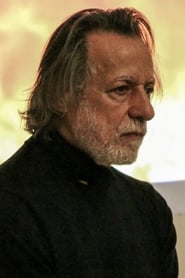
Rolando Peña is a Venezuelan artist born in 1942. He is one of the pioneers of the 60s Latin-American underground scene and is a main figure of the Venezuelan contemporary art. He was nicknamed the “black prince” and has been involved in theatre, dance, and fine arts since 1958. He created many happenings, projects of expansive cinema, multimedia and performances projects between Caracas and New York since 1964.
Known for
 NR
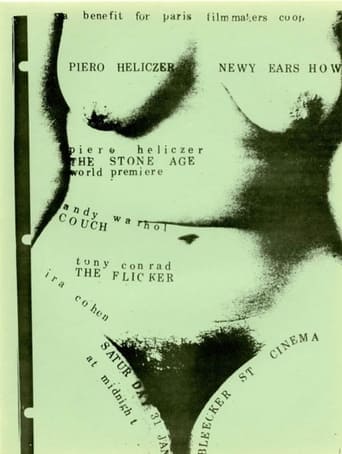
NR"The question is, it is either going to be a stoned age or a new Stone Age" - Louis Brigante
The Stone Age
1970
 7.0
7.0During the dictatorial regime of Juan Vicente Gómez, the bachelor Ibarra is imprisoned for political conspiracy. In prison, the inmates live together remembering the events that led to their imprisonment. Finally, a group, led by the bachelor Ibarra, manages to carry out a plan to escape from the prison.
Puros hombres
1977
 NR
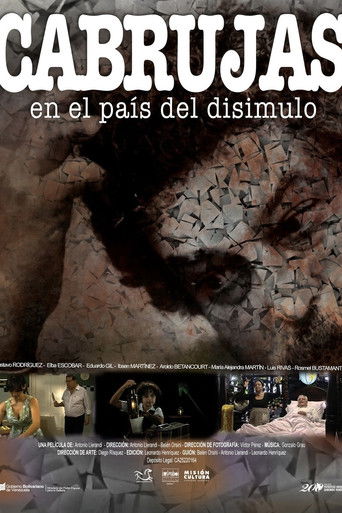
NRBeginning with his childhood and covering the many facets that characterized his intellectual universe, this documentary details the different aspects of the most important venezuelan writer of the 60s, 70s and 80s: José Ignacio Cabrujas.
Cabrujas en el país del disimulo
2017
 7.0
7.0In Secretaries Day, either you get laid or you get paid.
Cóctel de Camarones. En el Día de la Secretaria
1984
 5.0
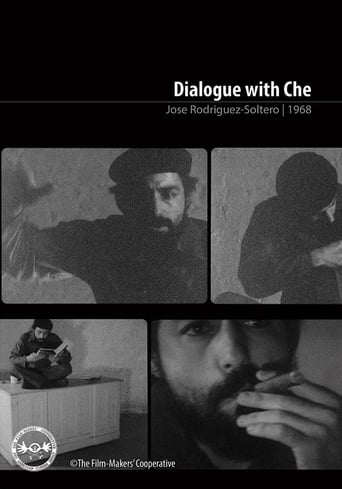
5.0In 1967, José Rodriguez Soltero made “Dialogue with Che” (1968), starring Venezuelan artist, actor, producer and dancer Rolando Peña as Che. Warhol superstar Taylor Mead is also featured, in the role of a CIA agent. “The film was partly underwritten by Andy Warhol, who gave a check to cover lab fees. "Dialogue..." was seldom shown in the States - it is entirely in Spanish - but had some life in the European screens. It had a modest run at the Cinémathèque Française, where it was championed by Marie Meerson and Henri Langlois, and played at the Berlin Film Festival in 1969. Historically, it has been shown with two prints projected side by side, the second screen starting with a 3-minute delay. --Film-Makers Coop
Dialogue with Che
1968
 8.0
8.0No synopsis available yet.
Todos los días son sábados
1977
Film credits
1980s · 2 titles
7.0In Secretaries Day, either you get laid or you get paid.
Cóctel de Camarones. En el Día de la Secretaria
1984
 5.4
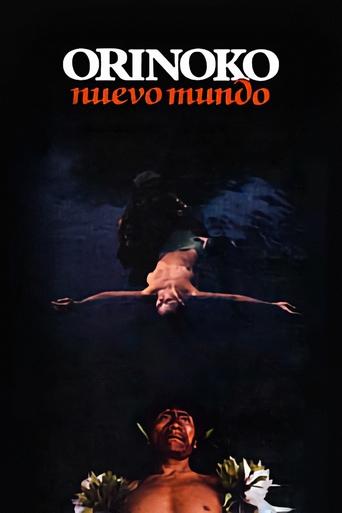
5.4The Orinoko: main character in the film. The first part is set during the pre-conquest and is represented as an earthly paradise. A shaman has precognitive visions: go to Columbus and the Catholic missionary in 1498.
Orinoko, New World
1984
1970s · 6 titles
NR"The question is, it is either going to be a stoned age or a new Stone Age" - Louis Brigante
The Stone Age
1970
7.0During the dictatorial regime of Juan Vicente Gómez, the bachelor Ibarra is imprisoned for political conspiracy. In prison, the inmates live together remembering the events that led to their imprisonment. Finally, a group, led by the bachelor Ibarra, manages to carry out a plan to escape from the prison.
Puros hombres
1977
8.0No synopsis available yet.
Todos los días son sábados
1977
 NR
NRFilm by Rolando Peña, with Rolando Peña and Iván Loscher.
La Cotorra I
1976
 10.0
10.0Film dedicated to the American artist Andy Warhol.
The Discovery of America
1970
 NR
NRA conversation between Rolando Peña and Iván Loscher during the construction of the Caracas subway. "La Cotorra No. 2" is a very personal, humorous rehearsal of the current communications of our societies as well as ours.
La Cotorra II
1979
1960s · 7 titles
5.0In 1967, José Rodriguez Soltero made “Dialogue with Che” (1968), starring Venezuelan artist, actor, producer and dancer Rolando Peña as Che. Warhol superstar Taylor Mead is also featured, in the role of a CIA agent. “The film was partly underwritten by Andy Warhol, who gave a check to cover lab fees. "Dialogue..." was seldom shown in the States - it is entirely in Spanish - but had some life in the European screens. It had a modest run at the Cinémathèque Française, where it was championed by Marie Meerson and Henri Langlois, and played at the Berlin Film Festival in 1969. Historically, it has been shown with two prints projected side by side, the second screen starting with a 3-minute delay. --Film-Makers Coop
Dialogue with Che
1968
 3.7
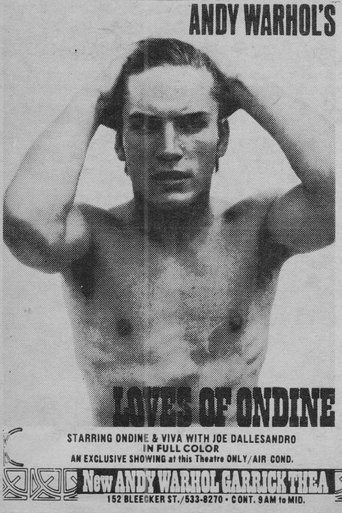
3.7Ondine is a gay man attempting to re-adjust his sexuality via various encounters with different women. After trying his luck with three women, Ondine becomes a background character in a sequence in which a group of Latin American men, calling themselves The Bananas, engage in a food fight. Ondine then engages in a wrestling match with Joe Dallesandro, who is married to Brigid Berlin.
The Loves of Ondine
1968
 4.7
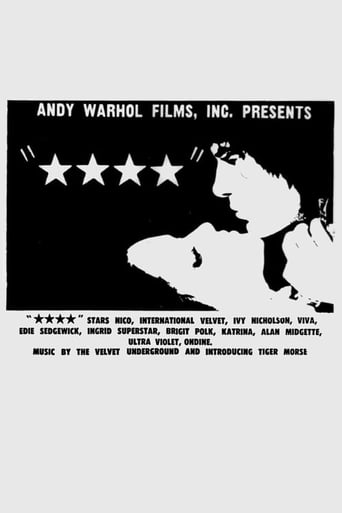
4.7Photographed entirely in color, Four Stars was projected in its complete length of nearly 25 hours (allowing for projection overlap of the 35-minute reels) only once, at the Film-Makers' Cinematheque in New York City. The imagery in the film is dense, wearying and beautiful, but ultimately hard to decipher, for, in contrast to his earlier, and more famous film Chelsea Girls, made in 1966, Warhol insisted that two reels be screened simultaneously on top of each other on a single screen, rather than side-by-side. The film's title is a pun on the rating system used by critics to rank films, with "four stars" being the highest rating. From Wikipedia.
Four Stars
1967
 NR
NRAn intimate portrait of the South American poet Nicanor Parra, reading his poetry and talking with friends. Made during Parra's visit to the YMHA Poetry Center in New York. "... a series of punches to the solar plexus – physical, moral, audio and visual – of the audience." - The Sunday Magazine, Santiago, Chile.
Hommage to Nicanor Parra
1968
 6.5
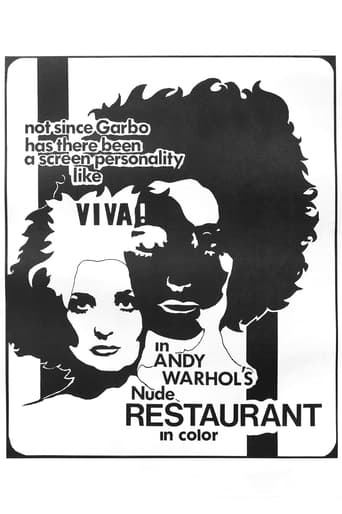
6.5At a New York City restaurant, the patrons are men, nude but for a G-string, waited on by one woman, also clad in a G-string and a G-bestringed waiter.
The Nude Restaurant
1967
 NR
NR"El Disco Rojo" under the leadership of Amador del Villar and with the participation of actress Eva Moreno
El disco rojo
1964
 8.0
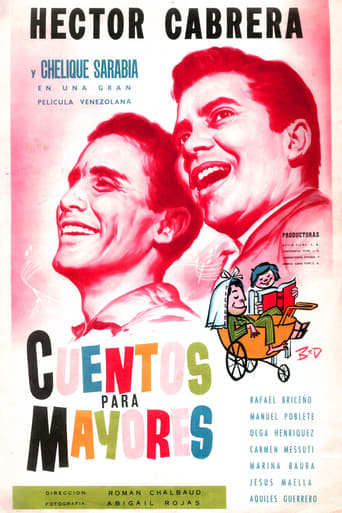
8.0This anthology film consists of three parts: "Story One: The story of the brave man", "Story Two: Angels Rhythm" and "Story Three: The false office of supernumerary". The first story tells of a man desperate to get money to cure the illness of his daughter. The second story tells the adventures of a gang of youths; and finally, the third story tells of corruption in Congress.
Tales for Grown Ups
1963
Behind the camera
NRFilm by Rolando Peña, with Rolando Peña and Iván Loscher.
La Cotorra I
1976
NRA conversation between Rolando Peña and Iván Loscher during the construction of the Caracas subway. "La Cotorra No. 2" is a very personal, humorous rehearsal of the current communications of our societies as well as ours.
La Cotorra II
1979
Super-8 film by Rolando Peña.
Invasión-Total-Matinal-De-Besos-Cosmológicos
1967