

Directing
Narcisa Hirsch
Born — Died
1928-01-16 — 2024-05-04
Place of birth
Berlin, Germany
Known for
Directing
Credits
56 titles
Narcisa Hirsch (née Heuser, born 1928) is an Argentine experimental filmmaker of German birth. Her work centered on themes of the body, love, sex, death, movement, and the female gaze. Despite this focus on women, she has resisted being labeled as a feminist. She began as a painter, and but her later and better known work centers on performance and film, though she has also written several books. She cites Salvador Dalí and Luis Buñuel as influences to her experimental film work, as well as the Bauhaus artists of Germany. During her time as an experimental filmmaker in Argentina, she frequented the Di Tella Institute and the Goethe Institute, a place where many of her works premiered. Recenl…
Known for
 NR
NR"The world is a tarantula ... a big, dark tarantula, moving around weaving its own web." A journey into myths and origins of the world with the grand dame of Argentine avant-garde cinema. See the Earth as it really is: A marble spinning in a sea of eternity.
Myst
2019
 NR
NRPortrait of women where they look at the images of their own faces and reflect on that experience.
Surely Bach Closed the Door When He Wanted to Work
1979
 NR
NRTwins still in their amniotic fluid announce our human condition, our compulsion to walk, move forward, run. When everything moves, we go through the forest of emotions in a dreamlike way. But it is thanks to water and its light reflections, to its transforming power that the infinite “Kosmos” plays with our uncertainty.
Kosmos
2017
 6.0
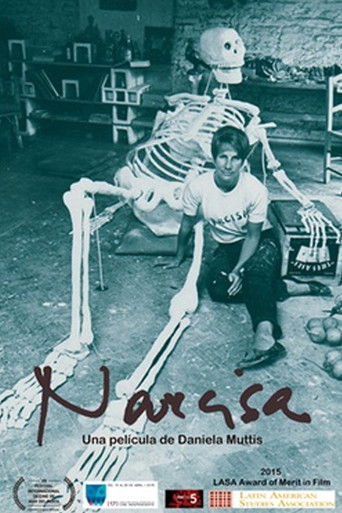
6.0This documentary is an approach to the experience of seeing and listening to the trajectory of Narcisa Hirsch, a pioneer of Argentine experimental cinema, but who has also been part of the happenings and performances of the 1960s and 1970s.
Narcisa
2014
 9.0
9.0In his second feature film, Leandro Listorti establishes a parallel between two worlds he seems to know well: that of plants and that of cinema. This delicate cinematographic work, full of beautiful images—both archival and current—gives an account of the immense work of classification and preservation, and generously invites us to think about forms of representation and memory.
Herbaria
2022
 NR
NRA portrait of Narcisa Hirsch, Argentine filmmaker, pioneer of experimental cinema. The artist explores the path of her memories, where the traces of some men appear, which are transposed with the constant reference to the desert.
Reflejo Narcisa
2014
Film credits
2020s · 3 titles
9.0In his second feature film, Leandro Listorti establishes a parallel between two worlds he seems to know well: that of plants and that of cinema. This delicate cinematographic work, full of beautiful images—both archival and current—gives an account of the immense work of classification and preservation, and generously invites us to think about forms of representation and memory.
Herbaria
2022
 NR
NRA film critic with philosophical interests, played by the film critic Roger Koza, wonders about the nature of Nature. And he obsessively tries to capture it with his phone camera. Other experts—filmmakers from different countries, art historians, a scenographer in charge of a natural science museum, and members of the human species from a distant future—think about ways of representating nature. A kaleidoscopic, playful collage, sometimes fiction, sometimes documentary, the film cannot help but wonder about the nature of cinema itself.
Instead of Trees
2026
No synopsis available yet.
El refugio de Narcisa Heuser
2023
2010s · 5 titles
6.0This documentary is an approach to the experience of seeing and listening to the trajectory of Narcisa Hirsch, a pioneer of Argentine experimental cinema, but who has also been part of the happenings and performances of the 1960s and 1970s.
Narcisa
2014
NRA portrait of Narcisa Hirsch, Argentine filmmaker, pioneer of experimental cinema. The artist explores the path of her memories, where the traces of some men appear, which are transposed with the constant reference to the desert.
Reflejo Narcisa
2014
 1.0
1.0No synopsis available yet.
Butoh
2013
"Life is a latency that as time and space becomes visible as a figure. But never eat at all, there are other possible lives. Making a life is difficult, filming the impossible itself . with this imago-auto-bio-graphy is an attempt to talk about this ambiguity, where what could be is the possibility of a memory, where what was and what was not, can be remembered in the same way, . always I lived with mixing the imagined thing is chosen in this chancy; go left on the road the other films that might have emerged" -Narcisa Hirsch
El Mito de Narciso
2011
 NR
NRWith research that spans the work of philosophers Gilles Deleuze and Martin Heidegger to modern mythologies in which time reversal plays a crucial role — such as failed time machines, speed of light travel, and occult practices involving speech — Stracke combines science and philosophy in an attempt to defy death through cinema and the notion of time reversal.
time/ OUT OF JOINT
2015
1970s · 3 titles
NRPortrait of women where they look at the images of their own faces and reflect on that experience.
Surely Bach Closed the Door When He Wanted to Work
1979
 NR
NRThe Super 8mm film “Muñecos” (1972) — shot by the artist, Leopoldo Maler and Carolee Schneemann — combines recordings of a happening by Hirsch that took place in three cities: in Buenos Aires, London, and New York. In each, she is seen handing out 500 tiny baby dolls to bystanders, while candidly suggesting to everyone: “Have a baby!” This work was made in response to a period of strong pro-natalist and anti-contraceptive policies pushed by the Argentinian government.
Muñecos (Have a baby)
1972
 NR
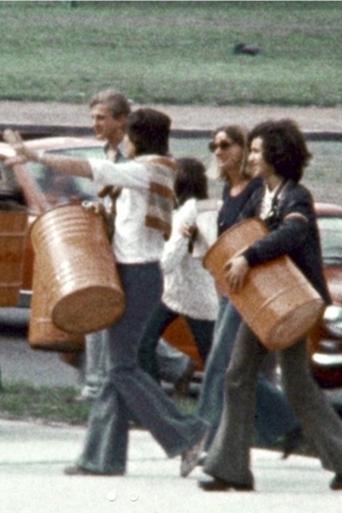
NRHirsch’s first steps in filmmaking were documentations of her performances and happenings in public spaces. These were collective actions, filmed initially on 8mm or 16mm film, which record the reactions of a randomly chosen spectator.
Tambores en la plaza
1970
1960s · 3 titles
 NR
NRNo synopsis available yet.
Yo veo conejos
1967
 NR
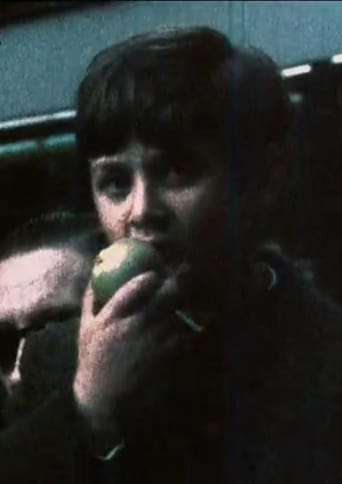
NRHappening by Narcisa Hirsch, where she gives free apples in the street while we hear passersby's comments.
Apples
1966
 6.0
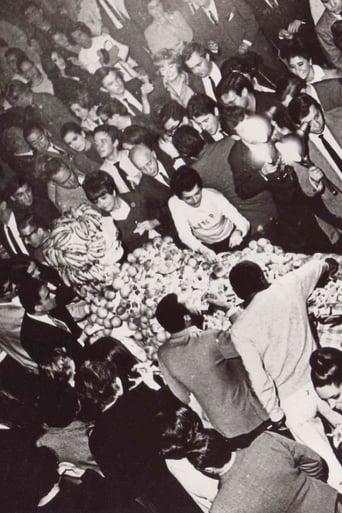
6.0Marabunta, a ceremony in collective anthropophagy involving a six-meter skeleton completely covered in fruit and food, inside of which were live doves and parrots painted with phosphorescent colors that flew out as people were eating.
Marabunta
1967
Behind the camera
NR"The world is a tarantula ... a big, dark tarantula, moving around weaving its own web." A journey into myths and origins of the world with the grand dame of Argentine avant-garde cinema. See the Earth as it really is: A marble spinning in a sea of eternity.
Myst
2019
NRPortrait of women where they look at the images of their own faces and reflect on that experience.
Surely Bach Closed the Door When He Wanted to Work
1979
NRTwins still in their amniotic fluid announce our human condition, our compulsion to walk, move forward, run. When everything moves, we go through the forest of emotions in a dreamlike way. But it is thanks to water and its light reflections, to its transforming power that the infinite “Kosmos” plays with our uncertainty.
Kosmos
2017
NRTwins still in their amniotic fluid announce our human condition, our compulsion to walk, move forward, run. When everything moves, we go through the forest of emotions in a dreamlike way. But it is thanks to water and its light reflections, to its transforming power that the infinite “Kosmos” plays with our uncertainty.
Kosmos
2017
 NR
NRA tribute to Virginia, a 23-year-old girl who apparently committed suicide in Ibiza. Excerpts from her letters to Narcisa, written on the walls, appear in the film as a leitmotif.
Para Virginia
1979
 NR
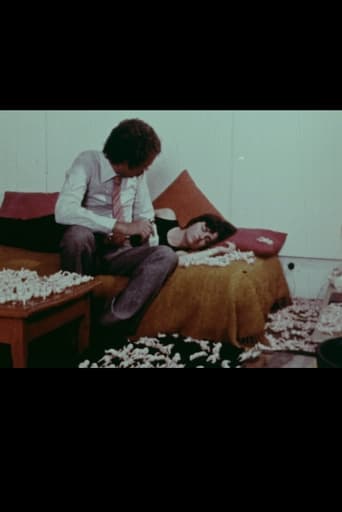
NRNo synopsis available yet.
Pink Freud
1972
"Life is a latency that as time and space becomes visible as a figure. But never eat at all, there are other possible lives. Making a life is difficult, filming the impossible itself . with this imago-auto-bio-graphy is an attempt to talk about this ambiguity, where what could be is the possibility of a memory, where what was and what was not, can be remembered in the same way, . always I lived with mixing the imagined thing is chosen in this chancy; go left on the road the other films that might have emerged" -Narcisa Hirsch
El Mito de Narciso
2011
 7.0
7.0The dialogue of a woman with herself split into two unknown opposites.
Ana, ¿Dónde Estás?
1985
7.0The dialogue of a woman with herself split into two unknown opposites.
Ana, ¿Dónde Estás?
1985
7.0The dialogue of a woman with herself split into two unknown opposites.
Ana, ¿Dónde Estás?
1985
 NR
NR"Academia del fracaso" is a speculative aesthetic fact of a polemic nature, as Marta Minujín explains when she talks about her work. Portrayed in this film explaining the functioning of her participatory performance in 1974, the artist extends herself to reflect and talk about some things, many things, that make up the world and its ideas.
Retrato de Marta Minujín
1974
 6.6
6.6The Aleph is the point where diachronic and synchronic times meet, and each second represents a moment in life, from birth to death.
El Aleph
2005
 NR
NRThe camera takes in the Patagonian pastures, then the faces in an old warehouse, and transparent photos of Patagonian scenes. Everything is filtered by an amber light. (Narcisa Hirsch Filmoteca)
Patagonia
1977
The life story of an artist. The fantasy of a poetic burial accompanied by friends of cinema.
Testamento y vida interior
1977
No synopsis available yet.
Celebración
2007
 10.0
10.0MUNDIAL 78 is a humorous depiction of the controversial 1978 football World Cup that took place during the Argentinian dictatorship
Mundial 78
1978
 NR
NRPatagonia reflects Hirsch's close connection to Argentina’s natural world and the people around her.
Patagonia
1972
 10.0
10.0The movie follows a group of children living in the streets in the city of Buenos Aires. The only day center working is the CAINA (Centro de Atención Integral a la Niñez y Adolescencia) an institution that assists and shelters street children.
Los chicos y la calle
2002
10.0The movie follows a group of children living in the streets in the city of Buenos Aires. The only day center working is the CAINA (Centro de Atención Integral a la Niñez y Adolescencia) an institution that assists and shelters street children.
Los chicos y la calle
2002
 NR
NRAn unpublished piece by this pioneer of experimental cinema with the participation of Elías Cherñajovsky and Sergio Levin.
Mundial
1978
 NR
NRThis film is the testimony of men speaking to their own image. Each man, alone in a dark space, speaks to himself while watching his own projection. As viewers, we see his image and hear his voice, becoming witnesses to this dialogue.
Hombres (Que hablan con su propia imagen)
1979
 NR
NRNarcisa Hirsch (Berlin, 1928), a pioneer of experimental cinema in Argentina, produced continuously in various media since the 60s. In the beginning, as a painter and illustrator, her works were exhibited at the Gallery Lirolay, which, like the Instituto Di Tella, was the most important art gallery in Buenos Aires in the 60s. She conducted performances and happenings, and was part of the group of filmmakers formed by Marie Louise Alemann, Claudio Caldini, Horacio Vallereggio, Juan Villola and Juan José Mugni, exhibiting their films outside the circuit of theaters and institutions, with the exception of the Goethe Institute, an organization that during the last military dictatorship in Argentina accompanied this movement and gave a formal context to it.
Narcisa Hirsch: Experimental Films
2013
NRNarcisa Hirsch (Berlin, 1928), a pioneer of experimental cinema in Argentina, produced continuously in various media since the 60s. In the beginning, as a painter and illustrator, her works were exhibited at the Gallery Lirolay, which, like the Instituto Di Tella, was the most important art gallery in Buenos Aires in the 60s. She conducted performances and happenings, and was part of the group of filmmakers formed by Marie Louise Alemann, Claudio Caldini, Horacio Vallereggio, Juan Villola and Juan José Mugni, exhibiting their films outside the circuit of theaters and institutions, with the exception of the Goethe Institute, an organization that during the last military dictatorship in Argentina accompanied this movement and gave a formal context to it.
Narcisa Hirsch: Experimental Films
2013
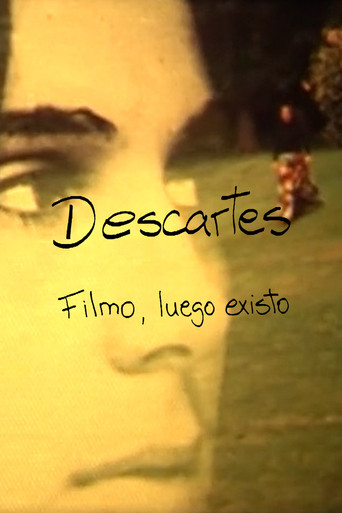 NR
NRa film by Narcisa Hirsch
Descartes: Filmo, luego existo
—
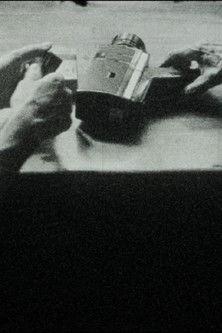 NR
NRThe hands of Narcisa Hirsch, a nonagenarian, open another Super 8 film cartridge to load a camera. In what seems like a ritual of passing on a legacy, the grandmother and her grandson, Tomás Rautenstrauch, watch a film of a meadow that gradually fills the frame.
Pradera
—
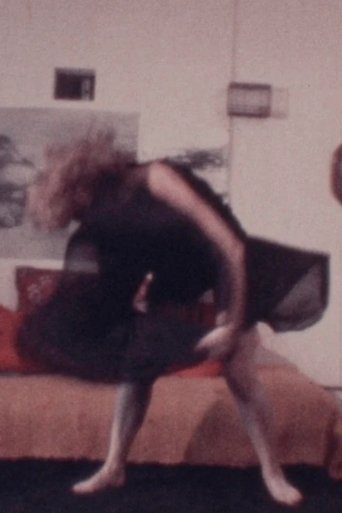 NR
NRIn Aída (1976), a Super 8 camera captures ballerina Aída Laib dancing vigorously in Hirsch’s atelier to the sounds of Nina Simone. The dancing movements intersperse with a visual exploration of the artist’s naked body, where Hirsch’s sensual gaze grasps textures and reaches abstraction.
Aída
1976
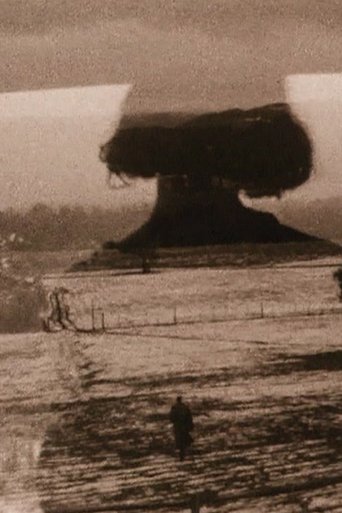 7.5
7.5Images from the texts of Rumi, 13th century Sufi poet.
Rumi
1999
 6.0
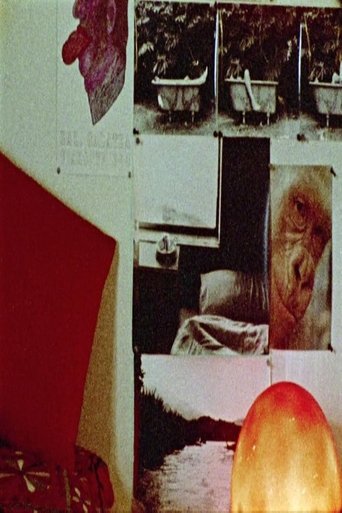
6.0on the image of a collage on the wall, the voice of a woman describes a man the interior space of a workshop that is not seen.
Workshop
1975
 NR
NRNo synopsis available yet.
Andrea 1973
1973
NRHappening by Narcisa Hirsch, where she gives free apples in the street while we hear passersby's comments.
Apples
1966
 NR
NRHirsch’s first steps in filmmaking were documentations of her performances and happenings in public spaces. These were collective actions, filmed initially on 8mm or 16mm film, which record the reactions of a randomly chosen spectator.
Edgardo
1971
 NR
NR"the speed of time dissolves thought"
la velocidad del tiempo
2012
The role of men returning from the war; it is the end of the battles and ideologies.
A-Dios
1989
 6.0
6.0A mixture of abstract images and, as if out of a Man Ray painting, a large mouth in the foreground with red lipstick slowly devours a raw liver and then goes on to eat a postcard. Meanwhile, romantic Neapolitan songs play in the background. As Andrea Giunta says: At the same time they function as a hyperbole of the feminine in a register impregnated with pop aesthetics (they are perfect lips and make-up), but in which the flesh introduces an element of deep transgression, with scatological tensions.
Neapolitan Songs
1970
 NR
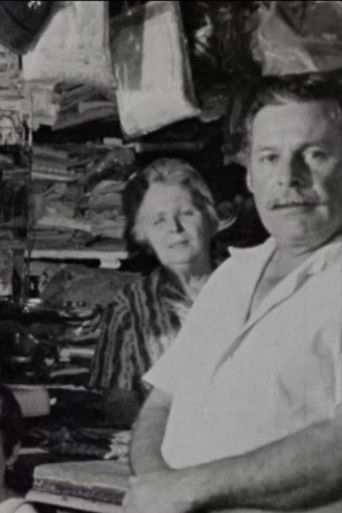
NRDocumentary about Jewish colonizers in Argentina.
Pioneros
1976
6.0Marabunta, a ceremony in collective anthropophagy involving a six-meter skeleton completely covered in fruit and food, inside of which were live doves and parrots painted with phosphorescent colors that flew out as people were eating.
Marabunta
1967
 6.0
6.0About the music of Steve Reich, a phrase be phased out as the image it makes the reverse movement.
Come Out
1971
 NR
NR“ Cinema is what happens between frames," said German experimental filmmaker Werner Nekes. A woman and a man are on the ground together but it looks as though they are floating without moving. Silence overruns the scene; she stops and walks away. La Noche Bengalí is a documentary made as part of the seminar that Wernes Nekes held in Buenos Aires in 1980, sponsored by the Goethe Institute.
The Bengali Night
1980
 NR
NROver the course of one year, Narcisa Hirsch left a super 8 camera on a tripod in a paddock near her house in the Patagonia. When she was away, she gave instructions to activate the camera to a local farmer who looked after cows in the area.
Paddock
1973
The transformation of an image. A woman suddenly transfigured breast and cut, like the Amazon, making new weapons: the bow and arrow.
AMA-ZONA
1983