

Known for
 NR
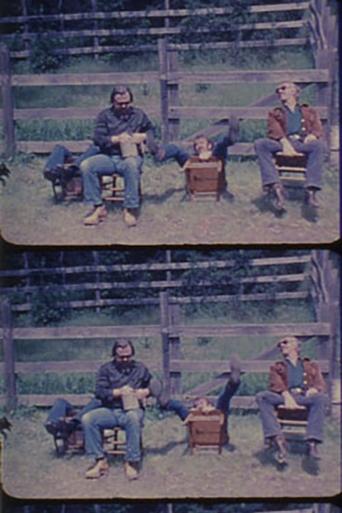
A ‘film wake’. Though celebratory in mood, it has a mournful subtext… death and dying. We dedicated it to Dr. Sam West, departed friend and patron of the arts, trusting that his ghost would approve our hi-jinx and seeming irreverence. Preserved by the Academy Film Archive in 2002.
Deep Westurn
1974
[1970/2003, color, 7.5 min] Experimental short film preserved by the Academy Film Archive in 2007.
King David
1970
Lights whirl around the frame. Experimental short film preserved by the Academy Film Archive in 2016.
Ducksarenodinner
1983
 NR
A singular cinematic figure, San Francisco’s Mike Henderson became one of the first independent African-American artists to make inroads into experimental filmmaking in the 1960s. Henderson’s work throughout the 1970s and 1980s, from which this program of 16mm films is culled, thrums with a sociopolitical, humorous sensibility that lends his small-scale, often musically kissed portraits (which he later dubbed “blues cinema”) a personal, artisanal quality. - Film Society of Lincoln Center. Preserved by the Academy Film Archive in 2016.
The Last Supper
1970
 NR
A singular cinematic figure, San Francisco’s Mike Henderson became one of the first independent African-American artists to make inroads into experimental filmmaking in the 1960s. Henderson’s work throughout the 1970s and 1980s, from which this program of 16mm films is culled, thrums with a sociopolitical, humorous sensibility that lends his small-scale, often musically kissed portraits (which he later dubbed “blues cinema”) a personal, artisanal quality. - Film Society of Lincoln Center. Preserved by the Academy Film Archive in 2016.
Down Hear
1972
 NR
A motley cast of characters offer their thoughts on what’s most important in life. Experimental short film preserved by the Academy Film Archive in 2011.
Dufus
1970
Film credits
Behind the camera
[1970/2003, color, 7.5 min] Experimental short film preserved by the Academy Film Archive in 2007.
King David
1970
Lights whirl around the frame. Experimental short film preserved by the Academy Film Archive in 2016.
Ducksarenodinner
1983
NRA singular cinematic figure, San Francisco’s Mike Henderson became one of the first independent African-American artists to make inroads into experimental filmmaking in the 1960s. Henderson’s work throughout the 1970s and 1980s, from which this program of 16mm films is culled, thrums with a sociopolitical, humorous sensibility that lends his small-scale, often musically kissed portraits (which he later dubbed “blues cinema”) a personal, artisanal quality. - Film Society of Lincoln Center. Preserved by the Academy Film Archive in 2016.
The Last Supper
1970
NRA singular cinematic figure, San Francisco’s Mike Henderson became one of the first independent African-American artists to make inroads into experimental filmmaking in the 1960s. Henderson’s work throughout the 1970s and 1980s, from which this program of 16mm films is culled, thrums with a sociopolitical, humorous sensibility that lends his small-scale, often musically kissed portraits (which he later dubbed “blues cinema”) a personal, artisanal quality. - Film Society of Lincoln Center. Preserved by the Academy Film Archive in 2016.
Down Hear
1972
NRA motley cast of characters offer their thoughts on what’s most important in life. Experimental short film preserved by the Academy Film Archive in 2011.
Dufus
1970
 NR
Experimental short 16mm film directed by Mike Henderson. Preserved by the Academy Film Archive in 2010.
Money
1970
No synopsis available yet.
Money Does
1982
A singular cinematic figure, San Francisco’s Mike Henderson became one of the first independent African-American artists to make inroads into experimental filmmaking in the 1960s. Henderson’s work throughout the 1970s and 1980s, from which this program of 16mm films is culled, thrums with a sociopolitical, humorous sensibility that lends his small-scale, often musically kissed portraits (which he later dubbed “blues cinema”) a personal, artisanal quality. - Film Society of Lincoln Center. Preserved by the Academy Film Archive in 2016.
When & Where
1984
Henderson leaves the house, as his experiment intersects with another film crew.
The Rocking Chair Film
1972
Experimental short film. Preserved by the Academy Film Archive in 2015
Will She Get Over It?
1971
As a guitar screeches, the image comes into focus. Experimental short film preserved by the Academy Film Archive in 2012.
Just Another Notion
1983
 NR
A singular cinematic figure, San Francisco’s Mike Henderson became one of the first independent African-American artists to make inroads into experimental filmmaking in the 1960s. Henderson’s work throughout the 1970s and 1980s, from which this program of 16mm films is culled, thrums with a sociopolitical, humorous sensibility that lends his small-scale, often musically kissed portraits (which he later dubbed “blues cinema”) a personal, artisanal quality. - Film Society of Lincoln Center. Preserved by the Academy Film Archive in 2014.
The Shape of Things
1981
 NR
A singular cinematic figure, San Francisco’s Mike Henderson became one of the first independent African-American artists to make inroads into experimental filmmaking in the 1960s. Henderson’s work throughout the 1970s and 1980s, from which this program of 16mm films is culled, thrums with a sociopolitical, humorous sensibility that lends his small-scale, often musically kissed portraits (which he later dubbed “blues cinema”) a personal, artisanal quality. - Film Society of Lincoln Center. Preserved by the Academy Film Archive in 2016.
Pitchfork and the Devil
1979
Experimental short film preserved by the Academy Film Archive in 2012.
How To Beat A Dead Horse
1983
Experimental short film preserved by the Academy Film Archive in 2014.
Too Late To Stop Down Now
1982
A singular cinematic figure, San Francisco’s Mike Henderson became one of the first independent African-American artists to make inroads into experimental filmmaking in the 1960s. Henderson’s work throughout the 1970s and 1980s, from which this program of 16mm films is culled, thrums with a sociopolitical, humorous sensibility that lends his small-scale, often musically kissed portraits (which he later dubbed “blues cinema”) a personal, artisanal quality. - Film Society of Lincoln Center. Preserved by the Academy Film Archive.
Mother's Day
1970