
Known for
 7.0
7.0No synopsis available yet.
Bakaláři
1972
 7.0
7.0No synopsis available yet.
Vivat Beňovský!
1975
 8.0
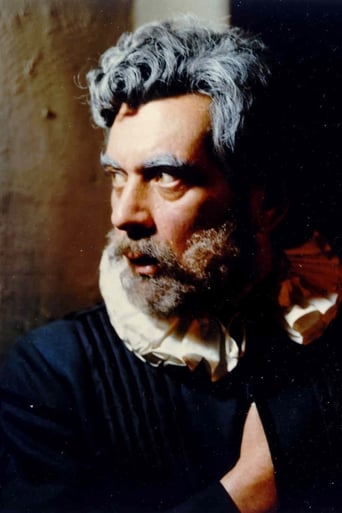
8.0Series about the life of Renaissance anatomist, scholar and politic Johannes Jessenius. Already legendary series today, was produced by Czechoslovak Television Bratislava, directed by Slovak director Miroslav Luther in the first half of 80's in Barrandov Studios in Prague. The story and screenplay of the series wrote Czech writer Vladimír Körner. Five-episodes epic historical narration is a biographical story of distinguished Renaissance scholar, anatomist and politic of Slovak origin, Johannes Jessenius (Ján Jesenský, 1566–1621). It displays his life from the first studies and successes. In 1594 he became professor of surgery and anatomy on Wittenberg University, which he had attended years before. From that moment, his life went through social and personal wins and losses, to the sad end on the Prague Old Town Square gallows, among 27 noblemen, knights and burgenses, after lose Bohemian Revolt in 1621. His destiny was coupled with key events of Czech history in the break of 16th and 17th century, when Renaissance and European humanism slowly fade out.
The Physician of a Dying Time
1984
No synopsis available yet.
Povstalecká história
1984
No synopsis available yet.
Rozprávky pätnástich sestier
1982
No synopsis available yet.
V službách zákona
1983
Film credits
1990s · 10 titles
No synopsis available yet.
Malý somár na dne duše
1990
A TV parody with songs based on well-known fairytale motifs tells the story of Decibella, the daughter of the black priest Ramus, who has only one desire: to perform with her band Pazvuka at the royal castle, to charm Prince Cinderella, whose passion is songwriting, with her music and to become his wife, the future queen. She has no idea that the prince has already been charmed by the song of the poor Goldilocks and takes great offence when the prince banishes her from the palace with her cacophonous music. Out of revenge, she begs her father to curse the whole country out of singing and music. Goldilocks, with the help of the fairy Echoes, finds the enchanted tones and helps Prince Cinderella to get the music back from the Black Prince for the people.
Zlatohláska
1994
A ballad of unequal marriage taking place between the Slovak minority in Vojvodina, Serbia.
Zuzka Turanova
1995
No synopsis available yet.
Jacobowsky a plukovník
1992
No synopsis available yet.
Letiace tiene
1990
 9.0
9.0At the centre of Peter Patzak's existentialist film noir stands the hopeless struggle against the arms mafia in Czechoslovakia and its connections with Austria after the fall of the iron curtain.
Rochade
1992
The original TV detective game. An investigation into the murder of a woman, the head of a department, which uncovers many hidden relationships in one workplace, a game with truth and lies brings an unexpected denouement in the end.
Ja nič neviem
1998
Two families live in an old house in a small town. Downstairs with his parents, a poor boy and upstairs, the owner's little girl, who sings very well and aspires to become a great singer. The boy adores his little friend and is very proud of her pretty voice. One day the children go to a fair together. The boy buys his friend a gingerbread heart with his hardly saved pennies and gives it to her out of great love. But he cannot yet tell her how much he loves her. He whispers his feelings only to the old willow tree, which is the only one who knows his secret. The years pass and the children become adults…
Pod vŕbou
1994
No synopsis available yet.
Fuente ovejuna
1991
No synopsis available yet.
Júlia
1991
1980s · 26 titles
 6.3
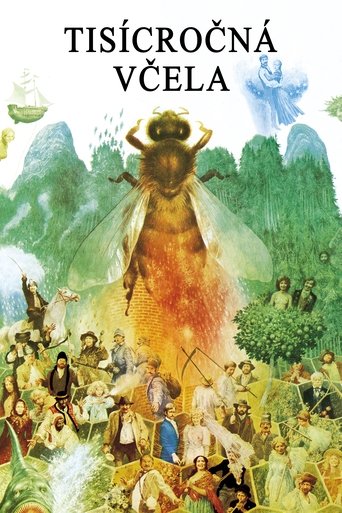
6.3A family saga taking place mostly in a small Slovak village over a period of thirty years (1887–1917). The first part captures the life of Martin Pichandu in the development of his craft, masonry; in the second part, his son is center stage living in a period of socio-political crisis, which ultimately results in the first World War. After originally airing on Czechoslovakian television in 1983 as a four-part 226-minute mini-series, this production received a 163-minute theatrical release in 1984.
The Millennial Bee
1983
No synopsis available yet.
Riaditeľ
1986
No synopsis available yet.
Crainquebille
1982
A television adaptation of William Shakespeare's classic drama. The story of the virtuous Isabella, who must save her brother from execution at the cost of her own honor. Through the story of the seductive Angelo and the beautiful Isabella, Claudio, and Julia, the author expresses the idea that moral principles are binding on everyone and that adhering to them is a matter of honor for every human being.
Oko za oko
1984
No synopsis available yet.
Tiene v raji
1986
No synopsis available yet.
Samo, kupec a kráľ
1988
No synopsis available yet.
Balada o mŕtvych očiach
1988
No synopsis available yet.
Eugen Onegin
1981
No synopsis available yet.
Frajer na ceste
1989
No synopsis available yet.
Bola som z olova
1983
 6.6
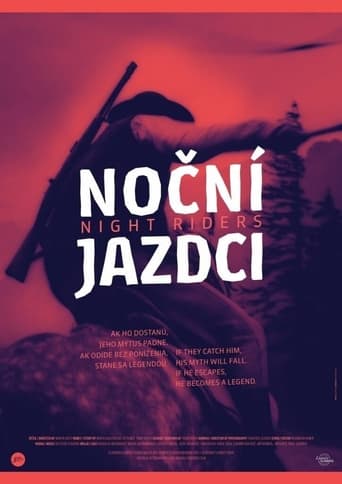
6.6Two men of principle face each other. One is backed by a whole, however poor village, the other by the law. It is a conflict that reaches it's climax in the closing shoot-out. Instead of the Wild West, the gunshots go off on the Slovak-Polish border. Michal Docolomansky as the horse smuggler and Radoslav Brzobohaty as the customs officer from Prague meet in Holly's Night Riders in a western-like confrontation set in the insecure years of the newly founded Czechoslovak Republic.
Night Riders
1981
A situational comedy from a world of unlimited possibilities, in which a poor taxi driver becomes a consul general, chairman of a motor racing council, and member of the most exclusive clubs within a single hour.
Raz, dva, tri
1985
A lyrical picture of student life. A romantic story of first student love seen through the eyes of an aging writer's memories. In the last years of his life, National Artist Štefan Králík, in addition to his theatrical work, also worked for television. A Trip to Youth takes place in the environment of a current class of high school graduates who have invited a famous writer to a discussion. Shortly before his arrival, however, something happens that contradicts the majority's opinion about morality. And so the planned official discussion suddenly becomes a sincere, open exchange of views, in which the writer becomes one of the actors in the story. A story that happened to him fifty years ago.
Výlet do mladosti
1984
No synopsis available yet.
Profesor na bielom koni
1984
 6.2
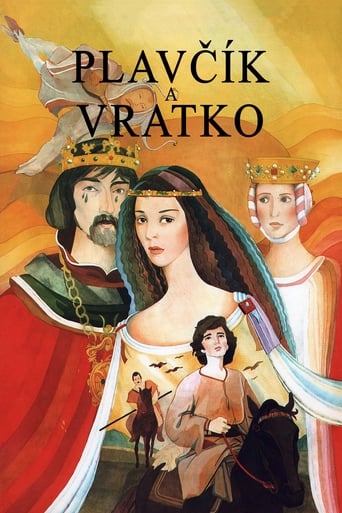
6.2The son of a charcoal burner was once prophesied as a child to marry the daughter of a king. The king tries to prevent this by all means.
Plavčík a Vratko
1982
No synopsis available yet.
Princezná s jedným krídlom a jednou plutvou
1980
No synopsis available yet.
Falošný peniaz
1980
A TV adaptation of Zuzka Zguriška's novel of the same name. The story takes place in a characterful Slovak village. It shows a picture of the inhabitants of Myjava in the 1920s, where there is no lack of freshness, brightness, liveliness and cheerfulness. The main character, a wealthy patriarchal ruler, orders her three adult sons around. She refuses to acknowledge her son's love; she does not want a poor bride. She enjoys the rich Susanna, whom the second son marries. After many convoluted and humorous transformations, the poor girl nevertheless wins the seemingly stony heart of the Scourge.
Bičianka z doliny
1981
No synopsis available yet.
Tušenie
1982
No synopsis available yet.
Mŕtvi učia živých
1984
No synopsis available yet.
Nádej má farbu belasú
1989
No synopsis available yet.
Sekera
1985
No synopsis available yet.
Ulička stratených snov
1985
No synopsis available yet.
A Game Without Love
1980
No synopsis available yet.
V bludisku pamäti
1985
No synopsis available yet.
Vytriezvenie
1987
1970s · 18 titles
 7.0
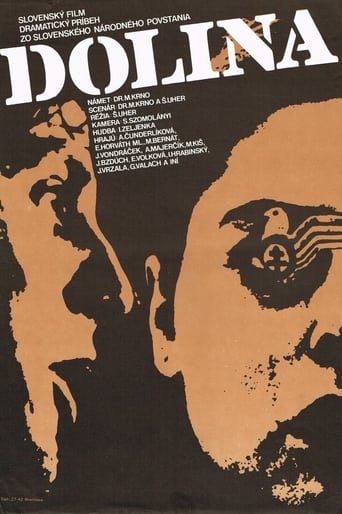
7.0A dramatic story of the emotional, moral and political maturation of two young people during the Slovak National Uprising.
Dolina
1973
 8.0
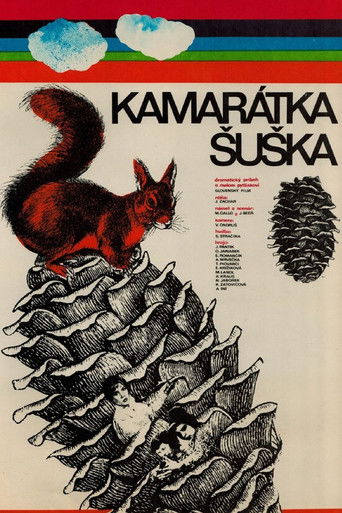
8.0A story about three young boys who are best friends and together are trying to fight a poacher in the forest close to their village.
Comrade Cone
1977
No synopsis available yet.
Svetská krása
1975
 8.0
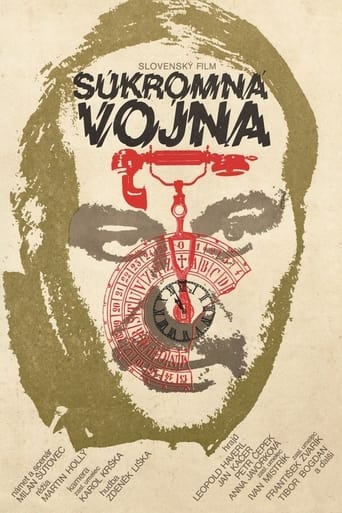
8.0Slovak psychological drama from the end of World War II. The plot of the film takes place in a short period of time just before the outbreak of the uprising. It is the story of a man who wages his "private" war against the man who is responsible for the serious injury of his brother. The upcoming Slovak National Uprising becomes the backdrop for a model-built story that touches on stubborn personal revenge in a situation of war conflict, when human life loses all value. The actions of the main character thus sound like increasingly absurd actions, his motives and the impact of his actions are relativized, the very legitimacy of such a belief appears shaky.
Súkromná vojna
1978
No synopsis available yet.
Svetlo na spodnej haluzi
1973
No synopsis available yet.
Článok na prvú stranku
1978
 NR
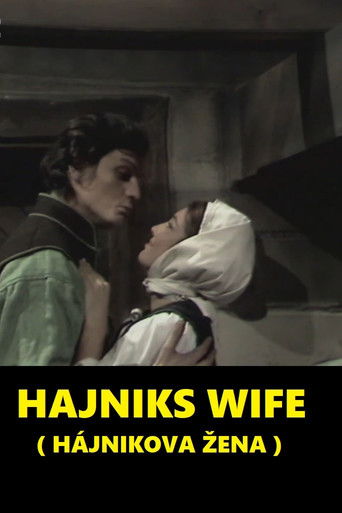
NRThe dramatization of P. O. Hviezdoslav's epic is a celebration of the moral purity of the Slovak people. Through the trial of gamekeeper Michal Čajka, who is on trial for the murder of young Mr. Artuš, we follow in retrospect the events leading up to the trial.
Hajniks Wife
1971
No synopsis available yet.
Mário a kúzelník
1976
No synopsis available yet.
Milionár
1973
No synopsis available yet.
10 % nádeje
1976
No synopsis available yet.
Amerikán
1976
No synopsis available yet.
Minúta rozhodnutia
1975
 9.0
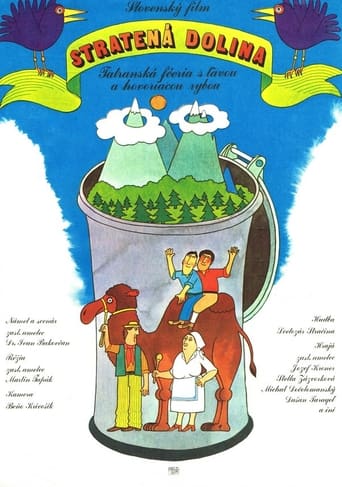
9.0The story of two friends and managers of a mountain hut. The central theme of the film is nature conservation and environmental protection. Friends Mišo and Dušan, who love the Tatras, try to preserve "their" valley as one of the last corners of nature untouched by tourism. They do it with sincere enthusiasm, but only with the means at hand. They settle accounts with sneaky hikers.
Stratená dolina
1977
No synopsis available yet.
Orol a lastovička
1977
An original television production based on the life of Slovak writer Jozef Gregor Tajovský.
Džbán plný ambrózie
1974
No synopsis available yet.
Mont Oriol
1974
A television adaptation of Shakespeare's tragedy about the destructive power of wealth. Timon, a rich and generous Athenian citizen, gives gifts to his friends generously and magnanimously. He helps everyone in need, regardless of their status. However, he is surrounded by false friends who refuse to help him when his coffers are empty and his barrels no longer overflow with wine. The attitude of his friends shakes his faith in the goodness of humanity, and he retreats to a cave on the seashore, where he dies by his own hand, cursing the entire human race. Even the famous warrior Alcibiades knows the ingratitude of Athens. When he speaks on behalf of a soldier sentenced to death for a minor offense, the senators expel him from the city. Alcibiades, a man of action, does not give up, defeats Athens, and conquers it. However, he finds Timon already dead.
Timon Aténsky
1973
No synopsis available yet.
Haló, tu Jakub!
1979
1960s · 6 titles
 6.8
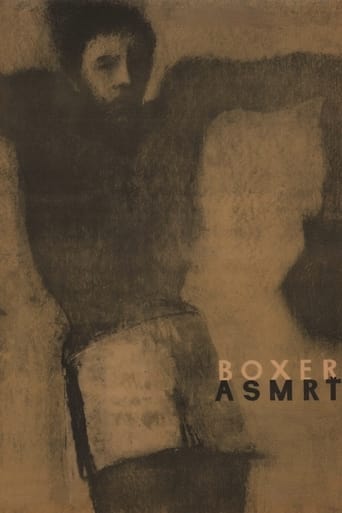
6.8Concentration camp commander Kraft finds out that prisoner Kominek is a former professional boxer. Overnight, the prisoner is made Kraft's exercise partner and unwillingly rises to a privileged position at the camp. His anger over the death of his friend and co-prisoner leads to open revolt. The film brings a new view of human degradation during fascism by a tragic story of one man whose only chance for survival is to accept the rules of an unequal game.
The Boxer and Death
1963
 8.2
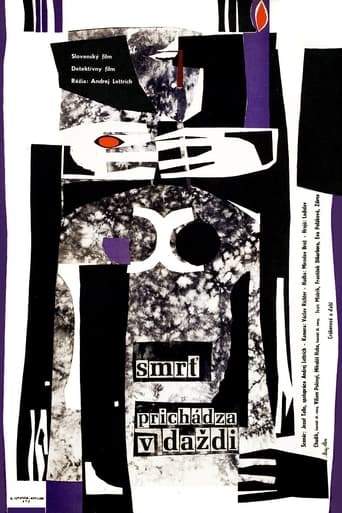
8.2A Slovak detective story set in contemporary Bratislava and featuring ordinary people with their own everyday problems. The violent death of Olga Holešová places them under heavy suspicion of murder. A series of strange coincidences and circumstances complicate the investigators' work. Her husband's infidelity, the loss of a large sum of money that the treasurer Fiala is supposed to replace, a lawyer earning extra money by doing various odd jobs - all these are confusing clues, among which investigator Jakubec eventually finds a thread that will lead him to the correct solution to the case.
Smrť prichádza v daždi
1966
 9.0
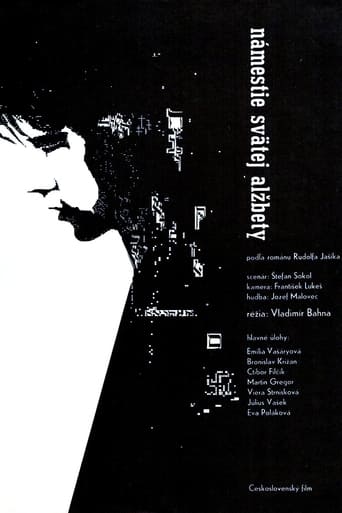
9.0Film adaptation of Rudolf Jašík's novel of the same name. The plot of the film is situated in the forties of our century, in the first years of the Second World War. It captures the political and social atmosphere of one of the Slovak towns that lives seemingly in the lee, far from the world and war. Well, appearances are deceiving. Beneath the surface of peaceful, everyday life, a tragic process is taking place, accelerating people's destinies, the disintegration of their characters, but also the maturing of their relationships. The film is the story of Eva and Igor, their love, violently interrupted by political events. In this era of personal and social tragedies, children become adults almost overnight, honest people become victims, and mentally ill people become murderers. The film about the fates of Eva and Igor, the Jewish cartmen Samko and Maxi, and the careerist Flórik presents a believable, convincing picture of the era marked by the expansion of fascism.
Saint Elizabeth Square
1966
Slovak partisans, bravely fighting against Nazi superiority, would never have succeeded to such an extent if they had not been supported by the villagers. Despite the threat of repression, it is the villagers who care for the wounded, hide them, and behave conscientiously. Although the film was made in the late 1960s, it fully adopts the patterns of partisan stories, perhaps the only thing it can be credited with is a more developed sense of authenticity in the story, characters, and setting.
Stopy na Sitne
1969
 8.0
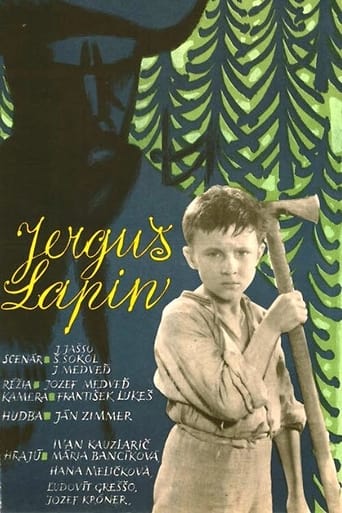
8.0Little Jerguš's father was killed by gendarmes. To help his mother, the boy is hired as a laborer, then goes to the factory, to the city, but, unable to withstand the cruel exploitation, hoping to become free and independent, returns to the mountains, where his father once fought for the good of the people.
Jerguš Lapin
1960
The story, set in the context of the construction of long-distance power lines, captures the life and work of a group of fitters who come to a mountain village to electrify the local cooperative. After being transferred to a lower-paid and "demeaning" job, the group's relationships begin to break down. Debut film of Slovakian director Martin Hollý.
Raven's Route
1962
Series credits
7.0No synopsis available yet.
Bakaláři
1972
7.0No synopsis available yet.
Vivat Beňovský!
1975
8.0Series about the life of Renaissance anatomist, scholar and politic Johannes Jessenius. Already legendary series today, was produced by Czechoslovak Television Bratislava, directed by Slovak director Miroslav Luther in the first half of 80's in Barrandov Studios in Prague. The story and screenplay of the series wrote Czech writer Vladimír Körner. Five-episodes epic historical narration is a biographical story of distinguished Renaissance scholar, anatomist and politic of Slovak origin, Johannes Jessenius (Ján Jesenský, 1566–1621). It displays his life from the first studies and successes. In 1594 he became professor of surgery and anatomy on Wittenberg University, which he had attended years before. From that moment, his life went through social and personal wins and losses, to the sad end on the Prague Old Town Square gallows, among 27 noblemen, knights and burgenses, after lose Bohemian Revolt in 1621. His destiny was coupled with key events of Czech history in the break of 16th and 17th century, when Renaissance and European humanism slowly fade out.
The Physician of a Dying Time
1984
No synopsis available yet.
Povstalecká história
1984
No synopsis available yet.
Rozprávky pätnástich sestier
1982
No synopsis available yet.
V službách zákona
1983
No synopsis available yet.
Sršne v úli
1985
The series depicts the history of Slovak society in the first decades of our century and leaves a deep faith in humanity and the nation. It tells the life story of Pavlínka, the daughter of a laborer and innkeeper, whose fate is filled with love, social ambitions, and unfulfilled dreams, and who ultimately returns to the basics of life, to naturalness and wisdom.
Život bez konca
1983
No synopsis available yet.
Svadba bez nevesty
1980
No synopsis available yet.
Americká tragédia
1977
This three-part production about the life, work, and times of Slovak literary classic Jozef Gregor Tajovský focuses on Tajovský's childhood. Jozef Gregor Tajovský was born in Tajov in 1874 and died in Bratislava in 1940. A large part of the life of the prose writer and playwright Jozef Gregor Tajovský is connected with his native Tajov, Banská Bystrica, and the surrounding villages of Pohorelá, Lopej, Horná Lehota, and Podlavice. He spent his childhood in Tajov with his grandparents. He speaks of it as the most beautiful period of his life. After completing elementary school in Tajov, he studied at a grammar school in Banská Bystrica and at a teacher training college in Kláštor pod Znievom. He was particularly attached to Tajov, to which he returned throughout his life.
Tá tajovská voda mútna
1987
 NR
NRNo synopsis available yet.
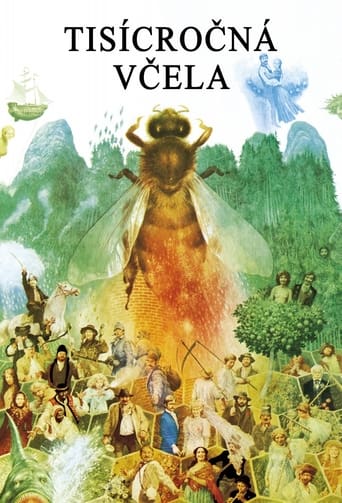
Tisícročná včela
1984
No synopsis available yet.
Reťazenie
1984
No synopsis available yet.
Parížski mohykáni
1972
No synopsis available yet.
Domov
1985
No synopsis available yet.
Matej Bel z Očovej
1987
No synopsis available yet.
Tridsaťdeväť stupňov v tieni
1976
No synopsis available yet.
Muži s plnou mocou
1988
No synopsis available yet.
Sedem krátkych rokov inžiniera Hagaru
1978
No synopsis available yet.
Starožitné zrkadlo
1996
No synopsis available yet.
V tieni vlkov
1972
This five-part TV film tells the story of Jan Daňo, a shepherd, and his two daughters.
Nepokojná láska
1975
No synopsis available yet.
Drotárskym chodníkom
1983
A story about a young Slovak peasant boy from the 17th century. After the death of his father, who was hanged for poaching, Adam Šangala decides to leave home and become a gentleman. However, he gets involved in a dispute with Count Markoč, who abuses a peasant girl, beats him up, and forces him to flee from his police officers. On the run, he meets the charming Betka, the daughter of a craftsman from Trnava, with whom he falls in love, but with Markoč's police still hot on his heels, there is no time for love. In his desperate situation, Adam enlists as a soldier for Count Pálfy...
Adam Šangala
1974
No synopsis available yet.
Generácia
1969
No synopsis available yet.
Vzbúrené mesto
1984
No synopsis available yet.
Tu musíš žiť
1985
No synopsis available yet.
Buddenbrookovci
1975
A two-part TV drama about the life and work of Jozef Murgaš, a world-renowned inventor, talented painter, and Slovak patriot. The first part focuses mainly on his life in Slovakia and describes Murgaš's student years. He leaves the picturesque surroundings of his native Tajov to attend high school in Banská Bystrica and later, at his mother's request, continues his studies in theology at the Esztergom Seminary. However, his studies did not end with graduation from this faculty. His love of painting was stronger and led him first to a one-year art preparatory course in Budapest and then to the Academy of Fine Arts in Munich. However, he was unable to complete his studies due to brutal intervention by the authorities. The second part depicts Murgaš's life in Wilkes-Barre, Pennsylvania, in the United States. He worked there as a priest in the local church, which he built together with other Slovaks. He also contributed to the establishment of a school for Slovak children in Wilkes-Barre.
Reverend
1989
No synopsis available yet.
Vynálezy hodinára Aurela
1984
No synopsis available yet.
Divadlo v dome
1975
No synopsis available yet.
Kronika
1974