
Writing
Thierry Leclère
Known for
Writing
Credits
7 titles
Thierry Leclère is a journalist. He is also an author and a documentary director. He was a reporter for Telerama and he now writes for the revue XXI and teaches journalism. His movies often adress postcolonial history, migrations and multicultural France.
Known for
Who remembers that unlikely handful of marchers—campaigning "for equality and against racism"—who set out on the roads of France in October 1983 in obscurity, only to culminate in a triumphant finale in Paris, with nearly 100,000 people at the Bastille and the Élysée Palace as the finish line? "Put your guns away, we’re coming—hunting season is over," proclaimed the March, a response to the police violence and numerous racist crimes that had marked the early 1980s. A novel of the "Beur generation," Les Marcheurs revisits this little-known story.
Les Marcheurs, chronique des années beurs
2013
 8.5
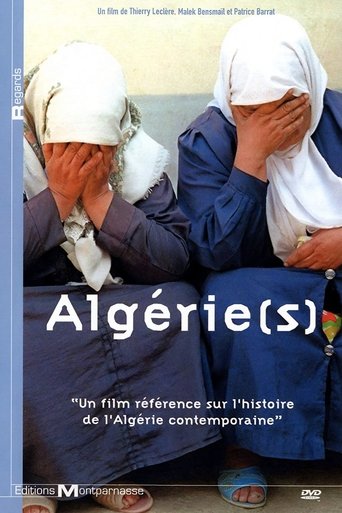
8.5Documentary series in two parts: 1. A people without a voice (80'), 2. A land in mourning (78'). Part 1: A people without a voice: October 88, the Algerian Republic is faltering, the film goes back to the sources of this tragedy and explains how the face to face between the Islamists and those in power began. The interruption of the legislative elections of December 91, followed shortly after the assassination of President Boudiaf in June 92, plunged Algeria into chaos. Part 2: A land in mourning: the cycle of violence that leads to massacres and the economic and geopolitical underside of the war. More than 100,000 deaths, an incredible degree of barbarity, massacres, apparently incomprehensible... Behind the official window of power and its artificial political scene, hides a shadow power.
Algeria's Bloody Years
2002
 NR
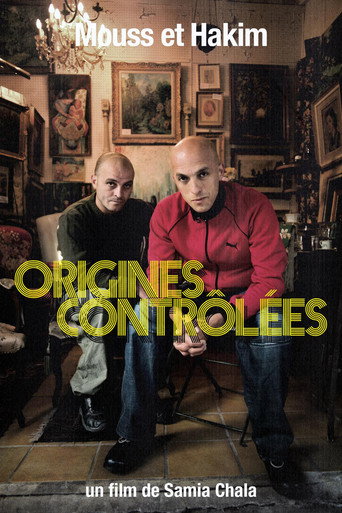
NRThis film will tell the story of a tour of France undertaken by two children of "controlled origin"—as Mouss and Hakim wryly put it. For us, the reference to the century-old schoolbook Le Tour de la France par deux enfants by Augustine Fouillée is far more than a mere nod; published in the wake of the Franco-Prussian War of 1870, this reader was a fiercely patriotic manual designed to shape the education and morals of young French children. Written under the pseudonym "G. Bruno," the book recounted the journey of two children, André and Julien Volden, who—following the Prussian annexation of Alsace-Lorraine and the death of their father—set out to find their uncle across France’s beautiful provinces. The book was steeped in nationalism and a martial spirit, instilling the values of the Third Republic—equality and citizenship—with a heavy hand, ensuring that no one dared to stand out from the crowd.
Mouss et Hakim, controled origins
2011
In the early 20th century, one of the biggest stars of the Parisian stage was a Black artist who has since been forgotten: the clown Chocolat. This film by Samia Chala and Thierry Leclère tells the extraordinary story of this former Cuban slave who captivated the Lumière brothers, inspired the painter Toulouse-Lautrec, and later influenced writers such as Jean Cocteau. The meteoric rise of Chocolat—who was physically struck and mocked on stage by the "white clown" Footit—reflects the French public's discovery of the "Black man" during the era of colonial exhibitions and the Third Republic. It is a story that still resonates today. Drawing on exceptional archival footage, Chocolat’s epic life story is recounted by historian Gérard Noiriel and actor Marcel Bozonnet, both of whom brought the clown back to life on stage.
Le Clown Chocolat
2013
Behind the camera
Who remembers that unlikely handful of marchers—campaigning "for equality and against racism"—who set out on the roads of France in October 1983 in obscurity, only to culminate in a triumphant finale in Paris, with nearly 100,000 people at the Bastille and the Élysée Palace as the finish line? "Put your guns away, we’re coming—hunting season is over," proclaimed the March, a response to the police violence and numerous racist crimes that had marked the early 1980s. A novel of the "Beur generation," Les Marcheurs revisits this little-known story.
Les Marcheurs, chronique des années beurs
2013
8.5Documentary series in two parts: 1. A people without a voice (80'), 2. A land in mourning (78'). Part 1: A people without a voice: October 88, the Algerian Republic is faltering, the film goes back to the sources of this tragedy and explains how the face to face between the Islamists and those in power began. The interruption of the legislative elections of December 91, followed shortly after the assassination of President Boudiaf in June 92, plunged Algeria into chaos. Part 2: A land in mourning: the cycle of violence that leads to massacres and the economic and geopolitical underside of the war. More than 100,000 deaths, an incredible degree of barbarity, massacres, apparently incomprehensible... Behind the official window of power and its artificial political scene, hides a shadow power.
Algeria's Bloody Years
2002
8.5Documentary series in two parts: 1. A people without a voice (80'), 2. A land in mourning (78'). Part 1: A people without a voice: October 88, the Algerian Republic is faltering, the film goes back to the sources of this tragedy and explains how the face to face between the Islamists and those in power began. The interruption of the legislative elections of December 91, followed shortly after the assassination of President Boudiaf in June 92, plunged Algeria into chaos. Part 2: A land in mourning: the cycle of violence that leads to massacres and the economic and geopolitical underside of the war. More than 100,000 deaths, an incredible degree of barbarity, massacres, apparently incomprehensible... Behind the official window of power and its artificial political scene, hides a shadow power.
Algeria's Bloody Years
2002
NRThis film will tell the story of a tour of France undertaken by two children of "controlled origin"—as Mouss and Hakim wryly put it. For us, the reference to the century-old schoolbook Le Tour de la France par deux enfants by Augustine Fouillée is far more than a mere nod; published in the wake of the Franco-Prussian War of 1870, this reader was a fiercely patriotic manual designed to shape the education and morals of young French children. Written under the pseudonym "G. Bruno," the book recounted the journey of two children, André and Julien Volden, who—following the Prussian annexation of Alsace-Lorraine and the death of their father—set out to find their uncle across France’s beautiful provinces. The book was steeped in nationalism and a martial spirit, instilling the values of the Third Republic—equality and citizenship—with a heavy hand, ensuring that no one dared to stand out from the crowd.
Mouss et Hakim, controled origins
2011
NRThis film will tell the story of a tour of France undertaken by two children of "controlled origin"—as Mouss and Hakim wryly put it. For us, the reference to the century-old schoolbook Le Tour de la France par deux enfants by Augustine Fouillée is far more than a mere nod; published in the wake of the Franco-Prussian War of 1870, this reader was a fiercely patriotic manual designed to shape the education and morals of young French children. Written under the pseudonym "G. Bruno," the book recounted the journey of two children, André and Julien Volden, who—following the Prussian annexation of Alsace-Lorraine and the death of their father—set out to find their uncle across France’s beautiful provinces. The book was steeped in nationalism and a martial spirit, instilling the values of the Third Republic—equality and citizenship—with a heavy hand, ensuring that no one dared to stand out from the crowd.
Mouss et Hakim, controled origins
2011
In the early 20th century, one of the biggest stars of the Parisian stage was a Black artist who has since been forgotten: the clown Chocolat. This film by Samia Chala and Thierry Leclère tells the extraordinary story of this former Cuban slave who captivated the Lumière brothers, inspired the painter Toulouse-Lautrec, and later influenced writers such as Jean Cocteau. The meteoric rise of Chocolat—who was physically struck and mocked on stage by the "white clown" Footit—reflects the French public's discovery of the "Black man" during the era of colonial exhibitions and the Third Republic. It is a story that still resonates today. Drawing on exceptional archival footage, Chocolat’s epic life story is recounted by historian Gérard Noiriel and actor Marcel Bozonnet, both of whom brought the clown back to life on stage.
Le Clown Chocolat
2013
In the early 20th century, one of the biggest stars of the Parisian stage was a Black artist who has since been forgotten: the clown Chocolat. This film by Samia Chala and Thierry Leclère tells the extraordinary story of this former Cuban slave who captivated the Lumière brothers, inspired the painter Toulouse-Lautrec, and later influenced writers such as Jean Cocteau. The meteoric rise of Chocolat—who was physically struck and mocked on stage by the "white clown" Footit—reflects the French public's discovery of the "Black man" during the era of colonial exhibitions and the Third Republic. It is a story that still resonates today. Drawing on exceptional archival footage, Chocolat’s epic life story is recounted by historian Gérard Noiriel and actor Marcel Bozonnet, both of whom brought the clown back to life on stage.
Le Clown Chocolat
2013