
Directing
David MacDougall
Born
1939-11-12 (86)
Place of birth
New Hampshire, USA
Known for
Directing
Credits
41 titles
David MacDougall (born November 12, 1939) is an American-Australian visual anthropologist, academic, and documentary filmmaker, who is known for his ethnographic film work in Africa, Australia, Europe and India. For much of his career he co-produced and co-directed films with his wife, fellow filmmaker Judith MacDougall. In 1972, his first film, To Live with Herds was awarded the Grand Prix "Venezia Genti" at the Venice Film Festival. He has lived in Australia since 1975, and is currently a professor in the Research School of Humanities & the Arts at Australian National University.
Known for
 NR
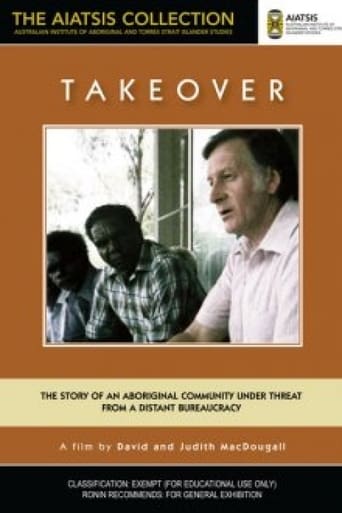
About Aborigines and Australian politics. On 13 March 1978 the Queensland Government announced its intention to take over management of the Aurukun Aboriginal Reserve from the Uniting Church. The people of Aurukun complained bitterly, believing that the Church was more sympathetic to their aims and fearing that the State was merely seeking easier access to the rich bauxite deposits on their Reserve. When the Federal Government took the side of the Aborigines the stage was set for national confrontation. Shows the situation at Aurukun during those crucial three weeks.
Takeover
1980
 NR
Renowned ethnographic filmmakers David and Judith MacDougall explore the many meanings of photography in this profound and penetrating documentary. The film focuses on the photographers of Mussoorie, a hill station in the Himalayan foothills of northern India whose fame has attracted tourists since the 19th century. Through a rich mixture of scenes that includes the photographers at work, their clients, and both old and new photographs, this extraordinary film examines photography as art and as social artifact — a medium of reality, fantasy, memory, and desire.
Photo Wallahs
1991
 6.0
Black and white UCLA Student Film, Preserved by the UCLA Film and Television Archive. A boy hitchhikes in the desert. A man gets out of his car and follows him, then collapses. The boy tries reviving the man to no avail. The boy takes the man's wallet, smokes a cigarette, eats a sandwich, and catches a ride.
KM 400
—
 NR
An extraordinarily insightful and intimate exploration of the social and cultural landscape of India's most elite boys' boarding school. In following the boys' daily routines and dramas, the film also affords us a rare glimpse at processes of postcolonial Indian identity formation.
Doon School Chronicles
2000
 NR
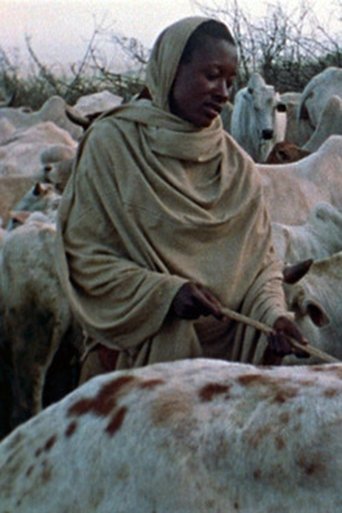
This film demonstrates the time-honored solutions to the problems associated with the Boran's dependence on cattle for living. Direct government intervention and the indirect impact of modernization are forcing the old patterns to change. The film depicts herding practices, movement patterns, watering strategies, and the lifestyle of the herdsmen. The film has special currency for issues in rural development and agricultural, environmental, and human adaption.
Boran Herdsmen
1974
 NR
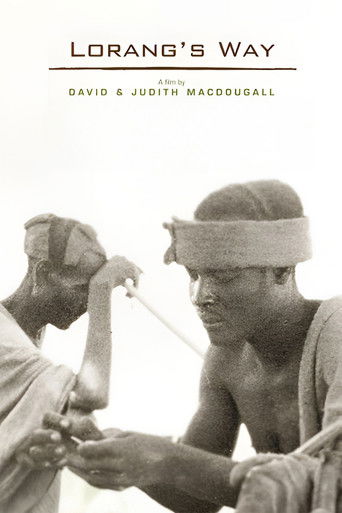
An ethnographic study of a Turkana family filmed in north western Kenya in the early 1970's.
Lorang's Way
1977
Film credits
Behind the camera
NRAbout Aborigines and Australian politics. On 13 March 1978 the Queensland Government announced its intention to take over management of the Aurukun Aboriginal Reserve from the Uniting Church. The people of Aurukun complained bitterly, believing that the Church was more sympathetic to their aims and fearing that the State was merely seeking easier access to the rich bauxite deposits on their Reserve. When the Federal Government took the side of the Aborigines the stage was set for national confrontation. Shows the situation at Aurukun during those crucial three weeks.
Takeover
1980
NRRenowned ethnographic filmmakers David and Judith MacDougall explore the many meanings of photography in this profound and penetrating documentary. The film focuses on the photographers of Mussoorie, a hill station in the Himalayan foothills of northern India whose fame has attracted tourists since the 19th century. Through a rich mixture of scenes that includes the photographers at work, their clients, and both old and new photographs, this extraordinary film examines photography as art and as social artifact — a medium of reality, fantasy, memory, and desire.
Photo Wallahs
1991
6.0Black and white UCLA Student Film, Preserved by the UCLA Film and Television Archive. A boy hitchhikes in the desert. A man gets out of his car and follows him, then collapses. The boy tries reviving the man to no avail. The boy takes the man's wallet, smokes a cigarette, eats a sandwich, and catches a ride.
KM 400
—
NRAn extraordinarily insightful and intimate exploration of the social and cultural landscape of India's most elite boys' boarding school. In following the boys' daily routines and dramas, the film also affords us a rare glimpse at processes of postcolonial Indian identity formation.
Doon School Chronicles
2000
NRThis film demonstrates the time-honored solutions to the problems associated with the Boran's dependence on cattle for living. Direct government intervention and the indirect impact of modernization are forcing the old patterns to change. The film depicts herding practices, movement patterns, watering strategies, and the lifestyle of the herdsmen. The film has special currency for issues in rural development and agricultural, environmental, and human adaption.
Boran Herdsmen
1974
NRAn ethnographic study of a Turkana family filmed in north western Kenya in the early 1970's.
Lorang's Way
1977
 NR
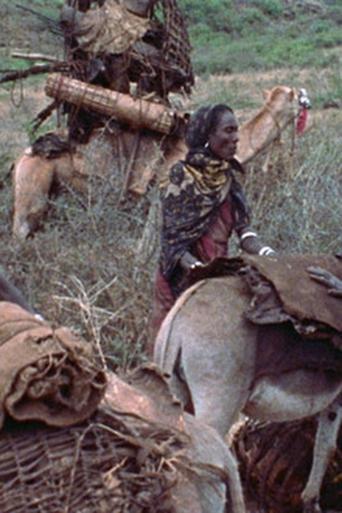
This classic ethnographic documentary, by the renowned filmmaking team of David and Judith MacDougall, explores the nomadic life of the Jie of Uganda. During the dry season the Jie leave their homesteads in large numbers and take their cattle to temporary camps (nawi) in western Karamoja District, where water and grass are more abundant.
Nawi
1970
 NR
Traditionally confined to the roles of life-givers, nurturers and homemakers, Boran women of Kenya are slowly realizing the importance of education and the difference it can make in their lives. They attach great importance to the traditional role of women in a herding society and perform dawn to dusk tasks with little deviation from customary ways. Remarkable though is the obvious independence they demonstrate in performing tasks which normally would fall under the male domain, like building their own houses. The film is principally observational with occasional segments in which the women speak directly to the camera.
Boran Women
1974
In the midst of a traditional herding territory, a growing town and a new road encroach upon a once-isolated desert people. The complexities brought about by this modernization are shown as two fathers and their sons confront difficult choices between old ways and new.
Kenya Boran
1974
 NR
At the request of a dying Tiwi man and his family on Melville Island, this film was made of the pukumani (bereavement) ceremony to follow his death. The film observes the family through the long period of preparation for the ceremony, following age-old traditions. Dancing and face-painting are rehearsed, to the family’s satisfaction, and because “things should be right for this film”. For the two days of ceremony, the community moves to Carslake Beach where a smoking ritual is held to protect the participants from spirits. The cemetery poles are erected, traditional dances are performed along with personal dances by family members. Facial and body decoration is elaborate and spectacular. After saying a final farewell to the old man, the community and the family leave the Beach and return to the village where routine life resumes.
Good-bye Old Man
1977
NRAt the request of a dying Tiwi man and his family on Melville Island, this film was made of the pukumani (bereavement) ceremony to follow his death. The film observes the family through the long period of preparation for the ceremony, following age-old traditions. Dancing and face-painting are rehearsed, to the family’s satisfaction, and because “things should be right for this film”. For the two days of ceremony, the community moves to Carslake Beach where a smoking ritual is held to protect the participants from spirits. The cemetery poles are erected, traditional dances are performed along with personal dances by family members. Facial and body decoration is elaborate and spectacular. After saying a final farewell to the old man, the community and the family leave the Beach and return to the village where routine life resumes.
Good-bye Old Man
1977
 NR
This observational documentary follows an episode in the routine life on Collum Collum cattle-station in northern New South Wales. But, as the filmmaker notes, it's a story that could have occurred anywhere.
A Transfer Of Power
1986
 NR
A documentary portrait of the Jie of northeastern Uganda, examining pastoral life during a dry season as government policies and economic pressures challenge traditional patterns of herding, movement, and subsistence.
To Live With Herds
1972
NRA documentary portrait of the Jie of northeastern Uganda, examining pastoral life during a dry season as government policies and economic pressures challenge traditional patterns of herding, movement, and subsistence.
To Live With Herds
1972
 6.0
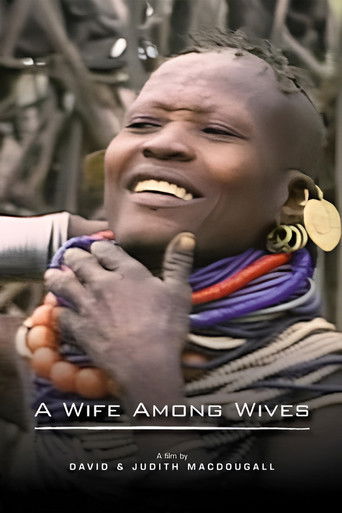
David and Judith MacDougall are exploring the marriage rituals and roles of Turkana women in this ethnographic documentary. The film's biggest part is taken up by talks between the Turkana people. As one of the first ethnographic documentaries "A Wife Among Wives" subtitles these talks so that the viewer can get a better and probably more personal understanding of the life of the Turkana.
A Wife Among Wives
1981
6.0David and Judith MacDougall are exploring the marriage rituals and roles of Turkana women in this ethnographic documentary. The film's biggest part is taken up by talks between the Turkana people. As one of the first ethnographic documentaries "A Wife Among Wives" subtitles these talks so that the viewer can get a better and probably more personal understanding of the life of the Turkana.
A Wife Among Wives
1981
Narrated by the linguist and anthropologist Peter Sutton, this documentary observes his work with a family in far north Queensland, outside Aurukun, to map their hereditary "clan country". The aim of the older members of the family is partly to protect their land and prove their attachment to it, for purposes of dealing with the government and industry, and also to demarcate the country from claims by other Aboriginal groups.
Familiar Places
—
 5.0
A shelter for children on the outskirts of Delhi provides food and accommodation for 350 boys. Some are orphans, others have been abandoned, still others have run away from home. About half are held under a court order, having been picked up from the streets for petty crimes. Living at the institution for several months, the filmmaker explores its routines and the varied experiences of several boys. Despite the harshness of their lives, many show remarkable strength of character, knowledge, and resilience. One day 181 child labourers arrived, placing additional strain on the building's deteriorating facilities. The institution does what it can, but is it enough?
Gandhi's Children
2008
5.0A shelter for children on the outskirts of Delhi provides food and accommodation for 350 boys. Some are orphans, others have been abandoned, still others have run away from home. About half are held under a court order, having been picked up from the streets for petty crimes. Living at the institution for several months, the filmmaker explores its routines and the varied experiences of several boys. Despite the harshness of their lives, many show remarkable strength of character, knowledge, and resilience. One day 181 child labourers arrived, placing additional strain on the building's deteriorating facilities. The institution does what it can, but is it enough?
Gandhi's Children
2008
 6.0
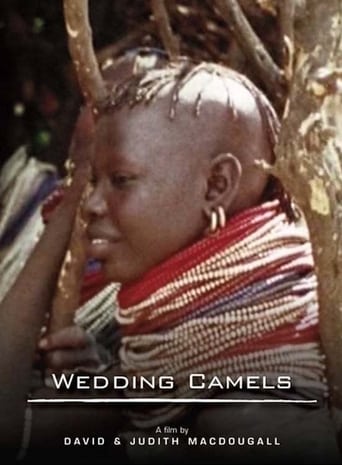
Set among the Turkana pastoralists of northwestern Kenya, the film chronicles the marriage negotiations between Lorang’s daughter Akai and Kongu, a friend and age-mate of her father. Much of the film focuses on extended discussions over the bridewealth—goats and camels to be given to the bride’s family—which draw in relatives from both sides and grow increasingly tense. Filmed in an observational style without narration, the documentary records the negotiations and social dynamics that shape the marriage arrangement.
The Wedding Camels
1980
6.0Set among the Turkana pastoralists of northwestern Kenya, the film chronicles the marriage negotiations between Lorang’s daughter Akai and Kongu, a friend and age-mate of her father. Much of the film focuses on extended discussions over the bridewealth—goats and camels to be given to the bride’s family—which draw in relatives from both sides and grow increasingly tense. Filmed in an observational style without narration, the documentary records the negotiations and social dynamics that shape the marriage arrangement.
The Wedding Camels
1980
An extraordinary personal journey into the experience of being black in a powerful white society. "Link-up Diary" is a film about the consequences of New South Wales long term practice of taking Aboriginal children away from their parents and raising them in "white" environments. In following the reunification, after many years, of several families in Sydney, during one week of 1986, the filmmaker adopts a diary format which does not attempt to disguise awareness of the camera's presence. This awareness becomes part of the film's subject.
Link-Up Diary
1987
Gordon Smith, head of the Collum Collum Aboriginal Co-operative which operates a cattle station in northern New South Wales, and Sunny Bancroft, the station manager, are negotiating with the Aboriginal Development Corporation in Canberra for a loan. Finance is needed to stock the property with breeding cattle so that the station can become financially independent.
Collum Calling Canberra
1981
No synopsis available yet.
Under the Palace Wall
2014
No synopsis available yet.
Under the Palace Wall
2014
 NR
Three Horsemen: 1978/1982 An old Aboriginal stockman, his nephew, and his 13-year-old grandnephew on Cape York peninsula, northern Queensland, try to get an old cattle station going again in their traditional clan country. 54 minutes. Presents the Pootchemunka family and life at the TiTree settlement in Northern Queensland Australia.
Three Horsemen
1982
Without narration, and without identification of individual speakers, the film provides an invaluable record of two events which occurred in the final week of January 1977, and which marked "a turning point in legal recognition of Aboriginal rights to land".
To Get That Country
—
 NR
In this fifth and final film in the Doon School quintet, MacDougall focuses on the life of one student whom he discovers at the school. The film was made in parallel with 'The New Boys' and intersects with it at several points. However, instead of looking at the group, it explores the thoughts and feelings of Abhishek, a 12-year-old from Nepal, during his first days and weeks as a Doon student. This is at once the story of the encounter between a filmmaker and his subject and a glimpse of the mind of a child at “the age of reason”. This is the most intimate and interactive film of the series.
The Age of Reason
2004
 NR
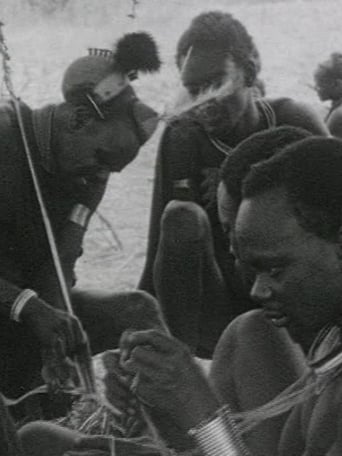
At Jie cattle camps in Uganda men often gather under a special tree to make leather and wooden goods and talk, relax, and sleep. This brilliant ethnographic documentary by renowned filmmakers David and Judith MacDougall captures one particularly riveting discussion one afternoon under the men's tree. The conversation on this particular afternoon becomes a kind of reverse ethnography, centering on the European's most noticeable possession, the motor vehicle. This is a uniquely delicate and intimate film, filled with the humor of the Jie and, implicitly, the ironic wit of the filmmakers.
Under the Men's Tree
1973
The Queen of the Hills is a reconstruction of a film shot and edited in 1988-89 but never completed. It was made as a companion piece to the MacDougalls’ film Photo Wallahs (1991), a study of photography and photographers in the north Indian hill station of Mussoorie. The film is a portrait of the hill station and its inhabitants, focusing on its unusual colonial past and postcolonial present. It has been restored digitally from the faded and damaged 16mm workprint produced in the 1980s.
The Queen of the Hills
2025
Since completing the Doon School Quintet, his series of films about an elite boys’ boarding school in North India, MacDougall has turned his attention to other institutions for children in India. The coeducational Rishi Valley School in Andhra Pradesh was founded on the educational principles espoused by Jiddu Krishnamurti, who stressed the importance of observing the world around us more calmly and simply, as if with fresh eyes. SchoolScapes was made in this spirit.
SchoolScapes
2007
The story of an Aboriginal stockman, Sunny Bancroft, and his family at Collum Collum and their growing enthusiasm for "picnic races" on bush tracks in New South Wales.
Sunny and the Dark Horse
1987
 NR
Follow Arnav, a six year old Southern Indian boy, as he explores his environment.
Arnav at Six
2014
 5.0
This documentary focuses on the vanishing lifestyle of a family of rural residents of the island of Sardinia. For many generations, they have been goatherds in the mountains, and it was a respected and acceptable occupation. Now tourism and the lure of other occupations deeply affects the younger generation, and soon there may be no goatherds left.
Tempus de baristas
1994
Constructed as a series of vignettes of station life, the film focuses particularly on the relationship between Sunny Bancroft, the station manager, and a 16-year-old trainee, Shane Gordon. The episodes are linked by Sunny's reflections on learning the hard way from experience, and from the lessons taught him by his father.
Stockman's Strategy
—
 NR
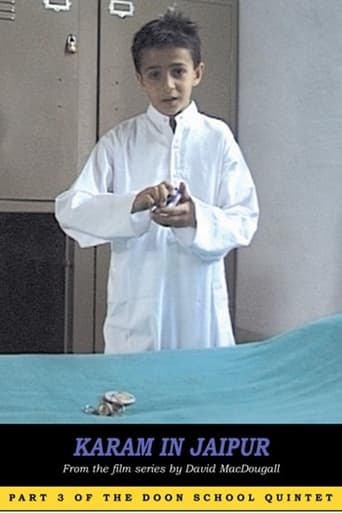
This third film in the Doon School quintet follows the main protagonist of 'With Morning Hearts' into the next phase of his life in Jaipur House, one of the five main houses of the school. There he plays hockey, sings, studies, and struggles to settle into the House. He must keep up with his classmates, contend with the authority of older boys, and try to find a way to make his mark. He finds it in gymnastics, for which he has an aptitude.
Karam in Jaipur
2001
 NR
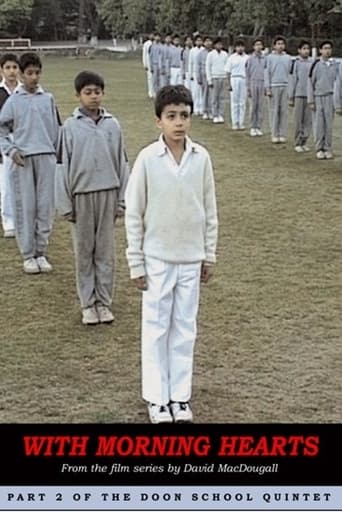
This film continues MacDougall's long-term study of an elite boys' boarding school in northern India. It focuses on a group of twelve-year-olds during their first year in one of the 'houses' for new boys. The film concerns their attachment to the house, but, more importantly, their attachment to one another in a communal life. It follows, in particular, the experiences of one boy and several of his close associates, from their initial homesickness, to their life as member of the group, to their separation from the house at the end of the year.
With Morning Hearts
2001