
Acting
Peter Kalisch
Born — Died
1921-12-11 — 1992-04-20
Place of birth
Berlin, Germany
Known for
Acting
Credits
57 titles
Known for
 6.2
6.2Polizeiruf 110 is a long-running German language detective television series. The first episode was broadcast 27 June 1971 in the German Democratic Republic, and after the dissolution of Fernsehen der DDR the series was picked up by ARD. It was originally created as a counterpart to the West German series Tatort, and quickly became a public favorite.
Polizeiruf 110
1971
 3.8
3.8Der Staatsanwalt hat das Wort was an East German television series.
Der Staatsanwalt hat das Wort
1965
 7.5
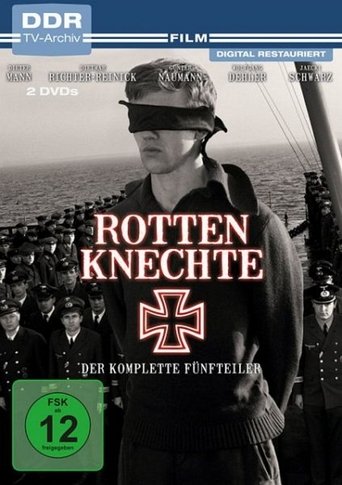
7.5The film concentrates on the last days of the German navy during World War II.
Rottenknechte
1971
 4.3
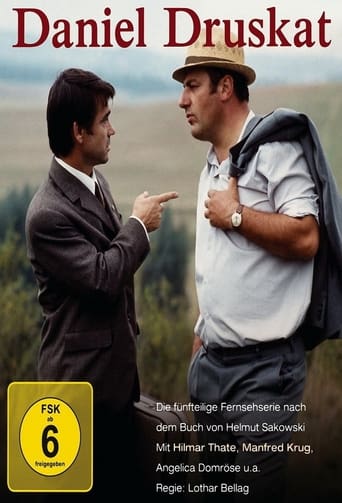
4.3Large-scale, five-part film about the relationship between two men caught between friendship, rivalry and hatred during the first decades of GDR in the countryside.
Daniel Druskat
1976
No synopsis available yet.
Großer Frieden
1989
 8.0
8.0The movie begins by showing how Schneller takes up the profession of a teacher out of love for the children. When the First World War begins, he becomes a 'volunteer officer' and slowly the political situation begins to shape him. He develops into a revolutionary fighter.
Ernst Schneller
1977
Film credits
1980s · 17 titles
No synopsis available yet.
Großer Frieden
1989
 9.0
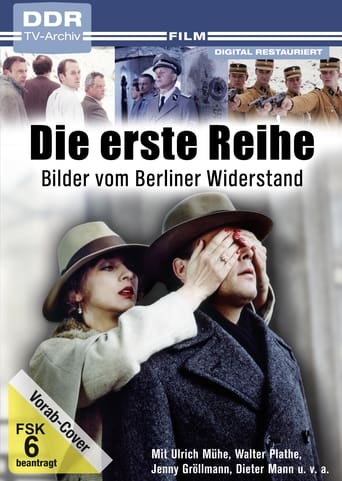
9.0Berlin in the 1930s - Adolf Hitler comes to power, communists and social democrats are persecuted, books are burned and Jewish citizens are ostracized. The outwardly shiny façade of Berlin, the capital of the Reich, reveals nothing of the unequal struggle of young people against the increasing oppression...
Die erste Reihe
1987
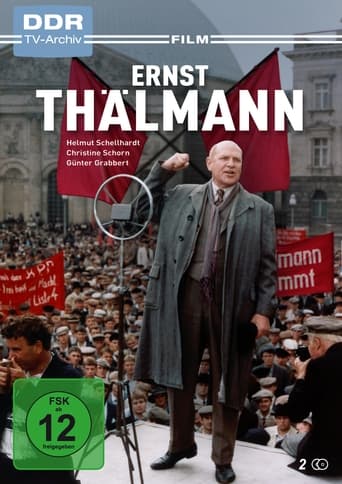 8.5
8.5This elaborate two-part television film features a section from the life of communist worker leader Ernst Thälmann. It begins with the bloody riots on May 1, 1929 in Berlin, in which police officers shot at demonstrating workers, and ends with February 7, 1933, when Thälmann appeared as a speaker at the illegal meeting of the Central Committee of the Communist Party of Germany in goat neck. This period was marked by the struggle of the Communists against the ever stronger National Socialists and the rise of Adolf Hitler.
Ernst Thälmann
1986
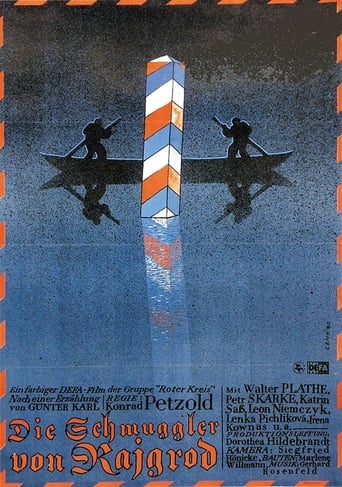 7.0
7.0In 1903, Jan Anskath and his half-brother Martin are living in Rajgorod at the border between Russia and Prussia – Jan on the Russian, Martin on the Prussian side. Both are occasionally smuggling stuff over the border. But while Jan acts from political conviction and is smuggling illegal writings over the border, Martin is only interested in the money. That is why he does not question his shadowy client when he sneaks out refugees into Russia. But then it becomes evident that the distinguished gentleman has robbed the refugees from all of their belongings, only to turn them over to the authorities of the Czar.
Die Schmuggler von Rajgrod
1980
 7.0
7.0Detti leaves the Harz to help build East Berlin but faces a cold welcome. He bonds with roommate Matthias and meets Silke. Assigned to Marzahn’s construction brigade, he works through challenges, determined to stay. His resolve pays off when he falls for Jasmin.
Berlin, hier bin ich
1982
The young Walter Retzlow, drafted into the guard team of a foreign labor factory in the last year of the war, receives the papers of a murdered anti-fascist by chance. He adopts the new identity, which promises him security.
Der Mann und sein Name
1983
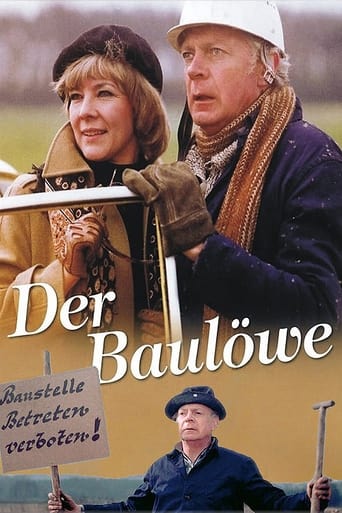 6.7
6.7The successful entertainment artist Ralf Keul must develop his land on the Baltic Sea or else ultimately give it up. Inexperienced yet courageous, he hurls himself into the undertaking, which spares him no unpleasantness. He battles over the transportation and procurement of materials, constantly on the verge of a nervous breakdown, while his craftsmen offer little additional assistance.
Der Baulöwe
1980
In 1920 Moscow, a wounded Red Guard paints “Blue Horses on Red Grass” to symbolize hope he’ll never see. He presents it to a gravely ill Lenin amid famine, inspiring Lenin to reaffirm his legacy and resolve as he leads Bolsheviks in rationing scarce food for the city’s survival.
Blaue Pferde auf rotem Gras
1980
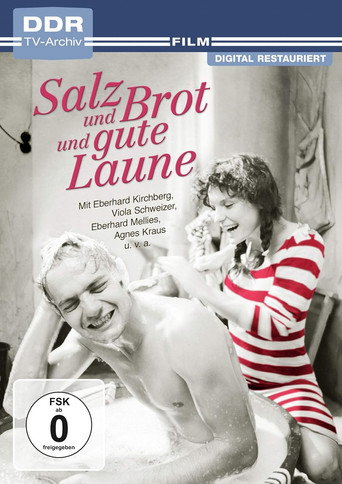 NR
NRNo synopsis available yet.
Salz und Brot und gute Laune
1980
 3.0
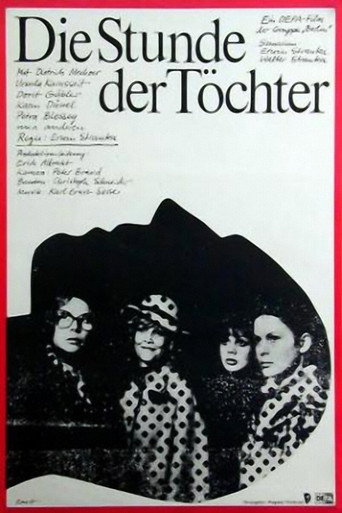
3.0A life-threatening heart attack confines Richard Roth to the hospital bed. There, Richard, who is in his late fifties, asks himself what will remain of him and his life. What happened to his four daughters? Do they take after him? How have they developed? His youngest daughter Nanny, who is still living with her father, gets her three other siblings to Weimar to visit their father.
Die Stunde der Töchter
1981
 3.0
3.0In the 22nd Century, antiquities command huge prices. A woman uses a time machine to travel back the the 19th Century in order to buy paintings from Vincent Van Gogh before he was famous. Will she be wealthy upon her return?
Visiting Van Gogh
1985
The real blue is the color with which potter Benito Guerrero makes his fortune. When he no longer receives the color from Germany as a result of the Second World War, he and his family's existence are threatened. However, with the help of his inventive cousin Ruben, he manages to bring his real blue back onto the market.
Das wirkliche Blau
1986
 6.5
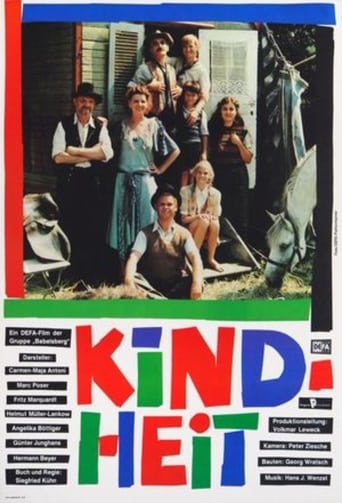
6.5Alfons lives with his grandparents on a Silesian village farm at the end of WWII. He adores his grandmother, who runs everything after her husband dies. But everything changes after the appearance of a traveling showman in the xenophobic village.
Childhood
1987
 4.0
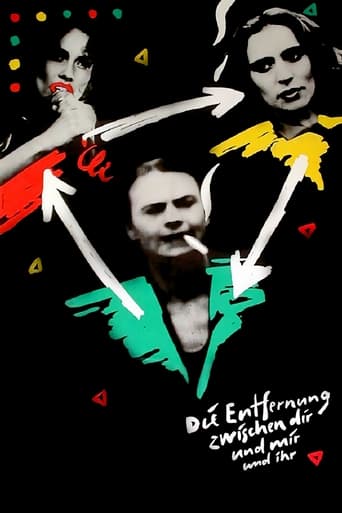
4.0Journalist Marga is commissioned by her editor-in-chief to interview a rock singer, Anne, from Prenzlauer Berg in Berlin. When Robert, an unpublished poet and Anne's ex-boyfriend, shows up, Marga becomes way more interested in her interview assignment. A love triangle comedy set in the bohemian East Berlin Prenzlauer Berg atmosphere combined with 1980s punk rock music à la Nina Hagen that comments on East German taboo topics, including environmental issues.
The Distance Between You and Me and Her
1988
 7.5
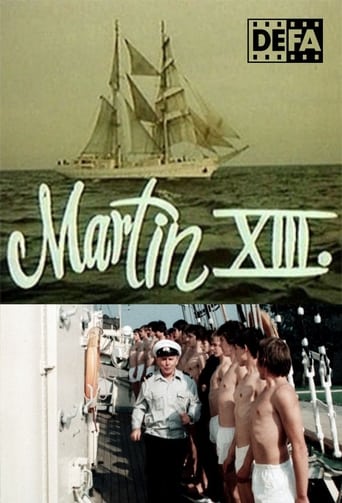
7.5The oceans seem to be the Nehls' second home. But there is one exception that Grandpa Nehl, alias Martin XI, captain of a training sailing ship, is not at all happy with. His son Martin XII is the first of the family to work ashore. A scandal, really, but Grandpa Nehl doesn't give up. He hopes that his grandson Martin XIII will carry on the maritime tradition. But behind his grandfather's back, he also goes his own way. And so a huge row is brewing, if it weren't for twin sister Martina.
Martin XIII.
1981
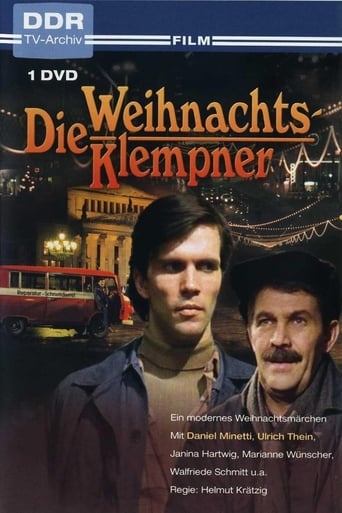 7.0
7.0Plumber Martin and his younger colleague Frank are on call on Christmas Eve of all days. Frank's girlfriend Regina, who is expecting her first baby at any moment, is anything but thrilled. But it doesn't help, duty is duty. One emergency call follows another, but this evening it's not just broken water pipes that are waiting for the two plumbers...
Die Weihnachtsklempner
1986
Adaptation of Theodor Fontane's novel.
Mathilde Möhring
1983
1970s · 18 titles
 NR
NRHistorical television comedy around Friedrich Alfred Krupp, whose connection to the imperial court and the influence of Kaiser Wilhelm II. to the Krupp family. Not yet 50 years old, the "cannon king" dies in 1902. The emperor holds a memorial speech sown with threats against the "inner enemies". Telltale secret files emerge, strange amorous adventures are in the game.
Goldene Zeiten - Feine Leute
1977
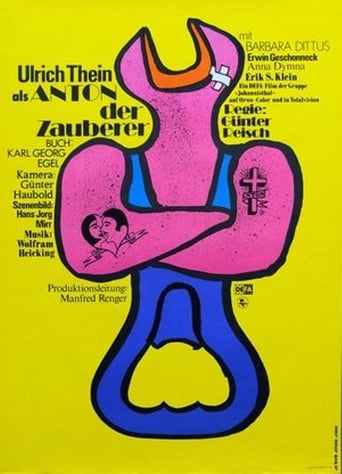 3.7
3.7A flamboyant comedy about love, work and money—revealing that the "planned" economy produced some unconventional entrepreneurial methods.
Anton the Magician
1978
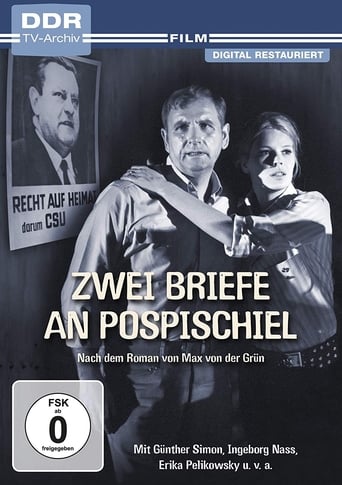 10.0
10.0Paul Pospischiel loses his job in the great colliery collapse in the Ruhr, retrains and builds a new life for himself. One day, he receives a letter from his mother, which tears him from his comfort zone and triggers a serious conflict. She has discovered the man who sent his father to a concentration camp decades ago and is therefore responsible for his death. The mother demands accountability from this man. Paul decides to confront the suspected informer and murderer...
Zwei Briefe an Pospischiel
1970
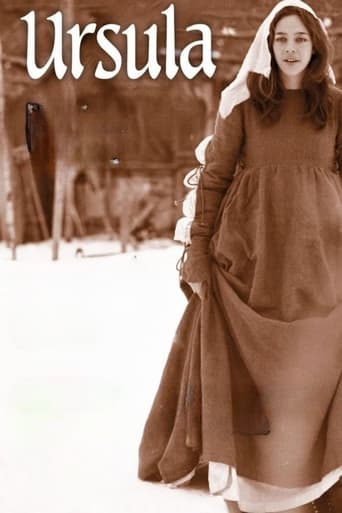 5.1
5.1Switzerland 1523. The mercenary Hansli Gyr returns with his soldiers from Italy to his home in the Oberland. They have fought for the Pope and now find a religious upheaval in Switzerland.
Ursula
1978
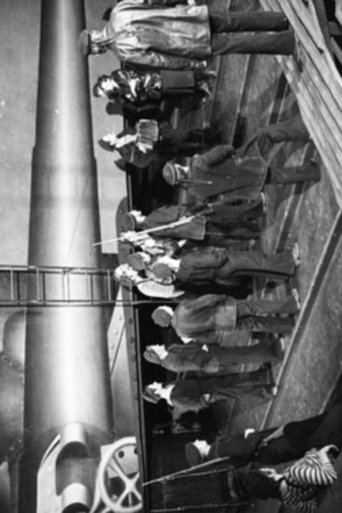 NR
NRDuring the October Revolution in 1917 the Bolshevik Party appointed a woman commissioner of the “Free Anarchist-Revolutionary Section”. This regiment emerged from an anarchist division of the ship of the line “Imperator Paul I.”
Optimistische Tragödie
1971
 7.0
7.0Maria is a record saleswoman by profession. She is lucky to have a job, because the year is 1930 and a major economic crisis has hit the world, accompanied by an army of unemployed people, especially in Germany. Maria is aware of her good fortune; in order to secure it, she has to do without many things. What business owner would employ an unmarried woman with a child in times like these? When Maria became pregnant, she, like many other women, had to become "active" and do something about this "misfortune". So she seeks "help" from a female doctor, trusting in her youth and hoping for better times when family happiness could come true for her.
Maria und der Paragraph
1974
 NR
NRUwe is a chemistry student and works as an excavator driver on various construction sites at weekends. One weekend, he meets the nursery nurse Gabi. As it turns out later, they owe their encounter to the daughter of the construction site brigadier Trunzer. But it doesn't stop at this one encounter and the resulting flirtation, as the two fall in love within a very short time. On another weekend, Uwe accompanies Gabi to visit her family. When construction site brigadier Trunzer returns from vacation a few days later, he first asks Uwe where he has been during his absence, to which Uwe replies: "I was in Honolulu - bet?".
Ich war in Honolulu – wetten?
1974
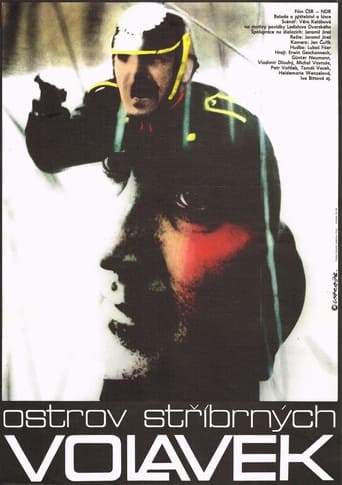 7.0
7.0The late summer of 1918. Paul, Willi and Heinrich from an age-old German town are good friends, although there is a great deal that divides them. Heinrich comes from an officer's family with an army tradition and is preparing to enter cadet college. Paul's father and grandfather are workers, and Willi, left to depend on himself, works as a hotel messenger. The last year of the war is hard for everyone, but while Paul and Willi know their own minds and do not hesitate to help the war fugitives Tony and Sepp, for Heinrich everything is more complicated.
The Island of the Silver Herons
1977
Private detective Fritsch from Munich had received a lucrative assignment: he was to obtain proof of inheritance for a Mr. Seligmann from Canada; this would bring the client a sum of five million dollars. He is therefore looking for an old document that was hidden in a valuable painting that disappeared decades ago. The starting point is a trail that leads to a town in Poland. The painting in question is said to have disappeared there in the final years of the Second World War. But the object of desire cannot be found here, and a new clue points to a grave in Frankenthal in the German state of Rhineland-Palatinate. Fretsch then found out that the painting must probably be in the villa of a personality with significant influence in the economy and politics of West Germany. Fretsch manages to get in touch with the wife of the presumed new owner of the painting and to find out the secret of his rise to multimillionaire status. But the people concerned use their resources to counterattack.
Sein letzter Fall
1976
 10.0
10.0A detailed reconstruction of the censorship case against the landmark Weimar-era communist film, Kuhle Wampe, or Who Owns the World? (1932). Directed by Slatan Dudow, the crew and cast included left-wing luminaries, such as playwright Bertolt Brecht, composer Hanns Eisler and balladeer Ernst Busch. The film was the subject of vehement disputes and was banned twice for revolutionary and communist tendencies that were perceived to threaten the state. About 230 meters of the original film fell victim to the censor’s shears. This historic censorship case was argued over the course of three sessions. Censored: Kuhle Wampe re-enacts the censorship hearings, based on original minutes and documents, as well as personal records of the case. In addition to footage from the original film, this docudrama includes original clips of Berlin in the 1920s and '30s and short testimonies, filmed in the 1970s, with some of the actors involved in the original Kuhle Wampe film production.
Censored: Kuhle Wampe
1975
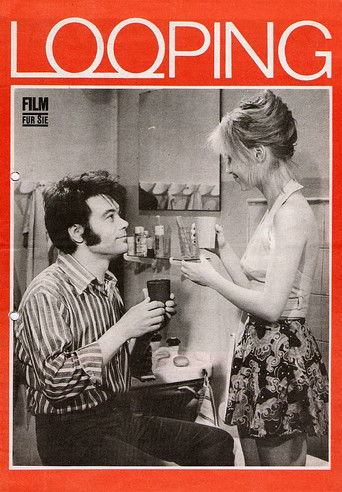 3.3
3.3The thirty year old bee is a daredevil, everything seems to work for him. But suddenly a tragic event tears him out of his carelessness. In the explosion of a carbide furnace in operation, a colleague is killed.
Looping
1975
No synopsis available yet.
Ein Mann und seine Frau
1979
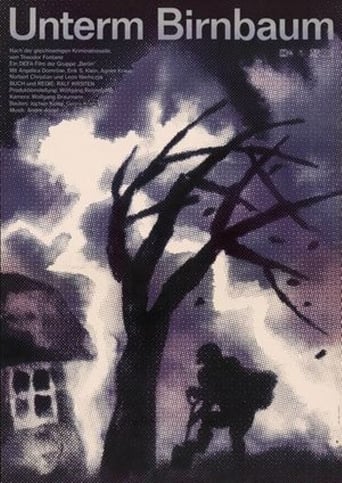 6.2
6.2Abel Hradscheck, the owner of an inn in the Oderbruch country, faces financial ruin. For this state of affairs, Ursula, his wife and former actress, is by no means free of blame. She is a "newcomer" to the area and even after eleven years in the area, still a "stranger". A Cracow company announces that a money-collector is on his way to the innkeeper. Mr. Szulski arrives and the debts are settled - with money supposedly stemming from an inheritance. The next day, Szulski departs but according to the maid and the stable-boy, behaves in a very strange manner. Soon afterwards, his carriage is discovered in the Oder River, but there is no trace of the drowned man. Hradscheck's neighbor starts casting suspicion on the innkeeper. The Counselor of Justice, who heads the investigations has the spot under the pear tree dug out. A dead body is exhumed...
Unterm Birnbaum
1973
 NR
NRHitler's seizure of power in 1933 and his rule in the years that followed are transferred to the North American criminal world of the 1930s in a parable. Gangster boss Ui needs the protection of the ruling class to achieve his goals and offers his help to their representatives. They initially hesitate, but join forces after Ui violently gains their respect. His victory is perfect and the people fall silent before the revolvers of their "protectors". Ui takes the raised hands as a sign of approval... Bertolt Brecht wrote the play in 1941 in a Finnish asylum - the premiere only took place in Stuttgart after his death in November 1958. It has been staged at the Berliner Ensemble since 1959 - Ekkehard Schall has played Ui over 500 times since then. On January 13, 1974, the play was shown for the last time, recorded in color by GDR television.
Der aufhaltsame Aufstieg des Arturo Ui
1974
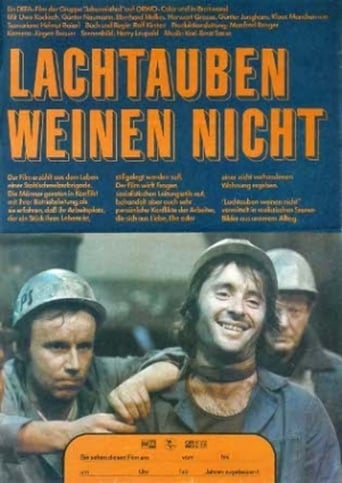 7.0
7.0The film tells the story of the smelter brigade of a steel mill whose members are connected by a strong comradeship. Among the workers are, for instance, young Rolf, whom everybody just calls "Lachtaube" and who always comes through for his co-workers, or the likable Hubert, who works as a simple smelter again after being dismissed as the head of the steel mill. Then, there is also the stubborn Manfred, who should have become a brigadier long ago because of his experience and his competence, but this privilege is refused to him because Manfred is not a party member. Ironically, it is Manfred who hears by accident about the plans of the mill to close down the old Martin furnaces – and to lay off the smelters. When the other men learn about the plans they enter the barricades for their jobs and force the plant′s management to face the workers′ demands and criticism.
Lachtauben weinen nicht
1979
Last years in the Life of german Dramatican Georg Büchner. Around the year 1830 he and his fellow students try to initiate a revolution in Germany, but they are not successful. Büchner has to leave the country and seeks exile in France and Switzerland, where he falls ill with typhus.
Addio, piccola mia
1979
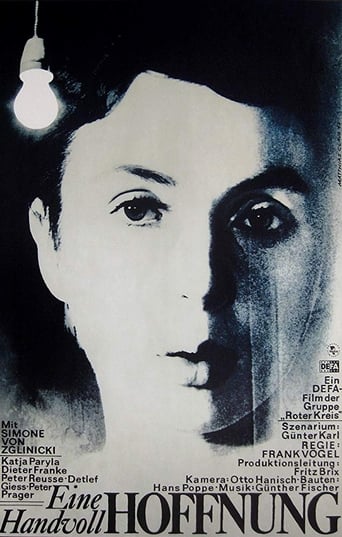 8.0
8.0Berlin at the end of the 1940s. Anneliese Weyher is working as a switchboard operator. She is living with her aunt after losing her parents in the war – a stroke of fate that has thrown the young woman off course emotionally. Indifferently, she is doing her work; her private life consists of an affair with a black-marketeer. Even when Anneliese witnesses an armed robbery, committed by infamous Wollnick and his gang, she stays lethargic and apathetic – she keeps silent instead of helping the inspector who is a friend of her aunt. It is not until Anneliese by coincidence meets her former lover, the watchmaker Kurt, that her life seems to take a positive turn.
Eine Handvoll Hoffnung
1978
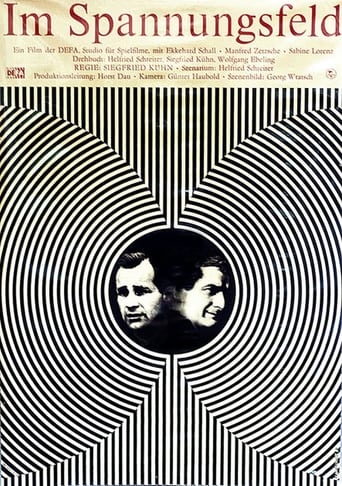 10.0
10.0Electronic data processing is an absolute must in the Information Age. Karl Hoppe, the director of a large plant, is aware of this need for modernization and hires mathematician Dr. Jochen Bernhardt to install computerized systems which are supposed to calculate ways in which the plant could be run more effectively. Dr. Bernhardt is so focused on efficiency that he forgets about the human side of work, causing his girlfriend to leave him and several dissatisfied employees to quit their jobs.
Im Spannungsfeld
1970
1960s · 8 titles
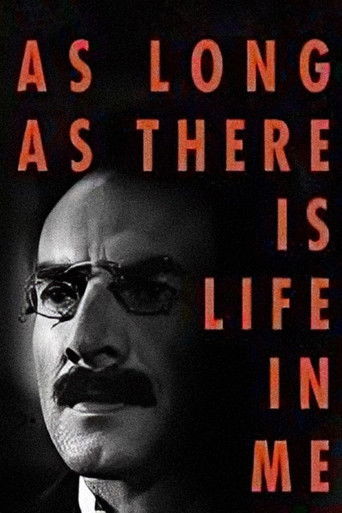 10.0
10.0This is part one of a two-part biopic about Karl Liebknecht. In 1914, Germany is arming itself for war. Karl Liebknecht, left-wing revolutionary Social Democrat, workers’ leader and a virulent antimilitarist, is one among 110 SPD members of Parliament who vote against approving war loans. From then on, he is considered un-German and a traitor to the fatherland, and his own party’s leadership turns against him. Despite threats, Liebknecht speaks up against the war and writes the manifesto “The Main Enemy Is at Home.” Even when he is arrested and charged with treason, he does not surrender.
As Long as There’s Life in Me
1965
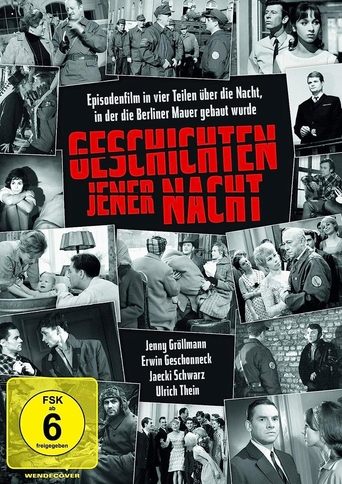 6.7
6.7Four directors - four styles - four episodes, all relating the events of a single night which has entered the history books: August 12-13, 1961. There are thousands of complex narratives connected with the frontier drawn through the middle of Berlin, and each episode relates the story of a difficult decision made on that night...
Geschichten jener Nacht
1967
 7.2
7.2During the Thirty Years' War, the camp-follower Anna Fierling, called "Mother Courage", travels the length and breadth of Europe with her covered wagon. She does not care if it's Catholics or Protestants she trades with as long as business thrives. She loses her three children as a result of the war: bold and spirited Eilif, sincere and upright Swiss Cheese and mute Katrin, who saves the children of Halle by beating a drum on a farmstead roof In wartime, the Fierling children's virtues prove to be deadly. Yet, Mother Courage, remains incorrigible. She will not have anyone "spoil the war" for her and so sets out once more after the soldiers with her wagon.
Mother Courage and Her Children
1961
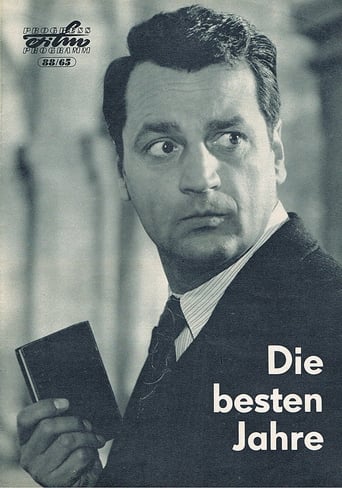 6.2
6.2In 1945, Ernst Machner returns home from the war in his mid-20s. Tuche would like him to weave for a living, but his comrades persuade him to become a young teacher instead.
The Best Years
1965
No synopsis available yet.
Adelsnest
1969
Victory and demise of the first proletarian dictatorship in the history of mankind, about the struggling, bleeding workers of Paris who enthusiastically defend their historical initiative. The little Cabet family from Rue Pigalle and their friends let the spectator participate in the action.
Die Tage der Commune
1966
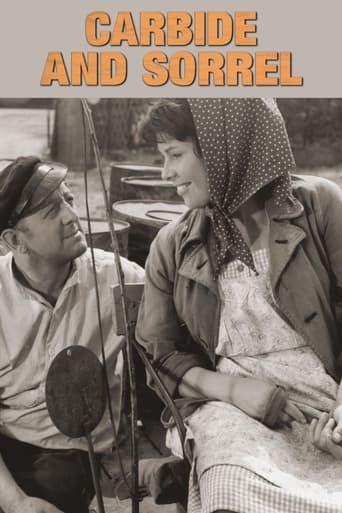 6.9
6.9After the second World War, Dresden has a lot of reconstructing to do. To get the cigarette factory he once worked for running again, Kalle has to travel to Wittenberg - the only place where carbide can be found. Once there, Kalle find himself in the unfortunate situation of having to hitchhike his way back to Dresden, transporting seven heavy barrels of carbide. However, his inventiveness and optimistic attitude help transform the grueling task into an adventurous, entertaining, and funny journey.
Carbide and Sorrel
1963
 7.0
7.0Dr. Barbara Heim, a heart surgeon, and Gunter Heim, a well-known actor, have been married for seven years. They have a six-year-old daughter. Both partners are totally taken up by their work which is physically and mentally demanding. So there is little time left for family life and the strained relations worsen and finally plunge Barbara into a crisis - shortly before their seventh wedding anniversary. At this very point a child dies in hospital, prompting Barbara to ask herself in desperation if - and for how long she can put up with the double burden of career and family. On top of this, she notices that Gunter is starting to compare her to other women.
The Seventh Year
1969
1950s · 5 titles
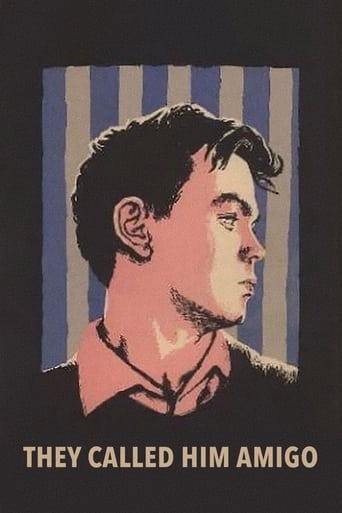 7.0
7.0A refugee from a Nazi concentration camp is discovered by some boys in WWII Berlin. They provide him with food and help him to continue his flight. Later one of the boys, the son of a communist, is charged with theft, arrested and sent to a concentration camp.
They Called Him Amigo
1959
 NR
NRA little man wants to order a warm coat from a fabric he has brought with him to a tailor's workshop in winter. He is laughed at and told that orders for this type of garment are only accepted in the summer - after all, they work to a schedule. When the customer continues to insist on his request, he is declared insane by the employees of the atelier - they are not a capitalist company after all. This infuriates him so much that a neurologist, the fire department and an ambulance are called. The doctor clarifies the situation and advises the first tailor to have a word with his assistant. "I'm normal," he claims. "I believe it," replies the doctor, "but will the others believe it...?"
Das Stacheltier - Der Wintermantel
1954
 7.0
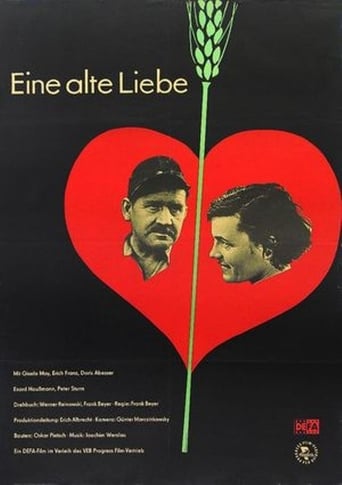
7.0Frieda and August Walkowiak celebrate their 30th wedding anniversary. However, the marriage has been in crisis for some time. August wants to spend his old age in peace, while Frieda has no intention of giving up her position as LPG chairman. The problems in the countryside are huge, collectivization is not progressing fast enough, even comrade Heinrich Rantsch is clinging to his individual farm. Frieda fights for progress, even in her private life, because not only her burden but also her higher position is a thorn in her husband's side. During the wedding anniversary celebrations, Frieda is called to the LPG. This is the cause of the family quarrel that has been in the air for a long time. August demands her resignation. In vain - and so he moves in with Rantsch. Their daughter Helga also leaves the house because of the tensions. Frieda collapses. When she is in hospital, August comes to his senses.
An Old Love
1959
No synopsis available yet.
Katzgraben
1957
No synopsis available yet.
Mutter Courage und ihre Kinder
1957
Series credits
6.2Polizeiruf 110 is a long-running German language detective television series. The first episode was broadcast 27 June 1971 in the German Democratic Republic, and after the dissolution of Fernsehen der DDR the series was picked up by ARD. It was originally created as a counterpart to the West German series Tatort, and quickly became a public favorite.
Polizeiruf 110
1971
6.2Polizeiruf 110 is a long-running German language detective television series. The first episode was broadcast 27 June 1971 in the German Democratic Republic, and after the dissolution of Fernsehen der DDR the series was picked up by ARD. It was originally created as a counterpart to the West German series Tatort, and quickly became a public favorite.
Polizeiruf 110
1971
6.2Polizeiruf 110 is a long-running German language detective television series. The first episode was broadcast 27 June 1971 in the German Democratic Republic, and after the dissolution of Fernsehen der DDR the series was picked up by ARD. It was originally created as a counterpart to the West German series Tatort, and quickly became a public favorite.
Polizeiruf 110
1971
6.2Polizeiruf 110 is a long-running German language detective television series. The first episode was broadcast 27 June 1971 in the German Democratic Republic, and after the dissolution of Fernsehen der DDR the series was picked up by ARD. It was originally created as a counterpart to the West German series Tatort, and quickly became a public favorite.
Polizeiruf 110
1971
6.2Polizeiruf 110 is a long-running German language detective television series. The first episode was broadcast 27 June 1971 in the German Democratic Republic, and after the dissolution of Fernsehen der DDR the series was picked up by ARD. It was originally created as a counterpart to the West German series Tatort, and quickly became a public favorite.
Polizeiruf 110
1971
3.8Der Staatsanwalt hat das Wort was an East German television series.
Der Staatsanwalt hat das Wort
1965
7.5The film concentrates on the last days of the German navy during World War II.
Rottenknechte
1971
4.3Large-scale, five-part film about the relationship between two men caught between friendship, rivalry and hatred during the first decades of GDR in the countryside.
Daniel Druskat
1976
8.0The movie begins by showing how Schneller takes up the profession of a teacher out of love for the children. When the First World War begins, he becomes a 'volunteer officer' and slowly the political situation begins to shape him. He develops into a revolutionary fighter.
Ernst Schneller
1977