
Directing
Harry Smith
Born — Died
1923-05-29 — 1991-11-27
Place of birth
Portland, Oregon, USA
Known for
Directing
Credits
35 titles
Harry Everett Smith (May 29, 1923 in Portland, Oregon – November 27, 1991 in New York City) was a visual artist, experimental filmmaker, record collector, bohemian, mystic, and largely self-taught student of anthropology. Smith was an important figure in the Beat Generation scene in New York City, and his activities, such as his use of mind-altering substances and interest in esoteric spirituality, anticipated aspects of the Hippie movement. Besides his films, Smith is widely known for his influential "Anthology of American Folk Music," drawn from his extensive collection of out-of-print commercial 78 rpm recordings. Throughout his life Smith was an inveterate collector. In addition to reco…
Known for
 NR
NRScenes from the life and work at Anthology Film Archives. Much of the footage in this video was shot by Auguste Varkalis.
Laboratorium Anthology
1999
 7.8
7.8A compilation of over 30 years of private home movie footage shot by Lithuanian-American avant-garde director Jonas Mekas, assembled by Mekas "purely by chance", without concern for chronological order.
As I Was Moving Ahead Occasionally I Saw Brief Glimpses of Beauty
2000
 10.0
10.0This exhibition focuses on Jonas Mekas’ 365 Day Project, a succession of films and videos in calendar form. Every day as of January 1st, 2007 and for an entire year, as indicated in the title, a large public (the artist's friends, as well as unknowns) were invited to view a diary of short films of various lengths (from one to twenty minutes) on the Internet. A movie was posted each day, adding to the previously posted pieces, resulting altogether in nearly thirty-eight hours of moving images.
365 Day Project
2007
 7.3
7.3Also known as Walden, Jonas Mekas’s first diary film is a six-reel chronicle of his life in 1960s New York, interweaving moments with family, friends, lovers, and artistic idols. Blending everyday encounters with portraits of the avant-garde art scene, it forms an epic, personal meditation on community, creativity, and the passage of time.
Diaries, Notes, and Sketches
1968
 7.0
7.0Jonas Mekas assembles 160 portraits, appearances, and fleeting sketches of underground and independent filmmakers captured between 1955 and 1996. Fast-paced and archival in spirit, the film celebrates the avant-garde as its own “nation of cinema,” a vital community existing outside the dominance of commercial film.
Birth of a Nation
1997
 8.0
8.0The films were made between 1964 and 1966 at Warhol's Factory studio in New York City. Subjects were captured in stark relief by a strong key light, and filmed by Warhol with his stationary 16mm Bolex camera on silent, black and white, 100-foot rolls of film at 24 frames per second. The resulting two-and-a-half-minute film reels were then screened in 'slow motion' at 16 frames per second.
Andy Warhol Screen Tests
1965
Film credits
2000s · 2 titles
7.8A compilation of over 30 years of private home movie footage shot by Lithuanian-American avant-garde director Jonas Mekas, assembled by Mekas "purely by chance", without concern for chronological order.
As I Was Moving Ahead Occasionally I Saw Brief Glimpses of Beauty
2000
10.0This exhibition focuses on Jonas Mekas’ 365 Day Project, a succession of films and videos in calendar form. Every day as of January 1st, 2007 and for an entire year, as indicated in the title, a large public (the artist's friends, as well as unknowns) were invited to view a diary of short films of various lengths (from one to twenty minutes) on the Internet. A movie was posted each day, adding to the previously posted pieces, resulting altogether in nearly thirty-eight hours of moving images.
365 Day Project
2007
1990s · 2 titles
NRScenes from the life and work at Anthology Film Archives. Much of the footage in this video was shot by Auguste Varkalis.
Laboratorium Anthology
1999
7.0Jonas Mekas assembles 160 portraits, appearances, and fleeting sketches of underground and independent filmmakers captured between 1955 and 1996. Fast-paced and archival in spirit, the film celebrates the avant-garde as its own “nation of cinema,” a vital community existing outside the dominance of commercial film.
Birth of a Nation
1997
1970s · 3 titles
April 19 nite of Ricky visit but not of Ricky. 1. Jose Soltero & his assistant Alicia from Argentina. I do teaching, they tape. 2. Harry arrives and Sandy. She & I tape. 3. Harry does his Eurthmy(?) thing & gets hungry (medium rare quickly). Best part is we're double taping (Me on other camera) I talk about Kenneth Anger's curse. Good.
Ricky Leacock Visit, evening, April 19, 1971
1971
Jonas Mekas visit. Harry comes by before Ricky visit. 1. 12 p.m. April 15th -- Jonas dares to come by but won't talk. I tape him not with set up -- (as I planned) but with camera in my arms I sneak a few shots. 2. Ricky visit RED 1.
Ricky Leacock Visit, April 15, 1971
1971
 NR
NRA pilot for a documentary film capturing life at the Chelsea Hotel in the early 1970s. The film was never finished due to budget issues. 'A regrettable folly of my youth,' said the director, Albert Scopin.
Chelsea Hotel
1970
1960s · 3 titles
7.3Also known as Walden, Jonas Mekas’s first diary film is a six-reel chronicle of his life in 1960s New York, interweaving moments with family, friends, lovers, and artistic idols. Blending everyday encounters with portraits of the avant-garde art scene, it forms an epic, personal meditation on community, creativity, and the passage of time.
Diaries, Notes, and Sketches
1968
8.0The films were made between 1964 and 1966 at Warhol's Factory studio in New York City. Subjects were captured in stark relief by a strong key light, and filmed by Warhol with his stationary 16mm Bolex camera on silent, black and white, 100-foot rolls of film at 24 frames per second. The resulting two-and-a-half-minute film reels were then screened in 'slow motion' at 16 frames per second.
Andy Warhol Screen Tests
1965
 NR
NRHarry Smith’s screen test by Andy Warhol.
Screen Test: Harry Smith
1964
Behind the camera
 5.7
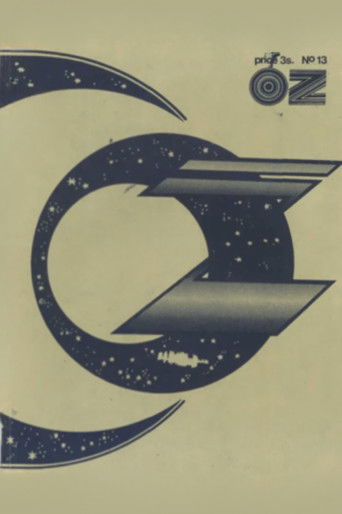
5.7Unfinished commercial adaptation of L. Frank Baum's The Wonderful Wizard of Oz which was shelved after Smith's close friend, the executive producer and primary financial backer Arthur Young died of cancer. Portions released as No. 16, 19, and 20. From the reported three to six hours of camera test footage (rushes) only ca. 15 minutes, in the form of non-color-corrected rushes, is known to be extant. The only completed bit is The Approach to Emerald City, a 5 (other sources say 9 resp. 12) minute sequence set to music from Charles Gounod's Faust.
No. 13: Oz
1962
 NR
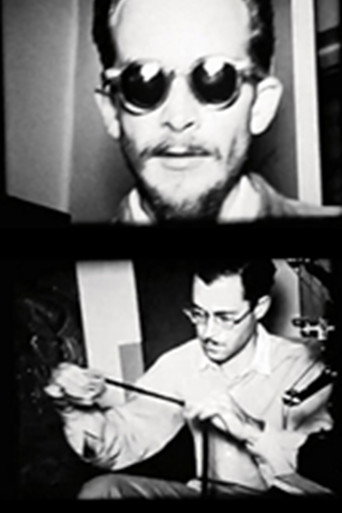
NRA home movie from 1951 called Autobiography, shot by Belson and Smith in Belson’s North Beach apartment, depicts the classic Beat pad with Smith and Belson’s paintings on the wall, a 16mm projector, and appearances by filmmakers Hy Hirsh and Chris Maclaine and poets Philip Lamantia, Weldon Kees, and Gerd Stern.
Autobiography
1951
 5.6
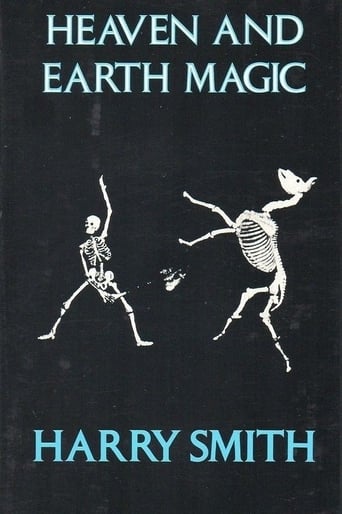
5.6The first part depicts the heroine's toothache consequent to the loss of a very valuable watermelon, her dentistry and transportation to heaven. Next follows an elaborate exposition of the heavenly land, in terms of Israel and Montreal. The second part depicts the return to Earth from being eaten by Max Müller on the day Edward VII dedicated the Great Sewer of London.
Heaven and Earth Magic
1962
5.6The first part depicts the heroine's toothache consequent to the loss of a very valuable watermelon, her dentistry and transportation to heaven. Next follows an elaborate exposition of the heavenly land, in terms of Israel and Montreal. The second part depicts the return to Earth from being eaten by Max Müller on the day Edward VII dedicated the Great Sewer of London.
Heaven and Earth Magic
1962
 6.3
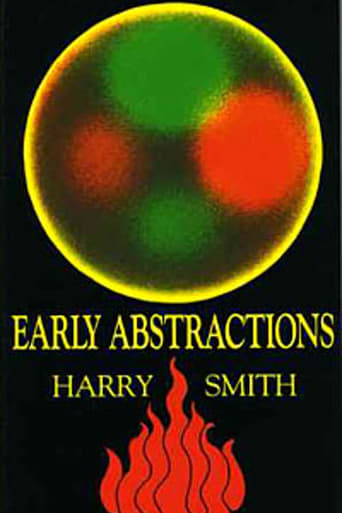
6.3Early Abstractions is a collection of seven short animated films created by Harry Everett Smith between 1939 and 1956. Each film is between two and six minutes long, and is named according to the chronological order in which it was made. The collection includes Numbers 1–5, 7, and 10.
Early Abstractions
1965
Harry Smith’s final film; an epic four-screen projection. Smith worked on this cinematic transformation of Kurt Weill and Bertolt Brecht’s opera Rise and Fall of the City of Mahagonny (1929) for over ten years and considered it his magnum opus. The film was shot from 1970 to 1972 and edited for the next eight years. The “program” of the film is meticulous, with a complex structure and order. The Weill opera is transformed into a numerological and symbolic system. Images in the film are divided into categories— portraits, animation, symbols and nature— to form the palindrome P.A.S.A.N.A.S.A.P. The film contains invaluable cameos of important avant-garde figures such as Allen Ginsberg, Patti Smith, and Jonas Mekas, intercut with installation pieces from Robert Mapplethorpe’s studio, New York City landmarks of the era, and Smith’s visionary animation.
No. 18: Mahagonny
1980
 NR
NRFilm No. 19 US, 1980, 35mm, 12.5 min.
No. 19
1980
 6.1
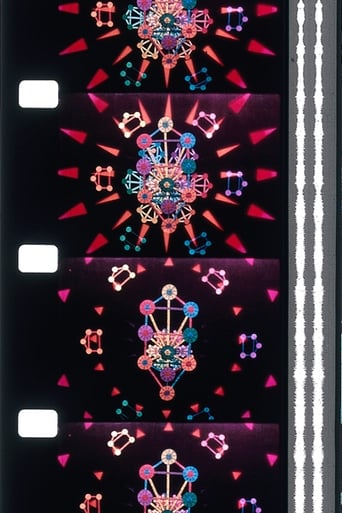
6.1Study for Film No. 11: Mirror Animations (1957). Harry Smith described the film as, “An exposition of Buddhism and the Kaballah in the form of a collage. The final scene shows Agaric mushrooms growing on the moon while the Hero and Heroine row by on a cerebrum”.
No. 10: Mirror Animations
1956
 5.2
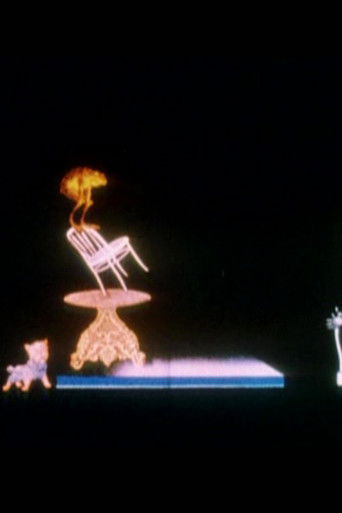
5.2The Tin Woodman, framed by light bulbs, does a little dance, leaps and retrieves his axe from outside the frame, chops down a tree that turns into various objects, grabs a heart emblem from the corner, and goes to the Emerald City at night with Toto. He goes to the edge of a cliff, where he meats an Asian spirit who gives him a heart shape that becomes a kite that hooks to him with a cane. This is followed by approximately ten minutes of kaleidoscopic images, including a man's hands, a dancing girl, and a cutout of Krishna.
No. 16: Oz: The Tin Woodman's Dream
1967
 NR
NRIn 1980, Harry Smith combined his two Wizard of Oz-related films (FILM NO. 16 and 19) and called the new work FILM NO. 20: FRAGMENTS OF A FAITH FORGOTTEN. The film was to premiere accompanied by a live score at an Anthology fundraising event at Alice Tully Hall, but, unfortunately, the event was canceled and it never screened. – Anthology Film Archives
Number 20: Fragments of a Faith Forgotten
1980
“Superimposed photographs of Mr. Fleischman’s butcher shop in New York, and the Kiowa around Anadarko, Oklahoma–with Cognate Material. The strip is dark at the beginning and end, light in the middle, and is structured 122333221. I honor it the most of my films, otherwise a not very popular one before 1972. If the exciter lamp blows, play Bert Brecht’s Mahogany.”– Harry Smith
No. 14: Late Superimpositions
1965
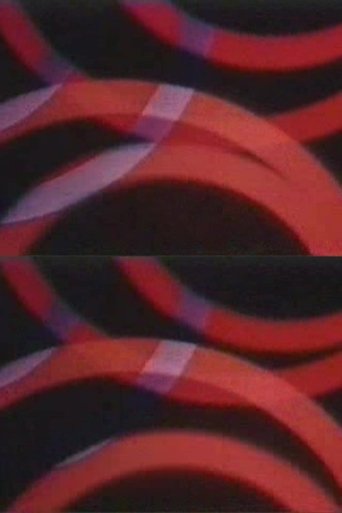 5.5
5.5Experimental short. 16 mm, color, silent, 2:30 or 6 min. Sequel to No. 4.
No. 5: Circular Tensions (Homage to Oskar Fischinger)
1949
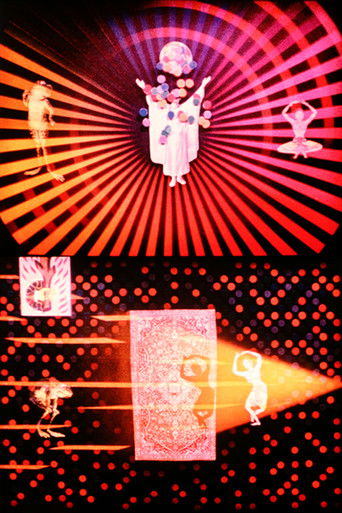 5.8
5.8Cut up animation and collage technique by Harry Smith synchronized to the jazz of Thelonious Monk's Mysterioso.
No. 11: Mirror Animations
1956
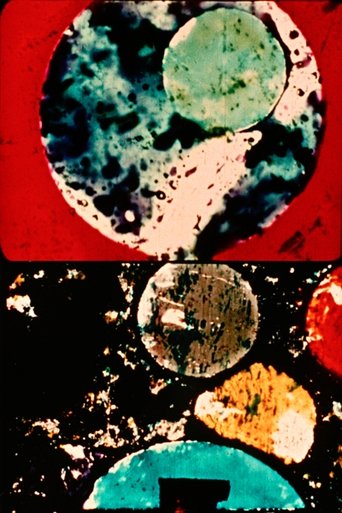 5.8
5.8Hand-painted 35 mm stock photographed in 16 mm, color, 2:15 or 10 min. Initially intended to be screened with and synchronized to Dizzy Gillespie's Algo Bueno. This film "takes place either inside the sun or in... Switzerland" according to Smith. To produce this film he used a technique that involved cutting stickers of the type used to reinforce the holes in 3-ring binder paper. These were applied to 16 mm movie film and used like a stencil. Layers of vaseline and paint were used to color each frame in this manner. The effect is hypnotic, psychedelic and is something like a visual music.
No. 2: Message From the Sun
1947
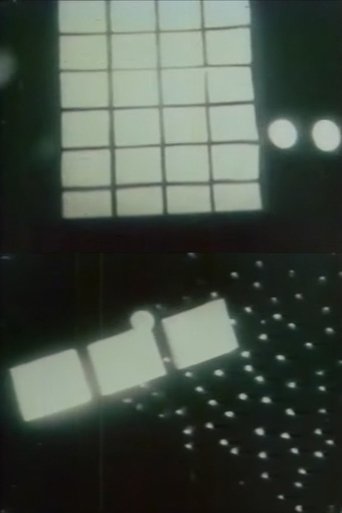 5.1
5.116 mm, black & white and color, 2:16 or 6 min. Silent though possibly intended to be screened with Dizzy Gillespie's Manteca. The film starts with a color sequence showing Smith's painting Manteca (ca. 1950) with which he tried to subjectively depict Gillespie's song, every brushstroke representing a music note. The film concludes with black & white superimpositions.
No. 4: Fast Track
1947
 NR
NRFeatures Thelonious Monk's Misterioso. Extended version of No. 11 printed forward-backward-forward.
No. 17: Mirror Animations
1979
16 mm, color, silent or mono, 1:30 or 20 min. Untraced red-green anaglyph 3-D film.
No. 6
1950
 5.5
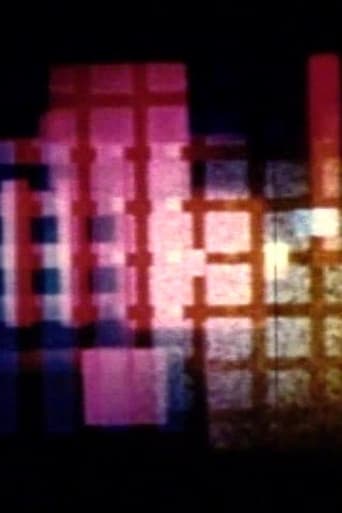
5.516 mm, color, silent, 5:25 or 15 min. "Optically printed Pythagoreanism in four movements supported on squares, circles, grillwork, and triangles with an interlude concerning an experiment."
No. 7: Color Study
1951
16 mm, color, 10 min. Untraced collage.
No. 9
1954
 5.9
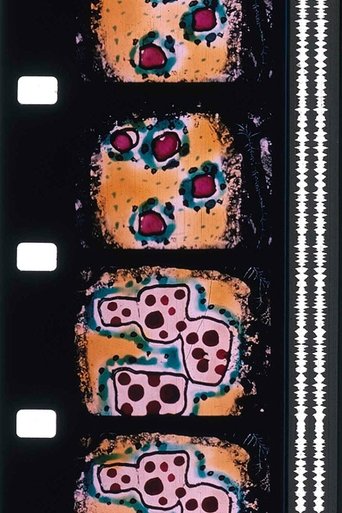
5.9Hand-painted 35 mm stock photographed in 16 mm, color, silent, 2:20 or 5 min. Initially intended to be screened with and synchronized to Dizzy Gillespie's Manteca or Guarachi Guaro. "...the history of the geologic period reduced to orgasm length."
No. 1: A Strange Dream
1939
 8.0
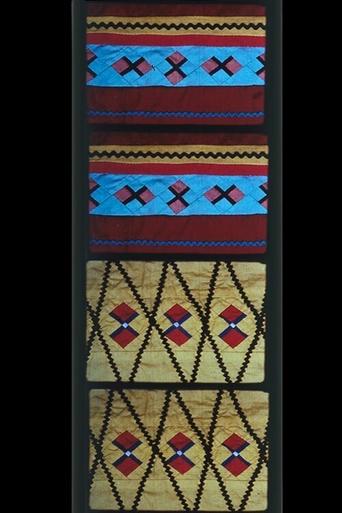
8.016 mm, color, silent, 10 min. Animation of Seminole patchwork.
No. 15: Untitled Animation of Seminole Patchwork Film
1965
 5.8
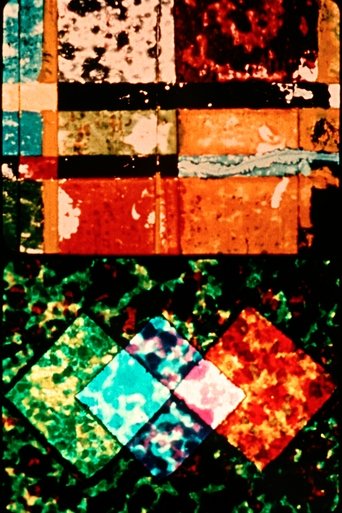
5.8Hand-painted 35 mm stock photographed in 16 mm, color, 3:20 or 10 min. Reportedly cut down from about 30 min. Initially intended to be screened with and synchronized to Dizzy Gillespie's Guarachi Guaro or Manteca. "Batiked animation made of dead squares...".
No. 3: Interwoven
1947
16 mm, black & white, silent, 5 min. Untraced collage. Later expanded to No. 12.
No. 8
1954