
Known for
 6.0
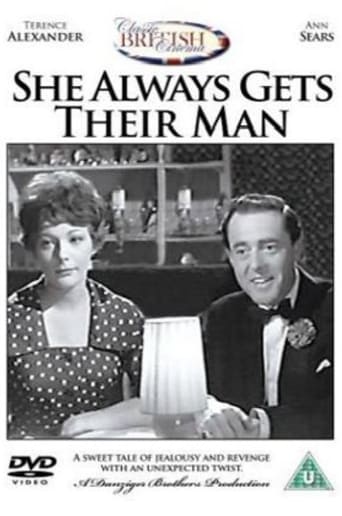
6.0The longtime tenants at a London women's hotel decide to take action when the newest resident, a sexy young flirt, begins stealing everyone's boyfriends. Director Godfrey Grayson's 1962 British comedy stars Ann Sears, Sally Smith, Avril Edgar, Terence Alexander, Bernice Swanson, William Fox and Michael Balfour.
She Always Gets Their Man
1962
 NR
NRIn the 1960s, as West Indians, Pakistanis, Indians and Africans began to arrive in Britain from former British colonies, race became a political issue. In the 1964 General Election, a swing to the Conservative Party in Labour’s Smethwick constituency and Enoch Powell’s “rivers of blood” speech on immigration four years later put attitudes towards ethnic minorities on the political and social agenda. In One British Family, made in 1974, John Pilger focuses on Gus and Julie Gill, who arrived in Britain from Trinidad in 1961. They now had three children and their own house on Tyneside, where they were the only black family in the street. “They take less from the social services than the equivalent white families,” says Pilger. “They’re not on any council’s housing lists and they’ve never been out of work.”
One British Family
1974
 NR
NRIn A Nod and a Wink, John Pilger demonstrates how the charge of conspiracy is being used as a means of political suppression in Britain, comparing this with statutes in police states such as Brazil and the Soviet Union, which use “a vague law” to silence and imprison people for their political or religious views.
A Nod and a Wink
1975
 NR
NRChildren growing up in poverty is the subject of Smashing Kids, 1975. John Pilger meets the Hopwoods, of Liverpool, where hunger has become a way of life during father Harry’s unemployment as his family of five survive on £1 a day. The wallpaper in their council house is torn and there are no clothes in the couple’s wardrobe and no sheets on their bed. The family have never had a holiday and Harry tells Pilger: “It would be easier to serve time than to put up with this.”
Smashing Kids
1975
Follows a beatnik artist who becomes a top fashion designer.
Design for Loving
1962
 NR
NRDocumentary from 1975 on the plight of mentally handicapped children held in appalling circumstances in the UK.
Nobody's Children
1975
Behind the camera
6.0The longtime tenants at a London women's hotel decide to take action when the newest resident, a sexy young flirt, begins stealing everyone's boyfriends. Director Godfrey Grayson's 1962 British comedy stars Ann Sears, Sally Smith, Avril Edgar, Terence Alexander, Bernice Swanson, William Fox and Michael Balfour.
She Always Gets Their Man
1962
NRIn the 1960s, as West Indians, Pakistanis, Indians and Africans began to arrive in Britain from former British colonies, race became a political issue. In the 1964 General Election, a swing to the Conservative Party in Labour’s Smethwick constituency and Enoch Powell’s “rivers of blood” speech on immigration four years later put attitudes towards ethnic minorities on the political and social agenda. In One British Family, made in 1974, John Pilger focuses on Gus and Julie Gill, who arrived in Britain from Trinidad in 1961. They now had three children and their own house on Tyneside, where they were the only black family in the street. “They take less from the social services than the equivalent white families,” says Pilger. “They’re not on any council’s housing lists and they’ve never been out of work.”
One British Family
1974
NRIn A Nod and a Wink, John Pilger demonstrates how the charge of conspiracy is being used as a means of political suppression in Britain, comparing this with statutes in police states such as Brazil and the Soviet Union, which use “a vague law” to silence and imprison people for their political or religious views.
A Nod and a Wink
1975
NRIn A Nod and a Wink, John Pilger demonstrates how the charge of conspiracy is being used as a means of political suppression in Britain, comparing this with statutes in police states such as Brazil and the Soviet Union, which use “a vague law” to silence and imprison people for their political or religious views.
A Nod and a Wink
1975
NRChildren growing up in poverty is the subject of Smashing Kids, 1975. John Pilger meets the Hopwoods, of Liverpool, where hunger has become a way of life during father Harry’s unemployment as his family of five survive on £1 a day. The wallpaper in their council house is torn and there are no clothes in the couple’s wardrobe and no sheets on their bed. The family have never had a holiday and Harry tells Pilger: “It would be easier to serve time than to put up with this.”
Smashing Kids
1975
NRChildren growing up in poverty is the subject of Smashing Kids, 1975. John Pilger meets the Hopwoods, of Liverpool, where hunger has become a way of life during father Harry’s unemployment as his family of five survive on £1 a day. The wallpaper in their council house is torn and there are no clothes in the couple’s wardrobe and no sheets on their bed. The family have never had a holiday and Harry tells Pilger: “It would be easier to serve time than to put up with this.”
Smashing Kids
1975
Follows a beatnik artist who becomes a top fashion designer.
Design for Loving
1962
NRDocumentary from 1975 on the plight of mentally handicapped children held in appalling circumstances in the UK.
Nobody's Children
1975
NRDocumentary from 1975 on the plight of mentally handicapped children held in appalling circumstances in the UK.
Nobody's Children
1975
 NR
NRIn 1974, when famine hit the country, Pilger returned to Bangladesh to make An Unfashionable Tragedy. It contains harrowing scenes of starving children but also puts the horrors into a geopolitical context. This is Pilger’s first documentary to highlight his theme of expendability, whereby countries with no oil, strategic value or military power are considered unimportant to the superpowers. Bangladesh, he points out, is not one of the United States’s “client states” on a priority list to receive its surplus food.
An Unfashionable Tragedy
1975
NRIn 1974, when famine hit the country, Pilger returned to Bangladesh to make An Unfashionable Tragedy. It contains harrowing scenes of starving children but also puts the horrors into a geopolitical context. This is Pilger’s first documentary to highlight his theme of expendability, whereby countries with no oil, strategic value or military power are considered unimportant to the superpowers. Bangladesh, he points out, is not one of the United States’s “client states” on a priority list to receive its surplus food.
An Unfashionable Tragedy
1975
 NR
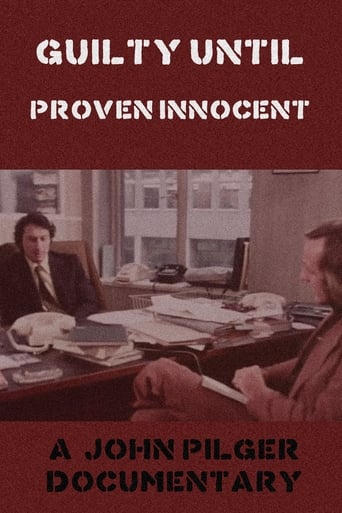
NRDocumentary about innocent people confined to prison on remand. John Pilger reports that more than half of the 500,000 people remanded in custody by magistrates each year are eventually found not guilty, fined or, as in the case of “Helen”, given a conditional discharge. Helen, charged with stealing a pair of slippers but with no previous convictions, recalls her day in Holloway Prison, London, which started at 7am when she joined 96 other prisoners in a rush to use four toilets whose conditions were “disgusting”. Between then and lunchtime, all prisoners were locked up, with just half-an-hour’s walk round a large yard for exercise. Lunch was eaten in cells, with tea at 3.30pm, before they were locked up until the following morning.
Guilty Until Proven Innocent
1974
The initial stages of the construction of an oil refinery on the Isle of Grain, Kent, and its impact on the local farming community.
The Island
1952
The initial stages of the construction of an oil refinery on the Isle of Grain, Kent, and its impact on the local farming community.
The Island
1952
 NR
NR1976. A candid look at the highs and lows of Australian society.
Pilger in Australia
1976
NR1976. A candid look at the highs and lows of Australian society.
Pilger in Australia
1976