
Directing
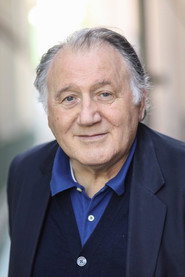
Peter Weibel
Born — Died
1944-03-05 — 2023-03-01
Place of birth
Odessa, Ukrainian SSR, USSR [now Ukraine]
Known for
Directing
Credits
40 titles
Peter Weibel (Austrian German: [ˈvaɪbl], German: [ˈvaɪbəl]; 5 March 1944 – 1 March 2023) was an Austrian post-conceptual artist, curator, and new media theoretician. He started out in 1964 as a visual poet, then later moved from the page to the screen within the sense of post-structuralist methodology. His work includes virtual reality and other digital art forms. From 1999 he was the director of the ZKM Center for Art and Media Karlsruhe.
Known for
No synopsis available yet.
Club 2
1976
No synopsis available yet.
Phettbergs nette Leit Show
1994
 5.5
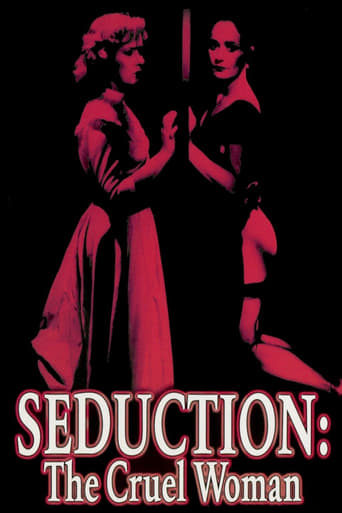
5.5Wanda, a dominatrix who runs an S&M gallery on the Hamburg waterfront, must choose between her lesbian lover and an American trainee.
Seduction: The Cruel Woman
1986
 NR
NRHome movies shot on Super 8mm by W+B Hein over 10 years.
Home Movies 1971-81
1985
 NR
NR"This video film shows indecency in its modern form. While peddling naked female flesh was considered indecent in the past, we can see by the examples of today´s star athletes that skin full of advertising sells better. The same applies to politicians, of course, though in a more subtle way. Advertising on skin as the new indecency! I consider this film to be a continuation of my previous work with the body as a vehicle for social codes. While in the past it was religion that dictated male and female behaviour, which was also expressed in their physical appearance, business has now assumed this role. Business dictates physical behaviour, physical pressure in its most direct form, and even sets standards for how our bodies are to be represented. Religion no longer prescribes morality, that is now done by the global power of business, with its products and codes. Morality has found a new patron." (Valie Export)
Lust
1988
 6.7
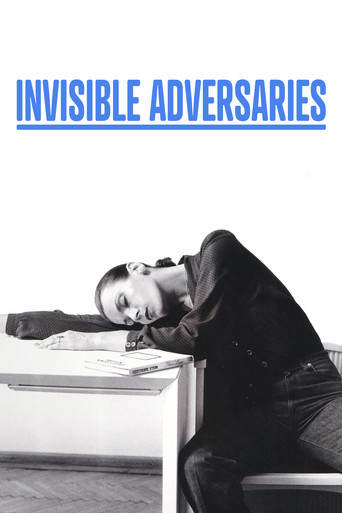
6.7Set in contemporary Vienna, the film involves a photographer, Anna, who discovers that extraterrestrial beings are colonizing the minds of her fellow citizens by raising the human aggression quotient. The outer world immediately becomes disjointed, yet the inner world does too, as Anna and her lover, Peter, try to hang onto their deteriorating relationship.
Invisible Adversaries
1977
Film credits
1990s · 2 titles
Gustav Klimt in search of the artwork of the present. Using Klimt's paintings, "Quiet Pond" presents reasons why kitsch is art, art is kitsch, and art is art or possibly not. Who can know and who can judge?
Stille Weiher
1998
After the fall of the Berlin wall, much changed in Yugoslavia, that is now ex-Yugoslavia; a post industrial, post modern, post national, post colonial, post structural society, that can be perhaps summarized in the concept of post socialism? The disintegration of the concept of ideology means that notions are no longer clear. Because we think that we are outside an ideological context, but perhaps we ourselves are the centre of the ideology. It is this idea that corresponds with the thoughts about post socialism in the nineties, and probably the post ideological society of late capitalism as well. The end of the ideological period then perhaps seems imminent. These thoughts are considered in this philosophical media reflection, based on documentary fragments, statements by Peter Weibel and Slavoj Zizek and the works of three artists: Mladen Stilinovic (Zagreb), "Kasimir Malevich" (pseudonym, Belgrade) and IRWIN (Ljubljana).
Post-Socialism+Retro Avantgarde+Irwin
1997
1980s · 5 titles
5.5Wanda, a dominatrix who runs an S&M gallery on the Hamburg waterfront, must choose between her lesbian lover and an American trainee.
Seduction: The Cruel Woman
1986
NRHome movies shot on Super 8mm by W+B Hein over 10 years.
Home Movies 1971-81
1985
NR"This video film shows indecency in its modern form. While peddling naked female flesh was considered indecent in the past, we can see by the examples of today´s star athletes that skin full of advertising sells better. The same applies to politicians, of course, though in a more subtle way. Advertising on skin as the new indecency! I consider this film to be a continuation of my previous work with the body as a vehicle for social codes. While in the past it was religion that dictated male and female behaviour, which was also expressed in their physical appearance, business has now assumed this role. Business dictates physical behaviour, physical pressure in its most direct form, and even sets standards for how our bodies are to be represented. Religion no longer prescribes morality, that is now done by the global power of business, with its products and codes. Morality has found a new patron." (Valie Export)
Lust
1988
 5.5
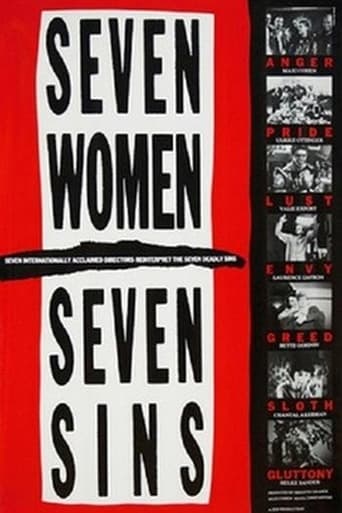
5.5Seven Women, Seven Sins (1986) represents a quintessential moment in film history. The women filmmakers invited to direct for the seven sins were amongst the world's most renown: Helke Sander (Gluttony), Bette Gordon (Greed), Maxi Cohen (Anger), Chantal Akerman (Sloth), Valie Export (Lust), Laurence Gavron (Envy), and Ulrike Ottinger (Pride). Each filmmaker had the liberty of choosing a sin to interpret as they wished. The final film reflected this diversity, including traditional narrative fiction, experimental video, a musical, a radical documentary, and was delivered in multiple formats from 16, super 16, video and 35mm.
Seven Women, Seven Sins
1986
 4.4
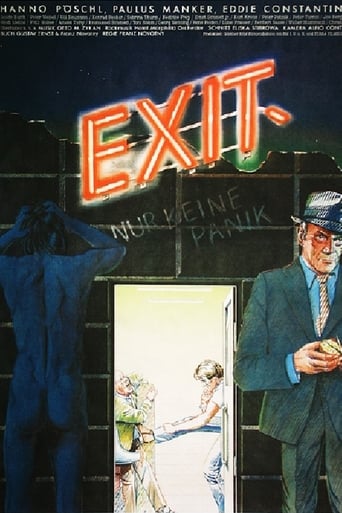
4.4A guy having sex with a woman on a rooftop – just to get her coffee-machine.
Exit... But No Panic
1980
1970s · 2 titles
6.7Set in contemporary Vienna, the film involves a photographer, Anna, who discovers that extraterrestrial beings are colonizing the minds of her fellow citizens by raising the human aggression quotient. The outer world immediately becomes disjointed, yet the inner world does too, as Anna and her lover, Peter, try to hang onto their deteriorating relationship.
Invisible Adversaries
1977
 7.0
7.0This film is a kind of anthology about Vienna, from the invention of film to the present day. The aim is to break down the usual clichéd "image of Vienna" such as that found in the traditional "Vienna Film" by juxtaposing documentary footage, newly shot material and subjective sequences created by various artists. Individual, self-contained sections of the film gain new meaning within the context of historical material. Familiar sites appear estranged when edited together with historical scenes. Other scenes appear like a persiflage or satirical. The film does not incorporate any commentary whatsoever. It is a collage of diverse materials aimed at conveying a distanced image of Vienna to the viewer
ViennaFilm 1896-1976
1977
1960s · 2 titles
 10.0
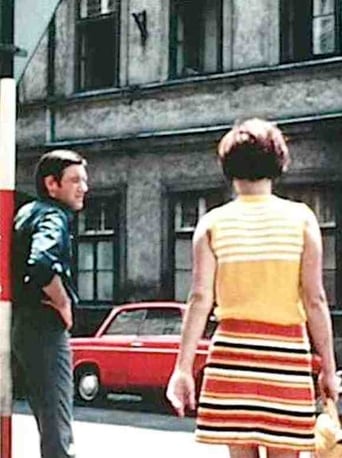
10.0Documentary and pseudo-documentary procedures were filmed simultaneously by two cameras from different viewpoints. The material was then divided into phases of movement. In the montage each phase was doubled. The techniques used in this process vary. Also the sound was doubled, again using different techniques. Two realities, differently perceived according to the conditions of this film, were edited into one synthetic reality, where everything is repeated. This doubling up destroys the postulate: identity of copy and image.
Hernals
1967
 NR
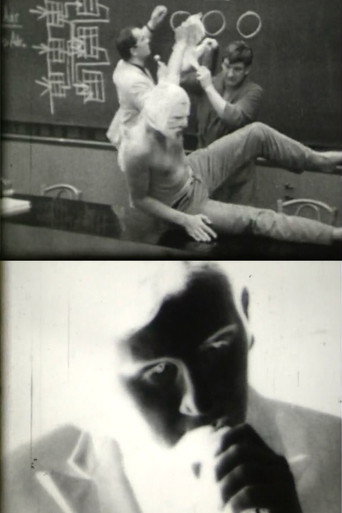
NR‘Kunst & Revolution is a documentation on the famous action known as the “filthy uni mess”, which led to a jury court trial. I only had a few metres of film with me and they were quickly spent, but still the film gives one a rough impression of the events. As a whole mythology quickly arose around the event, I altered the material to counteract this effect (through repetition, and adding other material, for instance from a film about keeping dogs, and my own leftover footage from the Muehl action number 54 ‘Im Freudenauer Wasser’).’ In film 16 of his anthology Ernst Schmidt Jr. documented the actions of Günter Brus, Otto Muehl, Peter Weibel and Oswald Wiener.
Kunst & Revolution
1968
Series credits
Behind the camera
6.7Set in contemporary Vienna, the film involves a photographer, Anna, who discovers that extraterrestrial beings are colonizing the minds of her fellow citizens by raising the human aggression quotient. The outer world immediately becomes disjointed, yet the inner world does too, as Anna and her lover, Peter, try to hang onto their deteriorating relationship.
Invisible Adversaries
1977
"If I were the second son of my mother and father I would have been my brother. Thus, I am brother, I am brother of the second son of my mother and father, although what disturbs me is the possibility that I could have been the first son of my mother and of another father. Then I would be my own stepbrother or my own stepsister..." - Peter Weibel
Parenthetical Identity
1974
Because of its exclusive reference to meaning, Fingerprint is not only language for world, the reproduction of objects and symbol, but also language in and of itself and object. The film was produced by means of pressure rather than exposure - film as the trace of a touch rather than light. (Peter Weibel)
Fingerprint
1968
1972 film documenting blood-giving and exhibition of the process.
Timeblood
1972
 4.2
4.2One day, Nina confesses to her boyfriend Mick, that she never has had an orgasm. Comedy about the problems of relationship and sexuality in a parody of the sex enlightenment and soft sex genre.
Sei zärtlich, Pinguin
1982
Experimental short merging poetry and the words of Jesus Christ.
Tritity
1975
 7.0
7.0A journalist runs a strict, scheduled routine to date four different women simultaneously, while keeping them completely separated from one another. His charade slowly starts falling apart.
Menschenfrauen
1980
 NR
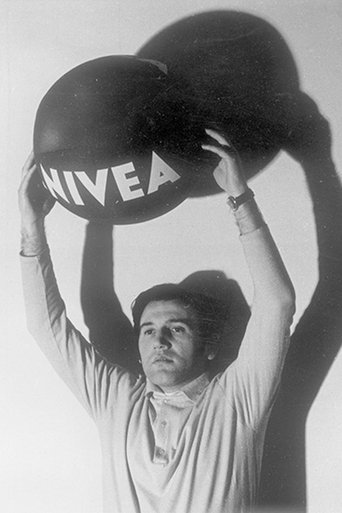
NRIn Nivea, an actor, holding a rubber ball, stands motionless for one minute (like a standing frame) in front of the screen onto which empty frames are projected, accompanied by a camera noise on tape. An inflatable, direct advertising film. An image object problem.
Nivea
1967
"The word 'monodrom' is derived from the Greek and means one-way street. That is TV: a one-way communication system, a monodrom." - Peter Weibel
Monodrom
1974
As an aquarium, the TV set signifies the identity of a real and reproduced event. Its images transform the TV set into an aquarium, a still-life, an object of meditation. But the water gradually runs out of the TV cabinet. The gurgling noise grows louder, the movements of the fish become more hectic, finally they are wriggling for their lives on the waterless floor of the cabinet. A warning sinusoidal tone begins to sound – censorship has saved the fish from their doom. I would have filmed the fish until they stopped flapping about, in order to produce the impression of a real death in a real TV set in a real apartment. This deliberate illusion would have shocked the audience, confronted them with real death as opposed to the pictures of death shown on the news, which now seem nothing more than illusion. (Peter Weibel)
TV-Aquarium (TV-Death 1)
1970
Two cameras are connected via a switch and the recordings are blended into a picture on the monitor. Layers of various body parts are made in order to form analogies of body-scapes, an anagrammatic of the body: ear instead of nose, vulva instead of mouth...
Switchersex
1972
A sound comedy where the action of the performers is directed by strange sounds.
Chamber Music
1974
"I throw water in space with a bucket. A video camera pictures this. Another camera pictures this event from the TV screen. 3 modalities of reality: 3 levels of interpretation. Reality: filmed reality: filmed film." - Peter Weibel.
Imaginary Water Sculpture
1971
 NR
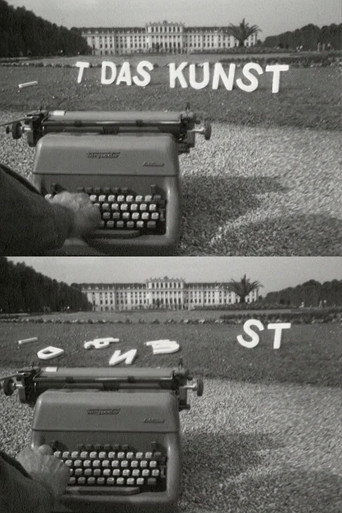
NRShort film depicting a typewriter and text falling over.
Every Action Causes Another
1967
 NR
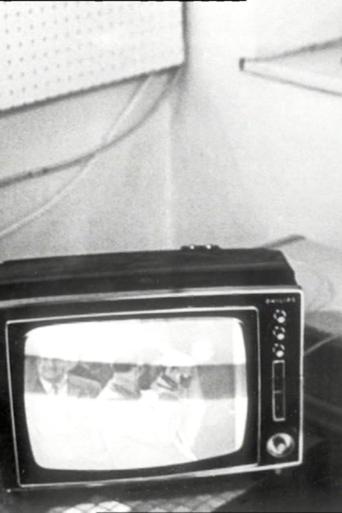
NRWeibel stages a documentation of the public as an exhibit themselves.
The Public As Exhibit
1969
 NR
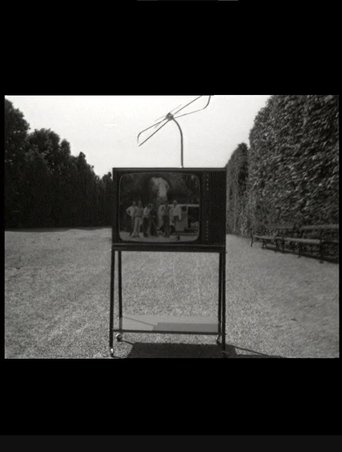
NRCommunication is the medium
Die Kommunikation is das Medium
—
"Video as box, the TV set as box. Communication is the medium."
TV-News (TV-Death II)
1970
“The video compilation TV & VT WORKS consists of short performances that deal with the relationship between reality and the film/TV camera while also addressing how television has changed our perspectives on reality. Several ‘Tele Actions’ and ‘TV Death’ moments, as the artist calls them, show actions that define the ontology of an artwork within a televised setting. The common element linking the individual segments consists in fake news reports from Austrian television, which is where the work was ultimately broadcast.” –KONTAKT COLLECTION
TV + VT Werke 1969-1972
1972
 NR
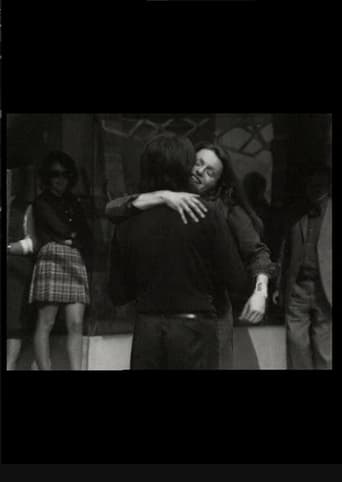
NRShort film depicting a man and woman smoking.
More Warmth Among Human Beings
1972
 NR
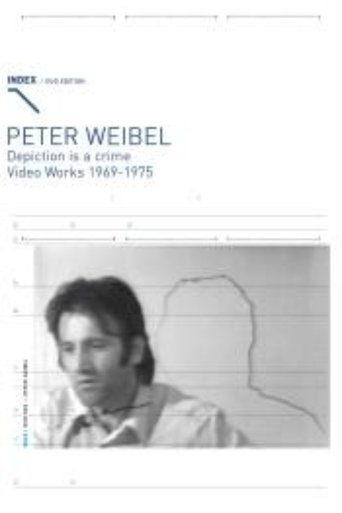
NRCompilation consisting of 17 of Peter Weibel's earlier works.
Depiction is a Crime
2001
The behaviour of a one-dimensional stimulus in a linear interval.
Intervals
1972
An instant-camera and a TV camera are placed opposite one another. They operate at the same time. The actor takes photographs with the Polaroid camera, the TV team films.
Depiction Is A Crime
1970
Experimental short examining the self in deep ways.
Self Limitation - Self Drawing - Self Description
1974
 NR
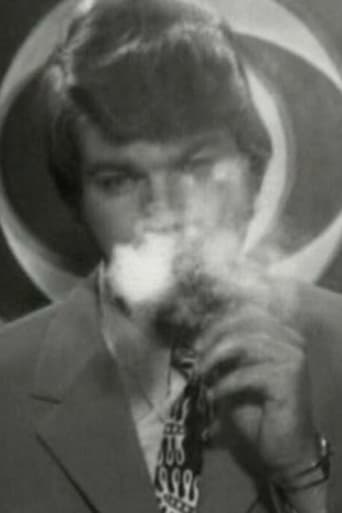
NRBroadcast on the Austrian Television (ORF) in June 1972, TV & VT-Works comprises a series of ‘tele-actions’ in which a cigar-smoking newsreader is periodically interrupted by public interventions raising the question “Is this Art?”. Disrupting the smooth flow of information and thus the illusion of comprehending the world from one’s living room, these actions interrogate TV temporality to examine the mechanisms of production and spectatorship. A work of culture jamming avant la lettre.
TV & VT-Works
2024
Between the TV set and viewer, a function exists whereby the user switches on and off the appliance. I have reproduced this function and made it the content of the TV programme. Sandwich character of real process and reproduction process, of reflection and action. On the screen, a series of viewers is seen sitting in front of TV sets. A fault occurs in the last set shown, meaning the next viewer has to get up in order to repair the fault. This repair brings about a disruption in the next viewer’s screen. The disruption propagates itself until it reaches the real TV set, meaning the real viewer has to rise and eliminate the fault. Time delay: the real procedure is the conclusion of the reproduced procedure. (Peter Weibel)
The Endless Sandwich
1970
Short film based on the principle of an audiotape loop.
Synthesis. On/Off
1972