

Acting
Susana Zabaleta
Born
1964-09-30 (62)
Place of birth
Monclova, Coahuila, Mexico
Known for
Acting
Credits
29 titles
Susana Zabaleta Ramos is a Mexican singer and actress. Born in Monclova, Coahuila, she moved to Mexico City in 1985. In 1986 she performed in the Sala Ollín Yoliztli and interpreted opera performances, such as La Traviata, Dido and Aeneas and Eneas. She also performed with the group "Quien es quien". n 1987 Zabaleta debuted on the stage with the musicals El violinista en el tejado and Don Quijote de la Mancha. In 1989 she participated in the musicals ¡Que plantón! and Sor-Presas. In 1991 she participated in the Mexican version of Cats along with María del Sol . In 1995, she recorded her first album titled ¿O fué un sueño? and in 1996, recorded the Spanish version of the Disney's film Po…
Known for
 7.5
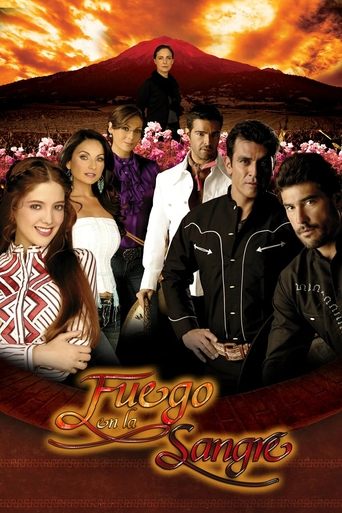
7.5Fuego en la sangre is a telenovela that began transmissions on January 21, 2008, through Mexico's Canal de las Estrellas network. Starring Adela Noriega, Eduardo Yáñez, Diana Bracho, and Guillermo García Cantú. It is the Mexican remake of the Colombian soap operas Las Aguas Mansas and Pasion de Gavilanes. The theme song called "Para Siempre" is sung by Vicente Fernández. The telenovela received TVyNovelas Award for Best Telenovela, in 2009.
Burning for Revenge
2008
 7.6
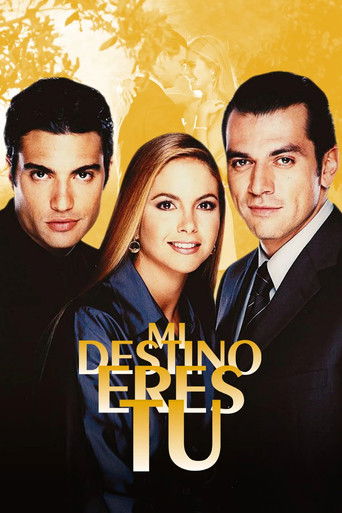
7.6Mi destino eres tú is a 2000 Mexican telenovela. It is a production of Carla Estrada and the protagonists were Lucero and Jorge Salinas.
Mi Destino Eres Tú
2000
 7.1
7.1Fernanda Quiñones, whose stage name is Salomé, is a dancer who works at the D'Rubí cabaret in Mexico City with her friend Karicia. One day, Salomé meets Julio, son of the millionaire Montesino family, who is married to Ángela, a sickly woman who cannot have children. Lucrecia, Julio's mother, who is obsessed with the idea of having a grandson who will inherit the family fortune, proposes to Salomé that she be the mother of that grandson. But, when she finds out that Julio, even though he loves her, will not only not leave Angela, but that she will be the one to raise the child as if it were her own, she flees far away with her son and two other babies abandoned by a neighbor. Twenty years later, Salomé becomes a wealthy business woman who lives with her three children. When he returns to Mexico, Julio and his mother will try to find out who Salomé and Julio's son is.
Salomé
2001
 8.0
8.0Pueblo chico, infierno grande is a Mexican historical telenovela produced by José Alberto Castro for Televisa and originally broadcast on Canal de las Estrellas from January 6 to August 1, 1997. Created by Javier Ruán and adapted by Javier Ruán, Mario Hernández, and Sergio Schmucler, the telenovela is based on a true story about Leonarda Ruán. It stars Verónica Castro, Juan Soler, and Guillermo Capetillo. The story is set in the late 19th century and follows Leonarda Ruán, a wealthy widow from the town of Nahuatzen who falls in love with Genaro Onchi, a young man from a humble background. Their relationship faces strong opposition from society, family conflicts, jealousy, and the return of people from Leonarda's past who try to separate them. As secrets and rivalries emerge, Leonarda and Genaro fight to protect their love against the judgment and traditions of their small town.
Pueblo chico, infierno grande
1997
 8.3
8.3Bajo la misma piel is a Mexican telenovela produced by Carlos Moreno Laguillo for Televisa and originally broadcast on Canal de las Estrellas from September 15, 2003, to January 16, 2004. Created by Martha Carrillo and Cristina García, the story follows four women from the same family as they face love, betrayal, family conflicts, and personal struggles. Sara, Regina, Miranda and Esther must overcome challenges such as an unhappy marriage, a complicated love triangle, illness, and forbidden relationships while searching for true love and happiness.
Bajo la misma piel
2003
 5.3
5.3Reality show that addresses the most important drag competition in Mexico, created by La Gran Diabla Producciones, which aims to exalt the national and Hispanic drag art, exalting our culture with a lot of sparkle.
La Más Draga
2018
Film credits
2020s · 5 titles
 6.7
6.7Twenty years have passed since those two apartments in the heart of Mexico City were the battlefield of a war of the sexes between Ana, Carlos, Andrea, Miguel, Tomás and María. All that is left of those apartments are memories and the image of Tomás' dead body at the bottom of the elevator shaft. Their lives have changed, their families have grown and new and unexpected characters have come to unsettle their daily lives and trigger a chain of events that will make them realize that modesty has been replaced by public disclosure; sex is only an app away; but love...love is still something elusive that everyone in today's banal and chaotic world is seeking.
Sex, Shame and Tears 2
2022
 7.5
7.5Two identical twin sisters, separated at birth, one truly decent but humble, the other ultra rich, conniving, and truly destructive. They soon find themselves hopelessly intertwined in each other's lives.
La Usurpadora
2023
 NR
NRNo synopsis available yet.
Ricardo Pérez: Guerrero de Dios
2025
 NR
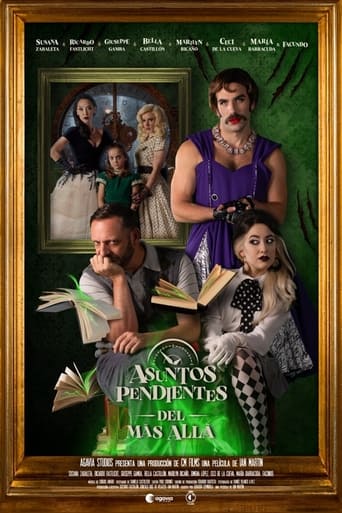
NRIn a haunted apartment building, a paranormal investigator in decline has to reunite with his daughter to solve the mystery of the building and regain his credibility as a writer and father. All this, while trying to escape from the terrible creature that stalks the place, killing the tenants one by one...
Asuntos pendientes del más allá
2024
 10.0
10.0In a world where everyone is born blind and when they turn 15 years old, people get the sight for the first time, Leonora is trying to find herself, while adapting to a new world.
Leonora Does Not Want To See
2020
2010s · 3 titles
 5.7
5.7Ozzy is an enthusiastic and friendly flying monkey, son of the legendary Goliath, the brave warrior. They serve Evilene - the wicked witch - just as the rest of their kin. But Ozzy is not happy about it and when Evilene's plans put Oz once again in peril, Ozzy reaches out to the Champions of Oz, three great friends (the Lion, the Scarecrow and the Tinman) with incredible qualities that have taken Emerald City to its maximum splendor.
Wicked Flying Monkeys
2015
 7.4
7.4Ana Paula catches her fiancé cheating. After a night of drinking, she wakes up far from home, not so certain she wants to go back.
Get Married If You Can
2014
 5.0
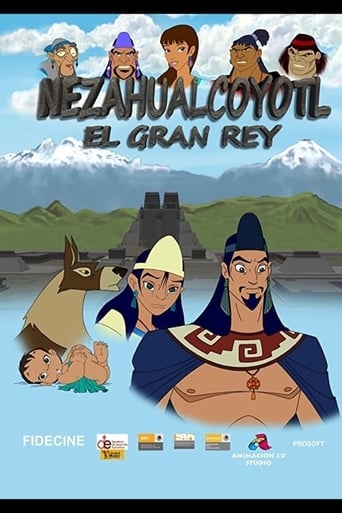
5.0King Tezozomoc invades Texcoco betraying the trust of his allies with a surprise attack. The young prince Nezahualcoyotl will attempt to retrieve his father's kingdom from the hands of Tezozomoc.
Nezahualcóyotl, la gran historia
2015
2000s · 2 titles
 5.7
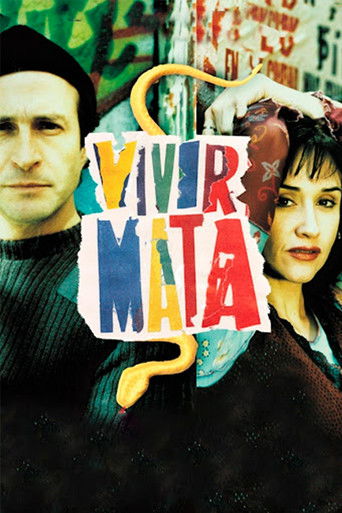
5.7A romantic comedy of our times about passion, friendship and lies, on one of those days when the city and its inhabitants go crazy and anything seems possible. Diego and Silvia meet each other and fall in love thanks to their masterly lies. The morning after, with their respective friends, they remember the encounter and slowly begin to realize how sincere and honest that relationship was. When the opportunity arises, both struggle to meet again on a day in which a sudden and unusual disorder reigns in Mexico City.
Life Kills
2002
 4.7
4.7A view of the end-of-the-century Mexican family. A father who comes back home after a long absence, but who would rather be somewhere else. A daughter suffering from a trapped pain. A son full of guilt and recriminations. A little kid who soaks up all the tension in the house, like a sponge, and a self-effacing mother who would like to go away and leave everything behind.
A Breakfast Chronicle
2000
1990s · 4 titles
 6.6
6.6A comedic drama featuring two couples and two old friends in Mexico City. Tomas visits Carlos and Ana, while Miguel and Andrea are joined by Maria. The presence of guests triggers lust, rejection, infidelities, reconciliation and other consequences.
Sex, Shame & Tears
1999
 6.1
6.110-year-old Elisa, whose parents are about to lose their new car due to financial problems, plans a bank robbery.
Elisa Before the End of the World
1997
 5.9
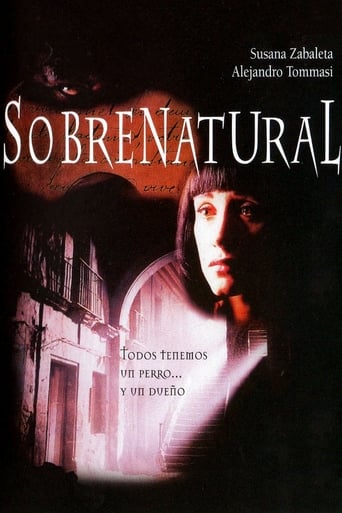
5.9Something strange is going on in Dolores' apartment house--or is it mainly in Dolores' head that the strangeness lies... When her best friend Eva is murdered on her doorstep, and her husband begins to have violent nightmares, it appears that there is definately something amiss in the world of delusional Dolores.
All of Them Witches
1996
 5.7
5.7No synopsis available yet.
Cosi fan tutte: O, la escuela de los amantes
1996
Series credits
7.5Fuego en la sangre is a telenovela that began transmissions on January 21, 2008, through Mexico's Canal de las Estrellas network. Starring Adela Noriega, Eduardo Yáñez, Diana Bracho, and Guillermo García Cantú. It is the Mexican remake of the Colombian soap operas Las Aguas Mansas and Pasion de Gavilanes. The theme song called "Para Siempre" is sung by Vicente Fernández. The telenovela received TVyNovelas Award for Best Telenovela, in 2009.
Burning for Revenge
2008
7.6Mi destino eres tú is a 2000 Mexican telenovela. It is a production of Carla Estrada and the protagonists were Lucero and Jorge Salinas.
Mi Destino Eres Tú
2000
7.1Fernanda Quiñones, whose stage name is Salomé, is a dancer who works at the D'Rubí cabaret in Mexico City with her friend Karicia. One day, Salomé meets Julio, son of the millionaire Montesino family, who is married to Ángela, a sickly woman who cannot have children. Lucrecia, Julio's mother, who is obsessed with the idea of having a grandson who will inherit the family fortune, proposes to Salomé that she be the mother of that grandson. But, when she finds out that Julio, even though he loves her, will not only not leave Angela, but that she will be the one to raise the child as if it were her own, she flees far away with her son and two other babies abandoned by a neighbor. Twenty years later, Salomé becomes a wealthy business woman who lives with her three children. When he returns to Mexico, Julio and his mother will try to find out who Salomé and Julio's son is.
Salomé
2001
8.0Pueblo chico, infierno grande is a Mexican historical telenovela produced by José Alberto Castro for Televisa and originally broadcast on Canal de las Estrellas from January 6 to August 1, 1997. Created by Javier Ruán and adapted by Javier Ruán, Mario Hernández, and Sergio Schmucler, the telenovela is based on a true story about Leonarda Ruán. It stars Verónica Castro, Juan Soler, and Guillermo Capetillo. The story is set in the late 19th century and follows Leonarda Ruán, a wealthy widow from the town of Nahuatzen who falls in love with Genaro Onchi, a young man from a humble background. Their relationship faces strong opposition from society, family conflicts, jealousy, and the return of people from Leonarda's past who try to separate them. As secrets and rivalries emerge, Leonarda and Genaro fight to protect their love against the judgment and traditions of their small town.
Pueblo chico, infierno grande
1997
8.3Bajo la misma piel is a Mexican telenovela produced by Carlos Moreno Laguillo for Televisa and originally broadcast on Canal de las Estrellas from September 15, 2003, to January 16, 2004. Created by Martha Carrillo and Cristina García, the story follows four women from the same family as they face love, betrayal, family conflicts, and personal struggles. Sara, Regina, Miranda and Esther must overcome challenges such as an unhappy marriage, a complicated love triangle, illness, and forbidden relationships while searching for true love and happiness.
Bajo la misma piel
2003
5.3Reality show that addresses the most important drag competition in Mexico, created by La Gran Diabla Producciones, which aims to exalt the national and Hispanic drag art, exalting our culture with a lot of sparkle.
La Más Draga
2018
5.3Reality show that addresses the most important drag competition in Mexico, created by La Gran Diabla Producciones, which aims to exalt the national and Hispanic drag art, exalting our culture with a lot of sparkle.
La Más Draga
2018
 7.3
7.3No synopsis available yet.
Las Lunas del Auditorio
2002
 7.0
7.0Una luz en el camino is a Mexican children's telenovela produced by Mapat L. de Zatarain for Televisa and originally broadcast on Canal de las Estrellas from March 30 to July 31, 1998. It is an adaptation of the Argentine children's telenovela El árbol azul (1991–1992), created by Mario L. Mortheo and adapted for Mexican television by Alejandro Orive and Carlos Daniel González. The story follows Luciana, a young girl who loses her mother at an early age and longs to have a loving family again. After meeting child psychologist Marcela, she becomes determined to bring her and her widowed father, Rodrigo, together. Along the way, they must overcome grief, misunderstandings, and the schemes of the ambitious Astrid, who seeks to marry Rodrigo for his fortune.
Una luz en el camino
1998
 7.8
7.8Sixteen Mexican celebrities open their homes and prepare a dinner in which they will show who is the best host.
Come Dine with Me Mexico
2022
 6.0
6.0The lives of five women facing a world full of sex, infidelities and secrets.
S.O.S.: Sexo y otros Secretos
2007
 3.3
3.3Follows Mexican actors and comedians Mauricio Barrientos (aka "El Diablito") and Paloma Cedeño, as they travel around the city and have conversations about life, relationships and sex with their celebrity guests.
La noche del Diablito
2022
 7.5
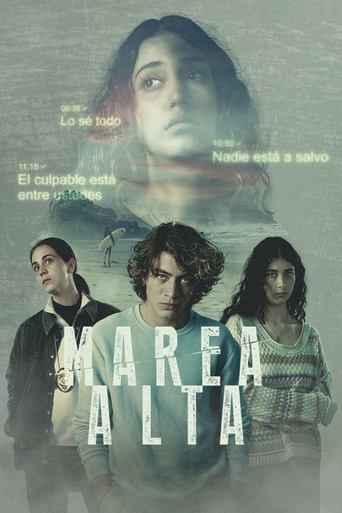
7.5After the death of a teenager, the threatening messages that arrive from her social media account will disturb the apparent calm of a coastal city.
High Tide
2022
 5.5
5.5Cantando por un Sueño is a television contest produced by the Mexican television network Canal de las Estrellas which also aired on Univision in the United States. As with its twin show Bailando por un sueño, celebrities are paired with common, everyday people. However, in Cantando por un Sueño, contestants have to sing, rather than dance to impress the panel of judges and win. The panel of judges is made up of famous Latin American singers. Prizes generally include costly interventions to help people in unfortunate situations including blindness, deafness, paralysis, mortal diseases, bankruptcy, etc. Mexican singer Thalía is the 'godmother' of this contest, and she sings the title song of the show too. Cantando por un Sueño had three seasons of about seven episodes each and concluded in a final fourth season Called "Reyes de la Canción" where the winners, runner-ups and 3rd place finishers of the first three seasons compete in a final showdown..
Cantando por un sueño
—
No synopsis available yet.
Reyes de la Canción
2021