
Directing
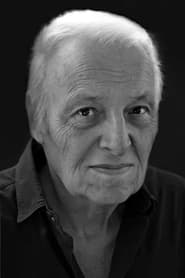
Yann Le Masson
Born — Died
1930-06-27 — 2012-01-20
Place of birth
Brest, Finistère, France
Known for
Directing
Credits
9 titles
Yann Le Masson is a French documentary filmmaker and director of photography, born on June 27, 1930 in Brest (Finistère), died on January 20, 2012 in Avignon (Vaucluse). Yann Le Masson, born into a traditionalist Catholic family of six children, a Basque mother and a Breton father, grew up in Brest, Vannes, Toulon and then Dakar. After solid studies in mathematics and then electrical engineering, he entered the Ecole de cinéma de la rue de Vaugirard, before IDHEC where he belonged to the cell of filmmakers campaigning against the Indochina War, then for the independence of Morocco and Tunisia and against the war in Algeria. A graduate of IDHEC in 1955, he began working as an assistant opera…
Known for
 9.0
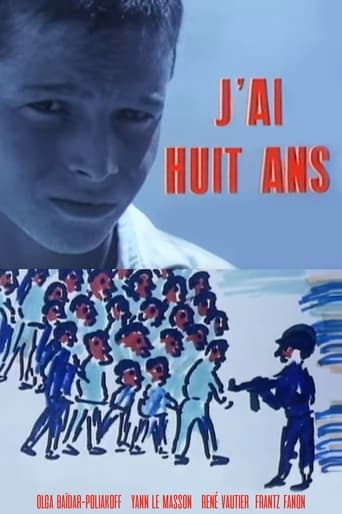
With my wife, Olga Poliakoff, we made "I'm Eight Years Old" based on an idea by René Vautier. Using drawings by Algerian children who were refugees in Tunisia, the film immerses the viewer in the traumatized world of these children, horrifically linking the word "France" with words like "kill," "burn," and "torture." The live-action footage was shot in Tunisia by René Vautier and myself. A second set of drawings was compiled, and the children's testimonies were recorded by Olga at the Algerian-Tunisian border. The entire film was edited in collaboration with Jacqueline Meppiel. The first screening took place in Paris on February 10, 1962, without any precautions or authorization, for about fifty people. Sponsored by the Maurice Audin Committee, the film then circulated clandestinely throughout France in dozens of copies and was seen by tens of thousands of people while the OAS was carrying out bombings in Paris and Algiers – Yann Le Masson
J'ai Huit Ans
1962
 9.0
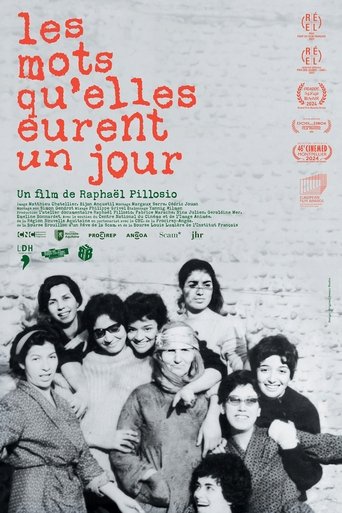
1962, at the end of the Algerian War, Algerian independence activists are released from Rennes prison. For one night, filmmaker Yann Le Masson films them. They tell him their vision for the future of Algeria and the place women must occupy in the new society to be built. Fifty years later, with the soundtrack missing, Raphaël Pillosio sets out to find these women. Two deaf people set about lip-reading the women filmed by Yann Le Masson, revealing snatches of sentences, words cut short by the camera's shifts. An investigative film in which the few activists still alive discover their old testimonies and tell us their silent story. The reconstruction of the lost soundtrack will remain in suspense; no happy ending will come to absorb the absence, to cancel the ferocious operation of time. An essay film about cinema that depicts their disappearance, and forever keeps them alive.
The Words Women Spoke One Day
2024
 7.7
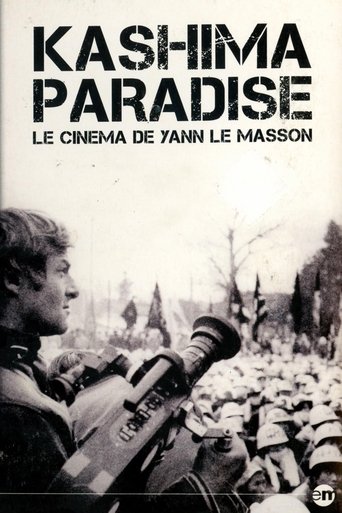
This 1973 French documentary explores the conflict between modern values and material comforts in Japan and the more traditional obligations (giri) and culture which are still the real backbone of the society. Among the topics touched on are the Osaka Expo, battles against pollution, and Japanese leftist movements.
Kashima Paradise
1973
In March 1977, six activists of the Movement for the Liberation of abortion and contraception (MLAC) were tried for the illegal practice of abortion. Around the trial, the film reveals the lives of this group of women proposing to appropriate medical knowledge associated with childbirth and abortion.
Look, She Has Her Eyes Wide Open
1980
Patrick, who has had diabetes for 25 years and is treated with insulin, is gradually losing his sight. He has agreed to laser treatment as the only alternative to total blindness, a treatment that destroys almost the entire retina, leaving only central vision. For three years, the director followed him in his daily life, walking towards darkness, where he learns day by day to touch, listen, guess, feel, and resist. The camera narrows its field of view over time to "see" as Patrick does.
Heligonka
1985
No synopsis available yet.
Pour Demain
—
Film credits
Behind the camera
9.0With my wife, Olga Poliakoff, we made "I'm Eight Years Old" based on an idea by René Vautier. Using drawings by Algerian children who were refugees in Tunisia, the film immerses the viewer in the traumatized world of these children, horrifically linking the word "France" with words like "kill," "burn," and "torture." The live-action footage was shot in Tunisia by René Vautier and myself. A second set of drawings was compiled, and the children's testimonies were recorded by Olga at the Algerian-Tunisian border. The entire film was edited in collaboration with Jacqueline Meppiel. The first screening took place in Paris on February 10, 1962, without any precautions or authorization, for about fifty people. Sponsored by the Maurice Audin Committee, the film then circulated clandestinely throughout France in dozens of copies and was seen by tens of thousands of people while the OAS was carrying out bombings in Paris and Algiers – Yann Le Masson
J'ai Huit Ans
1962
7.7This 1973 French documentary explores the conflict between modern values and material comforts in Japan and the more traditional obligations (giri) and culture which are still the real backbone of the society. Among the topics touched on are the Osaka Expo, battles against pollution, and Japanese leftist movements.
Kashima Paradise
1973
In March 1977, six activists of the Movement for the Liberation of abortion and contraception (MLAC) were tried for the illegal practice of abortion. Around the trial, the film reveals the lives of this group of women proposing to appropriate medical knowledge associated with childbirth and abortion.
Look, She Has Her Eyes Wide Open
1980
Patrick, who has had diabetes for 25 years and is treated with insulin, is gradually losing his sight. He has agreed to laser treatment as the only alternative to total blindness, a treatment that destroys almost the entire retina, leaving only central vision. For three years, the director followed him in his daily life, walking towards darkness, where he learns day by day to touch, listen, guess, feel, and resist. The camera narrows its field of view over time to "see" as Patrick does.
Heligonka
1985
No synopsis available yet.
Pour Demain
—
In 1963, in Reunion, Michel Debré, Prime Minister of General De Gaulle, aims for the post of deputy. Yann Le Masson follows his eventful campaign. His film remained banned in France for 10 years.
Sucre amer
—