
Known for
 6.8
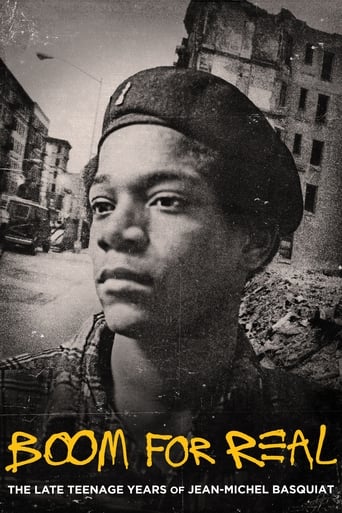
6.8Exploring the pre-fame years of the celebrated American artist Jean-Michel Basquiat, and how New York City, its people, and tectonically shifting arts culture of the late 1970s and '80s shaped his vision.
Boom for Real: The Late Teenage Years of Jean-Michel Basquiat
2018
 6.9
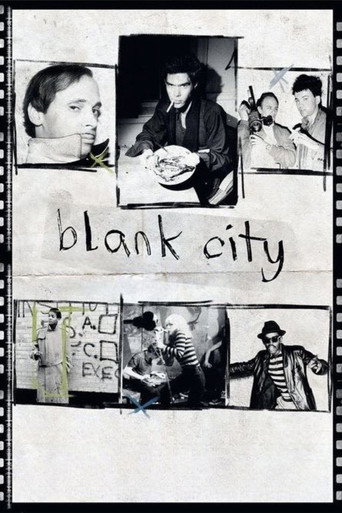
6.9In the years before Ronald Reagan took office, Manhattan was in ruins. But true art has never come from comfort, and it was precisely those dire circumstances that inspired artists like Jim Jarmusch, Lizzy Borden, and Amos Poe to produce some of their best works. Taking their cues from punk rock and new wave music, these young maverick filmmakers confronted viewers with a stark reality that stood in powerful contrast to the escapist product being churned out by Hollywood.
Blank City
2011
 NR
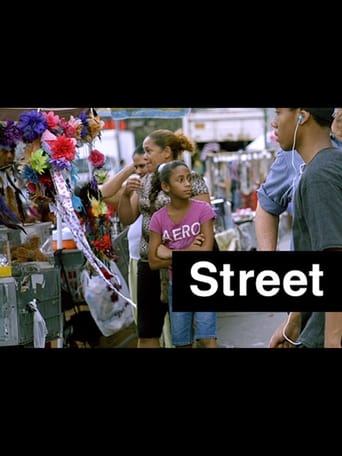
NRSTREET is an unscripted 61-minute high definition video filmed by artist James Nares over one week in September 2011. The final video is a mesmerizing experiment in the nuance and beauty of everyday people and people-watching; providing a global view that extends beyond the streets of New York where it was filmed: from Battery Park to the furthest reaches of Upper Broadway, and West Side to East Side in Nares’ personal homage to actualité films.
Street
2011
 NR
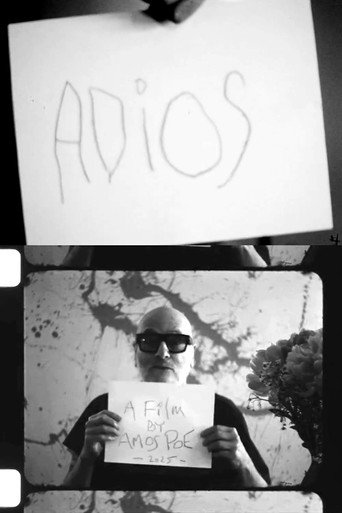
NR"Shortly after Amos went into home hospice he began filming ‘Adios’, a short film, compiled of 16mm and Super 8 footage, to premiere at his memorial, chronicling all the family and friends who have come to visit. Even Courtney our absolutely wonderful hospice nurse is in it. […] Only twice have we forgotten to film a visitor. Amos designated me the Director of Photography. Since I have to focus and shoot using my bad left eye the joke in our home is that it’s a film by a dying director and a blind DP." – Claudia Summers
Adios
2025
 8.0
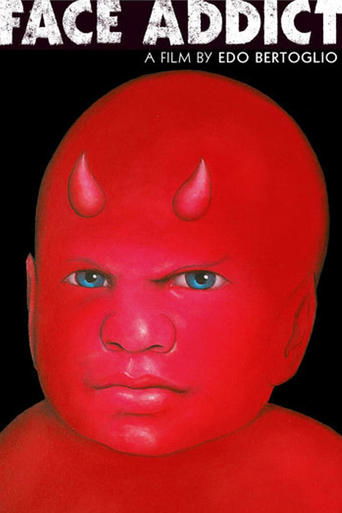
8.0Face Addict tells the story of a unique and unrepeatable experience, that of the artistic community in New York between the late '70s and early '80s, known as the downtown scene.
Face Addict
2005
A schematic animation of matter transforming into energy.
Spinning Lead Ball
1976
Film credits
2010s · 2 titles
6.8Exploring the pre-fame years of the celebrated American artist Jean-Michel Basquiat, and how New York City, its people, and tectonically shifting arts culture of the late 1970s and '80s shaped his vision.
Boom for Real: The Late Teenage Years of Jean-Michel Basquiat
2018
6.9In the years before Ronald Reagan took office, Manhattan was in ruins. But true art has never come from comfort, and it was precisely those dire circumstances that inspired artists like Jim Jarmusch, Lizzy Borden, and Amos Poe to produce some of their best works. Taking their cues from punk rock and new wave music, these young maverick filmmakers confronted viewers with a stark reality that stood in powerful contrast to the escapist product being churned out by Hollywood.
Blank City
2011
1970s · 2 titles
 3.0
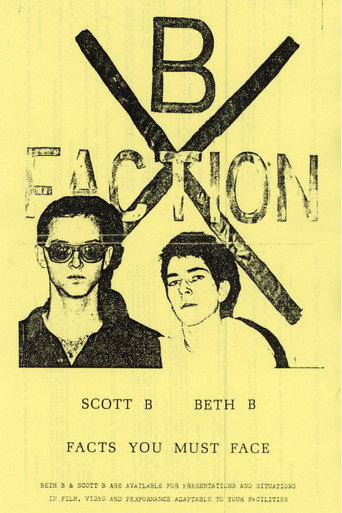
3.0An exploration of social schizophrenia in which terrorists consult their mothers before planting bombs, and the head of the New York City bomb squad succumbs to his dominatrix.
G-Man
1978
 NR
NRHow to play a melody? A magic moment, unrepeatable. Life is just a bowl of cherries. Film as art as life as film.
Dear Jimmy
1978
Behind the camera
NRSTREET is an unscripted 61-minute high definition video filmed by artist James Nares over one week in September 2011. The final video is a mesmerizing experiment in the nuance and beauty of everyday people and people-watching; providing a global view that extends beyond the streets of New York where it was filmed: from Battery Park to the furthest reaches of Upper Broadway, and West Side to East Side in Nares’ personal homage to actualité films.
Street
2011
A schematic animation of matter transforming into energy.
Spinning Lead Ball
1976
A game of stones, with Seth Tillett.
Game
1975
 6.4
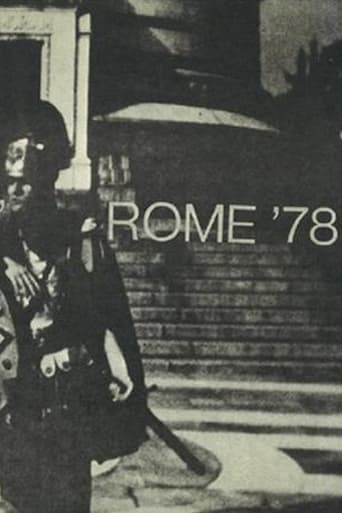
6.4Nares mocks up Ancient Rome by shooting in faux-classical sites including Tribeca's American Thread Building, where a decrepit penthouse loft with a peeling-paint dome serves as an echoey stand-in for the imperial palace. The latter location required ingenuity: Posing as potential renters, Nares and associates asked the manager to show them the apartment, then unlocked the windows on the way out; a few hours later, they broke back into the space, full cast and crew in tow, to shoot the necessary scenes.
Rome '78
1978
Mini-document of sculptural activity, involving the effects of gravity on weighty objects.
Hammered
1975
Hand twirls a piece of fabric at 500 frames per second.
Cloth
1998
Rhythmic video music made by dropping stones on stones.
Drip
2007
A concrete ball on the off ramp to the old West Side Highway.
Ramp
—
Studies in repetitive movement.
Hand Notes #2
1974
 NR
NRAfter Rome 78, Nares made a political documentary—a controversial 1980 video interview with an IRA member titled No Japs at My Funeral—but turned to other forms of art for much of the remaining decade, never realizing projects like a feature script he penned with Gary Indiana.
No Japs at My Funeral
1980
NRAfter Rome 78, Nares made a political documentary—a controversial 1980 video interview with an IRA member titled No Japs at My Funeral—but turned to other forms of art for much of the remaining decade, never realizing projects like a feature script he penned with Gary Indiana.
No Japs at My Funeral
1980
 NR
NR"ARABIAN LIGHTS is the second of only two Super 8mm films deAk is known to have fully edited to completion, and the only work she produced outside the New York club scene. During an extended romantic holiday in Egypt in 1977 with Jamie (then James) Nares, the two young visual artists shared a movie camera and recorded intimate, carefree moments that deAk later edited into this unusual self-portrait. Tourism becomes performance art at legendary historic sites and across the bright desert landscapes as their budding romantic relationship plays out. The film was rarely screened during the period, and MoMA’s new digital preservation is drawn from deAk’s unique original Kodachrome print and a reel of assembled outtakes, both recently acquired for the Museum’s collection." — MoMA
Arabian Lights
1983
A hand descends, as though from the heavens, to manipulate a length of ribbon.
Thread
2010
A young girl in the last summer of her childhood, alternates between solitary play and the discovery of her power to influence the world around her. “One of the most beautiful cinematic works I've ever seen.” Lucy Sante.
To Make a Prairie
2010
Freehand wall drawing of a perfect circle.
Giotto Circle #2
1990
Observing the trajectories of falling rocks.
Drop
2017
A wandering being in search of sustenance in a wintry wasteland experiences a strange transformation, eventually learning that the best way to get is to give.
Lighthouse
1991
Wind currents on a debris-strewn street corner.
Twister
1976
A symbiosis of man and pole.
Poles
1975
Throwing and catching the same.
Steel Rod
1976
This hybrid of diary and documentary was shot on Jamie Nares’s first trip home since her arrival in New York three years prior. While the cultural upheaval of the 1970s has a presence (not least in its title), Suicide? No, Murder! shares the formal lyricism of the artist’s experimental short films. Super-8 imagery of moments shared with family in and around Nares’s English family home is replete with playfulness and a meditative quality that oscillates between tender and somber. The everyday is subject to formal and metaphysical questioning in a portrait of a young artist along a personal journey. Unfinished at the time, this screening premieres the artist’s own digital restoration of this rarely seen and evocative work. Back in New York, the short Waiting for the Wind is an energetic study of the artist's body in motion in his sparse apartment. This accomplished production was described by critic Amy Taubin as a “technical tour-de-force."
Suicide? No, Murder!
2017
Two giant circles forming semicircles, carved with a self-made instrument.
Giotto Circle Extended
1975
Taking stock of the city block. A measuring of sorts. One of the first films made by Nares after moving to New York City.
Block
1976
Self portrait as a head adrift in the city.
Roof
1975
“Nares creates a tornado-like catastrophe with a hand-held super-8 camera, a shooting ratio of three to one (about $100 worth of film stock), and remarkable timing…fine filmmaking control is uses to suggest the terror of a world completely beyond personal control…Nares opens up the possibility of metaphor, evoking forces both terrifying and exhilarating.” Amy Taubin
The Wind
1980
An epic struggle to tie a knot in a length of fabric using the feet.
Knot
1974
Freehand wall carving of a perfect circle.
Giotto Circle #1
1975
 NR
NRA pendulum swings among old NYC buildings.
Pendulum
1976
Choreographed and orchestrated, a rhythmic video music, made by hurling lengths of plastic pipe against a cinder block wall.
Paper Factory
2007
Tracking a storm in the bedsheets.
Weather Bed
1991
A semi-visible pianist plays. In memory of the poet, pianist and Judo black belt, David Rattray.
Piano
1991
Calibration study for the film Pendulum.
Studio Pendulum
1976
Collage of faces taken from television by James Nares
TV Faces
1977
A gestural inflection, born of repetition.
Arm and Hammer
1976
Studies in repetitive movement.
Hand Notes #1
1974