
Directing
Chris Burden
Born — Died
1946-04-11 — 2015-05-10
Place of birth
Boston, Massachusetts, USA
Known for
Directing
Credits
23 titles
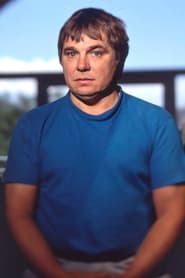
Christopher Lee Burden (April 11, 1946 – May 10, 2015) was an American artist working in performance, sculpture and installation art. Burden became known in the 1970s for his performance art works, including Shoot (1971), where he arranged for a friend to shoot him in the arm with a small-caliber rifle. A prolific artist, Burden created many well-known installations, public artworks and sculptures before his death in 2015.
Known for
 5.8
A probing portrait of Chris Burden, an artist who took creative expression to the limits and risked his life in the name of art.
Burden
2016
A film about a sculpture by Chris Burden.
Metropolis II
2014
During the early seventies I conceived a way to break the omnipotent stranglehold of the airwaves that broadcast television had. The solution was to simply purchase commercial advertising time and have the stations play my tapes along with their other commercials.
TV Ad
1973
 NR
In this narrative performance for video, Burden tells the story of his relationship with a truck named "Big Job." To relate his autobiographical monologue, he sits deadpan before the camera with moving images of the truck behind him. Writes Burden, "During a six-month period, while the artist wrestles with the problem of owning an antique 16,000 lb. freight-truck, Big Job becomes a metaphor for personal insanity. I talk about the 'curse of Big Job,' my foiled plans to transform the truck into a rolling communications command post or a traveling museum, and my difficulty in getting rid of the rig. A true story."
Big Wrench
1980
I began the evening watching television, smoking and drinking beer. The other artists were preparing their pieces. People were filling the museum and my activity went almost unnoticed. After about an hour I got up and went around the room turning off all the lights. I had a pair of old pants which had been passed around by many of my friends. I placed the pants on the floor and saturated them with lighter fluid. I lit the pants on fire and extinguished the flames with my body. I turned the lights on and returned to watching television.
Fire Roll
1973
 NR
May 7th, 1974, School of the Art Institute of Chicago. Chris Burden relentlessly dunks his head in a filled-up sink, trying to breath water.
Velvet Water
1974
Film credits
2010s · 2 titles
2000s · 2 titles
 6.0
The life and work of enigmatic Dutch/Californian conceptual artist Bas Jan Ader, who in 1975 disappeared under mysterious circumstances at sea in the smallest boat ever to cross the Atlantic. As seen through the eyes of fellow emigrant filmmaker René Daalder, the picture becomes a sweeping overview of contemporary art films as well as an epic saga of the transformative powers of the ocean.
Here Is Always Somewhere Else
2007
 NR
The TV Commercials 1973–1977 (1973–77/2000) is a compilation of four video works—TV Ad (1973), Poem for L.A. (1975), Chris Burden Promo (1976), and Full Financial Disclosure (1977)— that were aired as purchased spots on television between 1973 and 1977. Burden notes: “During the early ’70s I conceived a way to break the omnipotent stranglehold of the airwaves that broadcast television had. The solution was to simply purchase commercial advertising time and have the stations play my tapes along with their other commercials.”
The TV Commercials 1973–1977
2000
1980s · 2 titles
 NR
Accompanying video to the exhibition "Chris Burden: A Twenty-Year Survey", Newport Harbor Art Museum, California, USA, 1988. Survey, interviews, etc.
A Twenty-Year Survey, Newport Harbor Art Museum
1988
 NR
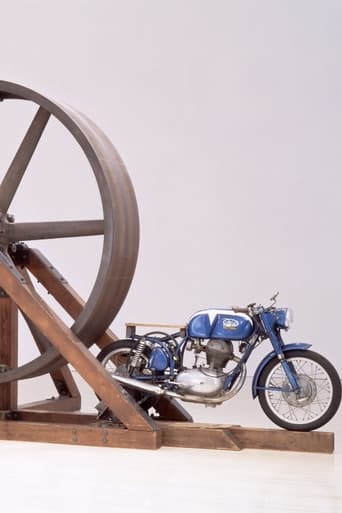
During the 1980 exhibition of Burden's monumental kinetic sculpture The Big Wheel at Ronald Feldman Fine Arts, New York, Burden and Feldman were interviewed by art critic Willoughby Sharp. Burden articulates the process of creating The Big Wheel, a 6,000-pound, spinning cast-iron flywheel that is initially powered by a motorcycle, and discusses its relation to his earlier performance pieces and sculptural works. Addressing his motivations and the meaning of this potentially dangerous mechanical art object, Burden discusses such topics as the role of the artist in the industrial world, "personal insanity and mass insanity," and "man's propensity towards violence."
The Big Wheel
1980
1970s · 3 titles
NRMay 7th, 1974, School of the Art Institute of Chicago. Chris Burden relentlessly dunks his head in a filled-up sink, trying to breath water.
Velvet Water
1974
 NR
November 19, 1971, F Space, Santa Ana, California: “At 7:45 p.m. I was shot in the left arm by a friend”.
Shoot
1971
 7.5
In this short compilation, Chris Burden introduces and narrates selected clips from his public art performances including 'Shoot', 'Bed Piece', and 'Fire Rolls', among others.
Documentation of Selected Works 1971-74
1975
Behind the camera
During the early seventies I conceived a way to break the omnipotent stranglehold of the airwaves that broadcast television had. The solution was to simply purchase commercial advertising time and have the stations play my tapes along with their other commercials.
TV Ad
1973
NRIn this narrative performance for video, Burden tells the story of his relationship with a truck named "Big Job." To relate his autobiographical monologue, he sits deadpan before the camera with moving images of the truck behind him. Writes Burden, "During a six-month period, while the artist wrestles with the problem of owning an antique 16,000 lb. freight-truck, Big Job becomes a metaphor for personal insanity. I talk about the 'curse of Big Job,' my foiled plans to transform the truck into a rolling communications command post or a traveling museum, and my difficulty in getting rid of the rig. A true story."
Big Wrench
1980
I began the evening watching television, smoking and drinking beer. The other artists were preparing their pieces. People were filling the museum and my activity went almost unnoticed. After about an hour I got up and went around the room turning off all the lights. I had a pair of old pants which had been passed around by many of my friends. I placed the pants on the floor and saturated them with lighter fluid. I lit the pants on fire and extinguished the flames with my body. I turned the lights on and returned to watching television.
Fire Roll
1973
NRMay 7th, 1974, School of the Art Institute of Chicago. Chris Burden relentlessly dunks his head in a filled-up sink, trying to breath water.
Velvet Water
1974
NRNovember 19, 1971, F Space, Santa Ana, California: “At 7:45 p.m. I was shot in the left arm by a friend”.
Shoot
1971
At 8 p.m. I lay down on La Cienega Boulevard and was covered completely with a canvas tarpaulin. Two fifteen-minute flares were placed near me to alert cars. Just before the flares extinguished, a police car arrived. I was arrested and booked for causing a false emergency to be reported. Trial took place in Beverly Hills. After three days of deliberation, the jury failed to reach a decision, and the judge dismissed the case.
Deadman
1972
At 6 p.m. three invited spectators came to my studio. The room was fifteen feet by twenty-five feet and well lit by natural light. Wearing no clothes, I entered the space from a small room at the back. Two assistants lifted onto each shoulder one end of six foot sheets of plate glass. The sheets sloped onto the floor at right angles from my body. The assistants poured gasoline down the sheets of glass. Stepping back, they threw matches to ignite the gasoline. After a few seconds I jumped up, sending the burning glass crashing to the floor. I walked into the back room.
Icarus
1973
For two hours each night, from 8 to 10 p.m. on September 10–12, 1971, performance artist Chris Burden was bolted to the stone floor of F Space in Santa Ana, California, for a piece titled Prelude to 220, or 110. Immobilized in a supine position by copper cuffs around his hands and feet, Burden was flanked by two buckets of water, each containing a live wire charged to 110 volts. Viewers were thus presented with a choice to participate in the performance by spilling the water. If the water spilled, Burden risked severe electrocution, and nearby visitors could also be harmed.
220
1971
For the 22 days between February 18th to March 10th, 1972 at Market Street Program in Venice Beach, California, Chris Burden performed his Bed Piece. After stripping down to his underwear, the artist climbed into a bed placed on the gallery floor and remained there for the extent of the performance. Throughout the 22 days he didn’t speak to anyone. Aside from the gazes of spectators, the only human interaction Burden received was when gallery staff provided him with water, food and toilet facilities.
Bed Piece
1972
In 1973, Chris Burden bought a month worth of late-night ad time on a local TV station in Los Angeles, and aired a 10-second film clip of Through the Night Softly, a performance where Burden, clad only in bikini underwear, crawls across a parking lot full of broken glass with his hands behind his back.
Through the Night Softly
1973
In 1973, Burden paddled a small canvas kayak from a town on the Sea of Cortez in Baja California to an uninhabited beach further south, carrying only water. He spent 11 days on the beach, in 120-degree temperatures, before declaring an end to the performance and paddling back to town. “It was really more about isolation than anything else,” Burden said during an interview with The New York Times. "It was about being gone.”
B.C. Mexico
1973
NRThe TV Commercials 1973–1977 (1973–77/2000) is a compilation of four video works—TV Ad (1973), Poem for L.A. (1975), Chris Burden Promo (1976), and Full Financial Disclosure (1977)— that were aired as purchased spots on television between 1973 and 1977. Burden notes: “During the early ’70s I conceived a way to break the omnipotent stranglehold of the airwaves that broadcast television had. The solution was to simply purchase commercial advertising time and have the stations play my tapes along with their other commercials.”
The TV Commercials 1973–1977
2000
Back to You is a piece that attempted to deal with my own myth, the myth of me as the aggressive artist, threatening audiences the evil-kin evil of the art world. The tape begins with the voice of Eliza Bear and the piece actually takes place inside a moving elevator. And around the elevator shaft there were several monitors placed, so that, what you see is exactly what the audience saw at the performance. "Chris Burden has requested a volunteer. Will a volunteer please step up" A volunteer had been selected to participate. The volunteer is being escorted to the elevator. A sign in the elevator is instructing the volunteer to stick push-pins into Chris Burden."
Back to You
1974
7.5In this short compilation, Chris Burden introduces and narrates selected clips from his public art performances including 'Shoot', 'Bed Piece', and 'Fire Rolls', among others.
Documentation of Selected Works 1971-74
1975