
Writing
Samuel Beckett
Born — Died
1906-04-13 — 1989-12-22
Place of birth
Foxrock, Dublin, Ireland
Known for
Writing
Credits
50 titles
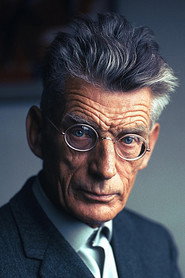
Samuel Barclay Beckett was an Irish avant-garde novelist, playwright, theatre director, and poet, who lived in Paris for most of his adult life and wrote in both English and French. He is widely regarded as among the most influential writers of the 20th century. Beckett was awarded the 1969 Nobel Prize in Literature "for his writing, which—in new forms for the novel and drama—in the destitution of modern man acquires its elevation."
Known for
 9.0
9.0"The Century of the Theater" - From the "birth of the director" to the "heroes of modernity" - an overview of the world of theater - illuminates the interaction with the history of the past hundred years is also shown.
Das Jahrhundert des Theaters
2002
 10.0
10.0Follows the "Beckett on Film" project, which produced film adaptations of writer Samuel Beckett's nineteen stage plays. The documentary features excerpts from the "Beckett on Film" versions of "Not I", "Krapp's Last Tape", "Endgame", "What Where", and "Waiting for Godot".
Check the Gate: Putting Beckett on Film
2003
 7.1
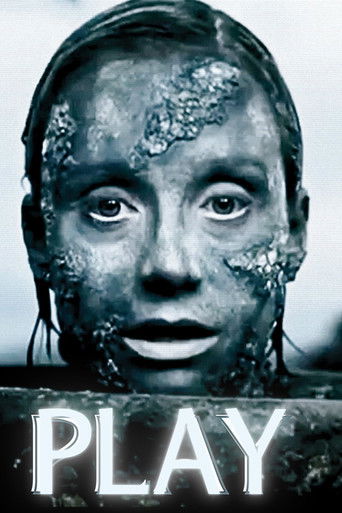
7.1The land is filled with people in urns chattering at top speed, but only to themselves, not to one another. The focus goes to three people: a man, his mistress and his wife.
Play
2001
 7.4
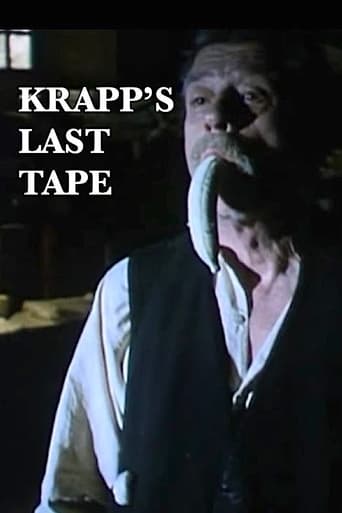
7.4In Krapp's Last Tape, which was written in English in 1958, an old man reviews his life and assesses his predicament. We learn about him not from the 69-year-old man on stage, but from his 39-year-old self on the tape he chooses to listen to. On the 'awful occasion' of his birthday, Krapp was then and is now in the habit of reviewing the past year and 'separating the grain from the husks'. He isolates memories of value, fertility and nourishment to set against creeping death 'when all my dust has settled'. One part of 19 parts for series "Beckett on Film" featuring filmed versions of Beckett plays, some screened at the 2000 Toronto International Film Festival and some on Channel 4 television in the UK in June 2001.
Krapp's Last Tape
2000
 5.8
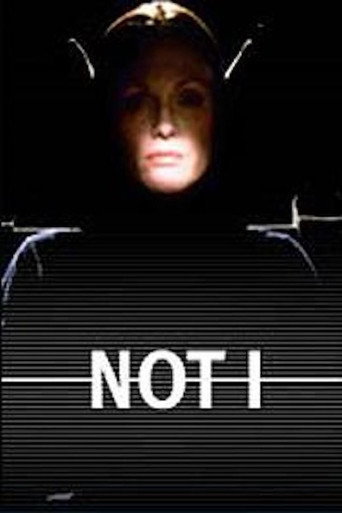
5.8A young woman sits down in a chair. Only her mouth is visible as she begins to speak at a rapid clip, describing events that she insists did not really happen to her.
Not I
2000
 5.6
5.6The camera swoops down on a circular area, seemingly suspended in space. It is filled with medical waste and other trash. A labored exhalation is heard. Then it stops. Then it starts again, culminating in a windy, dying sigh.
Breath
2001
Film credits
2010s · 3 titles
 5.0
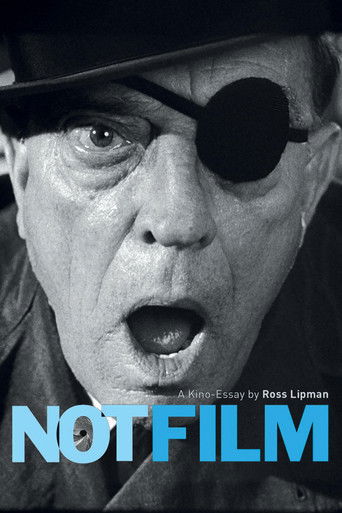
5.0NOTFILM is a feature-length experimental essay on FILM -- its author Samuel Beckett, its star Buster Keaton, its production and its philosophical implications -- utilizing additional outtakes, never before heard audio recordings of the production meetings, and other rare archival elements.
Notfilm
2015
 NR
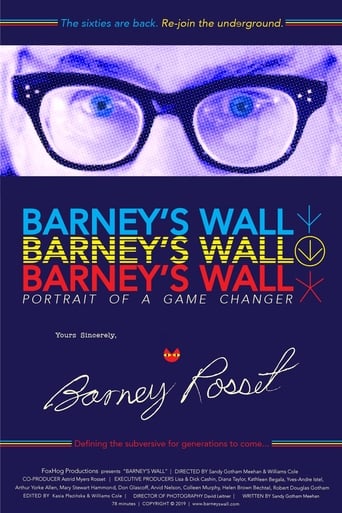
NRWhat makes a rebel? This 78 minute documentary probes the psyche of bad-boy publisher and free speech warrior Barney Rosset, whose mid-century legal and cultural battles smashed sexual and political taboos in the United States — unleashing the counter-culture of the 1960s and introducing millions of young intellectuals to the most radical currents in literature, film, theater and politics. In his late eighties, coming to terms with his life, Barney Rosset began to obsessively sculpt an autobiographical 15′ x 22′ surreal wall mural, embedded with jewel-like vignettes crafted out of found objects, each a clue to the conflicts and obsessions that drove Barney’s lifetime rebellion against authority. A cast of artists, a neurologist, and a shaman connect the clues and piece together Barney’s life.
Barney's Wall
2019
 10.0
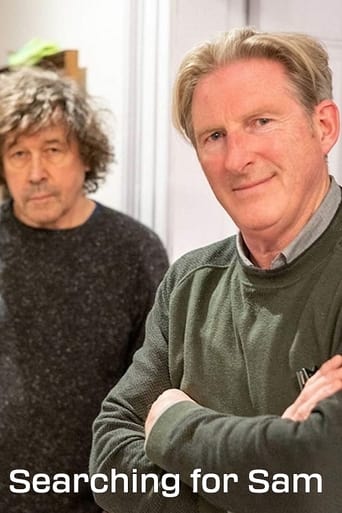
10.0Samuel Beckett has fascinated Adrian Dunbar since he was a young student. Now, 30 years after Beckett's death in Paris, Dunbar explores what made the man who made Waiting for Godot.
Searching for Sam: Adrian Dunbar on Samuel Beckett
2019
1980s · 2 titles
 NR
NRThe elusive author of Waiting for Godot cooperated in the production of this portrait, which traces Beckett’s artistic life through his prose, plays, and poetry. Billie Whitelaw, Jack McGowran, and Patrick Magee—Beckett’s great dramatic interpreters—appear in selected extracts from the plays; Beckett specialist David Warrilow narrates a variety of texts.
Samuel Beckett: Silence to Silence
1984
 7.5
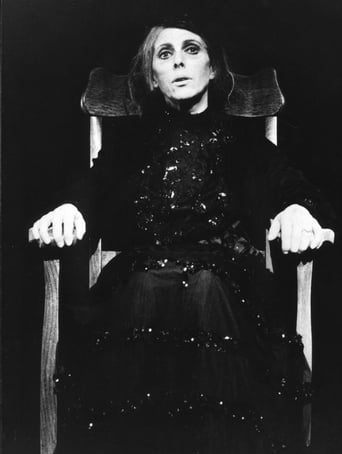
7.5The filmmakers accompany Alan Schneider, director of the American premieres of most of Beckett's plays, and producer Daniel Labeille to the home of Billie Whitelaw, whom Schneider, ironically, had never met previously, and takes us through the rehearsal process of Beckett's newest play, including the recording of the dialogue, as almost all of it is voiceover. The final fifteen minutes of the film are the premiere performance in its entirety.
Making Samuel Beckett's 'Rockaby'
1983
1960s · 3 titles
 7.0
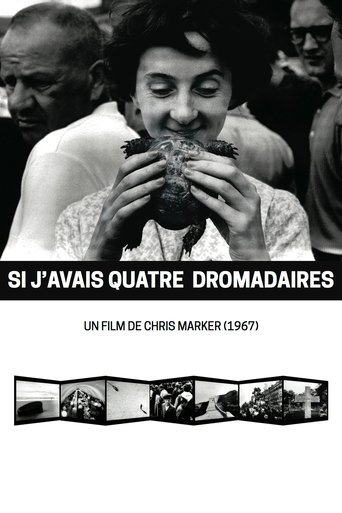
7.0Composed entirely of still photographs taken by Chris Marker across 26 countries, If I Had Four Dromedaries presents a dialogue between three voices reflecting on the meaning of images and travel. Through this photo-essay form, Marker explores the relationship between still and moving images and the act of seeing itself.
If I Had Four Dromedaries
1966
 7.0
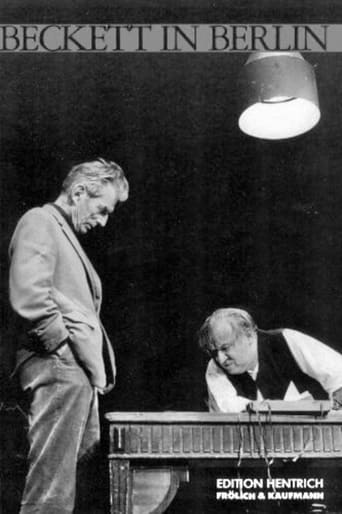
7.0Samuel Beckett walks in Berlin in 1969.
Beckett in Berlin
1969
 NR
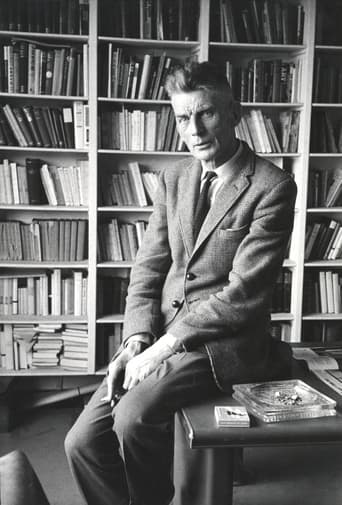
NRA wordless, silent interview with Samuel Beckett for Swedish Television after Beckett won the Nobel Prize in Literature.
Samuel Beckett - Mute Interview
1969
Series credits
Behind the camera
10.0Follows the "Beckett on Film" project, which produced film adaptations of writer Samuel Beckett's nineteen stage plays. The documentary features excerpts from the "Beckett on Film" versions of "Not I", "Krapp's Last Tape", "Endgame", "What Where", and "Waiting for Godot".
Check the Gate: Putting Beckett on Film
2003
7.1The land is filled with people in urns chattering at top speed, but only to themselves, not to one another. The focus goes to three people: a man, his mistress and his wife.
Play
2001
7.4In Krapp's Last Tape, which was written in English in 1958, an old man reviews his life and assesses his predicament. We learn about him not from the 69-year-old man on stage, but from his 39-year-old self on the tape he chooses to listen to. On the 'awful occasion' of his birthday, Krapp was then and is now in the habit of reviewing the past year and 'separating the grain from the husks'. He isolates memories of value, fertility and nourishment to set against creeping death 'when all my dust has settled'. One part of 19 parts for series "Beckett on Film" featuring filmed versions of Beckett plays, some screened at the 2000 Toronto International Film Festival and some on Channel 4 television in the UK in June 2001.
Krapp's Last Tape
2000
5.8A young woman sits down in a chair. Only her mouth is visible as she begins to speak at a rapid clip, describing events that she insists did not really happen to her.
Not I
2000
5.6The camera swoops down on a circular area, seemingly suspended in space. It is filled with medical waste and other trash. A labored exhalation is heard. Then it stops. Then it starts again, culminating in a windy, dying sigh.
Breath
2001
 9.0
9.0A reader tells a sad story to a listener, who only knocks in response.
Ohio Impromptu
2002
 6.4
6.4An autocratic Director (Harold Pinter) and his Assistant (Rebecca Pidgeon) put the final touches to the last scene of some kind of dramatic presentation, which consists entirely of a man (John Gielgud) standing still onstage.
Catastrophe
2001
 6.6
6.6Performed at the Royal Court Theatre on 16th January 1973
Not I
1973
6.6Performed at the Royal Court Theatre on 16th January 1973
Not I
1973
 5.8
5.8Two bureaucrats discuss the potential suicide of a man standing perfectly still in front of a door that opens into the night sky and a fatal drop.
Rough for Theatre II
2000
 NR
NRKrapp's Last Tape: James Hayes uses his natural Irish accent to deliver the best known of these works, a meditation on ageing. He plays the eponymous Krapp, a sad, lonely man recollecting emotion in tranquility with the assistance of a reel to reel tape recorder. Now somewhere near 70, he is reminded of the past, as a recording of his 39-year-old self recalls life a dozen years before. As such, we are able to glimpse the hope of relative youth, the acceptance of middle age failure and the resignation of an old man. The Old Tune: Featuring two old men sitting on a park bench next to a hurdy-gurdy and almost inevitably brings to mind the song from Gigi, "I Remember It Well". As cars pass, irritating the men who fondly remember the days of horse-drawn carriages, every statement delivered by either Niall Buggy or David Threlfall, playing the grumpy septuagenarians, is instantly contradicted by his fellow, often to great humorous effect. Recorded at the Jermyn Street Theatre in London, UK.
Beckett Double Bill (Krapp's Last Tape / The Old Tune)
2020
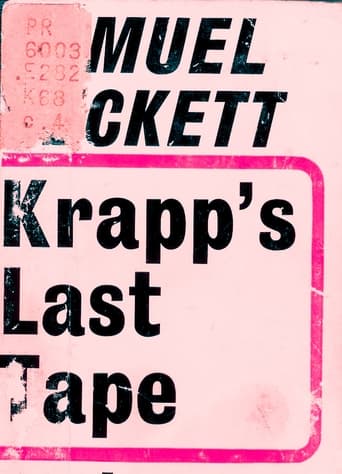 10.0
10.0A 69-year-old man sits alone on his birthday and listens to his past through the form of tape reels he has recorded throughout his life.
Krapp's Last Tape
1972
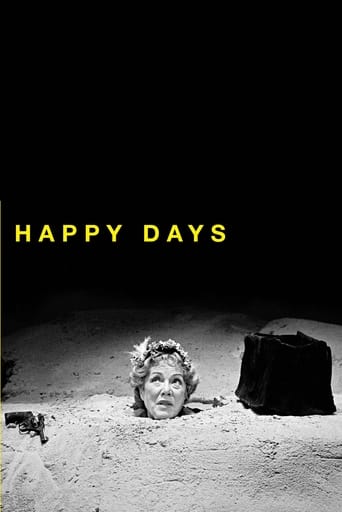 7.5
7.5An adaptation of Samuel Beckett's absurdist drama. An ordinary woman lives her humdrum life half-buried in a pile of dirt; her husband is partially visible behind her. She goes through her daily routines, ever hopeful that this is going to be a happy day.
Happy Days
2000
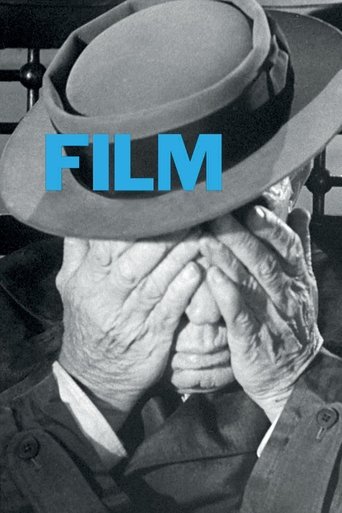 7.0
7.0A man attempts to evade observation by an all-seeing eye.
Film
1965
7.0A man attempts to evade observation by an all-seeing eye.
Film
1965
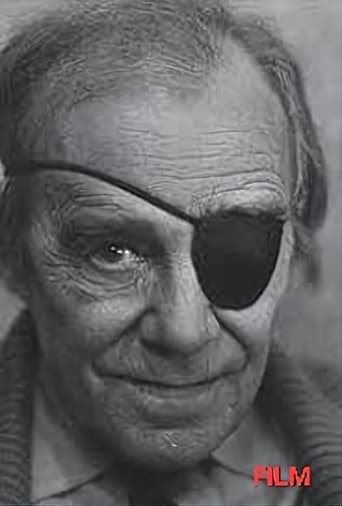 8.0
8.0A man attempts to remain hidden from view from the camera and other eyes.
Film (A Screenplay by Samuel Beckett)
1979
 NR
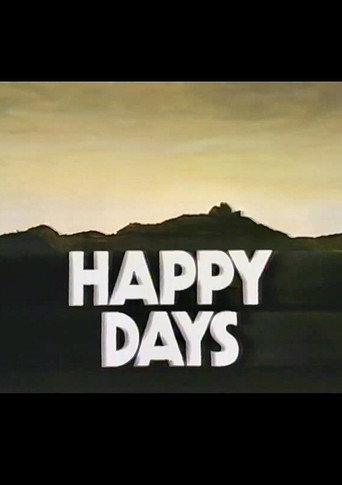
NRWinnie, buried to her waist, follows her daily routine and prattles to her husband, Willie, who is largely hidden and taciturn.
Happy Days
1979
NRWinnie, buried to her waist, follows her daily routine and prattles to her husband, Willie, who is largely hidden and taciturn.
Happy Days
1979
7.5The filmmakers accompany Alan Schneider, director of the American premieres of most of Beckett's plays, and producer Daniel Labeille to the home of Billie Whitelaw, whom Schneider, ironically, had never met previously, and takes us through the rehearsal process of Beckett's newest play, including the recording of the dialogue, as almost all of it is voiceover. The final fifteen minutes of the film are the premiere performance in its entirety.
Making Samuel Beckett's 'Rockaby'
1983
May, wrapped in tatters, paces back and forth engaging in conversation with the disembodied voice of her mother. In the second scene, May's voice becomes subsumed into her mother's. She paces ever more slowly as the play progresses, and the light dims so that by the fourth and final scene there is no trace of her
Footfalls
2000
 NR
NRThis play is adapted from the last full-length novel by Samuel Beckett, also one of his most obscure works.Set in a boundless wilderness, the story follows an unnamed narrator crawling forward. On his journey, he encounters another wanderer named Pim, and an absurd yet tense relationship gradually develops between the two.In the end, Pim chooses to flee, leaving the narrator alone once again.
How It Is
2026
 7.1
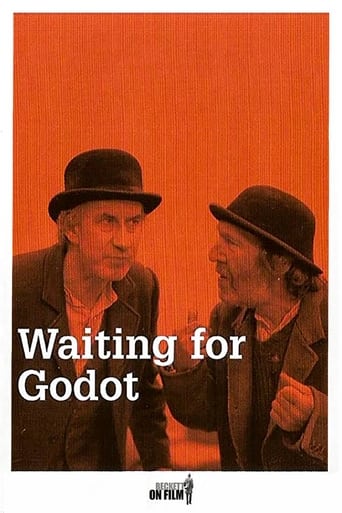
7.1Two tramps wait for a man named Godot, but instead meet a pompous man and his stooped-over slave.
Waiting for Godot
2001
 6.2
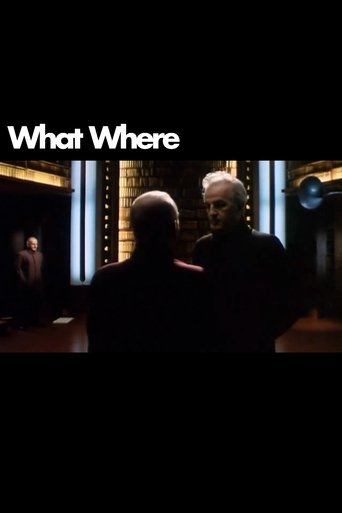
6.2There are five survivors in a futuristic library. Bam is their supreme dictator, and has the others interrogated and tortured, believing them to have said where. What Bam means is unclear, but he distrusts all.
What Where
2000
 7.0
7.0An old blind beggar and an old cripple in a wheelchair meet on a desolate street corner. The latter proposes that the two form an alliance, but the men are not destined to get along together.
Rough for Theatre I
2000
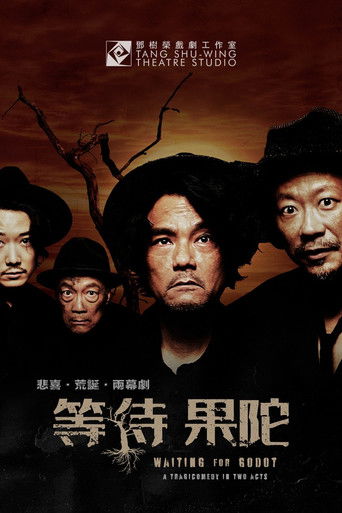 NR
NRCantonese adapted version of ‘Waiting for Godot’ staged in Hong Kong
Waiting for Godot
2025
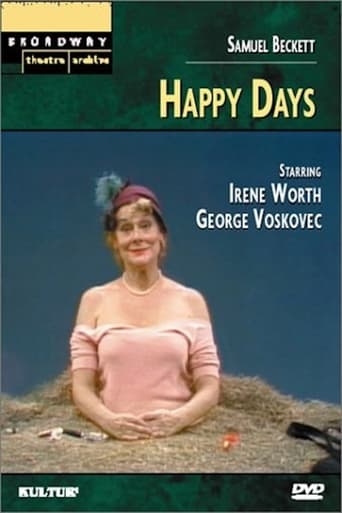 8.0
8.0Winnie, a woman in her fifties, is buried waist-deep in a mound of scorched earth, with just a large, black shopping bag and a collapsed parasol. Behind her and hidden from view sleeps Willie.
Happy Days
1980
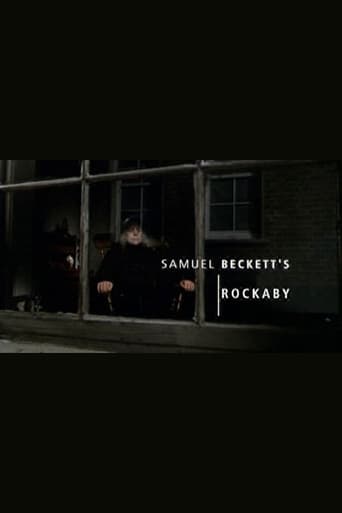 5.1
5.1An old woman in a rocking chair listens to a disembodied voice (her own) that recounts her life and that of her mother's. When the voice stops, she calls for more.
Rockaby
2000
An adaptation of Samuel Beckett's short play from 1965. Three women meet on a bench; they reminisce about their old school days and whisper terrible secrets.
Come and Go
2000
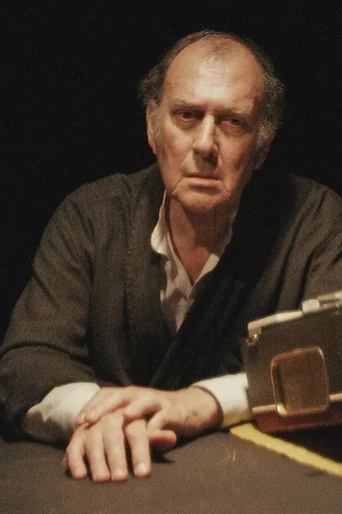 NR
NRA 69 year old man sits alone on his last birthday and listens to the past. Krapp's Last Tape is an extraordinary study of mortality, creativity and memory. A television relay of the 2006 Royal Court Theatre production of Samuel Beckett's critically acclaimed play, starring Harold Pinter.
Krapp's Last Tape
2007
 NR
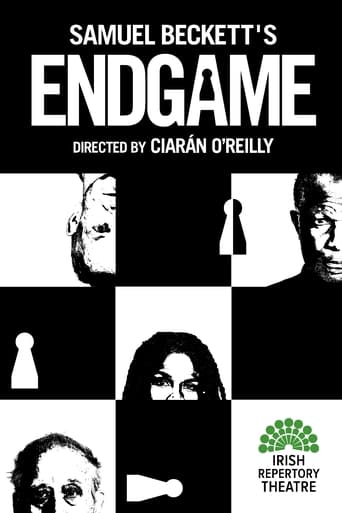
NREndgame tells the story of Hamm, who is reduced to living in one room, in which he sits blind and chair-bound. His only escape from his solitary world is the company of his aging, legless parents, who live in garbage bins, and his shuffling servant, Clov, who is at his beck and call, and who, like a dog, comes when whistled for. The only thing left for Hamm is to wait for the inevitable end. A pinnacle of Beckett’s characteristic raw minimalism, Endgame is a pure and devastating distillation of the human essence in the face of approaching death. “Nothing is funnier than unhappiness” invokes Nell, which summarizes the tragicomic nature of this timeless play.
Endgame
2023
 NR
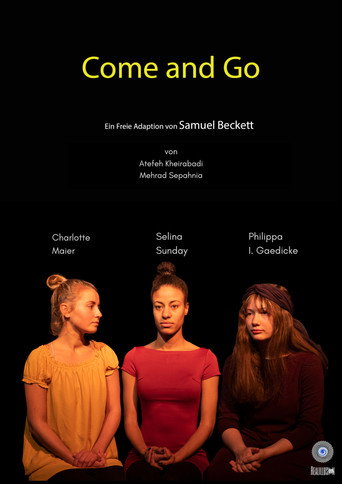
NRCome and Go is a free adaptation of Samuel Beckett’s minimalist play, reimagined as an experimental film. This cinematic interpretation brings Beckett’s absurdism to life through visual language, navigating the blurred borders between reality and illusion. With a distilled aesthetic and rhythmic pacing, the film explores the quiet tensions, repetitions, and silences that define the human condition evoking a world where presence and absence continuously shift.
Come and Go
2020
 NR
NRDocumentary about the staging of 'Waiting for Godot' in prison.
Waiting for Godot in San Quentin
1998
A hot, thirsty man in the desert is tormented when the things he needs drop from the sky only to disappear again or hover out of his reach.
Act Without Words I
2001
 9.0
9.0A woman left behind by a man. Based on a script by Samuel Beckett.
...but the clouds...
1977
No synopsis available yet.
Warten auf Godot
1976
 NR
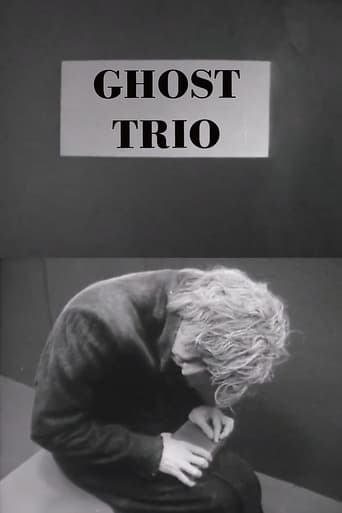
NRA female voice identifies a lone man in a room. The shots cut closer, revealing he is holding a cassette recorder, playing Beethoven's "Ghost" Piano Trio no. 5. The film repeats the imagery, and then shows what he has been reacting to.
Ghost Trio
1977
 7.3
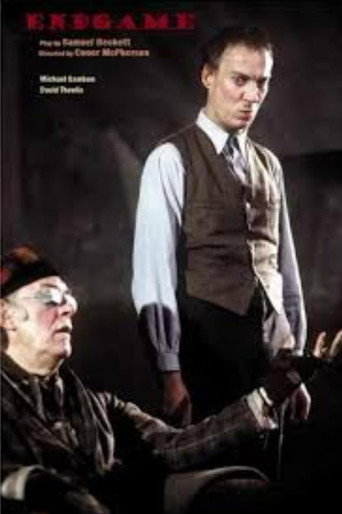
7.3Hamm is blind and unable to stand; Clov, his servant, is unable to sit; Nagg and Nell are his father and mother, who are legless and live in dustbins. Together they live in a room with two windows, but there may be nothing at all outside.
Endgame
2000
 NR
NRWith hindsight, we can see exactly how wrong the labels given to Samuel Beckett have been, since it has been said that his writing was sad, negative and desperate. Nowadays, it can be said that several of his pieces submerge us in the reality of human existence, but with an element of humor - and it is this humor that has saved us. Beckett rejects every theory, every core belief, looking for the truth. He observes people amid the darkness and takes them into what is vast and unknown about life, so they can discover their truth by taking a look at themselves and others. Like Beckett, we share their uncertainty, their search, their pain. This theatrical reflection by the masters of European theater, Peter Brook and Marie-Hélène Estienne, incorporates parts of Fragments, a piece premiered in 2008 and filmed in 2015 and which contains the short plays Rough For Theater I, Rockaby, Act Without Words II and Neither.
Beckett by Brook
2018
No synopsis available yet.
Ostatnia Taśma
1989
 7.3
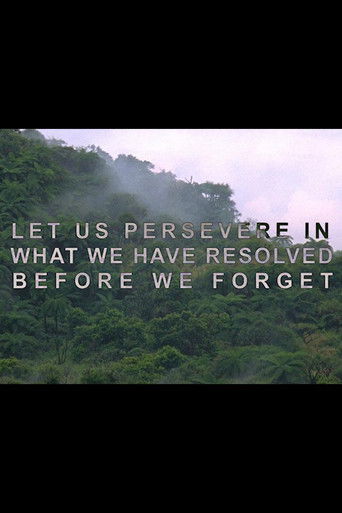
7.3On the island of Tanna, a part of Vanuatu, an archipelago in Melanesia, strange rites are enacted and time passes slowly while the inhabitants await the return of the mysterious John.
Let Us Persevere in What We Have Resolved Before We Forget
2013