
Directing
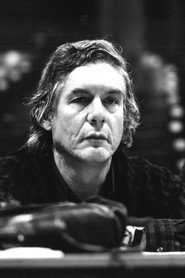
Hans Neuenfels
Born — Died
1941-05-31 — 2022-02-06
Place of birth
Krefeld, Germany
Known for
Directing
Credits
15 titles
Known for
 NR
No synopsis available yet.
Lesenswert
2013
 9.0
No synopsis available yet.
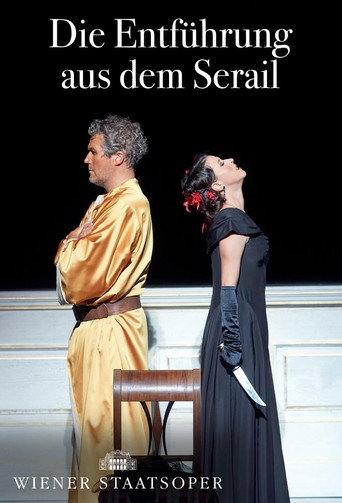
Die Entführung aus dem Serail - Wiener Staatsoper
2020
 7.0
No synopsis available yet.
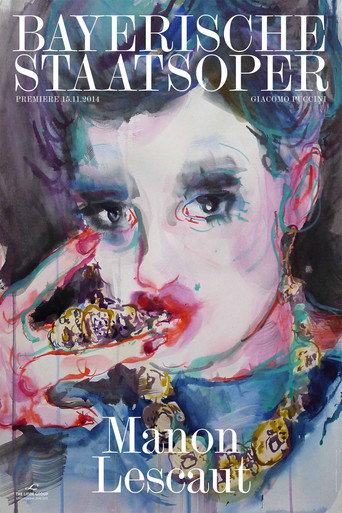
Manon Lescaut - Bayerische Staatsoper
2015
 10.0
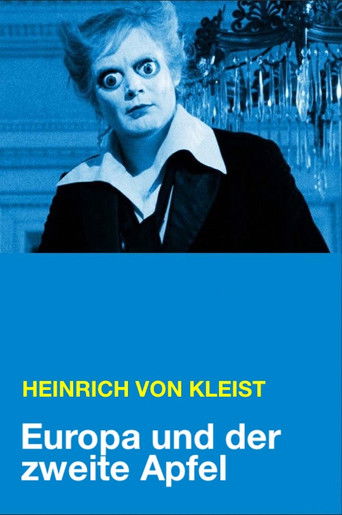
After the essay "On Marionette theatre" by Heinrich von Kleist. The film focuses on Kleist himself, torn apart, searching for knowledge, for identity, trapped in his loneliness and self-absorption, jumping over walls, making grimaces, cruelty, suffering.
Innocence Unknown
1988
If there has been an "edit" somewhere on the music theatre scene since the dawn of the new millennium, which has been noted by the chroniclers as a tangible scandal - then the Salzburg festival production of the operetta "The Bat" by Johann Strauß, staged by Hans Neuenfels. Neuenfels, born in Krefeld in 1941 and long known as the "enfant terrible" of the theatre scene, was not the first within the reception history of the "bat" who dared to scratch their paint. This time there was not only an unconventional direction, but also serious interventions in the libretto. Neuenfels has written new dialogues, incorporating texts from other authors: Karl Kraus, Gottfried Benn, Hugo Ball. Conductor is Marc Minkowski.
Die Fledermaus (La chauve-souris)
2001
Legendary director Hans Neuenfels once again proves his great skill with this interpretation of Mozart’s “Entführung aus dem Serail” (Abduction from the Seraglio). This extraordinary production conducted by Lothar Zagrosek, and with Catherine Naglestad, Kate Ladner and Matthias Klink in the main roles, won the Bavarian Theatre Prize in 1999 and offers a refreshingly new view of one of the most frequently played operas worldwide. Special highlight: Neuenfels places an actor at every singer’s side who not only takes over his role for the spoken original scripts, but also interacts with his singing double and other characters of the piece. In recent decades, directors have sought to revitalise the somewhat naive plot of the “Entführung” with fresh interpretations. Hans Neuenfels, who produced his “first Mozart” here in Stuttgart, retains the story’s naivety and absurdity. He does this in a very stimulating and intelligent way.
Die Entführung aus dem Serail
1998
Series credits
Behind the camera
9.0No synopsis available yet.
Die Entführung aus dem Serail - Wiener Staatsoper
2020
7.0No synopsis available yet.
Manon Lescaut - Bayerische Staatsoper
2015
10.0After the essay "On Marionette theatre" by Heinrich von Kleist. The film focuses on Kleist himself, torn apart, searching for knowledge, for identity, trapped in his loneliness and self-absorption, jumping over walls, making grimaces, cruelty, suffering.
Innocence Unknown
1988
10.0After the essay "On Marionette theatre" by Heinrich von Kleist. The film focuses on Kleist himself, torn apart, searching for knowledge, for identity, trapped in his loneliness and self-absorption, jumping over walls, making grimaces, cruelty, suffering.
Innocence Unknown
1988
If there has been an "edit" somewhere on the music theatre scene since the dawn of the new millennium, which has been noted by the chroniclers as a tangible scandal - then the Salzburg festival production of the operetta "The Bat" by Johann Strauß, staged by Hans Neuenfels. Neuenfels, born in Krefeld in 1941 and long known as the "enfant terrible" of the theatre scene, was not the first within the reception history of the "bat" who dared to scratch their paint. This time there was not only an unconventional direction, but also serious interventions in the libretto. Neuenfels has written new dialogues, incorporating texts from other authors: Karl Kraus, Gottfried Benn, Hugo Ball. Conductor is Marc Minkowski.
Die Fledermaus (La chauve-souris)
2001
Legendary director Hans Neuenfels once again proves his great skill with this interpretation of Mozart’s “Entführung aus dem Serail” (Abduction from the Seraglio). This extraordinary production conducted by Lothar Zagrosek, and with Catherine Naglestad, Kate Ladner and Matthias Klink in the main roles, won the Bavarian Theatre Prize in 1999 and offers a refreshingly new view of one of the most frequently played operas worldwide. Special highlight: Neuenfels places an actor at every singer’s side who not only takes over his role for the spoken original scripts, but also interacts with his singing double and other characters of the piece. In recent decades, directors have sought to revitalise the somewhat naive plot of the “Entführung” with fresh interpretations. Hans Neuenfels, who produced his “first Mozart” here in Stuttgart, retains the story’s naivety and absurdity. He does this in a very stimulating and intelligent way.
Die Entführung aus dem Serail
1998
 2.0
An imaginary biography of Jean Genet, poet and high priest of evil. "Revolt is something I allow myself", said Jean Genet in 1975. Born in Paris in 1910, raised and humiliated in an approved school, a pederast and thief who has been to prison 14 times and expelled from five European countries. His novels are ballads of poisonous beauty, his plays are murky rituals of oppression where each person acts out the role imposed upon him by the others.
Journey Into a Secret Life
1983
2.0An imaginary biography of Jean Genet, poet and high priest of evil. "Revolt is something I allow myself", said Jean Genet in 1975. Born in Paris in 1910, raised and humiliated in an approved school, a pederast and thief who has been to prison 14 times and expelled from five European countries. His novels are ballads of poisonous beauty, his plays are murky rituals of oppression where each person acts out the role imposed upon him by the others.
Journey Into a Secret Life
1983
 NR
The aristocratic families of Rossitz and Warwand, who are relatives, have started to treat each other with mistrust and hatred, since a testamentary contract has stated, that the complete goods will be inherited to the respective surviving line. At the same time the young generation is in love, how can the tender ties between Agnes of Warwand and Ottokar of Rossitz be protected? Killed by their own fathers, they lie in their blood. A radical drama about the term "family". (www.filmgalerie451.de)
The Family or Schroffenstein
1984
 5.8
The film interweaves three layers: the centre is Kleist's play "Penthesilea". Like from a distance Kleist observes the relationship beween man and woman, when he transfers into mythical Greece what in his time became a problem for him in Prussia - and remains to be a problem also for us. The director's associations during the work form the second layer. Reality and fantasy blend to an imaginary biography of Kleist, the third layer. At the end of the film Kleist is identical with his title character Penthesilesa.
Heinrich Penthesilea von Kleist
1983
5.8The film interweaves three layers: the centre is Kleist's play "Penthesilea". Like from a distance Kleist observes the relationship beween man and woman, when he transfers into mythical Greece what in his time became a problem for him in Prussia - and remains to be a problem also for us. The director's associations during the work form the second layer. Reality and fantasy blend to an imaginary biography of Kleist, the third layer. At the end of the film Kleist is identical with his title character Penthesilesa.
Heinrich Penthesilea von Kleist
1983
Film by Hans Neuenfels.
Das blinde Ohr der Oper
1990
 6.0
This performance of the Richard Wagner opera Logengrin was filmed in high definition for the Bayreuth Festival in 2011, and features vocalists like Georg Zeppenfeld, Klaus Florian Vogt, and Anette Dasch in the leading roles.
Lohengrin
2011