
Known for
 7.5
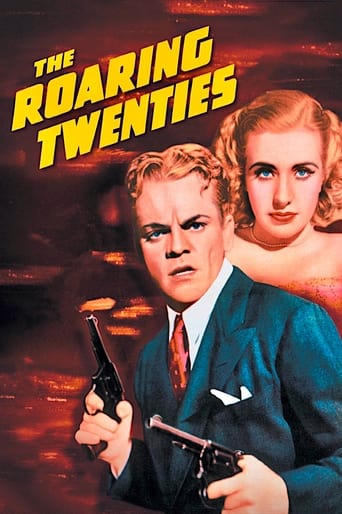
7.5After World War I, Armistice Lloyd Hart goes back to practice law, former saloon keeper George Hally turns to bootlegging, and out-of-work Eddie Bartlett becomes a cab driver. Eddie builds a fleet of cabs through delivery of bootleg liquor and hires Lloyd as his lawyer. George becomes Eddie's partner and the rackets flourish until love and rivalry interfere.
The Roaring Twenties
1939
 6.3
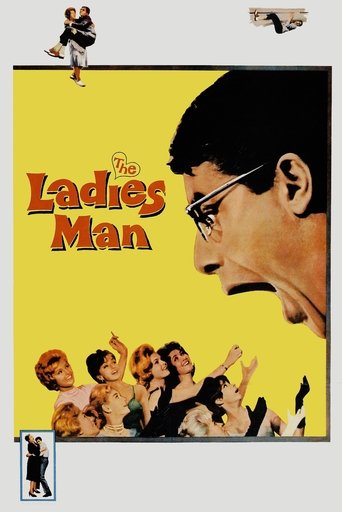
6.3After his girl leaves him for someone else, Herbert gets really depressed and starts searching for a job. He finally finds one in a big house which is inhabited by many, many women. Can he live in the same home with all these females?
The Ladies Man
1961
 7.3
7.3No synopsis available yet.
Crusade in Europe
1949
Part of the March of Time series, this episode (Volume 12, Number 2) focuses entirely on the beauty industry in the USA. With spending of over $1 billion (in 1945) on cosmetic products, it has evolved into a major commercial enterprise. Packaging has proved to be a very important factor in sales and some $50 million per year is spent on advertising. The FDA look out for harmful products and Federal Trade Commission keeps an eye out for misleading claims. Spas and country resorts, where you can rest and relax, are gaining popularity for those who can afford it as are slenderizing salons and gymnasiums. Hairstyling has become an even bigger business. It's not only women who spend money on beauty products as some $300 million per year is spent by men.
American Beauty
1945
 5.3
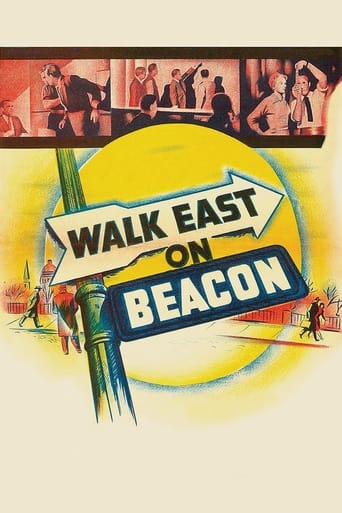
5.3An FBI agent works with a refugee scientist and the Coast Guard to crack a Soviet spy ring in Boston.
Walk East on Beacon
1952
 7.5
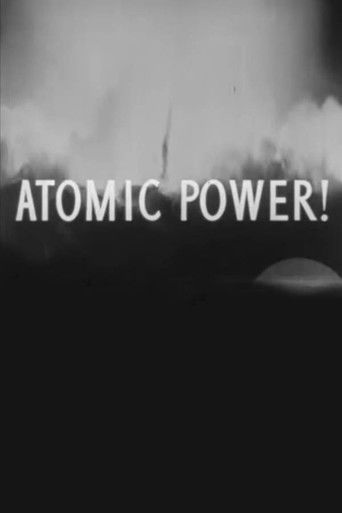
7.5Atomic Power! is an American short documentary film produced by The March of Time and released to theaters August 9, 1946, one year after the end of World War II. It is a recreation of the making of the atomic bomb leading up to the Trinity test. It was nominated for an Academy Award for Best Documentary Short.
Atomic Power!
1946
Film credits
1950s · 4 titles
5.3An FBI agent works with a refugee scientist and the Coast Guard to crack a Soviet spy ring in Boston.
Walk East on Beacon
1952
 10.0
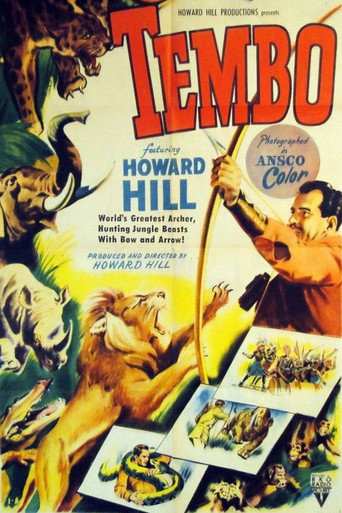
10.0Tembo is a 1951 American documentary film which follows the travels of hunter Howard Hill through equatorial Africa.
Tembo
1952
 6.6
6.61950's television documentary special that includes interviews with Hitler's sister Paula Wolf and a fellow prisoner who was incarcerated with Hitler, actual footage shot by the Nazi's and Eva Braun's rare home movies.
The Secret Life of Adolf Hitler
1958
 NR
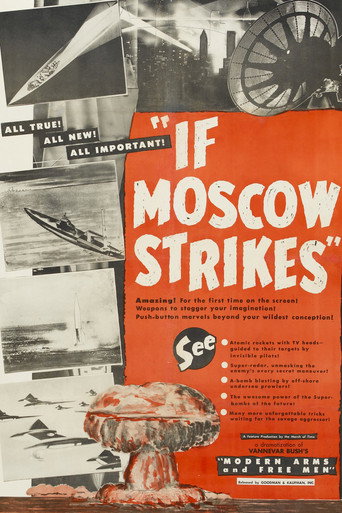
NRUsing documentary footage, re-enactments, newsreels, diagrams and animation, narrator Westbrook Van Voorhis details how to react to news of an atomic explosion.
If Moscow Strikes
1952
1940s · 20 titles
Part of the March of Time series, this episode (Volume 12, Number 2) focuses entirely on the beauty industry in the USA. With spending of over $1 billion (in 1945) on cosmetic products, it has evolved into a major commercial enterprise. Packaging has proved to be a very important factor in sales and some $50 million per year is spent on advertising. The FDA look out for harmful products and Federal Trade Commission keeps an eye out for misleading claims. Spas and country resorts, where you can rest and relax, are gaining popularity for those who can afford it as are slenderizing salons and gymnasiums. Hairstyling has become an even bigger business. It's not only women who spend money on beauty products as some $300 million per year is spent by men.
American Beauty
1945
7.5Atomic Power! is an American short documentary film produced by The March of Time and released to theaters August 9, 1946, one year after the end of World War II. It is a recreation of the making of the atomic bomb leading up to the Trinity test. It was nominated for an Academy Award for Best Documentary Short.
Atomic Power!
1946
Life during wartime for Sweden meant a carefully balanced neutrality in order to avoid the fate of Norway. This newsreel explains the concessions Sweden made to the Nazis in order to remain neutral, while highlighting the ways in which the country was also helping the Allies and defying Germany.
The March of Time: Sweden's Middle Road
1944
From the ruins of Monte Cassino to the malarial swamps of the Pontine Marshes, this newsreel depicts the full extent of Italy’s devastation in early 1945. Reports on the Ardeatine massacre – a Nazi atrocity in which over 300 Italians were shot in reprisal for a Partisan attack on an SS regiment.
The March of Time: Report on Italy
1945
Where’s the Meat tells in considerable detail where it is, where it isn’t and why it won’t be. There are glimpses of black markets and worried men in Washington, of sharp practices in stores and on the range, and of the small local butcheries which have crammed quick-freeze lockers with millions of pounds of meat, much of it bought point-free, on the hoof. The obvious conclusion: with the demand for meat almost twice the visible supply—despite the slaughter of cattle not fully grown—the best that can be done is not going to be good enough, for some time to come. The film’s approach to the problem, accordingly, is humorous as well as instructive. Best bits of humor: glaring samples of the sycophantic treatment accorded that “pampered citizen,” the local meat-retailer; almost lascivious shots of steaks and chops in all their old-fashioned glory, which might well be forbidden on grounds of mental cruelty to carnivorous America.
The March of Time: Where's the Meat?
1945
Eager science students, devout peasants, tough farm workers and hungry families: this film offered a rare chance for viewers to see the human face of Russia in the aftermath of war.
The March of Time: The Russians Nobody Knows
1947
A successful invasion of Nazi-occupied Europe depended on intelligence from behind enemy lines. This report uses a mixture of dramatized reconstructions, captured Axis film and footage shot by the French Resistance to reveal life in Nazi-occupied Europe.
The March of Time: Underground Report
1944
The Italian Communist Party in 1948: a force for progress and reform or the last refuge of a desperate population and a threat to the rest of Europe?
The March of Time: Crisis in Italy
1948
Postwar Farms (MARCH OF TIME) will interest not only farmers but also those numerous urbanites who wonder wistfully how they might make out on five acres and a prayer. General answer: there is a chance for small farmers, through rural electrification and cooperatives, but not too gay or sure a one. Few or none of the returning soldiers who look forward to farming can be absorbed on the land; and the small farmer at best is threatened by the expanding immensity of 20th-century big-business farming. Most impressive—and to many, most depressing—shots in the film show the implacable march of incredibly proficient machines across vast acreages of California and New Jersey, with human beings assuming a relationship to the soil almost as impersonal as work in great factories, or in the bull pens of great companies.
The March of Time: Post-War Farms
1944
A sweeping survey of General de Gaulle’s Free France government-in-exile and the French underground resistance movement. From bold acts of sabotage in Vichy France and fund-raising events in New York to the activities of the Free French forces in the South Pacific and Equatorial Africa.
The March of Time: The Fighting French
1942
Justice or revenge? As Allied tanks rolled across Europe in October 1944, clearly in no mood for reconciliation or forgiveness, this film demands punishment for Germany as well as hoping for a lasting peace settlement. Includes footage from the entire conflict, as well as staged sequences.
The March of Time: What To Do with Germany
1944
Tells the story of how the 8th American Air force’s daylight bombing raids on Germany helped the Allies to win control over the skies of Europe. Recreating the events of Operation Argument (or Big Week) during 20-25 February 1944, which helped secure Allied air power over Europe.
The March of Time: The Unknown Battle
1944
As America puts pressure on Ireland to suspend diplomatic relations with the Axis powers, this film offers a nuanced and heartfelt defence of Irish neutrality with a backdrop of peaceful images of whitewashed cottages and peat-laden wagons.
The March of Time: The Irish Question
1944
Part of the March of Time series, this episode (Volume 11, Number 11) focuses on a new sociological phenomenon - the teen-age girl. She is recognized as unique, with a mind of her own and not necessarily prone to following in her mother's foot-steps. Industry now recognizes this sector of society as a potentially lucrative market, the result being that magazines, beauty products and clothes are all being designed with the teen-age girl in mind. New music is central to their activities, and there is also an increasing demand for photogenic teen-agers as models.
The March of Time: Teen-Age Girls
1945
The Teachers’ Crisis (MARCH OF TIME) puts the pointer on one of the biggest U.S. problems—education. By narrative, charts and acted episodes, the film dramatizes the fact that, with public school enrollments bigger than ever before, and constantly growing, the U.S. has fewer public-school teachers than it had in 1939. Of these teachers many are pitifully ill-trained “emergency” amateurs. (The film shows the too common spectacle of a teacher unable to work a problem she has given students.) Still others are psychologically unfit to teach (the film shows a stupid teacher calling a pupil stupid).
The March of Time: The Teachers’ Crisis
1947
 10.0
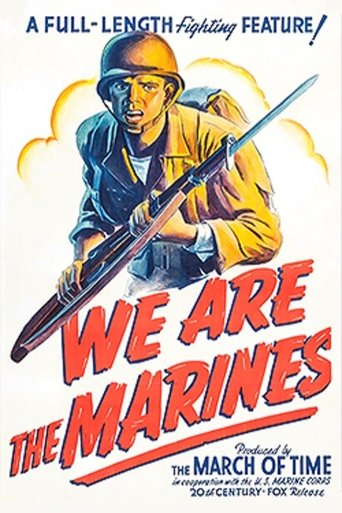
10.0The history of the Corps, from Colonial times to the present day (1942, that is). The film's midsection details the arduous training procedure of the Few and the Proud at Parris Island and elsewhere. Finally, wartime newsreel footage is adroitly blended with dramatized re-enactments to illustrate the contributions - and the utter necessity-of the marines in WW II.
We Are the Marines
1942
Fashion Means Business (MARCH OF TIME) compactly investigates that heavy, nervous industry which whets woman's desire to improve, with various fabrics and gewgaws, upon the pelt God gave her. The film ranges, within 18 minutes, from the elegant fountainheads of Parisian and U.S. design, to those frenetic dress foundries along Manhattan's Seventh Avenue in which as many as 100 identical garments are cut in a few swerves of power-driven super-scissors. There are also instructive glimpses of the machinery which stamps a season's fashions upon a whole continent at once: the fashion magazines, the provincial fashion editors, the out-of-town buyers. Respects are also paid to I.L.G.W.U., a strong, shrewd union which realizes that management's Golden Goose needs feeding as well as bleeding.
The March of Time: Fashion Means Business
1947
Ventures beyond the Copacabana beach to explain how Brazil – rich in minerals, oil and rubber and strategically vital for access to Africa, and at the time under the dictatorship of Getulio Vargas – was wooed by the USA’s ‘Good Neighbor Policy’ and came to join the Allies during World War II.
The March of Time: South American Front — 1944
1944
 6.7
6.7Covers the American planning and execution of the great Allied Military Manoeuvre in North Africa.
Africa, Prelude to Victory
1942
Documentary short film reporting on the activities of the American Red Cross and the useage made of contributed funds for the previous year. Preserved by the Academy Film Archive in 2012.
Seeing Them Through
1945
1930s · 4 titles
7.5After World War I, Armistice Lloyd Hart goes back to practice law, former saloon keeper George Hally turns to bootlegging, and out-of-work Eddie Bartlett becomes a cab driver. Eddie builds a fleet of cabs through delivery of bootleg liquor and hires Lloyd as his lawyer. George becomes Eddie's partner and the rackets flourish until love and rivalry interfere.
The Roaring Twenties
1939
 NR
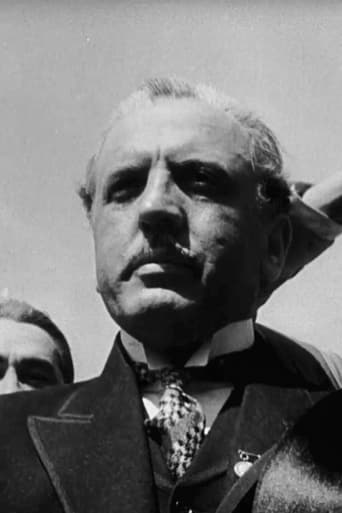
NROn July 10, 1936, the Time Corporation released the seventh episode of the second year of its newsreel series The March of Time, which included a controversial sequence titled “An American Dictator.” This segment, purportedly a journalistic exposé, centered on the rise to power and political career of then Dominican head of state Rafael Leónidas Trujillo Molina. The content of the short piece accused Trujillo of committing many politically motivated crimes, including murder, and caused a brief diplomatic crisis between the United States and the Dominican Republic. - Naida García-Crespo
The March of Time: An American Dictator
1936
This March of Time newsreel describes the organizing of the Croix de Feu, "Crosses of Fire," and the events of February 6th, 1934 in Paris, an attempted fascist coup against the democratic government of France.
The March of Time: Croix de Feu
1935
The U.S. looks for lessons in the Spanish Civil War as it prepares for future conflicts
The March of Time: Rehearsal for War
1937