Acting
Julio Mota
Born — Died
1936-04-08 — 2023-08-15
Place of birth
Venezuela
Known for
Acting
Credits
28 titles
Venezuelan actor born on April 8, 1936. He excelled in theater, film, and television. Additionally, he was a radio announcer and the official voice of the state channel Venezolana de Televisión.
Known for
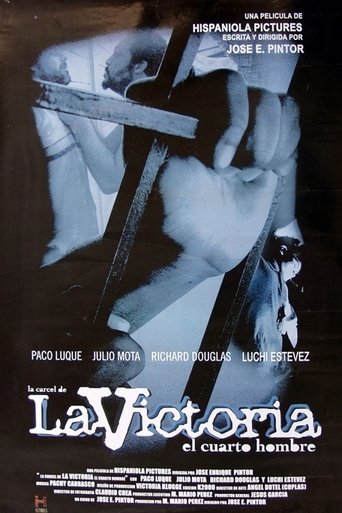 7.0
7.0A man enters the most dangerous prison in Santo Domingo in search of revenge against the man who killed his son.
La cárcel de La Victoria: El cuarto hombre
2004
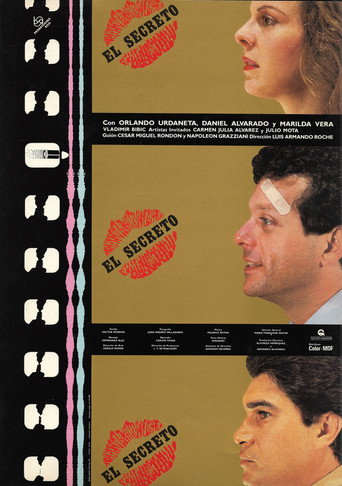 9.0
9.0Gaspar Urbieta works as a typographer in Maracaibo. The National Guard convinces him to infiltrate an organization of Colombian gold smugglers. Gaspar will experience situations of fear, humour, intrigue and romance with a beautiful and enigmatic blonde. His secret will be so incredible that if he told it, no one would believe it!
The Secret
1988
Feature film by John Dickinson.
Entre golpes y boleros
1990
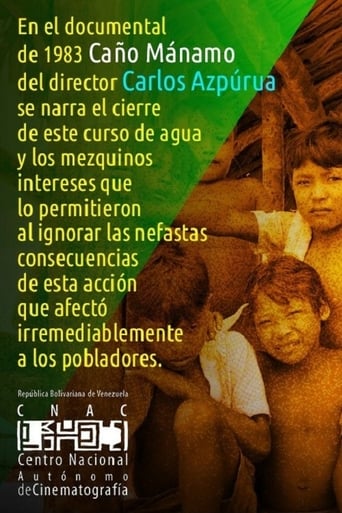 6.4
6.4A documentary about the building of a damn near Caño Mánamo and the effects it has on the environment.
Caño Mánamo
1983
 7.0
7.0The intent of novice director Solveig Hoogesteijn to make a drama about two Venezuelans from opposite sides of the economic and social tracks wobbles and weakens in the telling. Although the two compatriots both live in the capital, Caracas, and both love music, they have a need to go out into the rest of the country and discover their roots. As big-city dwellers, they are limited in their perspectives, though this excursion into other areas of Venezuela may prove more illuminating to them than to a foreign audience.
Manoa
1980
 10.0
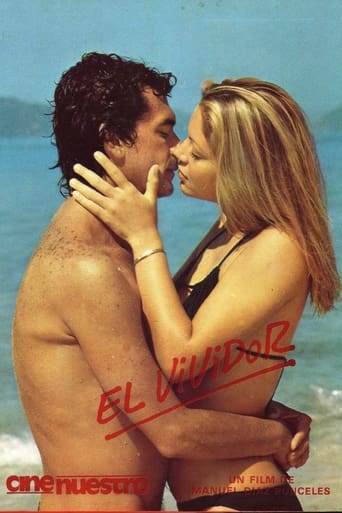
10.0Jorge Reina, a libertine and ambitious man, takes advantage of his ability to seduce and influence women to climb the ranks. He finally achieves his goal by marrying the rich heiress of the owner of the newspaper where he works and serving as its editor-in-chief. Drama based on Bel Ami by Guy de Maupassant.
El vividor
1977
Film credits
2010s · 2 titles
 3.7
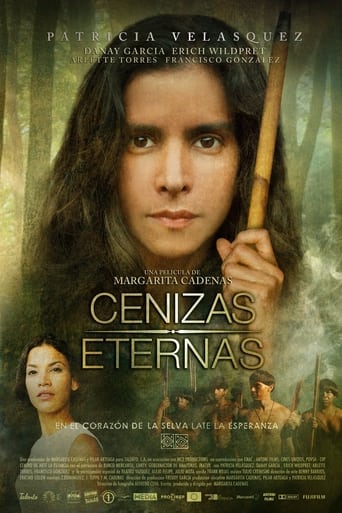
3.7ETERNAL ASHES tells the story of a mother, Ana and her daughter, Elena. Although they are separated, in the space and time they remain united forever. The people and the millenarian culture of Yanomami are the framework of this story about the unbreakable bonds of filiations. After an accident in the furious flow of the mythical Orinoco River, in the fifties, Ana was considered dead. Elena as an adult and facing the negligible possibility that her mother is alive decides to leave to the Amazon to search her. ETERNAL ASHES is a story of filiations, poetry, wisdom and especially of humanity.
Eternal Ashes
2011
 NR
NRYear 1966 Vimazoluleka is the first play that Levy Rossell staged at the Ateneo de Caracas (Quinta Ramia) starting on August 18, 1966. He moved to the auditorium of the Faculty of Engineering and from there to the Aula Magna. He won a scholarship to study in New York and staged it in English for five months off Broadway. He returned to Caracas and showed it throughout the 70s and 90s. He gave it that title from the first words of the names of his close classmates: Vicente Amengual, María Angelina Rodríguez, Zobeida Ramos, Luis Kolster, Levy Rossell and Carlos Hernandez.
Vimazoluleka
2017
2000s · 4 titles
7.0A man enters the most dangerous prison in Santo Domingo in search of revenge against the man who killed his son.
La cárcel de La Victoria: El cuarto hombre
2004
In a tiny town in an unnamed Latin American country in the 1930s, a young telegraph operator helps link the small, repressed community to the outside world, against the will of the powerful colonel who rules the village like a dictator.
La pluma del arcángel
2002
"Al Borde de la Línea" is the story of Claudia, a 16-year-old girl who works as a chambermaid in a rundown hotel where she is sexually abused by Rodriguez, the owner. She decides to escape with the help of her friend Alma, an older woman who is also a maid and Salvador, the driver of the morgue's van who is desperately in love with her. The night they have planned the escape, everything changes. Claudia runs away with Juan, a singer she met that day in the hotel's bar. Events unravel and bring them all back to the hotel "Crepúsculos de Venecia" a place of encounter, obsession, and betrayal. Their fate lies in Claudia's hands.
Al borde de la línea
2007
 4.3
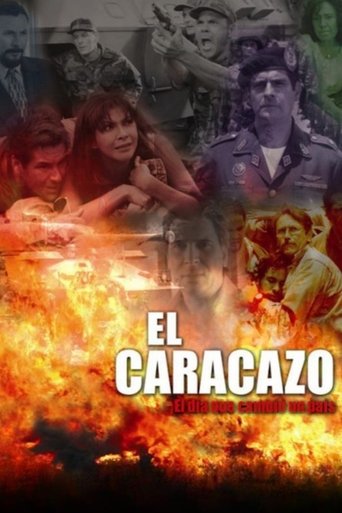
4.3El Caracazo o Sacudón fue una serie de fuertes protestas y disturbios durante el gobierno de Carlos Andrés Pérez, que comenzó el día 27 de febrero y terminó el día 28 de febrero de 1989 en la ciudad de Caracas, e iniciados realmente en la ciudad de Guarenas, cercana a Caracas. El nombre proviene de Caracas, la ciudad donde acontecieron parte de los hechos, recordando a otro hecho ocurrido en Colombia el 9 de abril de 1948; el Bogotazo. La masacre ocurrió el día 28 de febrero cuando fuerzas de seguridad de la Policía Metropolitana (PM) y Fuerzas Armadas del Ejército y de la Guardia Nacional (GN) salieron a las calles a controlar la situación.
El caracazo
2005
1990s · 2 titles
1980s · 8 titles
9.0Gaspar Urbieta works as a typographer in Maracaibo. The National Guard convinces him to infiltrate an organization of Colombian gold smugglers. Gaspar will experience situations of fear, humour, intrigue and romance with a beautiful and enigmatic blonde. His secret will be so incredible that if he told it, no one would believe it!
The Secret
1988
6.4A documentary about the building of a damn near Caño Mánamo and the effects it has on the environment.
Caño Mánamo
1983
7.0The intent of novice director Solveig Hoogesteijn to make a drama about two Venezuelans from opposite sides of the economic and social tracks wobbles and weakens in the telling. Although the two compatriots both live in the capital, Caracas, and both love music, they have a need to go out into the rest of the country and discover their roots. As big-city dwellers, they are limited in their perspectives, though this excursion into other areas of Venezuela may prove more illuminating to them than to a foreign audience.
Manoa
1980
 8.0
8.0In a coastal town with no name and desolated by poverty, the sea suddenly begins to exhale a scent of roses that transforms the lives of all the villagers.
El mar del tiempo perdido
1980
 8.0
8.0Documentary about multiple the denouncement of military, religious and science sectors, in relation to the violation of the indigenous tribes of the Venezuelan Amazon by the american evangelical mission New Tribes
Amazonas, el negocio de este mundo
1987
 7.0
7.0In Secretaries Day, either you get laid or you get paid.
Cóctel de Camarones. En el Día de la Secretaria
1984
 7.8
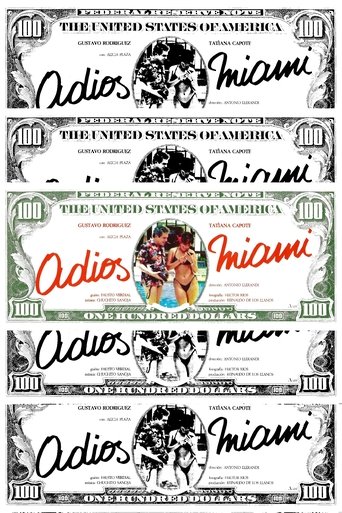
7.8A sharp black comedy that lays bare the contradictions, obsessions, and moral emptiness of a Venezuelan man who has climbed the social ladder through easy money rather than effort. The film portrays a glittering yet hollow way of life, marked by excess, paranoia, and emotional dislocation. Oswaldo, weary of his stagnant marriage, embarks on a passionate affair with a television star, believing that money lies at the center of all human relationships. In a world where everything seems purchasable—desire, loyalty, even identity—the film exposes the seductive illusion and underlying madness of sudden wealth.
Adiós, Miami
1984
 8.5
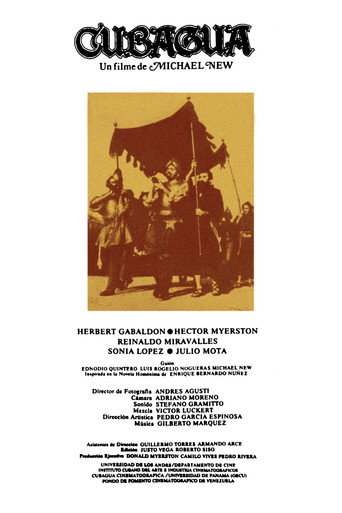
8.5Based on the novel by Venezuelan writer Enrique Bernardo Núñez, the film tells the story of engineer Leiziaga discovering his historical doubles in the context of the colonization of the island of Cubagua in Venezuela. In this way, two stories are intertwined: one that takes place in the 16th century and another in the 20th century. The first story focuses on the life of the Spanish settlers who arrived in Cubagua and the exploitation of the indigenous peoples for pearl extraction; the second story, set in the 1920s, tells of Leiziaga's archaeological expedition, financed by a multinational oil company, in which he visits the island to study the ruins of the Spanish settlement, which leads him to reflect on the passage of time and the destruction caused by human exploitation, and through a game of mirrors, to realize the relationships between the past, present and future.
Cubagua
1987
1970s · 10 titles
10.0Jorge Reina, a libertine and ambitious man, takes advantage of his ability to seduce and influence women to climb the ranks. He finally achieves his goal by marrying the rich heiress of the owner of the newspaper where he works and serving as its editor-in-chief. Drama based on Bel Ami by Guy de Maupassant.
El vividor
1977
 9.5
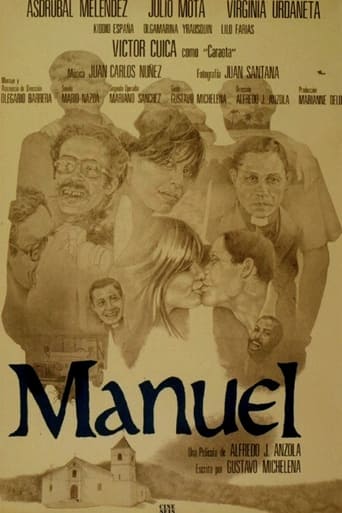
9.5Directed by Alfredo Anzola, Manuel (1979) is a Venezuelan drama that explores themes of love, faith, and resistance. The story follows Aparicio and his wife, Alma Rosa, as they welcome a new priest, Manuel, to their coastal village. As Manuel becomes acquainted with the community, he discovers that the village is slated for demolition to make way for a tourist development. Deeply moved by the villagers' plight, Manuel joins the local fishermen in their struggle to defend their land. During this time, he also finds himself drawn to Alma Rosa, leading to personal and moral dilemmas. The developers, aware of Manuel's growing influence and his feelings for Alma Rosa, begin to monitor his actions closely. The film delves into the complexities of human relationships and the fight against displacement.
Manuel
1979
 9.0
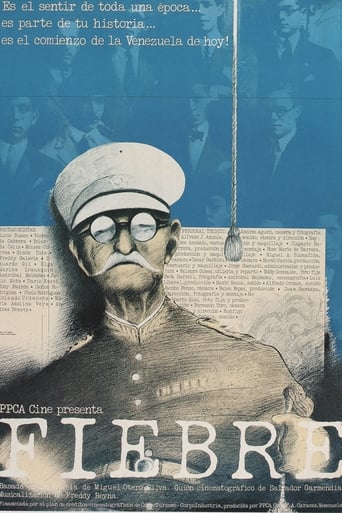
9.0Vidal Rojas, an opponent of the dictatorship of Juan Vicente Gómez, after failing in a subversive attempt and suffering a romantic disappointment, decides to enlist in the revolutionary groups in the interior of the country.
Fiebre
1976
 8.0
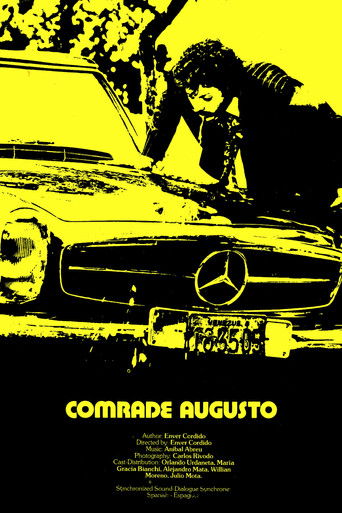
8.0Augusto Cardenas, former guerrilla of bourgeois origin, goes free after four years in prison, he meets with his parents and his wife. He returns to his world and realizes that the fight for his political ideals is only in his memory.
Comrade Augusto
1976
8.0Augusto Cardenas, former guerrilla of bourgeois origin, goes free after four years in prison, he meets with his parents and his wife. He returns to his world and realizes that the fight for his political ideals is only in his memory.
Comrade Augusto
1976
 NR
NRYo hablo a Caracas (1978), the first documentary by Carlos Azpúrua, is marked by the luminous presence of the Yekuana shaman Barné Yavarí. This elder from the Amazonian forest articulates two powerful and prophetic warnings: first, a demand for respect toward the sovereignty of Indigenous beliefs and culture; second, a grave denunciation of the threat posed by “criollo” presence and its economically irrational logic to the natural balance of the Amazon. Through Yavarí’s voice, the film contrasts modern exploitation with a millennia-old Indigenous worldview grounded in harmony with nature, turning the documentary into an early and resonant plea for cultural dignity and ecological consciousness.
Yo hablo a Caracas
1978
 NR
NRAfter several close calls with death squads, Mario Handler fled Uruguay in 1973 and eventually settled in Venezuela where he lived and continued to make films before returning to Uruguay in recent years. The first film he completed in exile, Dos puertos y un cerro is an essay film about the imbalances of trade. A narrator dispassionately recounts in voice-over a brief summation of Venezuela's situation as a hub port in the establishment of the colonial system in the sixteenth-century.
Two Ports and a Hill
1975
 6.5
6.51964, in a Latin American country, a journalist is head of an armed liberation movement that decides to initiate radical actions. His second in command, a farmer, and the other members of the group will kidnap a north american colonel stationed in Venezuela to force his government to suspend the execution of the vietnamese Nguyen Van Troi, accused of trying to assassinate the American Secretary of Defense, Robert McNamara.
Chronicle of a Latin American Subversive
1974
 7.0
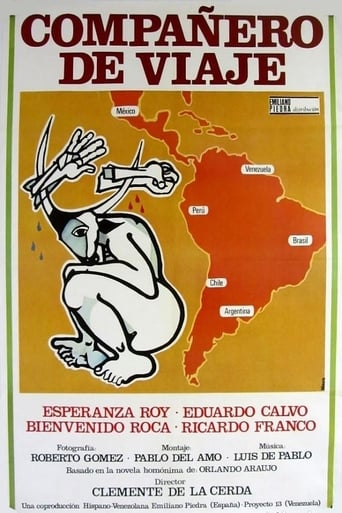
7.0A tale of hate in a town in the Venezuelan Andes where the conflicts and passions of those who live enclosed in the mountains make violence an inevitable destiny.
Compañero de viaje
1979
 8.5
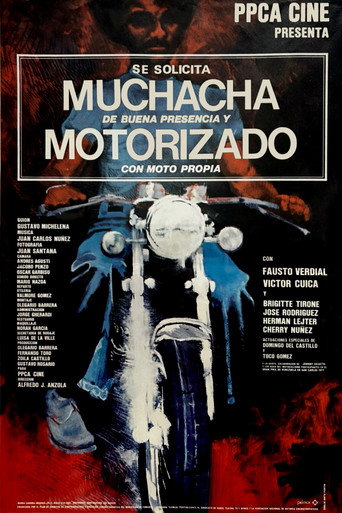
8.5Alexander and her friend Diosa start working in a furniture store, Alexander suspects that the owner is involved in a murky business.
Wanted: Good Looking Receptionist and Messenger with His Own Motorcycle
1977