
Directing
Kurt Rosenthal
Born
1938-01-01 (88)
Place of birth
Solingen, North-Rhine-Westphalia, Germany
Known for
Directing
Credits
39 titles
Known for
Through the testimony of a migrant from Cusco, the short film LA PARADA (1974) portrays one of Lima’s main hubs of popular commerce. Amid markets, street vendors, workshops, and the streets of Tacora, the film observes the labor, precarity, and strategies of survival of a migrant population transforming the city while seeking to build a life within it.
La Parada
1974
 NR
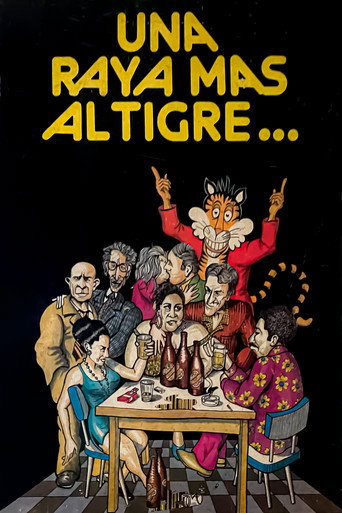
NRA film in three episodes: "Boarding House", "Chaparro Always Pays" and "Little Saturday".
Una Raya Más al Tigre
1981
Profile of Roberto Tevés, a traditional herbal healer who longs to return to his native land of Cora Cora (Ayacucho), but has already put down roots in the capital and its comforts.
Regresar es mi meta
1989
Bilingual education (Spanish - Quechua and Spanish - Aymara) in Puno.
Cien escuelas para dos lenguas
1983
It showcases the copper prospecting and industrialization systems implemented in the Cajamarca area.
Buscando los tesoros de la tierra
1982
The huatia is one of the ways of cooking in the highlands to share food with the entire population, as seen in Chontayoc.
La Huatia
1987
Film credits
Behind the camera
Through the testimony of a migrant from Cusco, the short film LA PARADA (1974) portrays one of Lima’s main hubs of popular commerce. Amid markets, street vendors, workshops, and the streets of Tacora, the film observes the labor, precarity, and strategies of survival of a migrant population transforming the city while seeking to build a life within it.
La Parada
1974
NRA film in three episodes: "Boarding House", "Chaparro Always Pays" and "Little Saturday".
Una Raya Más al Tigre
1981
Profile of Roberto Tevés, a traditional herbal healer who longs to return to his native land of Cora Cora (Ayacucho), but has already put down roots in the capital and its comforts.
Regresar es mi meta
1989
Bilingual education (Spanish - Quechua and Spanish - Aymara) in Puno.
Cien escuelas para dos lenguas
1983
It showcases the copper prospecting and industrialization systems implemented in the Cajamarca area.
Buscando los tesoros de la tierra
1982
The huatia is one of the ways of cooking in the highlands to share food with the entire population, as seen in Chontayoc.
La Huatia
1987
The problem that forest depletion represents for the native Campas people.
Hablan Tres Niños Campas
1980
Filming in the town of Barranca about the formation of an artisanal fishing cooperative in Caleta Vidal with support from the German Foundation Neumam 3.
Neuman 3 llama a Caleta Vidal
1981
A children's film depicting the consequences of rain in Peru. A WDR production.
Inundación
1984
The Importance of the Coca Leaf in the Cultural and Magical Life of Peru. A documentary commissioned by Westdeutscher Rundfunk Cologne – Germany.
Coca no es Cocaína
1986
Profile of Don Roberto Teves, a healer who inherited medicinal knowledge from his parents and grandparents, originating from ancient Inca Peru.
Lo aprendí en Cora Cora (1ª parte)
1988
Influenced by the gold rush, a peasant from the mountains goes in search of the precious metal.
Fiebre de Oro
1983
During the harvest, a farmer has to sleep next to his crops; once the harvest is complete, he returns home to sleep with his family. A documentary commissioned by Transtel in Germany.
Buenas Noches
1987
The use of the manguaré drum for interpersonal communication. A native explains his ailments to a healer who lives far from his home using the manguaré drum.
Cómo llamar a Don Braulio
1986
A new piñata for a children's party is mistakenly thrown in the trash.
La Piñata
1991
Filming in Satipo depicts the life of a rural child and his family within the social, cultural, economic, and ecological conditions in which their daily life unfolds.
Mucho café para un machete
1981
Montage of several photos of the work process of a Turkish guest worker.
Für ausländische und deutsche Arbeiter
1973
Afro-Peruvian dances for Christmas in Chincha.
El Baile de los Negritos
1980
 NR
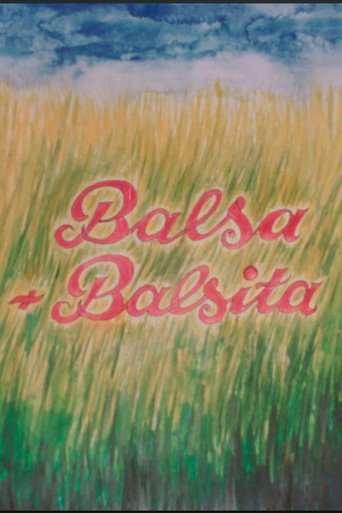
NRThe technique of making totora reed rafts.
Balsa y Balsita
1983
Regarding the work of the Christian peasantry of Bambamarca, who together carry out works that benefit the community.
Hacemos nuestro puente
1980
A Peruvian-German documentary about the gold fever in the Peruvian jungle and the life of the gold diggers.
Oro en Madre de Dios
1983
A Peruvian-German documentary about the gold fever in the Peruvian jungle and the life of the gold diggers.
Oro en Madre de Dios
1983
The farmers of Qhewe are the only community that preserves the Inca tradition of making a suspension bridge from ichu, an Andean vegetable that they collect in large quantities, braid into cords of all sizes and with them weave the bridge over the river.
El puente de Ichu
1980
Record of the life of the Yuyachkani theater group, its component actors and the works they present. Commissioned by the GDR.
Yuyachkani: Soy tu pensamiento
1987
The Tirado family's preparations to attend the procession of the Lord of Miracles in Lima. Commissioned CM for the WRF.
El Señor de los Milagros
1985
Construction of a sports complex carried out by members of the San Mateo peasant community with the support of the Federal Republic of Germany.
Una cancha para San Mateo
1981
Kurt Rosenthal has animated 102 abstract landscape drawings made by Werner Nöfer as frames for this film in such a way that they take on a continual travelling motion, varying the order and detail shown. When the movement – and the accompanying motor noise – stop, the film strip itself becomes the subject of the film. In Oberhausen in 1971, the film was counted as being among the ‘Trip’ films.
Storyboard
1970
The theory of continental drift that causes seismic movements on planet Earth.
Atención Terremoto
1978
The difficulties of an Andean education teacher in fulfilling his mission in a Campa indigenous community.
Qué se aprende en San Pacual I
1977
"Expropriated Springer!" is the motto of the extra-parliamentary movement after the murder of Benno Ohnesorg in 1967. In many cities, demonstrators are trying to prevent the delivery of the Bild newspaper. The film documents the siege of the Springer House in Hamburg in 1968. The police reacted to the protests with unprecedented brutality, leading to a further radicalization of the movement. Like the birth of the Baader-Meinhof group.
Von der Revolte zur Revolution oder Warum die Revolution erst morgen stattfindet
1969
"Expropriated Springer!" is the motto of the extra-parliamentary movement after the murder of Benno Ohnesorg in 1967. In many cities, demonstrators are trying to prevent the delivery of the Bild newspaper. The film documents the siege of the Springer House in Hamburg in 1968. The police reacted to the protests with unprecedented brutality, leading to a further radicalization of the movement. Like the birth of the Baader-Meinhof group.
Von der Revolte zur Revolution oder Warum die Revolution erst morgen stattfindet
1969
Learning of peasant children in their Basic Labor Education classes - EBL.
La Lana y La Papa
1979
 NR
NRNo synopsis available yet.
Made in USA
1975
NRNo synopsis available yet.
Made in USA
1975
The use of so-called "noble materials" in the construction of homes.
Material Noble
1991
Experiences of an education teacher in a Campa indigenous community.
Qué se aprende en San Pascual II
1978
Didactic process explaining how movement is achieved in cartoons.
Cómo se hacen dibujos animados
1979
No synopsis available yet.
Am steinigen Berg
1989