
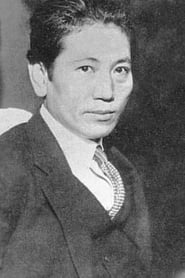
Acting
Musei Tokugawa
Born — Died
1894-04-13 — 1971-08-01
Place of birth
Masuda, Shimane, Japan
Known for
Acting
Credits
60 titles
Known for
 6.1
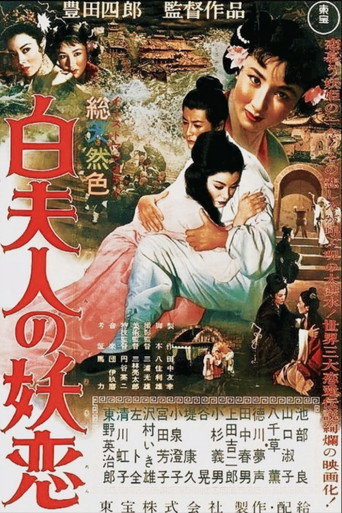
Lavish Japanese-Chinese coproduction based on an ancient Chinese legend about a man who falls in love with a snake goddess in human form.
The Legend of the White Serpent
1956
 6.6
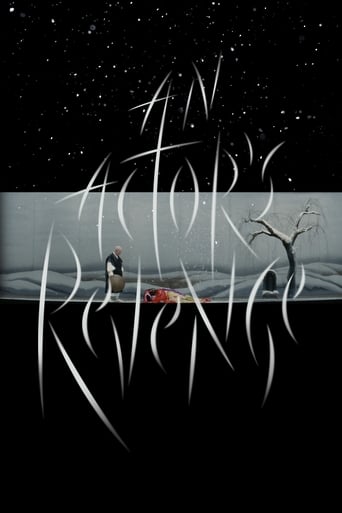
In Edo Japan, a kabuki actor seeks revenge against the three men who drove his parents to their deaths years ago.
An Actor's Revenge
1963
 6.8
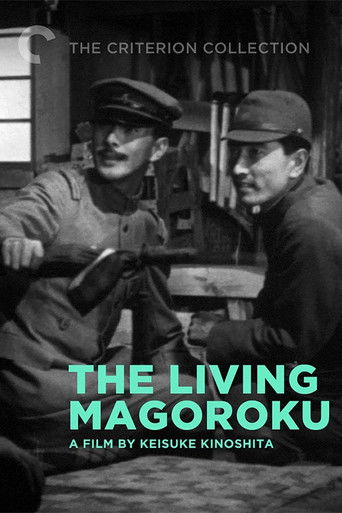
A wealthy family will not allow the military to grow crops on their fields due to their superstitious beliefs about their son's illness.
The Living Magoroku
1943
 7.0
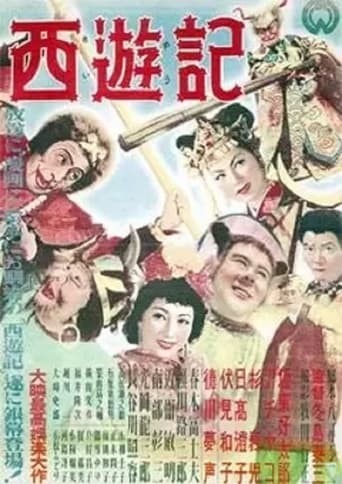
An adaptation of the famous 16th century novel, Journey to the West.
Saiyûki
1952
No synopsis available yet.
Mother
1948
 10.0
In 1930s Japan, a beer seller and a struggling music student fall in love while chasing their dreams.
Tipsy Life
1933
Film credits
1960s · 6 titles
6.6In Edo Japan, a kabuki actor seeks revenge against the three men who drove his parents to their deaths years ago.
An Actor's Revenge
1963
 NR
Tsukitaro, a young man who comes to Edo, meets a blind girl named Ochiyo. Ochiyo’s father, the grinder Yasujiro, was asked to sharpen a sword called Kongomaru, which was planned to be presented to the shogun Iemitsu, but he died due to a yakuza attack. In addition, the sword was stolen, and Ochiyo’s sister was also kidnapped.
Yakuza Princess of Edo
1961
 10.0
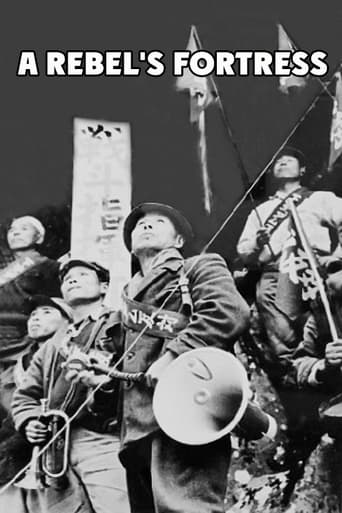
A chronicle of the eight-year battle against the construction of the Matsubara dam at Ogunimachi Shimouke, Asogun, district of Kumamoto. Tomoyuki Murahara constructs the “beehive fortress,” the point of reference for the protest movement opposing the decision to expropriate land.
A Rebel's Fortress
1964
1961 Japanese movie
Kyūsenman no akarui hitomi
1961
 9.0
Also Known As: Otogi's Voyage Around the World
Otogi's Voyage Around the World
1962
 NR
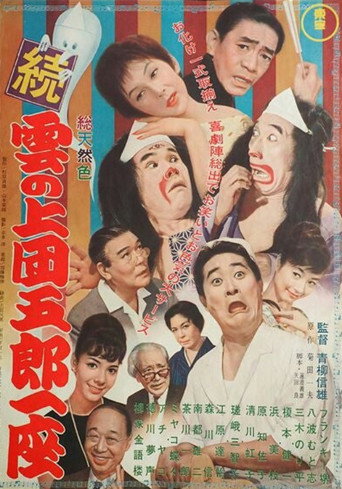
No synopsis available yet.
Dangoro's 'Above the Clouds' Group' Sequel
1963
1950s · 20 titles
6.1Lavish Japanese-Chinese coproduction based on an ancient Chinese legend about a man who falls in love with a snake goddess in human form.
The Legend of the White Serpent
1956
7.0An adaptation of the famous 16th century novel, Journey to the West.
Saiyûki
1952
 8.0
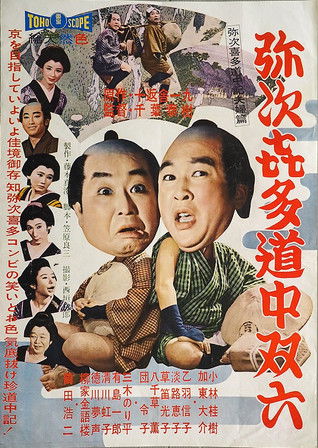
1958 Japanese movie
Yajikita dōchū sugoroku
1958
Set in a bustling 1950s parlor, a beautiful counter clerk falls for a wealthy businessman’s son, only to have their romance derailed by a ruthless loan shark and a mounting family debt. As the parlor faces ruin, the narrative weaves through slapstick antics, musical numbers by Enka legends, and surreal interviews with real-life cultural figures. A chaotic "blueprint" for the Pachinko subgenre, this musical dramedy captures the obsession and desperation of the silver balls.
Big Hit Pachinko Girl
1952
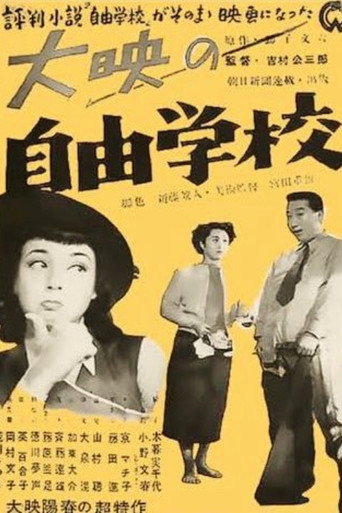 NR
Released on the same date as Shochiku's version.
Freedom School
1951
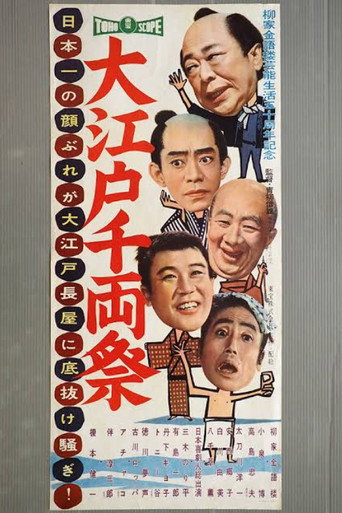 NR
No synopsis available yet.
Big Edo's 1,000 Ryo Festival
1958
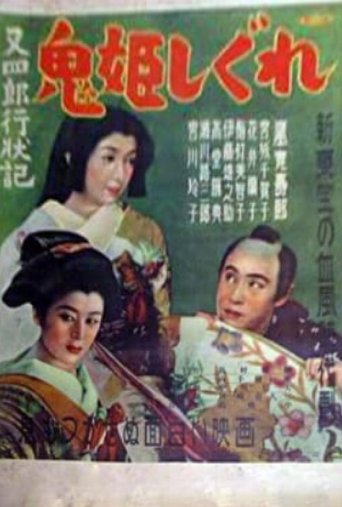 NR
Jidai-geki by Nobuo Nakagawa. Most likely a star vehicle for Kanjuro Arashi
Conduct Report on Matashiro: The Devil Princess and Winter Rain
1951
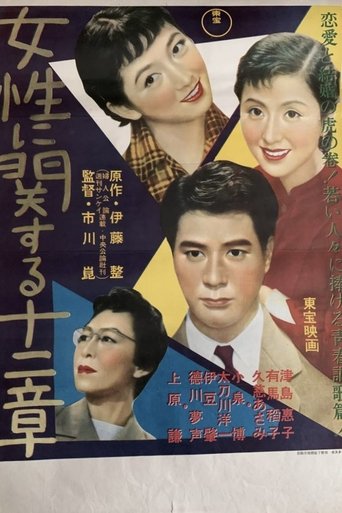 7.0
Minako, a ballerina who has been dating since her school days, and Koheta, a banker. It was Koheta who was finally about to get married as a result of his promotion, but just then, a big change occurs in Minako's body..
12 Chapters About Women
1954
 9.0
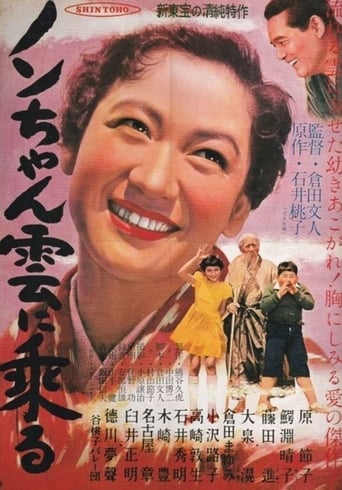
A little girl who falls into a lake and is saved by a god who then takes her up to the clouds and shows her what the world was like before she was born and what the world would be like if she where never born. While in the clouds she meets her grandparents and a few other people she loved who have passed on.
Nobuko Rides on a Cloud
1955
 NR
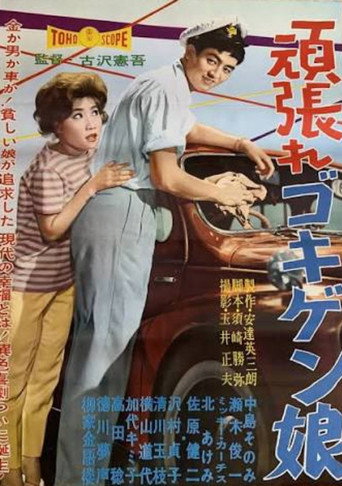
No synopsis available yet.
Work Hard, Happy Girls!
1959
 10.0
The mythical adventures of the legendary Chinese trickster Monkey, who must outwit a variety of wily demons who stand in the way of him and his fellow Buddhist travelers. Though portrayed as a literal, if rather anthropomorphized, monkey in the original legends, this film substitutes the spindly comic actor Norihei Miki, sans makeup.
The Adventures of Sun Wu Kung
1959
 NR
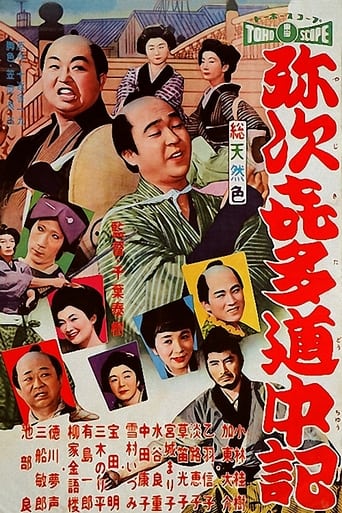
Two residents of Edo city Yaji and Kita make a journey to the temple of Ise, as part of a religious pilgrimage, but actually to get away from their wives for a little while. As they travel, they are constantly beset by complications involving women, mistaken identity, and misunderstood events. Another film adaptation of the famous novel Ikku Jippensha Footing It Along the Tokaido (Tokaidochu Hizakurige)
Yaji and Kita on the Road
1958
 10.0
The fifth entry in the Company President Series
The Third President
1958
 NR
No synopsis available yet.
Inochi wo Kakeru Otoko
1958
A bar girl tries to pass her three children, each from a different father, to rural relatives.
A Mother's Love
1950
 NR
Costume comedy
The Imitation Lords
1959
 NR
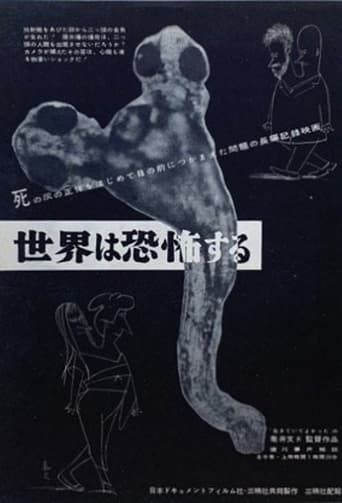
At a time when the USSR and the USA fervently vied to develop nuclear arms, the mass media buzzed with terms inspired by nuclear testing on Bikini Atoll such as the “Daigo Fukuryu Maru Incident,” the “ash of death,” “radioactive tuna,” and “radioactive rain,” and nuclear testing continued, Japan, the only nation to have suffered an atom-bomb attack, felt massive anxiety. “What is the radioactive ash of death?” “What effect does it have on living creatures?” Against the background of the era, the film scientifically describes the terrors of radioactivity with the cooperation of many scientists, physicians and research institutions.
The World Is Terrified: The Reality of the “Ash of Death”
1957
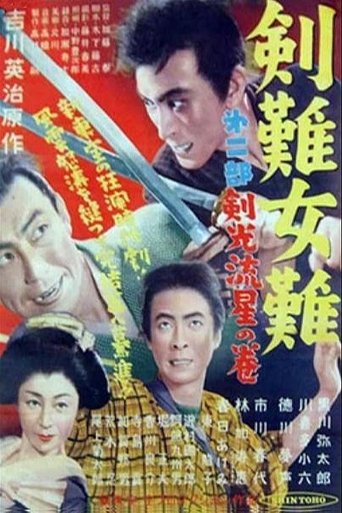 NR
film directed by Tai Katô
Trouble Over Swords and Women: Sword Light and Shooting Star
1951
No synopsis available yet.
Koguma monogatari
1951
No synopsis available yet.
Koguma monogatari: Yasei no mezame
1950
1940s · 24 titles
6.8A wealthy family will not allow the military to grow crops on their fields due to their superstitious beliefs about their son's illness.
The Living Magoroku
1943
No synopsis available yet.
Mother
1948
 NR
Ren Yoshimura directed this Daiei melodrama that was based on the novel entitled "Pandora's Box" by Dazai Osamu.
Diary of a Nurse
1947
 NR
No synopsis available yet.
Odoriko monogatari
1947
 NR
The story of a young lady who brightens up the neighborhood.
Monpe-san
1944
 NR
Horror film directed by Kôzô Saeki.
Ghost Tower
1948
 NR
Tobisuke, puppeteer in Kyôtô, saves O-fuku's life. Wounded in the head, it can now count to three. O-fuku invited him to meet her mother so she can heals him with a golden fruit. But O-fuku and Tobisuke had to cross the valley of death filled with fantastic creatures, will they survive?
The Adventures of Tobisuke
1949
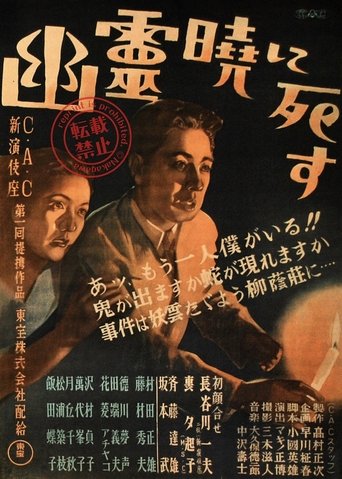 NR
At the wedding of Kohei (Hasegawa) and Michiko (Todoroki), a whisper echoes along with a gust of wind. As if manipulated by the mysterious voice, Kohei takes Michiko to stay at a dilapidated mountain villa in his hometown. What awaited him there...
Ghosts Die at Dawn
1948
This film focuses on Koreans living in Japan. The filmmaker’s humanism comes across in the portrayal of a girl living in a shabby tenement, the warmth of a Korean girl she meets, and the friendliness of this Korean girl’s family.
The Brick Factory Girl
1946
A pure love story between a former member of the imperial family who has been demoted to commoner status and a young girl.
First Love Story
1947
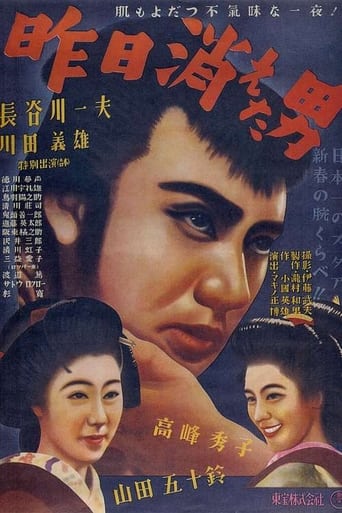 6.5
No synopsis available yet.
The Man Who Disappeared Yesterday
1941
1944 war movie
敵は幾万ありとても
1944
No synopsis available yet.
Kodakara fūfu
1941
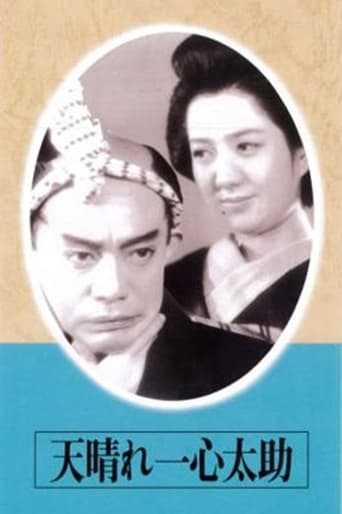 9.0
1945 Japanese movie
The Admirable Isshin Tasuke!
1945
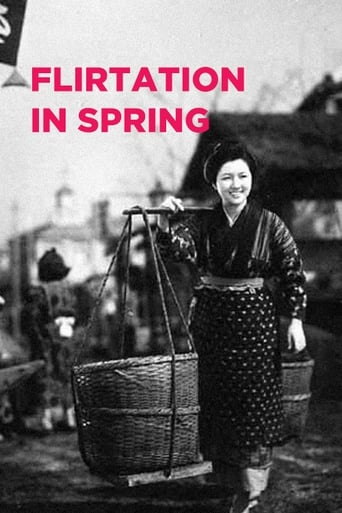 10.0
Japanese adaptation of Marcel Pagnol's play "Marius", set in early XXth century Japan.
Flirtation in Spring
1949
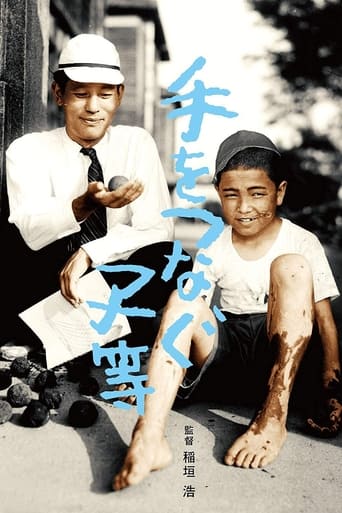 7.0
A small-town boy with a learning disability attempts to fit in with his classmates.
Children Hand in Hand
1948
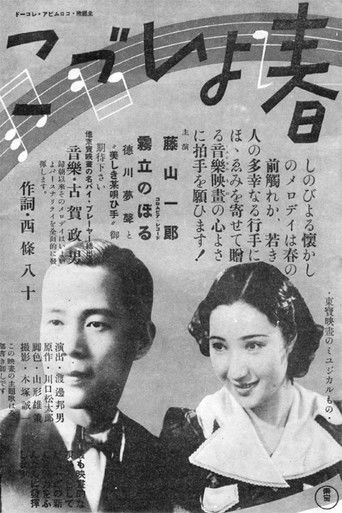 NR
Dr Sogawa is considering making his son, Taro, take over the family business, but Taro is completely absorbed in music. Nevertheless, he makes him enrol in a medical school. Taro's songs are recorded by the popular singer Shintaro.
Haru yo izuko
1940
 NR
A dead beauty is found in the trunk. Kubota (Miaki), Okayama (Kawazu) and Tsuji (Funakoshi) begin investigating this mysterious crime at the investigation headquarters. Since the cause of death was poison gas, he asked Yusaku Tominaga (Tsukigata), a now retired drug crime specialist, to cooperate. Kubota and his friends soon find the house of the murdered beauty and upon entering, they are surprised to find another corpse, this time of a man…
The Dead Beauty Incident
1948
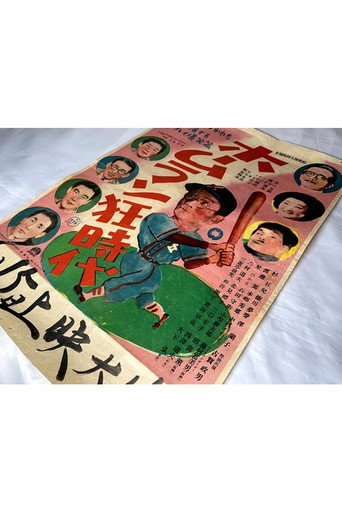 NR
Baseball comedy.
Hōmurankyō jidai
1949
 NR
Based on a novel by Tei Fujiwara
Nagareru hoshi wa ikiteiru
1949
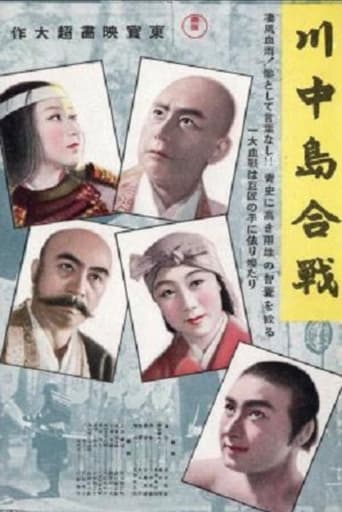 7.0
This epic depicts the battle between Uesugi Kenshin and Takeda Shingen. The focus of the story is the struggle by the unit leader in charge of the main supply wagons and the supply troops to transport materiel to the Uesugi army. To this are added episodes involving an itinerant woman.
The Battle of Kawanakajima
1941
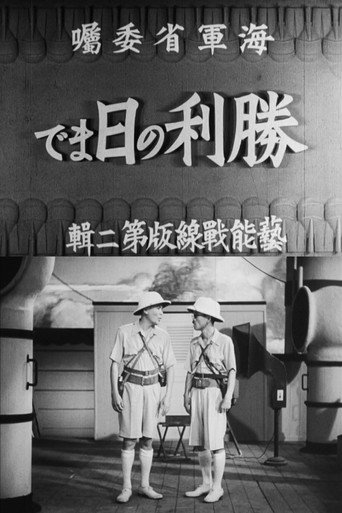 8.0
An Invention laboratory is working on the creation of a performance 'bomb' in the shape of a rocket that could be delivered to the front in order to entertain and amuse the national troops. Inside this rocket would be tiny performers. Once launched from the laboratory and landed amidst the Japanese troops the soldiers could enjoy the performers. The laboratory succeeds and the rocket is built. It bears the insignia, 'until the victory days.' The Japanese government began a program of shooting and disseminating propaganda and entertainment movies for its troops during World War II. Only 15 minutes of the film survives.
Until Victory Day
1945
 7.0
A documentary short highlighting the cultural attractions of Ise-Shima National Park in eastern Mie Prefecture, a popular coastal sightseeing destination and home to the Ise Grand Shrine.
Ise-Shima
1949
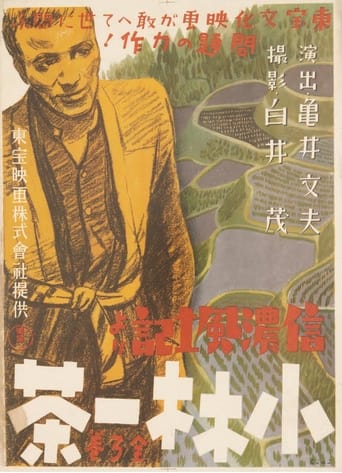 8.0
The film uses the haiku of early 19th century poet Kobayashi Issa as its motif to portray the lives of farmers residing deep in the mountains of Nagano. Commissioned by the Nagano Prefectural Department of Tourism, the movie became instead, in the hands of Kamei, a depiction, sometimes ironic, of poverty and the harsh life of the inhabitants of the area. The short movie is often considered Japan’s first “poetic documentary”.
Kobayashi Issa
1941
1930s · 10 titles
10.0In 1930s Japan, a beer seller and a struggling music student fall in love while chasing their dreams.
Tipsy Life
1933
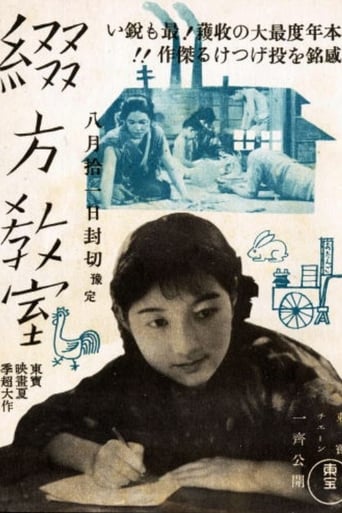 6.8
Masako, the daughter of an impoverished itinerant tinsmith, wins a grammar school composition contest with an essay about her neighborhood. The much publicized essay ends up causing the family problems and their chronic money troubles threaten Masako's further education.
Composition Class
1938
This is the only surviving “Mito Komon Manyu-ki” film. This release also known as "Adrift Tour Memoir" or literally "Mito Komon's Pleasure Trip" is an 80-minute compilation of the first (東海道の巻 or "Tokaido no maki") and second (日本晴れの巻 or "Japan's Fine Weather Reel") parts (147 minutes), which were re-edited and screened at a time when presentable films were dried up immediately after the defeat of the war.
Mito Komon's Pleasure Trip
1938
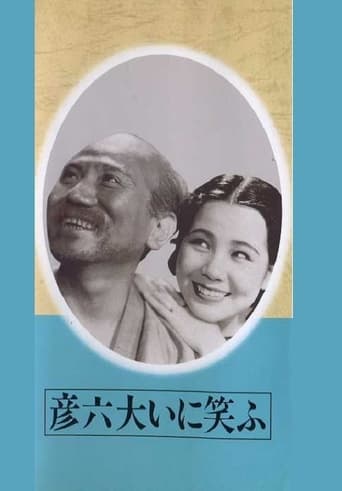 NR
Hikoroku Laughs a lot
Hikoroku Laughs a lot
1936
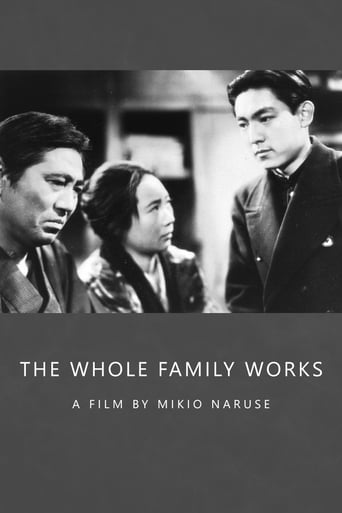 6.7
A large family scrapes by on the meager salaries of the father and three eldest sons, who left school in order to work and support the family. The fourth eldest is soon to graduate and follow in their footsteps, though he'd rather continue schooling. The eldest finally decides to break free and set out on his own against his parents' wishes, with the support and sympathy of his siblings.
The Whole Family Works
1939
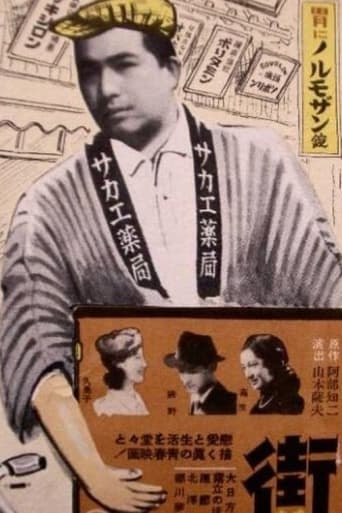 NR
No synopsis available yet.
The Town
1939
 NR
The first in a series of films featuring the comedy duo Entatsu-Achako, providing them with a background story to do their popular manzai-routines on film. Here, Entatsu and Achako start out as rivals for the affection of a young woman but ultimately pair up to face a bigger rival. Entatsu chooses to become a boxer to get his chance at punching the rival out of the way.
Akireta renchû
1936
1935 P.C.L. adaptation of Natsume's novel.
Botchan
1935
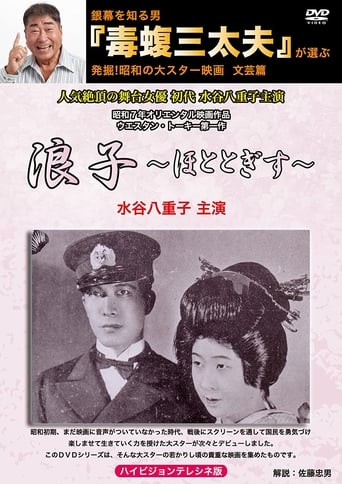 NR
An early Japanese sound film, notable for being the only Japanese film ever to use the Western Electric Sound System. Contrary to most Western sources that give sole directing credit to Eizo Tanaka, it was actually co-directed by six different directors, Tanaka, Kazue Kimura, Kazuo Takimura, Ryoji Mikami and Hidekuni Ouchi.
Namiko
1932
 6.0
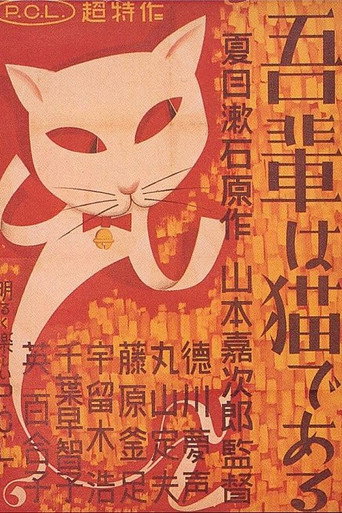
1936 P.C.L. adaptation of Natsume's novel.
I Am a Cat
1936