
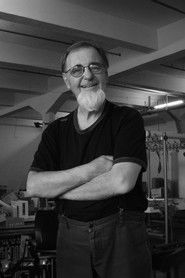
Directing
Woody Vasulka
Born — Died
1937-01-20 — 2019-12-20
Known for
Directing
Credits
49 titles
Woody Vasulka was a Professor at the Center for Media Study at SUNY Buffalo from 1973 to 1979. With his wife Steina, he founded The Kitchen, a New York City electronic media theater in 1971.
Known for
 NR
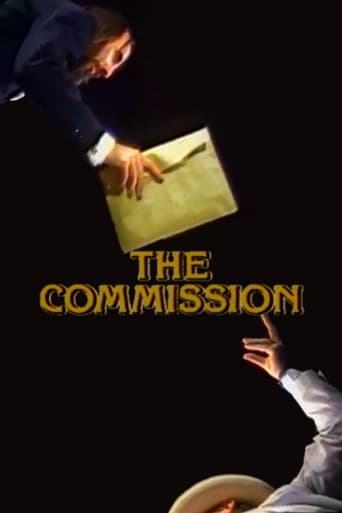
NRThis work is Woody's first entry into the narrative sphere, whereby the "story" is continually undermined with the aid of various anti-narrative strategies: In each of the eleven segments of this "electronic opera", different effects are used. Fascinated with the remarkable personality of infamous violinist Niccola Paganini and his complicated relationship to Hector Berlioz (played by artists Ernie Gusella and Robert Ashley, respectively), the author meditates over the intricacies of artistic geniality as connected not only with fame but also with the necessity of painful survival under the pressures of the art market.
The Commission
1983
 NR
NRThis series of short films offers a representative cross-section of the work produced at this famous Prague film school over the course of its 80-year history.
FAMU 80 – Best of
2026
 NR
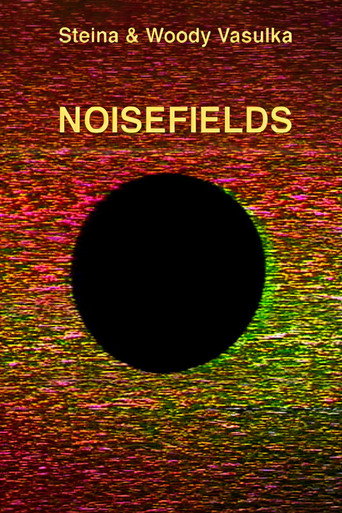
NRThis is an attempt to process abstract images without the use of camera. The central circle divides the creen into two parts that continually vibrate hypnotically and change colors to the accompanying rumbling of modulated sound.
Noisefields
1974
 NR
NRA short documentary on the life and art of Steina and Woody Vasulka, produced in 1996. The Vasulkas speak candidly about their work and worldviews, and the piece features excerpts from their early works and a glimpse into their '90s output.
Binary Lives
1996
 NR
NRThis is a documentary about video artists Bill & Louise Etra, Woody & Steina Vasulka, and Kit Fitzgerald & John Sanborn.
Group Portrait: Six Artists in Video
1978
 NR
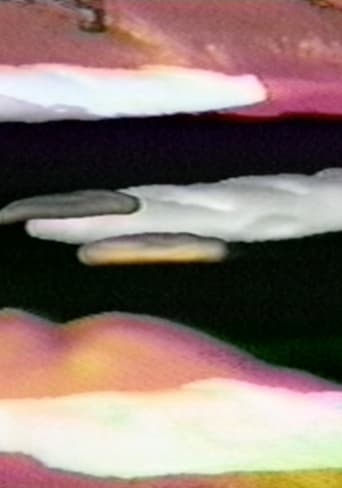
NRThe work is inspired by the surrealist René Magritte's unsettling painting La Legende doree, depicting French baguettes flitting in a window frame. Woody and Steina used a three-camera construction and through the use of horizontal deflection created objects migrating through a landscape. Maureen Turim called this work "a meta-discourse on painting and video".
Golden Voyage
1973
Film credits
1970s · 5 titles
NRThis is a documentary about video artists Bill & Louise Etra, Woody & Steina Vasulka, and Kit Fitzgerald & John Sanborn.
Group Portrait: Six Artists in Video
1978
 NR
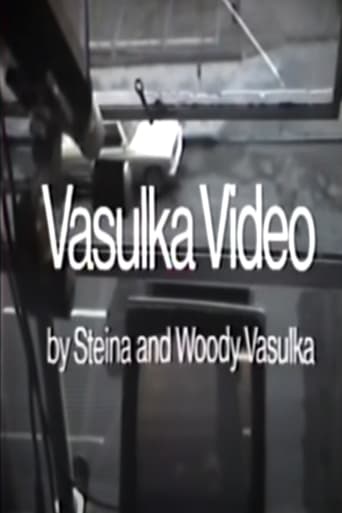
NRIn 1977 the Vasulkas were commissioned by public television to create six half-hour programs (Steina, Objects, Digital Images, Transformations, Vocabulary, Matrix) for broadcast on WNED in Buffalo, New York. The resulting series, entitled Vasulka Video, is innovative and informative television. The Vasulkas introduce and contextualize their works and discuss their processing techniques, providing invaluable insights into their groundbreaking experiments with electronic image and sound manipulation.
Vasulka Video
1978
 7.0
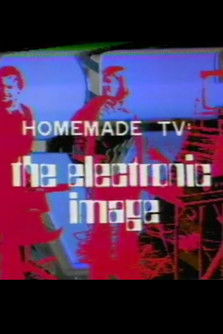
7.0A broadcast presentation of Steina and Woody Vasulka's experiments with the electronic image. Featuring a 15-minute "jam session" of improvised video feedback art.
Homemade TV: The Electronic Image
1975
 NR
NRB&W Vasulka project with a rotating camera, keyed and alternating directions. This experiment is excerpted in their 1977 work Orbital Obsessions.
Switch! Monitor! Drift!
1976
 NR
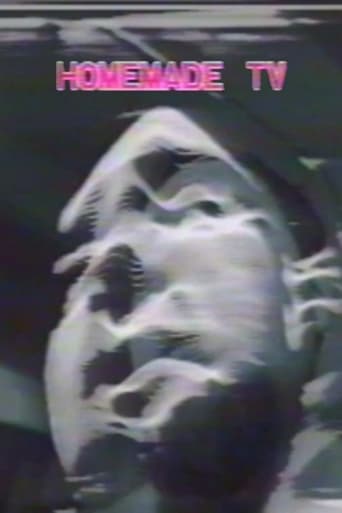
NRDescription from Portable Channel catalog: "This Program is a unique broadcast presentation of the Vasulka's recent experiments with the electronic image. It is not "video on TV" but a "videobroadcast" direct from the Vasulkas' loft in Buffalo, New York." The broadcast does in fact feature 3 Vasulka projects in their entirety: The Matter, Soundgated Images, and C-Trend.
Homemade TV: Vasulkas II
1975
Behind the camera
NRThis work is Woody's first entry into the narrative sphere, whereby the "story" is continually undermined with the aid of various anti-narrative strategies: In each of the eleven segments of this "electronic opera", different effects are used. Fascinated with the remarkable personality of infamous violinist Niccola Paganini and his complicated relationship to Hector Berlioz (played by artists Ernie Gusella and Robert Ashley, respectively), the author meditates over the intricacies of artistic geniality as connected not only with fame but also with the necessity of painful survival under the pressures of the art market.
The Commission
1983
NRThis series of short films offers a representative cross-section of the work produced at this famous Prague film school over the course of its 80-year history.
FAMU 80 – Best of
2026
NRThis is an attempt to process abstract images without the use of camera. The central circle divides the creen into two parts that continually vibrate hypnotically and change colors to the accompanying rumbling of modulated sound.
Noisefields
1974
NRThe work is inspired by the surrealist René Magritte's unsettling painting La Legende doree, depicting French baguettes flitting in a window frame. Woody and Steina used a three-camera construction and through the use of horizontal deflection created objects migrating through a landscape. Maureen Turim called this work "a meta-discourse on painting and video".
Golden Voyage
1973
 NR
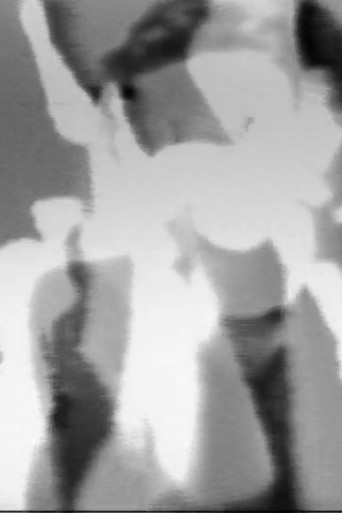
NRAn Interface not only between two continually switched over images but also between documentary tape, imagery taken from "reality", and its transformation in the electronic sphere.
Interface
1970
 NR
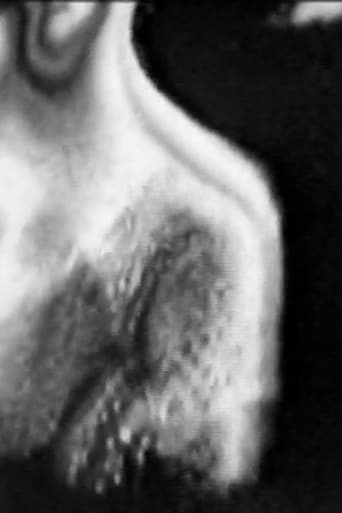
NRIn Studies cycle, abstract studies are assembled, which document the Vasulka's early work with electronic material. The visual aspect of Tissues is the work of Steina, whereas Woody engineered the sound.
Tissues
1970
 NR
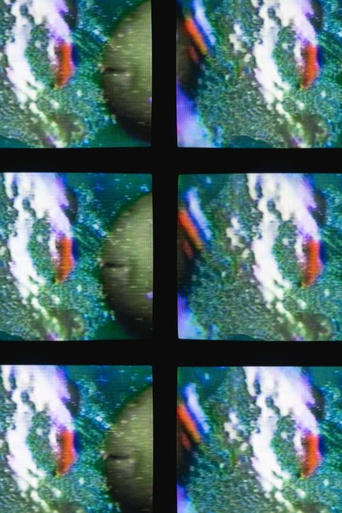
NRMatrix II explores the properties of images and sounds in the medium of video. Geometric shapes travel across a ‘matrix’ (grid) of cathode ray tube (CRT) screens. CRT televisions, which use manipulated electron beams to display images on a fluorescent screen, remained in widespread use until the early 2000s. The Vasulkas sought to test the limits of each monitor, creating a fluid motion resembling the behaviour of electronic signals. Matrix II is an early example of video art, which first developed in the late 1960s and 1970s as artists came into contact with new consumer technologies for capturing moving images.
Matrix II
1974
No synopsis available yet.
Sexmachine
1970
No synopsis available yet.
Odjezd branců
2026
Although the video artwork Evolution cites the well-known image of hominid evolution, it is more interested in the evolution of the media than in the evolution of the human species. Through the feedback of a system of video devices and the search for image imitation, it creates a layered (self-)reflection of the media used. It illustrates the gradual peeling back of artistic and technical possibilities in sound, from which an image is generated by directly manipulating the surface of the filmstrip, and in images that generate sound in video feedback.
Evolution
1969
No synopsis available yet.
Telc
1974
 NR
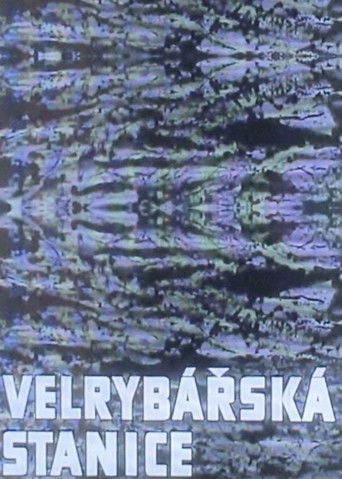
NRshort documentary film on an Icelandic whaling station
The Whaling Station
1964
NRshort documentary film on an Icelandic whaling station
The Whaling Station
1964
 NR
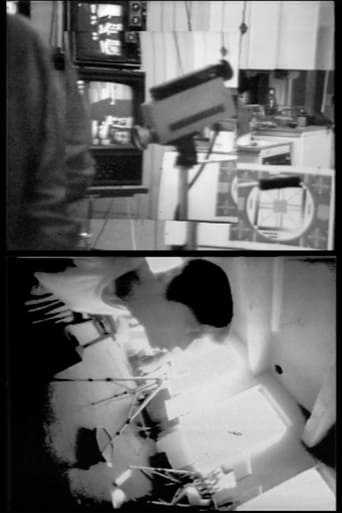
NRDocumentation and experimentation in real time, "Orbital Obsessions" is an example of early video self-portraiture, eerie and calm in its radical implications for the medium. The Vasulkas were interested in the building of control systems for the manipulation of electronic signals, resulting in their collaborations with several designers and engineers. One such example was the Multi-Level Keyer, a tool designed in 1973 by George Brown at the request of the Vasulkas, who were interested in expanding their range of source imagery. Steina’s manipulation of the image through keying, layering, and the manual control of luminance is seen here.
Orbital Obsessions
1977
 6.0
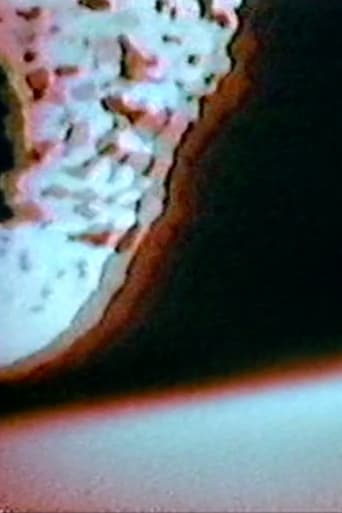
6.0Real time development of a video feedback, processed and controlled through a video keyer. Sound results from video signals, interfaced with audio synthesizer.
Distant Activities
1972
 NR
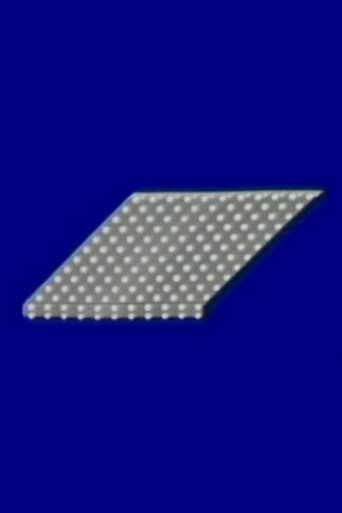
NRThe image and sound are being simultaneously generated from a single source, which at the same time shapes the visual pattern as well as electronic sound of the resulting signal. The potential of the Scan Processor enables the modification of the shape and scale of geometrical patterns, resulting in the creation of a new kind of "image behavior".
The Matter
1974
 NR
NRShort experimental film by Steina, Woody Vasulka
Heraldic View
1974
 NR
NROne of the works assembled in the series Sketches. These early sketches, created not without the irony, examine ways of manipulating the video image. They indicate that the documentary trend in the Vasulkas' work was from the beginning mingled with free experimentation. These short tapes were modified from the early documentary tapes.
Thierry
1970
 6.0
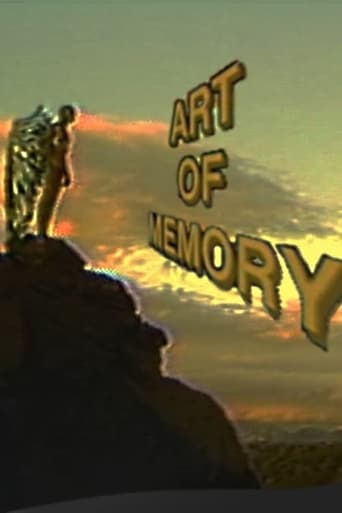
6.0Manipulating a variety of sources, Vasulka uses creative imaging tools to situate historical images against Southwestern landscapes of incredible beauty. Contorting the images into a variety of isomorphic forms, Vasulka creates a literal shape for these memories, developing these shapes as metaphors for the processes of fragmentation, condensation, and inversion, that inevitably contort fact into memory. While much of the raw material for the tape is drawn from World War II and its rehearsals, the Spanish Civil War and the Russian Revolution, The Art of Memory is really an extended meditation seeking to reconcile the blurry, banal photographs of historic figures with the mass destruction they helped engineer.
Art of Memory
1987
 NR
NRProgeny is a collaboration with sculptor Bradford Smith. Smith's organic and sensual sculptural forms are transformed by the merging of one of Steina's Machine Vision devices — a rotating, mirrored sphere with pre-programmed camera movements and optical transpositions — with Woody's digital processing.
Progeny
1981
 NR
NRIn Discs, originally made as installation for a set of monitors, the creators experiment with the phenomenon of horizontal drift trhough the indtroduction of purposeful time error. The result is the repetitive abstract pattern of a distorted magnetic field. Furthermore, this horizontal stream also travels thorugh a set of TV screens stacked on top of each other, giving the work a vertical dimension as well. The image thus demonstrates the flexibility of the frame in video.
Discs
1970
Soundsize continues the Vasulkas' investigation into the relationship of sound and image. Here a pattern of dots is modulated by sounds generated from a synthesizer, changing size and shape in a visual manifestation of electronic sound.
Soundsize
1974
 NR
NRA film by Steina and Woody Vasulka
Calligrams
1970
 NR
NRWith Voice Windows (1986), Steina renews her efforts to generate a complex sound-image interface
Voice Windows
1986
NRIn 1977 the Vasulkas were commissioned by public television to create six half-hour programs (Steina, Objects, Digital Images, Transformations, Vocabulary, Matrix) for broadcast on WNED in Buffalo, New York. The resulting series, entitled Vasulka Video, is innovative and informative television. The Vasulkas introduce and contextualize their works and discuss their processing techniques, providing invaluable insights into their groundbreaking experiments with electronic image and sound manipulation.
Vasulka Video
1978
 5.0
5.0No synopsis available yet.
C-Trend
1974
 NR
NRNo synopsis available yet.
Vocabulary
1973
 NR
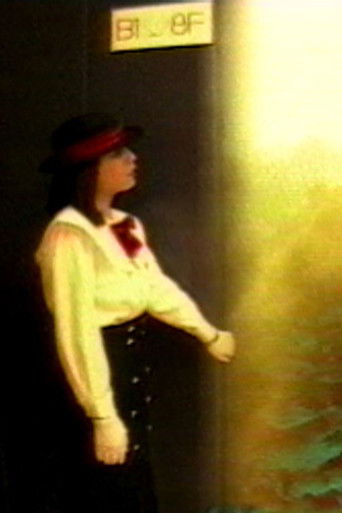
NRIn the Land of the Elevator Girls uses the elevator as a metaphorical vehicle to reveal an outsider's gaze into contemporary Japanese culture. The continual opening and closing of elevator doors serves as a succinct formal device, as the viewer is offered brief glimpses of a series of landscapes — natural, urban, cultural and domestic. Doors open onto doors to reveal layers of public and private vision, transporting the viewer from theatrical performances and street scenes to an elevator surveillance camera's recording of everyday life.
In the Land of the Elevator Girls
1989
7.0A broadcast presentation of Steina and Woody Vasulka's experiments with the electronic image. Featuring a 15-minute "jam session" of improvised video feedback art.
Homemade TV: The Electronic Image
1975
No synopsis available yet.
Artifacts
1980
 NR
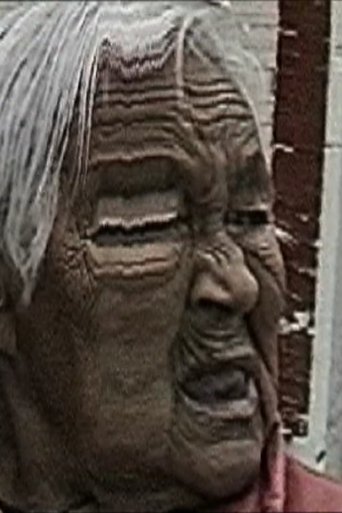
NRA 3-minute study of a wrinkle-faced old woman by one or both of the Vasulkas, produced late-career.
Old Lady El Toppo
—
 NR
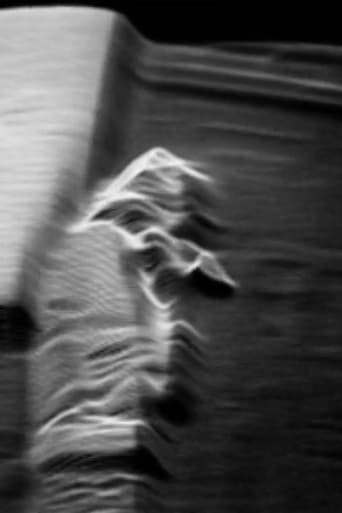
NRThis tape was created when Woody visited his native Moravia with a Portapak camera. In the course of signal modulation an alteration in the field of raster lines is taking place, in which the lines are being vertically deformed and gain the contours of objects (with the use of a Rutt/Etra synthesizer).
Reminiscence
1974
 NR
NRShort film.
Artifacts
1980
 9.0
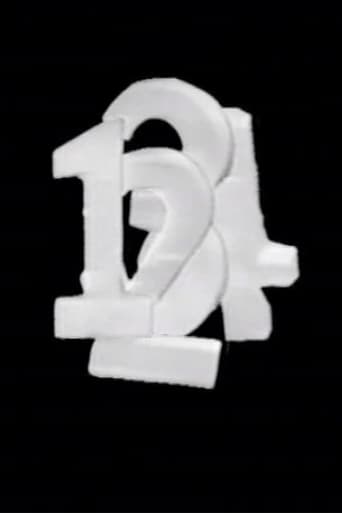
9.0This work shows paradoxical space relations in electonic depths, where the common space coordinates no longer apply and where the images become objects in space. The numerals on the cakes were captured by four cameras and then processed with the Multikeyer.
1-2-3-4
1974
NRDescription from Portable Channel catalog: "This Program is a unique broadcast presentation of the Vasulka's recent experiments with the electronic image. It is not "video on TV" but a "videobroadcast" direct from the Vasulkas' loft in Buffalo, New York." The broadcast does in fact feature 3 Vasulka projects in their entirety: The Matter, Soundgated Images, and C-Trend.
Homemade TV: Vasulkas II
1975
 NR
NRThe SCAN PROCESSOR STUDIES are a collection of works by Woody Vasulka & Brian O'Reilly. The full work is of total approximate duration of 45 minutes, with sections of various lengths, textures, and dynamic qualities.
Scan Processor Studies
1973
 NR
NRIn this early formal experiment with analog image processing, the Vasulkas investigate multiple camera set-ups and keyers to articulate spatial, temporal and sound/image manipulation. Solo for 3 is a playful technical exercise in which three cameras were trained on three different images of the number three. Image planes are layered, arranged and sequenced; the result is a multifaceted choreography of numbers.
Solo for 3
1974
 NR
NRThis period compilation of documentaries shot with a Portapak camera from the early era of video experimentation offers an immediate view of the independent New York art scene (concerts and theater perfomances on the streets and in the clubs of downtown). It is a sort of summary of Steina and Woody Vasulka's first creative period, a period of fascination with the more bizarre aspects of "new American decadence". Thanks to the video camera and its revolutionary implications, the creators were able to penetrate into spheres where the documentarians of more classical media were neither allowed nor interested to enter, thereby helping to expand the ideas of documentary possibilities. Steina has remarked that she learned the craft of camerawork as documentarian thanks to these celebratory, countercultural scenes of the "sexual avant-garde"-- Participation also features a pulsing light show projection at the Fillmore East, and a scene from Off-Broadway drag theater.
Participation
1971
 NR
NRThe Multikeyer and Scan Processor are used for creating the pulsating abstract composition showing six different cases of audio-video interface with the simultaneous generation of sound and image.
Soundgated Images
1974
 NR
NRThis symbolic journey evokes the personal creative wandering of the Vasulkas. The landscape, shot from a car window while driving in the Santa Fe area, is gradually transformed with more and more complicated imagery techniques.
In Search of the Castle
1981