
Acting
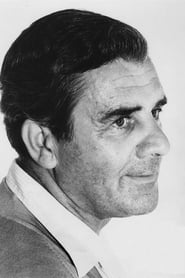
Oldřich Vykypěl
Born — Died
1912-02-27 — 1983-02-21
Place of birth
Brünn, Moravia, Austria-Hungary [now Brno, Czech Republic]
Known for
Acting
Credits
69 titles
Known for
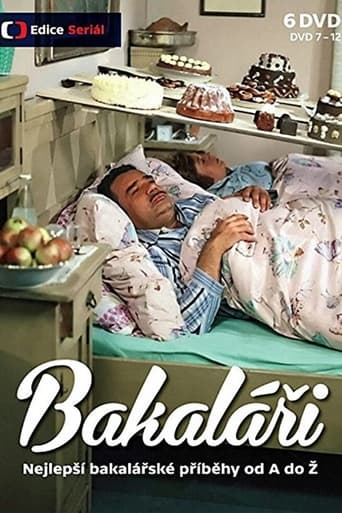 7.0
7.0No synopsis available yet.
Bakaláři
1972
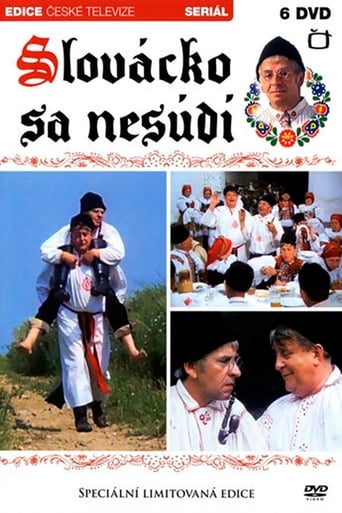 8.5
8.5No synopsis available yet.
Slovácko sa nesúdí
1976
No synopsis available yet.
Muž, který nesmí zemřít
1978
No synopsis available yet.
Legenda o živých mrtvých
1971
No synopsis available yet.
Konec dětských lásek
1982
No synopsis available yet.
Vůně domova
1982
Film credits
1980s · 10 titles
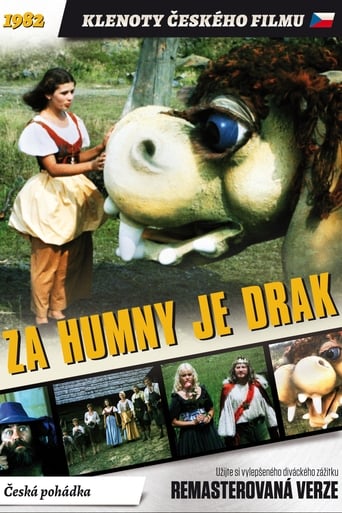 6.8
6.8In one royal forest, where coal miner Patočka lives and works, the friendly dragon Mrak settles down. The king's lackeys come across him while hunting and, terrified, go to sell the news to the king. He is currently organizing his daughter Viola's birthday party. The hunters describe the dragon in terrifying colors, and so the king concludes that the dragon will, according to tradition, want the king's daughter. So he announces a reward for killing the dragon, but no one wants to fight him. The only one who applies is the princess's favorite, the lutenist Marian, but the king does not like him, so he throws him out. Her brother Jan wants to save the princess, but the king doesn't want to allow it...
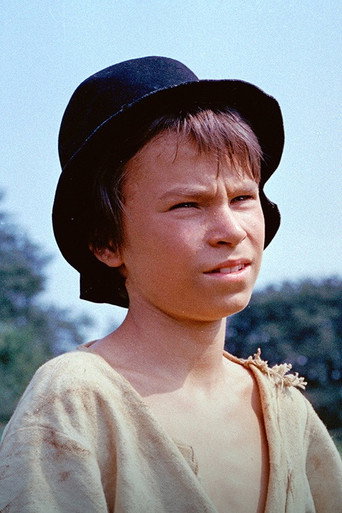
There is a Dragon Behind Humny
1983
 10.0
10.0How it will end? Let's just tell you that on one side of the mountain, the stream that had run before it dries up, and on the other side of the mountain, the creek starts to breathe.
The Secret of the Devil's Pocket
1981
 7.0
7.0A retired soldier, Martin, is returning home after twelve years of service. On the way, he stops in a small Wallachian village, which is ruled by a stingy and ruthless fojt with the help of a sycophantic scoundrel and the local priest. Martin witnesses how he takes the only cow from the widower Kryštof and his five children for a few pennies, how he denies payment of the debt to Jura and Juříček, who then force them to work in his forest for free, how he denies his share of the inheritance to his brother Štěpán, who is in love with the charming Anička. Martin does not want to let all this go by so he decides to help the villagers and punish the fojt. Soon, strange things start happening in the village and the fojt is increasingly afraid that the devil is behind everything. In his place, Martin appears with a cunning plan, the main part of which is a recipe for axe soup.
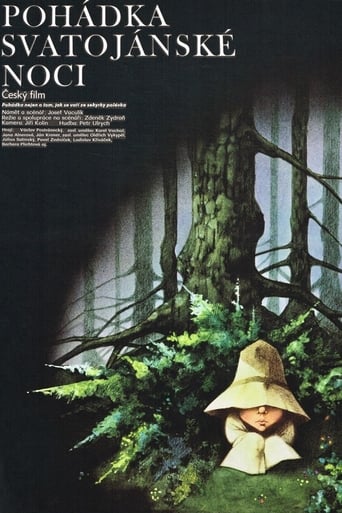
Pohádka svatojánské noci
1982
 NR
NRNo synopsis available yet.
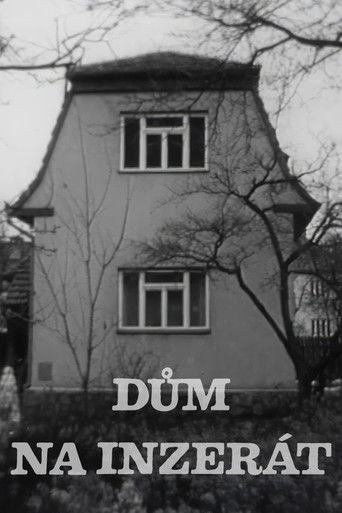
Dům na inzerát
1981
 9.0
9.0Antonín Kachlík wanted to make committed films about the moral dilemmas of the working class, but in the era of normalisation, he could only proclaim how faltering individuals would eventually come to the desired thinking. This is also true of the adaptation of Jiří Švejda's book about the wavering career of a young brickmaking technologist - the simplistic drawing of characters and plots, the posterishly lifeless language and the textbook discussion of social ills are all objectionable; the ideal becomes the code of the socialist builder.
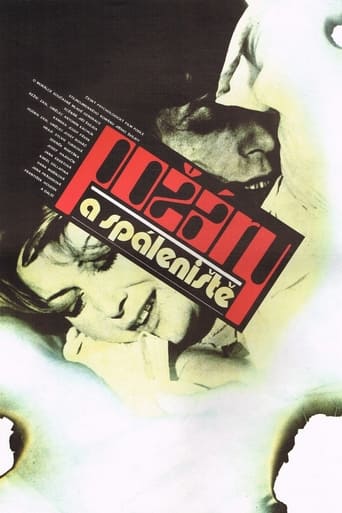
Požáry a spáleniště
1981
No synopsis available yet.
Zelené červené jablko
1982
A political drama dealing with the issues of contemporary construction and highlighting the various relationships within the party apparatus.
Na koho to slovo padne...
1980
In a mill, far from people, lives a miller with her daughter Vojtěška. There is no man's hand here, but behind the dam of the pond lives a waterman, who does not leave the miller without help in difficult times. When the mill is most busy, unexpected help appears - a young traveler. Yesterday Vojtěška claimed that such a person had not yet been born, so that she could only look at him with her eyes. But today, under the full moon, a reed sings to her, so it is no wonder that she cannot sleep...
O vodě, lásce a štěstí
1981
No synopsis available yet.
Konec Černého supa
1983
No synopsis available yet.
Čas na hodinách
1983
1970s · 19 titles
No synopsis available yet.
Před premiérou
1978
No synopsis available yet.
Stříbrná šestka
1971
 7.0
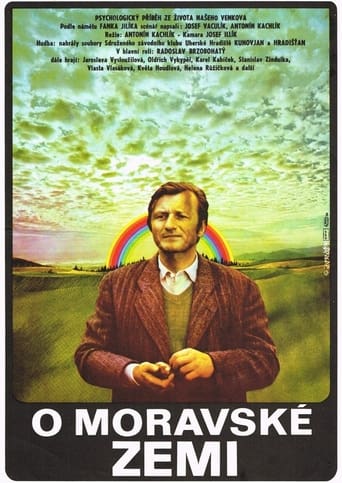
7.0The reason for making this film is clear: it was to cover up Vojtěch Jasný's famous chronicle "All the Good Natives", an account of the tragic consequences of forced collectivisation. The pro-regime director Antonín Kachlík also focuses on the socialisation of the Moravian village, accompanied by mistakes and coercion, but in his optimistic view he emphasises the hopeful prospects leading to a happy future. Although the united village lands were born in pain, they will serve for the benefit of all the working people... As with Jasný, Radek Brzobohatý embodies the stubborn peasant, who is only slowly acknowledging the benefits of communal farming. However, unlike the poetic exuberance and pithiness of Jasný's chronicle, here we encounter a vicious posturing.
The Moravian Land
1978
No synopsis available yet.
Jak se stal Rumcajs loupežníkem
1972
 7.7
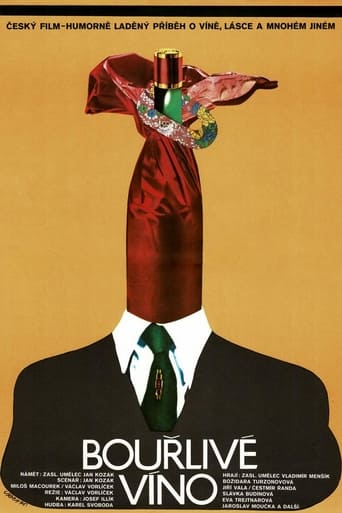
7.7It is the summer of 1968 and also in South Moravian Pálavice appear political clashes. The so far peacefully farming Unified farmers' cooperative starts splitting. Some of the farmers have found the cooperative called Vidrupa and want to deal with wine in private trade. Michal Janák, chairman of the farmers' cooperative is a deliberate man and refuses the latent return to the capitalism. As an excellent farmer he continues preparing planting out new vineyards. His adversaries do not agree - the returns will come many years later. Jozka Hrdlicka, an émigré, notices on the Austrian TV the interview with the representatives of Vidrupa and decides to visit his native village. The new suit and the hired car transform the bankrupt and criminal to the successful businessman with wine.
Wine Working
1976
A Czech TV film adaptation of Budd Schulberg's novel The Harder They Fall, which had previously been made as the 1956 US movie of the same name starring Humphrey Bogart and Rod Steiger.
The Harder They Fall
1972
 7.0
7.0Even a casual hitchhiker can get caught up in unexpected family troubles. The skilled title character fixes a broken-down car and is rewarded: he is invited to a luxurious cottage. However, its owner finds himself in a difficult situation when, in addition to his wife, his mistress arrives there - the hitchhiker is therefore asked to pass off the girl as his girlfriend...
Stopař
1978
No synopsis available yet.
Gazdina roba
1972
No synopsis available yet.
Zbojníci a žandáři aneb Jánošík
1974
 6.5
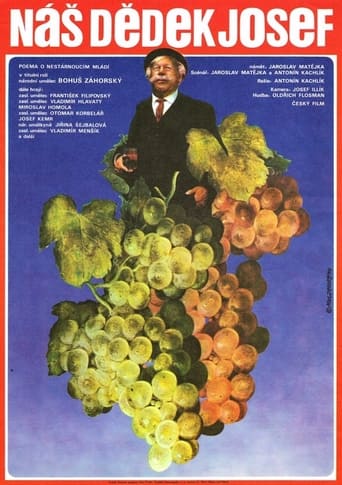
6.5Set in a 1950s Moravian wine village, an elderly Josef, guided by his quirky life philosophy and humor, recalls key moments from his past. Across nine seasonal vignettes filled with local folklore and customs, he and his fellow elders remain fully engaged in the joys and trials of village life.
Náš dědek Josef
1977
No synopsis available yet.
Šek, na kterém chyběl podpis
1974
No synopsis available yet.
Táto, něco bouchlo
1975
 6.0
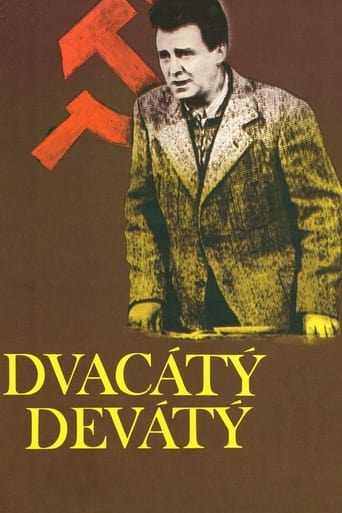
6.0In the era of normalisation, a number of (pseudo)historical films were made, even described as reconstructions, which glorified the world-building mission of the Communist Party and attributed to it exclusively humanitarian intentions ("Days of Betrayal", "Sokolovo", "Liberation of Prague", "The Victorious People"). In 1929, when its fifth congress met, Klement Gottwald, who had taken the line of the Russian Bolsheviks, took over the leadership of the Communists...
Dvacátý devátý
1975
No synopsis available yet.
Hlavou proti zdi
1977
No synopsis available yet.
Pán na inzerát
1978
No synopsis available yet.
V hodině nejtěžší...
1978
No synopsis available yet.
Zeměměřič
1977
No synopsis available yet.
Prokop Diviš
1977
No synopsis available yet.
Kandidát strany
1977
1960s · 12 titles
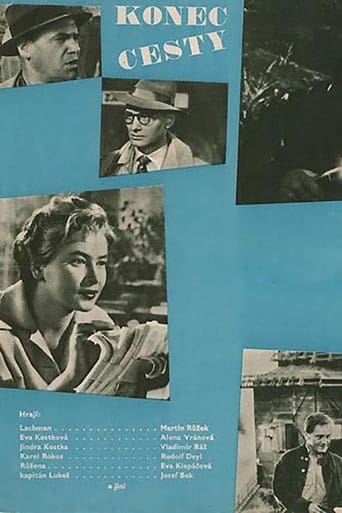 7.3
7.3Josef Lachman, once a security officer, serves twelve years for aiding an SS fugitive’s escape. Upon release, he works as a driver on a dam project, hunting buried English pounds Meyer told him about. With miner Rokos’s help, he retrieves the cash and hides it with his daughter Eva, but she spends some at Tuzex, Rokos blackmails him, and they discover the notes are WWII forgeries.
Konec cesty
1960
Little Honzík tries everything he can in order to join the team for Spartakiada Games.
Magical Day
1961
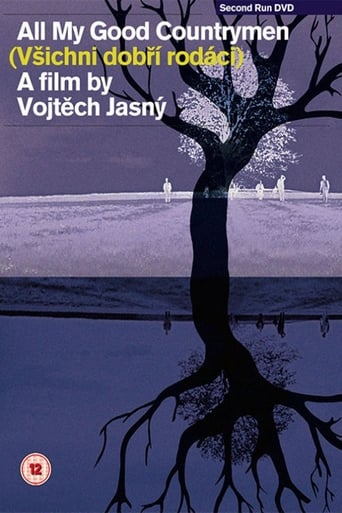 7.6
7.6The lives of 7 friends in a small Czech town from 1945 to some time after 1958.
All My Good Countrymen
1969
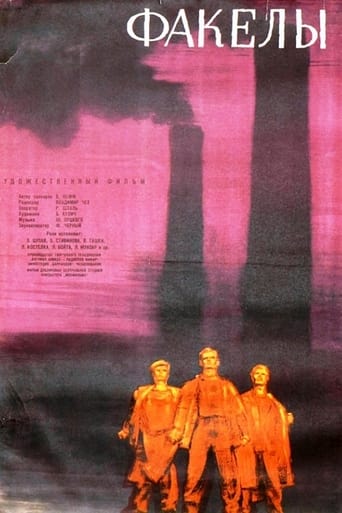 7.0
7.0Prague in the 1870s. Work in Smolík's sulphur factory is hard and dangerous to health. The poorly paid workers resemble torches because their clothes are soaked with poisonous phosphorus. Young Josef Rezler also works in the sulphur factory and uses his earnings to feed his mother and little sisters. He throws his perpetually drunken father out of the house. The older worker Brož forces Josef to learn to read and write. A cholera epidemic breaks out in Prague and Josef is the only one of his family to survive the disease...
Pochodně
1961
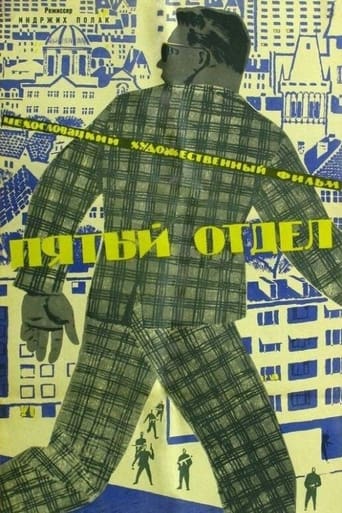 8.0
8.0An American spy agency located in West Germany is interested in information concerning Czechoslovak commercial activities in the Middle East. Agent Rudolf Karlik creates a network of associates in Prague...
Páté oddělení
1961
 9.0
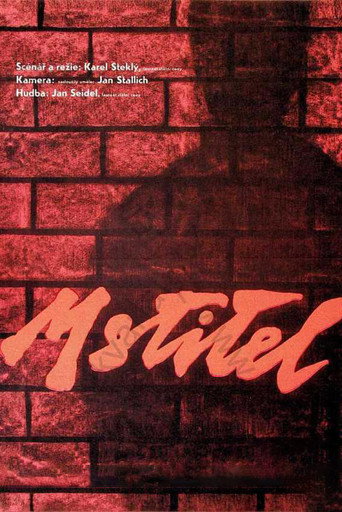
9.0Kaspar Len returns home after three years in the army. He vainly searches for the mason Kryštof’s family where he had lived before he left. All he finds out is that Kryštof’s daughter Márynka, who was in his thoughts all those years, is now working in the local brothel. He goes to visit her and Márynka tells him of the misfortunes which befell her family.
Mstitel
1960
No synopsis available yet.
Čtvrtý obratel
1965
Three nine-year-old boys are ridden with guilt after chasing their classmate into a busy street, causing him to get hit by a truck.
Tragic Monday
1960
No synopsis available yet.
Chlapec a srna
1962
No synopsis available yet.
Mysterie-buffa
1961
No synopsis available yet.
První jízdní
1962
TV play adapted from humorous novel by Kingsley Amis (1954).
Lucky Jim
1969
1950s · 16 titles
 7.5
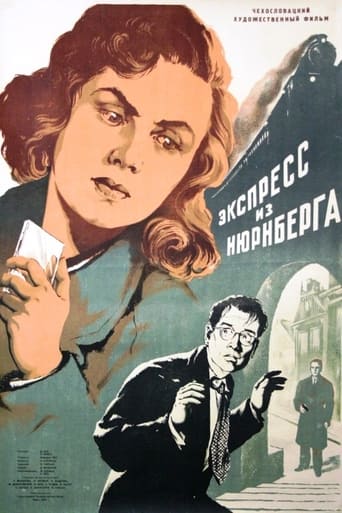
7.5An adventure film about the struggle of the Czechoslovak security authorities against Western agents. In an express train departing from Nuremberg station, a cigarette box with plans and instructions for the destruction of one of the Czechoslovak dams is stuck under the seat. The State Security is informed about the whole operation and tries to catch the foreign agents.
Expres z Norimberka
1954
 5.0
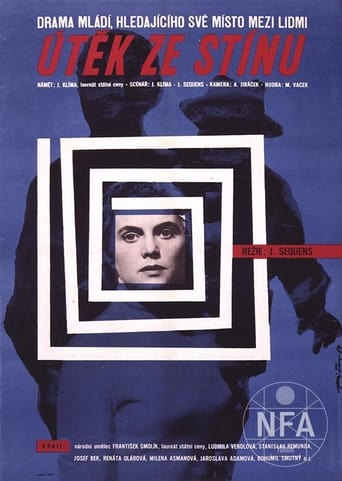
5.0This exemplary "psychological drama" depicts the difficulties with which a new socialist mindset is born. Director Jiří Sequens warns against ill-advised marriages into the families of the defeated bourgeoisie, because the former royalty refuses to accept a man from a different social class. The heroes of this film will find out. The former owner of a pharmacy refuses to accept that his daughter has married a mere technical draughtsman. However, her father's hateful schemes cause the sensitive woman to attempt suicide.
Escape from the Shadows
1959
 6.3
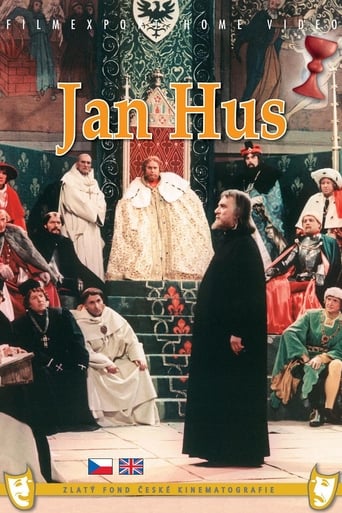
6.3The first part of the "Hussite Revolutionary Trilogy", completed with Jan Žižka (1955) and Proti všem (Against All Odds, 1957). The film captures the period from May 1412 to the summer of 1415, a turbulent time in the Czech Kingdom, during which there were protests in Prague against the sale of "omnipotent indulgences" whose sale throughout the kingdom was announced by Pope John XXIII. The ideological leader of this movement is the preacher Master Jan Hus, whose words, calling for the elimination of church abuses, are listened to in the Bethlehem Chapel by thousands of ordinary Praguers, Czech lords and Queen Sophie, wife of the Czech King Wenceslas IV.
Jan Hus
1955
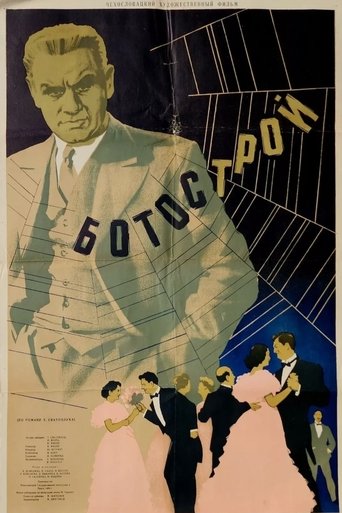 8.0
8.0The happenings in a shoe factory serve as a not very thinly veiled examination of the pros and cons of both socialism and democracy.
Shoesmachine
1954
The catastrophically dry weather of 1947 causes immense problems in the countryside. In the small village Klícov, only farmers Hánek and Bervida and the old Hromádka have water. The others must queue every day for a drop for themselves and their cattle. All the villagers lament over their previous decision to turn down the cooperative chairman Kouba's proposal to built a new village water-supply system.
Žízeň
1950
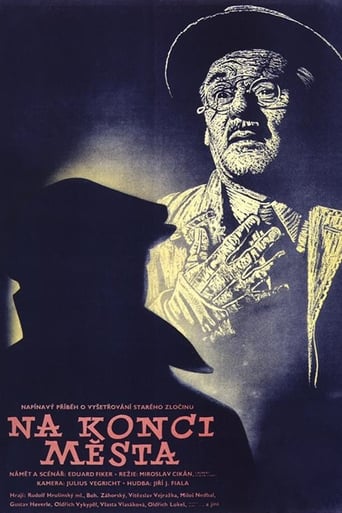 6.0
6.0Captain Jirák of the SNB is searching for the perpetrator of the murder of the former owner of an apartment building on the outskirts of town, which took place more than twenty years ago.
Na konci města
1955
 5.0
5.0The year is 1918. Toník returns home from the front. In Kladno, where he arrives, things are seething with discontent. The Social Democrats are in government, but nothing has changed. Socialization has not been implemented, there is hunger and food is still being skimped on. The first news about a socialist state arrives from Russia. On May 1st, the workers' Kladno manifests its loyalty to the ideals of the Great October Socialist Revolution. In December 1920, a general strike is declared in Kladno as well. The workers arm themselves, workers' councils take over the administration of the city and are also established in the surrounding villages. An armed uprising is being prepared. However, the right-wing leadership of the Social Democratic Party attacks the workers in the back. The army is sent to Kladno...
A red glow over Kladno
1956
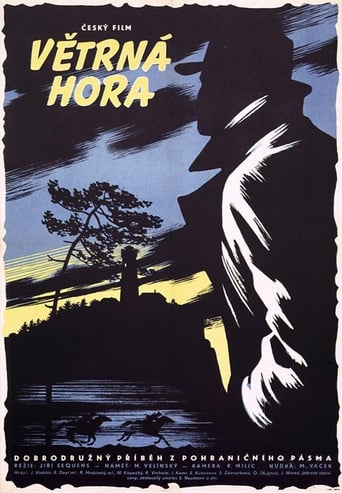 6.0
6.0A group of temporary workers arrive at the Czech-German border to conduct geological exploration. However, not all people have pure intentions and a past, and so the group of geologists is threatened by saboteurs who want to blow up an abandoned mine and escape across the border...
The Windy Mountain
1956
 7.3
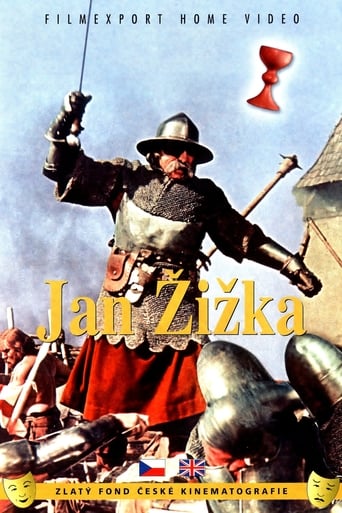
7.3The second part of the revolutionary Hussite trilogy takes place in the years 1419-1420.
Jan Žižka
1956
The story of a gypsy named Fabian, who came to work in Kunčice, and his son. Their lives change fundamentally on the great construction site of socialism. They both learn to read and write; Fabian becomes a skilled welder, and little Fabian is accepted into the pioneer organization. However, their transformation is not easy, it is not without many encounters, just like the transformation of Fabian's co-workers, many of whom have not yet overcome their racist prejudices.
Můj přítel Fabián
1955
The North Bohemian town of Chudoplesy in the middle of the 19th century: the only local industry is the domestic production of reed goods. The poor reeders organize a revolt against the exploitative factors.
Zvony z rákosu
1951
No synopsis available yet.
Přiznání
1951
Eighteen-year-old Dalibor Daněk grew up in an orphanage, did not get an education and became involved with a group of smugglers in the Ostrava region. But there are those who want to help him selflessly...
Křižovatky
1959
 7.0
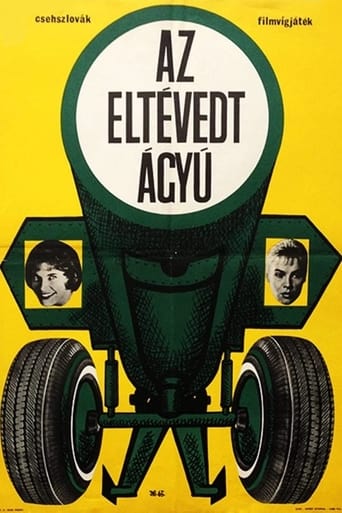
7.0A lone military unit carrying a cannon is stopped while moving from the training area by a gamekeeper who is in extreme distress because his son is seriously ill and needs acute medical attention. The lieutenant hesitates for a moment whether to help or move on...
Zatoulané dělo
1959
 6.7
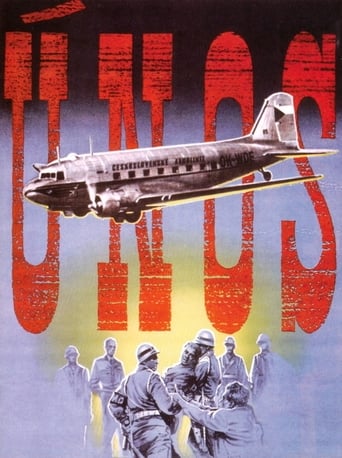
6.7American agents hijack a plane on the Ostrava-Prague route to launch a campaign against the People's Democratic Czechoslovakia. The plane lands in West Germany, but the Americans have an unexpected problem convincing the hijackers to stay in the West. Based on a true story.
Kidnapped
1953
Thirteen-year-old Jenda, whose father is the leader of an illegal movement in a small town at the end of World War II, proves his bravery and sense of duty when, despite all the dangers, he delivers an important message to the partisans.
Malý partyzán
1951
1930s · 1 titles
Series credits
7.0No synopsis available yet.
Bakaláři
1972
8.5No synopsis available yet.
Slovácko sa nesúdí
1976
No synopsis available yet.
Muž, který nesmí zemřít
1978
No synopsis available yet.
Legenda o živých mrtvých
1971
No synopsis available yet.
Konec dětských lásek
1982
No synopsis available yet.
Vůně domova
1982
No synopsis available yet.
Hnízdo
1973
No synopsis available yet.
Skleněná dáma
1974
No synopsis available yet.
Nerovná láska
1978