
Editing
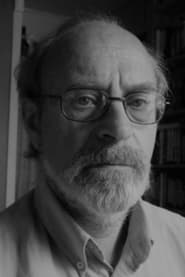
Pedro Chaskel
Born
1932-08-02 (94)
Place of birth
Germany
Known for
Editing
Credits
28 titles
Pedro Chaskel, is one of the main precursors of the so-called New Chilean Cinema, as a director, cameraman and editor of numerous short and feature length films. An early emigrant from Germany at the age of seven, Chaskel became a Chilean national in 1952, and studied architecture at the Universidad de Chile from 1951 to 1954. That year, he became a founding member and animator of the Cine Club Universitario de la Federación de Estudiantes de Chile (FECH). A conspirator in the exhibition of films that did not come to Chile through the regular commercial circuit, Chaskel promoted, together with a group of contemplative people, a custom that was not very common in Chile: the cinema forum, or…
Known for
 9.2
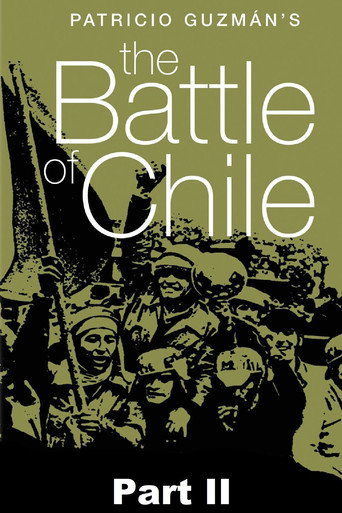
9.2Chronicles the events immediately surrounding the CIA- supported coup itself.
The Battle of Chile: Part II
1976
A poetic film that records the excavations carried out by Swiss ethnologist Jean Christian Spahni at the mouth of the Loa River. Through the bone remains and objects found, the testimony of the Chango indigenous people is revealed.
Aquí vivieron
1964
 10.0
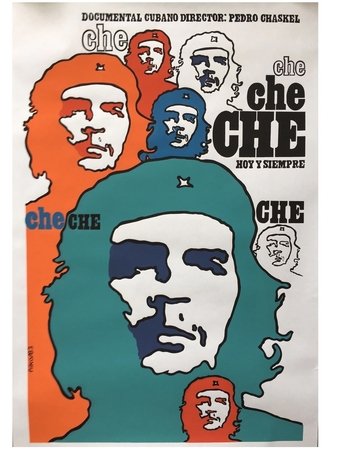
10.0A sound system plays Commander Ernesto Guevara's speech, delivered on October 20, 1962, during the Second Anniversary of the Young Communist League, along with a series of archival images of the revolutionary leader visiting factories and meeting with workers.
Che, Today and Always
1983
Latin American children, children of exiles and political prisoners, tell of their experiences of integration in Cuba, sharing their memories from exile and ideas on politics and education. Filmed in Havana in February 1979, the International Year of the Child.
Eyes Like My Dad
1979
 10.0
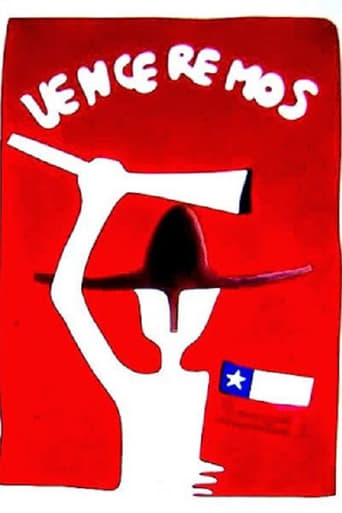
10.0A collage of images showing the two faces of a society. That of poverty and that of wealth. Throughout the documentary, this antagonism is shown: populations in unhealthy conditions, and on the other hand, large showcases with mannequins.
Venceremos
1970
This documentary shows the inhuman conditions on which the patients of Iquique's Psychiatric Hospital live.
Testimony
1969
Film credits
Behind the camera
9.2Chronicles the events immediately surrounding the CIA- supported coup itself.
The Battle of Chile: Part II
1976
A poetic film that records the excavations carried out by Swiss ethnologist Jean Christian Spahni at the mouth of the Loa River. Through the bone remains and objects found, the testimony of the Chango indigenous people is revealed.
Aquí vivieron
1964
10.0A sound system plays Commander Ernesto Guevara's speech, delivered on October 20, 1962, during the Second Anniversary of the Young Communist League, along with a series of archival images of the revolutionary leader visiting factories and meeting with workers.
Che, Today and Always
1983
10.0A sound system plays Commander Ernesto Guevara's speech, delivered on October 20, 1962, during the Second Anniversary of the Young Communist League, along with a series of archival images of the revolutionary leader visiting factories and meeting with workers.
Che, Today and Always
1983
Latin American children, children of exiles and political prisoners, tell of their experiences of integration in Cuba, sharing their memories from exile and ideas on politics and education. Filmed in Havana in February 1979, the International Year of the Child.
Eyes Like My Dad
1979
Latin American children, children of exiles and political prisoners, tell of their experiences of integration in Cuba, sharing their memories from exile and ideas on politics and education. Filmed in Havana in February 1979, the International Year of the Child.
Eyes Like My Dad
1979
10.0A collage of images showing the two faces of a society. That of poverty and that of wealth. Throughout the documentary, this antagonism is shown: populations in unhealthy conditions, and on the other hand, large showcases with mannequins.
Venceremos
1970
This documentary shows the inhuman conditions on which the patients of Iquique's Psychiatric Hospital live.
Testimony
1969
This documentary shows the inhuman conditions on which the patients of Iquique's Psychiatric Hospital live.
Testimony
1969
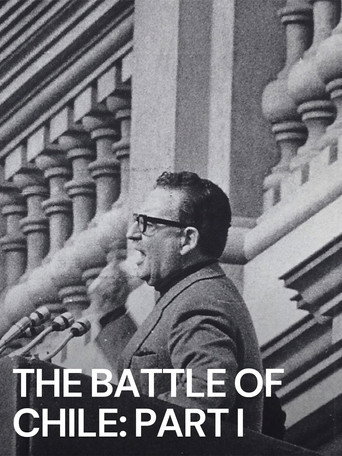 7.6
7.6The chronicle of the political tension in Chile in 1973 and of the violent counter revolution against the democratically elected government of Salvador Allende.
The Battle of Chile: Part I
1975
 NR
NRCuban workers remember Che Guevara. They testify to his relationship with the workers, his good example, and his great capacity for work.
Constructor Cada Día, Compañero
1982
NRCuban workers remember Che Guevara. They testify to his relationship with the workers, his good example, and his great capacity for work.
Constructor Cada Día, Compañero
1982
 NR
NRSOMOS + follows a political demonstration by women who rise up with a unified voice against Pinochet’s military regime.
Somos +
1985
 5.0
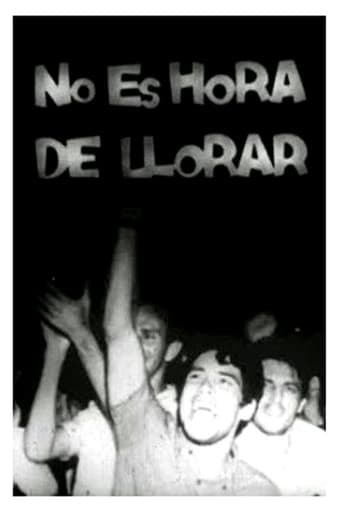
5.0Through the testimony of the victims of the Brazilian dictatorship, and the re-creation of the practices to which they were subjected, the torture suffered by the Brazilian political detainees in their country is denounced. Restored version.
It's Not Time to Cry
1971
 NR
NRConfused faces of children, women and men when asked about the meaning of “eviction”, “unemployment”, “begging”, “gambling” and “racial discrimination”, all problems eradicated in Cuba after the 1959 Revolution. Survey filmed in Havana between May 2 and 13, 1980.
¿Qué es?
1980
Documentary about the iconic portrait of Ernesto 'Che' Guevara by Cuban photographer Alberto Diaz Gutiérrez (known as 'Korda').
Una foto recorre el mundo
1981
A docudrama based on the family planning policies for the population with limited resources. A low-income lady resorts to clandestine ways to get an abortion...
Abortion
1965
A docudrama based on the family planning policies for the population with limited resources. A low-income lady resorts to clandestine ways to get an abortion...
Abortion
1965
No synopsis available yet.
Organilleros
1996
A poet recites his verses. The people who listen to him, inspired by him, form the Spring Party, which later becomes the Spring Army. It is decided to eliminate possible opponents. The poet is considered an enemy and is shot.
Érase una vez
1965
No synopsis available yet.
Por la vida
1987
No synopsis available yet.
Por la vida
1987
A day in the life of an 'organillero' as he plays his music in the streets of a Chilean city.
Day of the Organ Grinders
1961
 NR
NRDocumentary that explores the "Archives of Horror" of the General Alfredo Stroessner's dictatorship, discovered in Paraguay in 1992 and in the documentation of Operation Condor found there, which reveals who was responsible, their goals, strategies, accomplices and murders.
De vida y de muerte, testimonios de la Operación Cóndor
2015
 NR
NRNo synopsis available yet.
Neruda en el corazón
1993
Two guerrillas (Miguel Littin and Jorge Guerra) wander lost in the desert until one of them dies. A jeep appears in the distance to rescue the survivor, but unable to read the signs of comradeship pointed out to him by the drivers of the vehicle, he shoots them.
El Analfabeto
1965