
Acting
Héctor Duvauchelle
Born — Died
1932-12-08 — 1983-12-24
Place of birth
Bulnes, Chile
Known for
Acting
Credits
10 titles
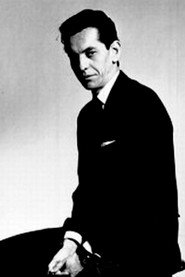
Héctor Duvauchelle Concha (Bulnes, Chile, December 8, 1932 – Caracas, Venezuela, December 24, 1983) was a Chilean actor who received the Municipal Film Award of Caracas in 1983. Following the 1973 coup d’état in Chile, he went into exile in Venezuela with his siblings, Humberto and María Elena Duvauchelle. Settling in Caracas, he built a prolific career in theatre, film, and television that continued until his murder in 1983.
Known for
 7.0
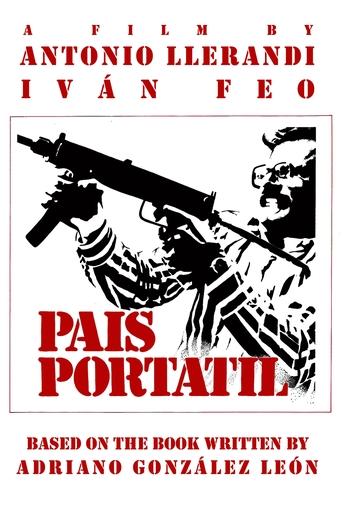
7.0Portable Country is a classical Venezuelan film about the urban guerrilla. Based on the novel of the same name, written by Adriano González León, the film centers on Andrés Barazarte, a disillusioned man from a wealthy landowning family, who grapples with his personal and political identity in the midst of Venezuela's tumultuous social changes and engages in the guerrilla. He reflects on his life, his family's decline, and the broader struggle for power in a country torn between tradition and revolution.The story unfolds as Andrés is tasked with transporting a mysterious package. This journey becomes a metaphor for his search for meaning and a confrontation with his family’s, and his country's, violent past. His recollections weave together with present events, creating a complex tapestry of memory and history.
Portable Country
1979
 5.1
5.1Absurdist short about a man with a suitcase and a man inside that suitcase.
The Suitcase
2008
 7.0
7.0The intent of novice director Solveig Hoogesteijn to make a drama about two Venezuelans from opposite sides of the economic and social tracks wobbles and weakens in the telling. Although the two compatriots both live in the capital, Caracas, and both love music, they have a need to go out into the rest of the country and discover their roots. As big-city dwellers, they are limited in their perspectives, though this excursion into other areas of Venezuela may prove more illuminating to them than to a foreign audience.
Manoa
1980
A poetic film that records the excavations carried out by Swiss ethnologist Jean Christian Spahni at the mouth of the Loa River. Through the bone remains and objects found, the testimony of the Chango indigenous people is revealed.
Aquí vivieron
1964
 8.0
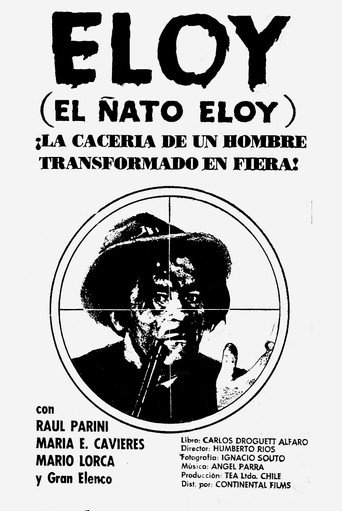
8.0The film is about Eloy, a Chilean bandit and companion of Joaquín Murieta, who is wanted by the justice system on the border with Argentina. Although an escape seems impossible, in desperation he flees without a fixed destination.
Eloy
1969
 6.9
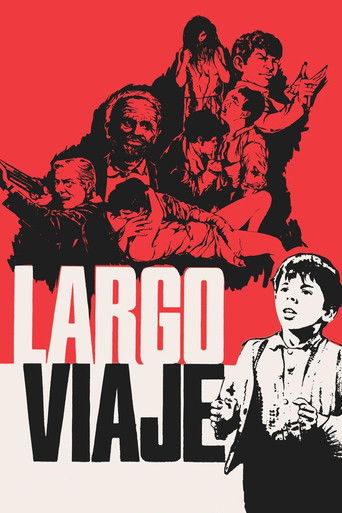
6.9The death of his newborn brother will cause a child from the poor neighborhoods of Santiago to walk around the city with the lost cardboard wings that the dead baby lost after the wake, trying to return them to him with the illusion that his little brother can fly to heaven.
A Long Journey
1967
Film credits
2000s · 1 titles
1980s · 2 titles
7.0The intent of novice director Solveig Hoogesteijn to make a drama about two Venezuelans from opposite sides of the economic and social tracks wobbles and weakens in the telling. Although the two compatriots both live in the capital, Caracas, and both love music, they have a need to go out into the rest of the country and discover their roots. As big-city dwellers, they are limited in their perspectives, though this excursion into other areas of Venezuela may prove more illuminating to them than to a foreign audience.
Manoa
1980
 10.0
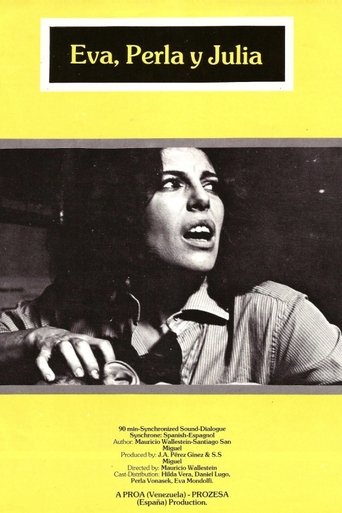
10.0In the process of illness and death of the father of three sisters (Eva, Julia and Perla) they confront each other, their lives, their past, their hopes and frustrations in a middle class environment. It is based on an idea by Mauricio Walerstein and Ibsen Martínez.
Eva, Perla y Julia
1980
1970s · 2 titles
7.0Portable Country is a classical Venezuelan film about the urban guerrilla. Based on the novel of the same name, written by Adriano González León, the film centers on Andrés Barazarte, a disillusioned man from a wealthy landowning family, who grapples with his personal and political identity in the midst of Venezuela's tumultuous social changes and engages in the guerrilla. He reflects on his life, his family's decline, and the broader struggle for power in a country torn between tradition and revolution.The story unfolds as Andrés is tasked with transporting a mysterious package. This journey becomes a metaphor for his search for meaning and a confrontation with his family’s, and his country's, violent past. His recollections weave together with present events, creating a complex tapestry of memory and history.
Portable Country
1979
 6.4
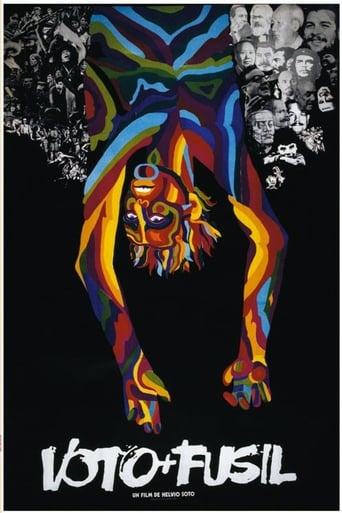
6.4The political evolution in Chile seeing from three different times: 1937, 1947 and 1970. A film that shows how a revolution cannot be accomplished by electoral means, and how the wealthy class will always attempt to destroy that revolution, with the help of the armed forces, as soon as their privileges are threatened.
Voto + Fusil
1971
1960s · 5 titles
A poetic film that records the excavations carried out by Swiss ethnologist Jean Christian Spahni at the mouth of the Loa River. Through the bone remains and objects found, the testimony of the Chango indigenous people is revealed.
Aquí vivieron
1964
8.0The film is about Eloy, a Chilean bandit and companion of Joaquín Murieta, who is wanted by the justice system on the border with Argentina. Although an escape seems impossible, in desperation he flees without a fixed destination.
Eloy
1969
6.9The death of his newborn brother will cause a child from the poor neighborhoods of Santiago to walk around the city with the lost cardboard wings that the dead baby lost after the wake, trying to return them to him with the illusion that his little brother can fly to heaven.
A Long Journey
1967
 6.5
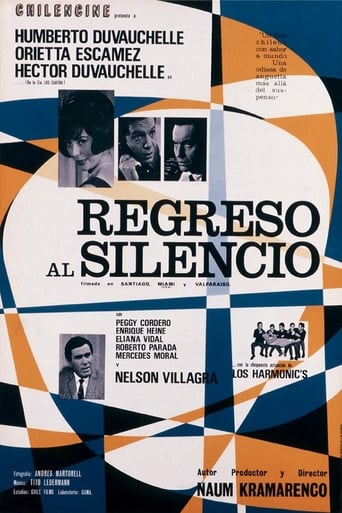
6.5After living many years in Miami, Bill returns to Chile looking for his brother. One night they meet again and celebrate the event with a night of revelry. The next day, Bill wakes up alone and since then he loses all traces of his brother. Mysteriously a detective appears and offers to help, starting a searching and a succession of misunderstandings.
Return to Silence
1967
 5.4
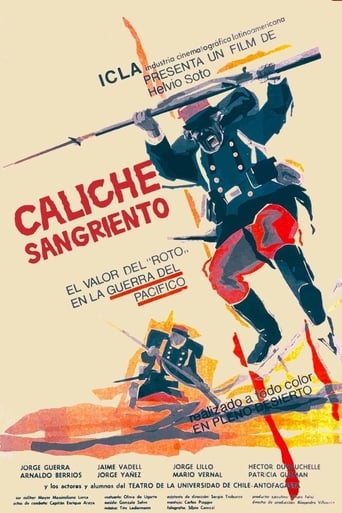
5.4Chilean soldiers try to survive in the desert after they are attacked by Peruvian troops. The 17 survivors are held together by the Captain. The Lieutenant is a civilian attorney who clashes with the Captain as he pursues the valuable rights to nitrate deposits in the area. When the fighting was over, 25,000 soldiers from Chile, Peru and Bolivia had perished while trying to secure the coveted mineral rights for foreign companies.
Bloody Nitrate
1969