

Acting
Florence Camarroque
Known for
Acting
Credits
2 titles
Florence Camarroque is a French actress, director, writer, adaptor, and singer. She rose to prominence in film in the 1970s, notably for her roles in Histoire de Paul (1975), Mémoire commune (1978), and Le cas Adam et Ève (1974). In Mémoire commune, directed by Patrick Poidevin, she plays the character of the Commune, alongside Jean-Paul Wenzel. On stage, she has performed in several notable plays, such as Pedro Calderón de la Barca's L’Alcade de Zalamea (directed by René Jauneau, 1968), Michel Vinaver's Par-dessus bord (directed by Roger Planchon, 1974), Vsevolod Vichnievsky's La Tragédie optimiste (directed by Bernard Chartreux, 1974), and 2 ou 3 Arturo Ui (2 or 3 Arturo Ui) based on Anto…
Known for
 10.0
A character, directly addressing the viewer, attempts, through his or her knowledge, a historical reflection on the Paris Commune of 1871. A series of five tableaux retraces the major phases of the events. First comes the analysis of the Second Empire. Then comes the fall of the Empire and the proclamation of the Republic on September 4, 1870. Based on texts by Jules Vallès, several actors evoke the event in the contemporary setting of the large housing estates of Bobigny. The third part deals with the period October-March 1871, during which the people of Paris felt, little by little, betrayed by the government. Finally, March 18 is the revolutionary day. Inspired by Bertold Brecht's "Days of the Commune," actors perform the episode "Madame Cabet's Canon." The fifth part, entitled "Two or Three Things I Know About Her," directly evokes the work of the Commune, building and imagining a better world...
Mémoire Commune
1978
 4.3
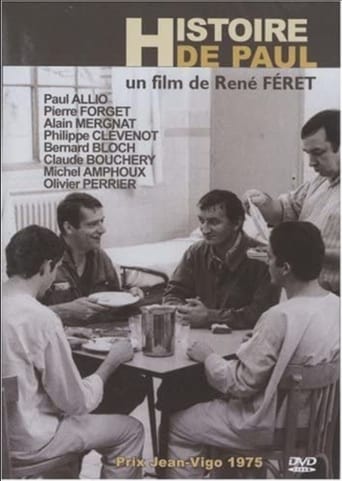
A young man is checked into a mental hospital for unexplained reasons.
The Story of Paul
1975
Film credits
1970s · 2 titles
10.0A character, directly addressing the viewer, attempts, through his or her knowledge, a historical reflection on the Paris Commune of 1871. A series of five tableaux retraces the major phases of the events. First comes the analysis of the Second Empire. Then comes the fall of the Empire and the proclamation of the Republic on September 4, 1870. Based on texts by Jules Vallès, several actors evoke the event in the contemporary setting of the large housing estates of Bobigny. The third part deals with the period October-March 1871, during which the people of Paris felt, little by little, betrayed by the government. Finally, March 18 is the revolutionary day. Inspired by Bertold Brecht's "Days of the Commune," actors perform the episode "Madame Cabet's Canon." The fifth part, entitled "Two or Three Things I Know About Her," directly evokes the work of the Commune, building and imagining a better world...
Mémoire Commune
1978
4.3A young man is checked into a mental hospital for unexplained reasons.
The Story of Paul
1975