
Acting
Masaru Kodaka
Born
1928-11-03 (97)
Place of birth
Bunkyo, Tokyo, Japan
Known for
Acting
Credits
49 titles
Known for
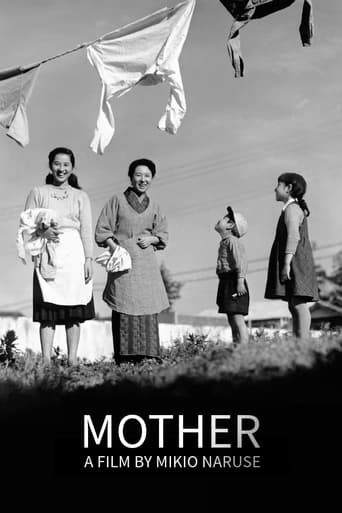 7.0
A teenaged girl witnesses her widowed mother's attempt to sustain her family.
Mother
1952
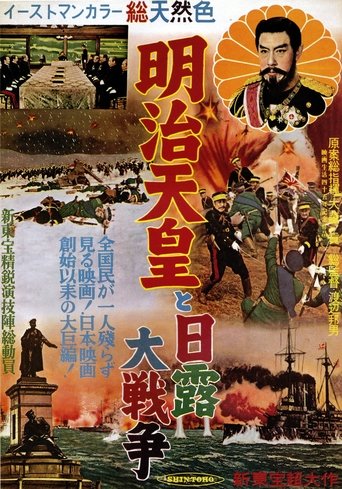 8.0
Meiji Tenno portrays the buildup to the Russo-Japan War. In addition to showing the political events that led to war, it also shows the era from the story of a farm family in rural Japan that sends their son off to war. As such, it could be considered an anti-war movie, showing how, while war is devised by governments, the people do not really understand what war is, and its combatants often do not know what they are fighting for.
Emperor Meiji and the Great Russo-Japanese War
1957
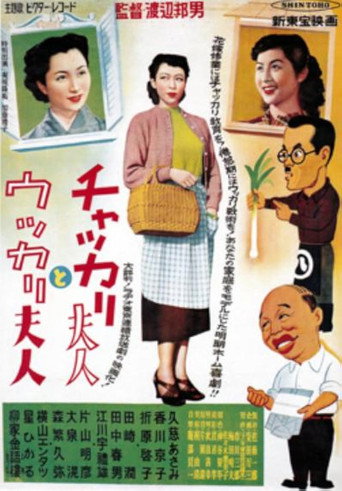 NR
The Chakkari and Ukkarai families live in a modest residential neighborhood on the outskirts of Tokyo. Both husbands are ordinary office workers at the same company. Mrs. Chakkari, Satoko, is incredibly shrewd, while Mrs. Ukkarai, Sachiko, is incredibly absent-minded. As a result, a series of hilarious and tragicomic situations unfolds.
Chakkari fujin to ukkari fujin
1952
 9.0
No synopsis available yet.
The Sacrifice of the Human Torpedoes
1955
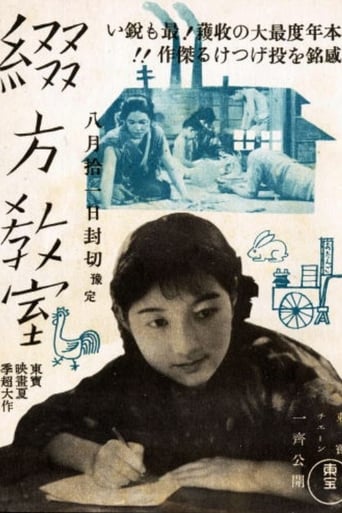 6.8
Masako, the daughter of an impoverished itinerant tinsmith, wins a grammar school composition contest with an essay about her neighborhood. The much publicized essay ends up causing the family problems and their chronic money troubles threaten Masako's further education.
Composition Class
1938
 6.5
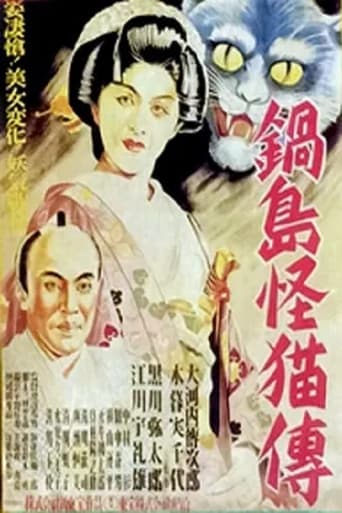
Tanuma Kandayuu is a high class samurai of the house of Nabeshima. He finds a lavish board of Go (a Chinese Board game) at Kinbei's store. He recommend Kinbei to offer it to his lord. Kinbei hesitates at first, since he knows the board has a mysterious legend surrounding it; it's believed that for every game played on the board, one death is required.
Ghost Cat of Nabeshima
1949
Film credits
1960s · 5 titles
 NR
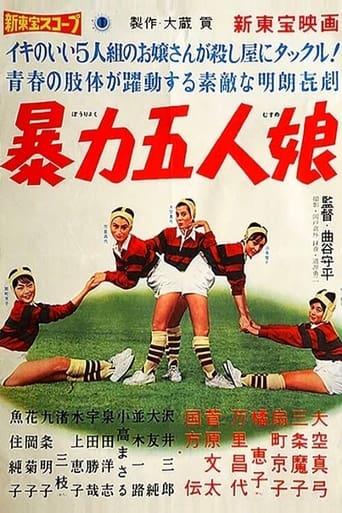
The All Girl's Rugby Team try to keep their private college from falling into the hands of Yakuza and unscrupulous businessmen.
Five Violent Girls
1960
 5.0
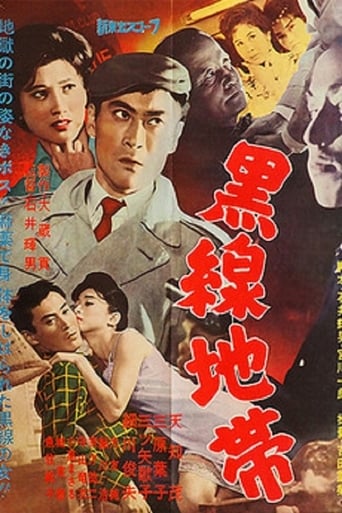
Freelance reporter “Scoop” Machida is hot on the trail of a prostitution ring called the Black Line, when he is framed for the murder of a young woman. Forced to clear his own name, the handsome journalist sinks deeper into the Black Line’s rotten swamp of drugs, prostitution, and murder and finds unexpected help in Maya, a steamy female gambler familiar with the neon-lit streets, shadowy alleyways, and seedy nightclubs he must navigate. The closest film in the Line series to classic American film noir, Ishii’s Black Line is a pulpy assortment of crime film conventions including the starkly expressionistic black and white cinematography by Jûgyô Yoshida, a jazzy music score by Michiaki Watanabe, and a sleazy screenplay by Ishii and Ichirô Miyagawa.
Black Line
1960
 7.4
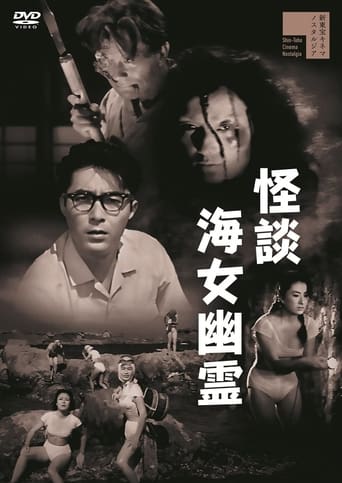
No synopsis available yet.
Ghost of the Pearl Divers
1960
 NR
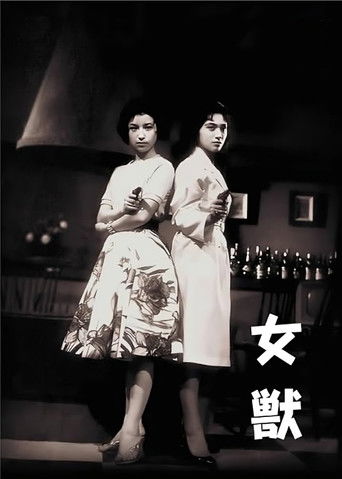
With the object of discovering the male accomplice of Hideko, a bad girl, Michiko, a police-woman, disguises herself and infiltrates a gang. Then in a reformatory, under the name of Suzuko, she finds a certain girl who is familiar with Hideko and from her she approaches a woman, named Keiko. One day, at a beer-hall, the police-woman meets Keiko who just finished a secret narcotics transaction and asks her about Hideko. However, with the sudden appearance of Saburo, one of the gang, her search fails, and an exciting pursuit begins. Later Keiko is found dead.
Female Detective
1960
 NR
Rumiko, the female boss from Kanto. The film is a fierce counterattack by a Yakuza woman against all men! It shows the power of a woman who fights, a woman who makes money, and a woman who explodes! More energy than in any male movie!
Face of the Dice
1966
1950s · 30 titles
7.0A teenaged girl witnesses her widowed mother's attempt to sustain her family.
Mother
1952
8.0Meiji Tenno portrays the buildup to the Russo-Japan War. In addition to showing the political events that led to war, it also shows the era from the story of a farm family in rural Japan that sends their son off to war. As such, it could be considered an anti-war movie, showing how, while war is devised by governments, the people do not really understand what war is, and its combatants often do not know what they are fighting for.
Emperor Meiji and the Great Russo-Japanese War
1957
NRThe Chakkari and Ukkarai families live in a modest residential neighborhood on the outskirts of Tokyo. Both husbands are ordinary office workers at the same company. Mrs. Chakkari, Satoko, is incredibly shrewd, while Mrs. Ukkarai, Sachiko, is incredibly absent-minded. As a result, a series of hilarious and tragicomic situations unfolds.
Chakkari fujin to ukkari fujin
1952
9.0No synopsis available yet.
The Sacrifice of the Human Torpedoes
1955
 8.0
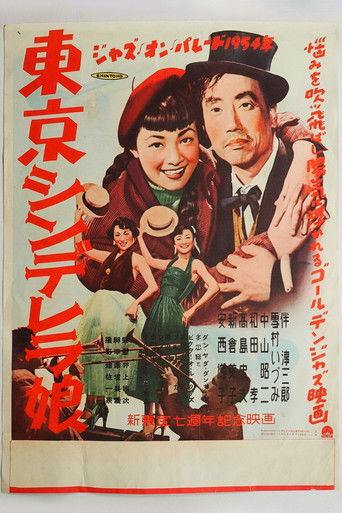
No synopsis available yet.
東京シンデレラ娘
1954
 NR
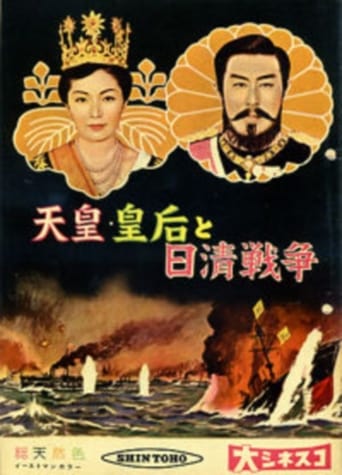
No synopsis available yet.
Emperor & Empress Meiji and the Sino-Japanese War
1958
 NR
Japanese war film.
Submarine Ro Hasn't Surfaced
1954
On a Sunday morning, young dentist Toshio Ezaki wakes up with a hangover, on a bench in his office. He finds a poisoned woman in a green-striped Western-style outfit lying in his exam room. He must retrace his blurry steps of the night before, and navigate a web of embezzlement, murder, framings, and false identities in Tokyo's Ginza district, to discover the identity of the dead woman and why she is there—and hopefully prove his innocence, before his wedding in three days...
Golden Beast
1950
 NR
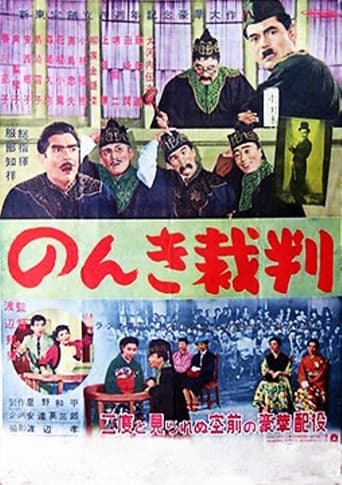
A spectacular comedy with a star-studded cast that depicts unusual trials and unexpected verdicts regarding the five deadly sins: the crime of beauty, the crime of a terrifying wife, the crime of taking the wrong course, the crime of seducing, and the crime of killing with laughter.
Nonki saiban
1955
 6.5
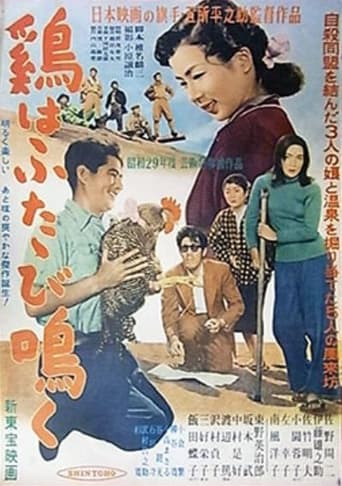
Three young women make a suicide pact, but they grow to have a better understanding of themselves.
The Cock Crows Twice
1954
 8.0
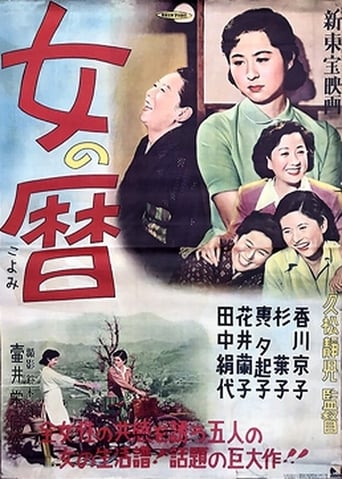
The story of five sisters.
Five Sisters
1954
 8.0
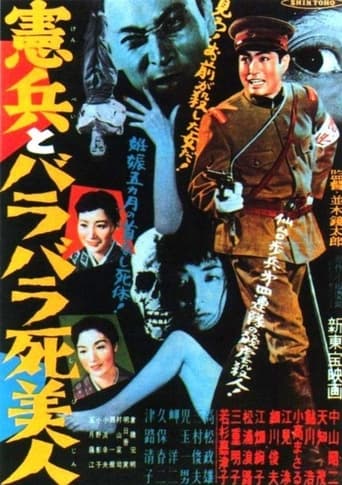
The year is 1937, and it has been six months since the Sendai Infantry left for Manchuria. The rotted corpse of a young woman is found at the bottom of a well, but her face and limbs are gone. The military police begin an investigation and search fervently for the person responsible, but they can't even determine the victim's identity, much less find any clues. However, the incident is made public when newspapers give wide coverage to the story, so Staff Sergeant Kosaka is dispatched from Tokyo to solve the case. Eventually, General Tsunekichi is taken into custody by local infantrymen because of the testimony of another unit, but the spirit of the dead woman appears before Staff Sergeant Kosaka, who continues to investigate on his own...
The Military Policeman and the Dismembered Beauty
1957
 NR
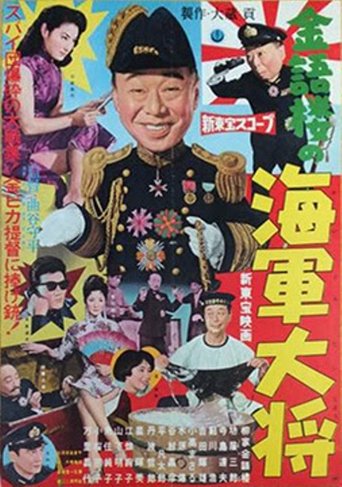
Japanese comedy film.
Kingorō no kaigun taishô
1959
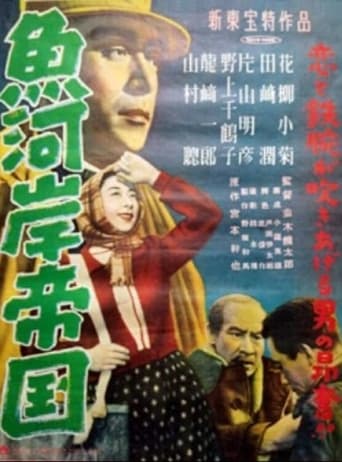 NR
Obscure Japanese movie by director Kyotaro Namiki
Riverside Fish Market Empire
1952
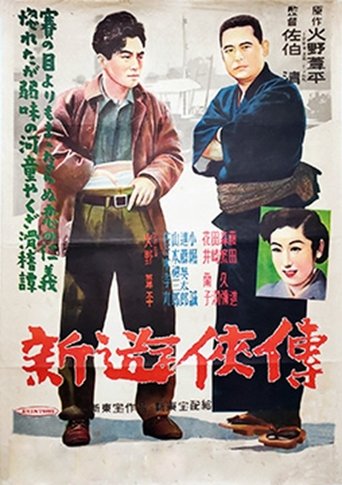 NR
No synopsis available yet.
新遊侠伝
1951
 NR
Sashichi investigates the mysterious murders of four beauties, all of whom were stabbed in the chest.
Casebook of Dandy Sashichi: Chests Covered In Fresh Blood
1959
 7.0
Earlier version or Prequel to Queen Bee and the School for Dragons.
Queen Bee
1958
Japanese sports comedy film about kendo.
The Fencing Collegian
1956
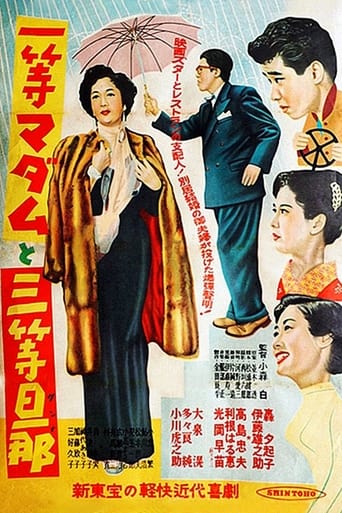 NR
Domestic comedy produced by Shin Toho Studios directed by Komori Kiyoshi and starring Todoroki Yukiko and Ito Yunosuke.
Madam of the first class and husband of the third class
1954
 NR
Comedy-horror film by Masaki Môri.
Kuronekokan ni Kieta Otoko
1956
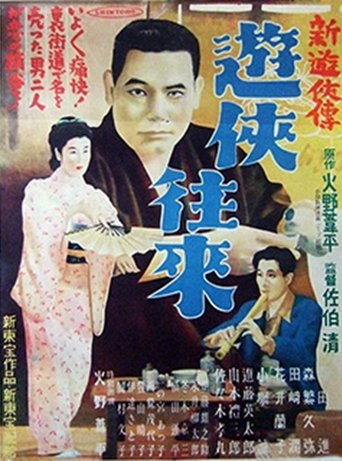 NR
No synopsis available yet.
新遊侠伝 遊侠往来
1951
 NR
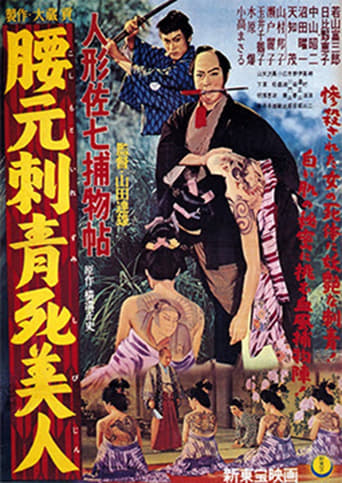
The fifth volume of the Ningyo Sana Torimonocho series. Based on the original work by Seishi Yokomizo, the film was adapted by Mitsuo Kaneda (The Nude Model Murder Case), directed by Tatsuo Yamada, who worked on The Golden Bugyo, and shot by Kikuzo Kawasaki. Keiko Hibino, Shigeru Amachi, Tomisaburo Wakayama
Casebook of Dandy Sashichi: Dead Woman's Tattoo
1958
 NR
Casebook of Dandy Sashichi
Casebook of Dandy Sashichi: The Ox of Edo
1957
 NR
Japanese comedy film.
お嬢さん女中
1955
Japanese comedy film.
太陽娘と社長族
1958
 7.8
A samurai rescues a mischievous tanuki from hunters and sets it free. When the samurai's wastrel son hatches a plot to kill his father for his fortune, the magical tanuki is determined to protect its rescuer.
Ghost Stories of Wanderer at Honjo
1957
 NR
This time around, Sashichi is investigating a case of serial murders believed to be perpetrated by a giant bear.
Casebook of Dandy Sashichi: Naked Princess and Mysterious Bear Man
1959
 NR
Japanese comedy film.
坊ちゃんの特ダネ記者
1957
Japanese comedy film.
ノイローゼ兄さんガッチリ娘
1956
 NR
Japanese comedy film.
Onna daigaku yakyūkyō jidai
1956
1940s · 9 titles
6.5Tanuma Kandayuu is a high class samurai of the house of Nabeshima. He finds a lavish board of Go (a Chinese Board game) at Kinbei's store. He recommend Kinbei to offer it to his lord. Kinbei hesitates at first, since he knows the board has a mysterious legend surrounding it; it's believed that for every game played on the board, one death is required.
Ghost Cat of Nabeshima
1949
 6.2
The premature death of a young mother serves as inspiration for her husband and son.
Mother Never Dies
1942
This film focuses on Koreans living in Japan. The filmmaker’s humanism comes across in the portrayal of a girl living in a shabby tenement, the warmth of a Korean girl she meets, and the friendliness of this Korean girl’s family.
The Brick Factory Girl
1946
 9.0
A 1942 Jidaigeki by the veteran jidaigeki filmmaker Kunio Watanabe about the legendary warrior Musashibo Benkei with Hideko Takamine portraying Minamoto no Yoshitsune (who is, of course, a man). The film climaxes in the famous encounter/fight btw Benkei and Yoshitsune at the Gojo Bridge.
Musashibo Benkei
1942
 9.0
Hideko, a young Baseball fan, determined to cheer for her favourite baseball team by creating a new song for them.
Hideko the Cheerleader
1940
No synopsis available yet.
Kodakara fūfu
1941
 5.0
Young men endure challenging flight training in the Yokaren, a program feeding new pilots into the Army and Navy. By the time of the filming, the pressure of the war had led the government to shorten the training and expand the age range of the recruits. Yokaren was highly selective, and thus an object of great fascination and desire for boys and young men. In this Navy–sponsored film, Setsuko Hara plays the daughter of a family that often entertains recruits on their days off—a surrogate sister to many trainees. Her fragile younger brother aspires to join the program, but is rejected. With perseverance and much support from Hara and their mother, he surmounts his weaknesses and becomes a flier.
Toward the Decisive Battle in the Sky
1943
 NR
No synopsis available yet.
The Splendid Gold Mine
1941
 6.0
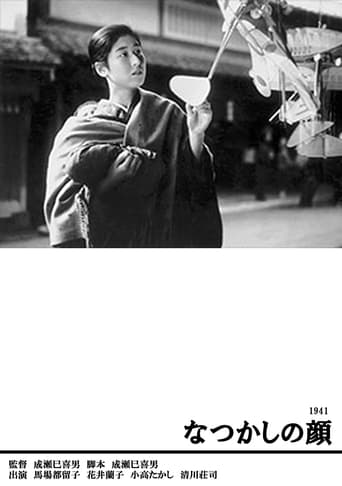
A Fond Face from the Past is also set in a rural community, specifically a village outside Kameoka, near Kyoto. In some ways this short, thirty-six-minute film is Naruse's most moving negotiation of the militarist restrictions of the time, perhaps because it is also his most direct engagement with the culture of war. When a newsreel comes to Kameoka featuring a local man named Yoichi, it causes some excitement in the community and, of course, in Yoichi's own family. First of all his mother makes the newsreel (Nippon News, no. 14), which begins with the same marching music that opens his own film, followed by a curious baby judging context in Los Angeles featuring two hundred Japanese babies. Released in January 1941, almost a year before the pacific war begins, this “found footage” is indicative of Japanese imperialist ambitions beyond Asia long before Pearl Harbor.
A Fond Face from the Past
1941
1930s · 5 titles
6.8Masako, the daughter of an impoverished itinerant tinsmith, wins a grammar school composition contest with an essay about her neighborhood. The much publicized essay ends up causing the family problems and their chronic money troubles threaten Masako's further education.
Composition Class
1938
 10.0
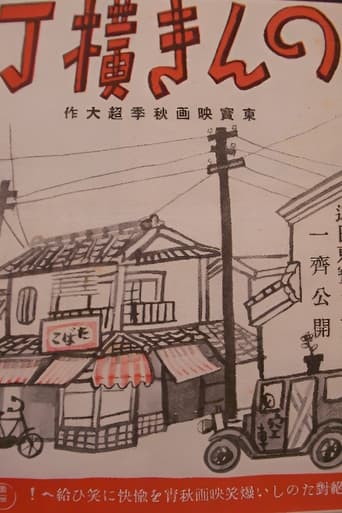
No synopsis available yet.
Easy Alley
1939
 8.5
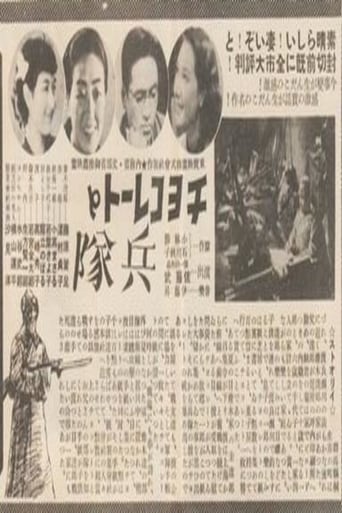
Chocolate and Soldiers (チョコレートと兵隊, Chokorēto to Heitai) is a 1938 Japanese war film directed by Sato Takeshi and one of the most effective Japanese propaganda films of the late 1930s. The American director Frank Capra said of Chocolate and Soldiers "We can't beat this kind of thing. We make a film like that maybe once in a decade. We haven't got the actors. It shows the common Japanese soldier as an individual and as a family man, presenting even enemy Chinese soldiers as brave individuals. It is considered to be a "humanist" film, paying close attention to the human feelings of both the soldier and his family. Cinema theorist Kate Taylor-Jones suggests that Chocolate and Soldiers provided "a vision of the noble, obedient and honourable Japanese army fighting to defend the emperor and Japan.
Chocolate and Soldiers
1938
Original work by Hyakken Uchida.
Roppa no Hōjiro Sensei
1939
Two brothers move to their grandfather's house after their father is drafted and play war games with their new classmates.
Osanaki mono no hata
1939