

Directing
Felipe Degregori
Known for
Directing
Credits
15 titles
Felipe Degregori studied film in Moscow in the 1970s. Upon returning to Peru, he directed several short films before making his feature film debut with "Abisa a los compañeros" (Warn the Comrades), his first feature film, shot in 1979 and released in January 1980. The film was an adaptation of the book "Abisa a los compañeros, pronto" (Warn the Comrades Soon) by Guillermo Thorndike, who also wrote the screenplay. Both the book and the film recreate a true event that occurred in 1963, when a group of Trotskyist militants planned and carried out a bank robbery in Miraflores to finance their political activities. The film was a great success with audiences upon its release and sparked considera…
Known for
 7.2
The Peruvian army captain Pantaleon Pantoja, a very serious and efficient officer, is chosen by his superiors to set up a special service of 'visitors' to satisfy the sexual needs of the soldiers posted on remote jungle outposts.
Captain Pantoja and the Special Services
1999
 NR
Narrates the trip made by the Henry 9, one of the ships owned by the company of the same name for transportation of passengers and cargo on the route from Pucallpa to Iquitos. Both cities are located in the Peruvian Amazon. The documentary shows the Peruvian rainforests from an angle that is not well known, from that of the everyday life of a riverside dweller, which enables discovering and learning of the natural and cultural value of those who struggle every day against isolation and oblivion.
No hay lugar más diverso
2012
 4.8
After exhausting all legal channels in his search for a job, "M" struggles with the decision of whether or not to enter a life of crime by helping his friends deliver drugs to Miami.
City of M
2000
 7.0
Based on real events in Peru, 1963. A team of revolutionary foreigners planned and pulled a heist on the biggest bank in Peru. The loot helped fund the rural revolution in Concepción, Cusco.
Abisa a los compañeros
1980
 NR
The lives of a group of young migrants to the city of Lima resemble the turbulent randomness of the sea when it rages. Immersed in an environment that resists assimilating them, these city dwellers draw upon their greatest virtue, perseverance, to rise above the waters, leaving a trail of hope.
Peces de Ciudad
2007
 5.4
A family longs to be on a TV show which does in-depth exposés of different real families every week. When they are finally selected they decide to change their lives completely so that the audience sees them as they want to be seen, not as they really are.
We Are All Stars
1993
Film credits

Behind the camera
NRNarrates the trip made by the Henry 9, one of the ships owned by the company of the same name for transportation of passengers and cargo on the route from Pucallpa to Iquitos. Both cities are located in the Peruvian Amazon. The documentary shows the Peruvian rainforests from an angle that is not well known, from that of the everyday life of a riverside dweller, which enables discovering and learning of the natural and cultural value of those who struggle every day against isolation and oblivion.
No hay lugar más diverso
2012
4.8After exhausting all legal channels in his search for a job, "M" struggles with the decision of whether or not to enter a life of crime by helping his friends deliver drugs to Miami.
City of M
2000
7.0Based on real events in Peru, 1963. A team of revolutionary foreigners planned and pulled a heist on the biggest bank in Peru. The loot helped fund the rural revolution in Concepción, Cusco.
Abisa a los compañeros
1980
NRThe lives of a group of young migrants to the city of Lima resemble the turbulent randomness of the sea when it rages. Immersed in an environment that resists assimilating them, these city dwellers draw upon their greatest virtue, perseverance, to rise above the waters, leaving a trail of hope.
Peces de Ciudad
2007
5.4A family longs to be on a TV show which does in-depth exposés of different real families every week. When they are finally selected they decide to change their lives completely so that the audience sees them as they want to be seen, not as they really are.
We Are All Stars
1993
5.4A family longs to be on a TV show which does in-depth exposés of different real families every week. When they are finally selected they decide to change their lives completely so that the audience sees them as they want to be seen, not as they really are.
We Are All Stars
1993
Documentary photo about the life of Daniel Alcides Carrión (1857-1885), martyr of Peruvian medicine.
Daniel Alcides Carrión
1977
The daily life of the popular sectors in Lima in the seventies.
El Día de mi Suerte
1978
 1.0
The result of three years of production, more than 100 hours of filming, and interviews with people from 15 nationalities, Translatina paints an alarming portrait of the realities faced by transgender people in Latin America. Through a series of testimonies from civil society representatives and other stakeholders, this full-length documentary offers a realistic look at the challenges faced by transgender people in accessing education, work, justice, health care, and other services. It also shows how non-governmental organizations in Latin America are starting a dialogue with governments to demand opportunities for inclusion of transgender people, and how such initiatives may result in significant changes to ensure the rights of the population.
Translatina
2010
 NR
Peruvian anthropologist and painter Ediberto Jiménez visits the villages of the Chungui people in the Peruvian highlands. During the 1980s, these people suffered terribly at the hands of the Maoist guerrilla group Shining Path, as well as the Peruvian counterinsurgency forces.
Chungui, Horror sin Lágrimas
2010
 NR
Based on testimonies from residents of the communities of Miskibamba and Huayao of the district of San Miguel and Tambo in the province of La Mar, Department of Ayacucho, the film illustrates some of the main conclusions of the work of the Truth and Reconciliation Commission, a group created with the purpose of clarifying the crimes and human rights violations that occurred during the internal armed conflict between 1980 - 2000.
Spreading the Truth (Difundiendo la verdad)
2004
NRBased on testimonies from residents of the communities of Miskibamba and Huayao of the district of San Miguel and Tambo in the province of La Mar, Department of Ayacucho, the film illustrates some of the main conclusions of the work of the Truth and Reconciliation Commission, a group created with the purpose of clarifying the crimes and human rights violations that occurred during the internal armed conflict between 1980 - 2000.
Spreading the Truth (Difundiendo la verdad)
2004
 NR
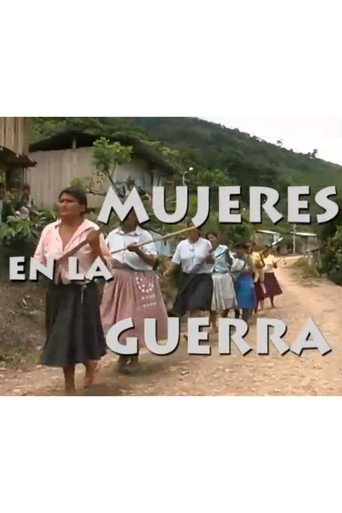
In 1980, the Communist Party of Peru—"Shining Path"—began its struggle against the Peruvian state, triggering an internal war that resulted in more than 69,000 deaths, according to the final report of the Truth and Reconciliation Commission. Within this conflict, a decisive factor in the defeat of the "Shining Path" was the role played by armed peasant self-defense groups, in which women took on a highly significant part. This work aims to document the participation of women in the anti-subversive struggle—an aspect that is little known, yet fundamental to the pacification of the country.
Mujeres en la guerra
2005