
Writing
Félicien Marceau
Born — Died
1913-09-16 — 2012-03-07
Place of birth
Kortenberg, Belgique
Known for
Writing
Credits
10 titles
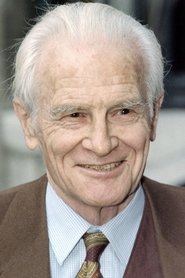
Félicien Marceau (16 September 1913 – 7 March 2012) was a French novelist, playwright and essayist originally from Belgium. His real name was Louis Carette. He was close to the Hussards right-wing literary movement, which in turn was close to the monarchist movement. He was born in Kortenberg, Flemish Brabant. Marceau received the Prix Goncourt for his book Creezy (ISBN 0714507083) in 1969. On 27 November 1975 he was elected to the Académie française, succeeding Marcel Achard. In 1974, Goudji created the academician's sword for Félicien Marceau. Source: Article "Félicien Marceau" from Wikipedia in English, licensed under CC-BY-SA 3.0.
Known for
 5.7
5.7No synopsis available yet.
Sacrée soirée
1987
 3.6
3.6No synopsis available yet.
Vivement dimanche
1998
 8.5
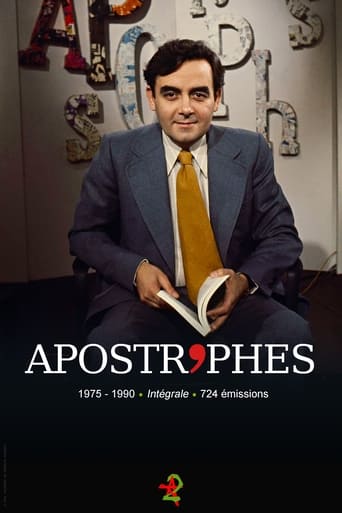
8.5Apostrophes was a live, weekly, literary, prime-time, talk show on French television created and hosted by Bernard Pivot. It ran for fifteen years (724 episodes) from January 10, 1975, to June 22, 1990, and was one of the most watched shows on French television (around 6 million regular viewers). It was broadcast on Friday nights on the channel France 2 (which was called "Antenne 2" from 1975 to 1992). The hourlong show was devoted to books, authors and literature. The format varied between one-on-one interviews with a single author and open discussions between four or five authors.
Apostrophes
1975
 5.9
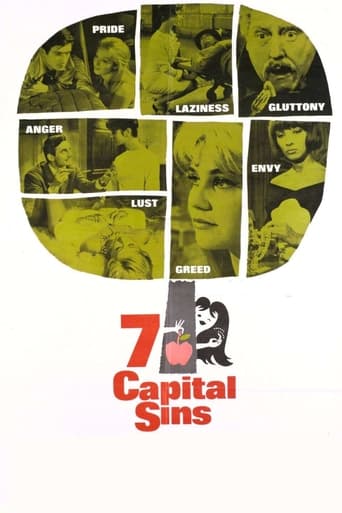
5.9Seven directors each dramatize one of the seven deadly sins in a short film. In "Anger," a domestic argument over a fly in the Sunday soup escalates into nuclear war. In "Sloth," a movie star would rather pay someone to tie his shoe than bend over to do it himself, and he can't be bothered to accept a starlet's sexual favors. In "Gluttony," a peasant family on its way to the funeral of a relative who died from indigestion stops regularly to eat and drink en route, arriving in time to eat some more. In "Greed," a high-class prostitute refunds the price of a cadet's lottery ticket. In "Pride," an unfaithful wife finds reason to reform. And so on through lust and envy.
The Seven Deadly Sins
1962
 4.9
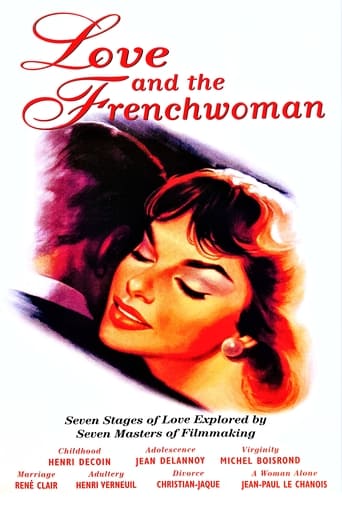
4.9The seven stages in the life of the modern Frenchwomen are disclosed by seven directors in a witty way: 1 - Childhood, 2 - Adolescence, 3 - Virginity, 4 - Marriage, 5 - Adultery, 6 - Divorce, 7 - The Single Woman.
Love and the Frenchwoman
1960
 5.8
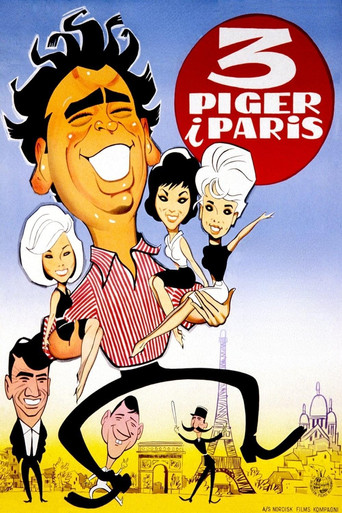
5.8Three girls in Paris is the story of three Danish girls (Ghita Nørby, Susse Wold and Hanne Borchsenius) traveling to Paris, but after having placed suitcase and money on the hotel and takes off in the city, they forget what it's called and where it is located. They are helped by a Parisian taxi driver, and meets a series of typical French.
Three Girls in Paris
1963
Series credits
5.7No synopsis available yet.
Sacrée soirée
1987
3.6No synopsis available yet.
Vivement dimanche
1998
8.5Apostrophes was a live, weekly, literary, prime-time, talk show on French television created and hosted by Bernard Pivot. It ran for fifteen years (724 episodes) from January 10, 1975, to June 22, 1990, and was one of the most watched shows on French television (around 6 million regular viewers). It was broadcast on Friday nights on the channel France 2 (which was called "Antenne 2" from 1975 to 1992). The hourlong show was devoted to books, authors and literature. The format varied between one-on-one interviews with a single author and open discussions between four or five authors.
Apostrophes
1975
Behind the camera
5.9Seven directors each dramatize one of the seven deadly sins in a short film. In "Anger," a domestic argument over a fly in the Sunday soup escalates into nuclear war. In "Sloth," a movie star would rather pay someone to tie his shoe than bend over to do it himself, and he can't be bothered to accept a starlet's sexual favors. In "Gluttony," a peasant family on its way to the funeral of a relative who died from indigestion stops regularly to eat and drink en route, arriving in time to eat some more. In "Greed," a high-class prostitute refunds the price of a cadet's lottery ticket. In "Pride," an unfaithful wife finds reason to reform. And so on through lust and envy.
The Seven Deadly Sins
1962
4.9The seven stages in the life of the modern Frenchwomen are disclosed by seven directors in a witty way: 1 - Childhood, 2 - Adolescence, 3 - Virginity, 4 - Marriage, 5 - Adultery, 6 - Divorce, 7 - The Single Woman.
Love and the Frenchwoman
1960
5.8Three girls in Paris is the story of three Danish girls (Ghita Nørby, Susse Wold and Hanne Borchsenius) traveling to Paris, but after having placed suitcase and money on the hotel and takes off in the city, they forget what it's called and where it is located. They are helped by a Parisian taxi driver, and meets a series of typical French.
Three Girls in Paris
1963
 8.2
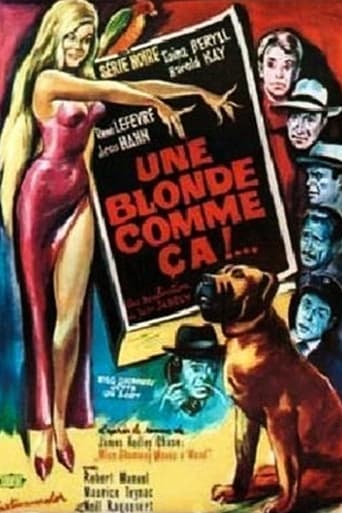
8.2Myra, daughter of the circus king, has been kidnapped in South America. Or so her father believes. In reality, Miss Shumway has escaped into the Indian jungle in the company of a conjurer. Millan, a mischievous and adventurous journalist, tracks down the young woman in the Indian sector of Tamazunchale. They get to know each other and Myra tells the young man what drove her to flee her father. But she's run out of money and expects her adventure to come to an end soon. Then she meets a man named Doc, who suggests she contact an old Indian sorcerer.
A Blonde Like That
1963
 NR
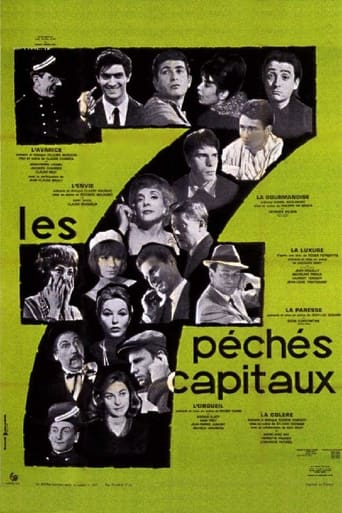
NRA woman leaves her lover to return to her husband who cheats on her, something that his pride can not admit.
Pride
1962
 6.5
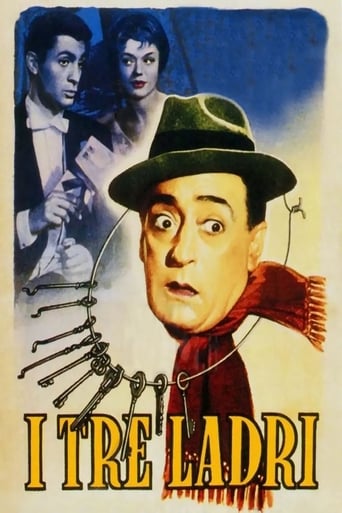
6.5Tapioca, a small-time thief, hides out in an elegant apartment, where he is soon joined by Cascarilla, one of his apprentices who has become better than his master. When the owners arrive home, the latter offers the wife a bunch of love letters she has written to various lovers for ten million.
The Three Thieves
1954
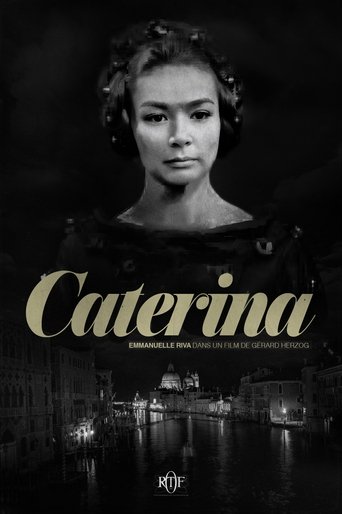 10.0
10.0No synopsis available yet.
Caterina
1963