
Acting
Jiří Zahajský
Born — Died
1939-01-19 — 2007-07-19
Place of birth
Mšeno, Czechoslovakia
Known for
Acting
Credits
75 titles
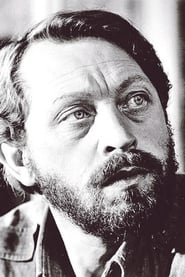
Jiří Zahajský (19 January 1939, Mšeno - 19 July 2007, Prague) was a Czech actor and dabér. He was a member of the Theater in Vinohrady, Theater behind the gate and longtime member of the Prague Drama Club. He played in a number of Czech films of both serious and comedic. Jiri Zahajsky was born in Mšeně near Mělník. As a child, he showed a tendency to acting when he played in the amateur performance of Snow White by Dwarf Dwarf. After the war, the Zahajski family moved to Děčín. As a student, he was playing a very good ensemble of amateurs under the direction of director Hipia. He recognized Zahai's talent and negotiated his studies at E. Burian. Zahajsky then studied at the DAMU and became …
Known for
 7.0
7.0No synopsis available yet.
Bakaláři
1972
 7.3
7.3Thirty Cases of Major Zeman is a Czechoslovak action-drama television show intended as a political propaganda to support the official attitude of the communist party. The series were filmed in the 1970s. Each episode encompasses one year, and investigations are stylized to that year. Most are inspired by real cases. The series follows the life of police investigator Jan Zeman during his career from 1945 to 1975.
Thirty Cases of Major Zema
1976
 8.0
8.0No synopsis available yet.
Hříšní lidé města pražského
1969
 7.0
7.0No synopsis available yet.
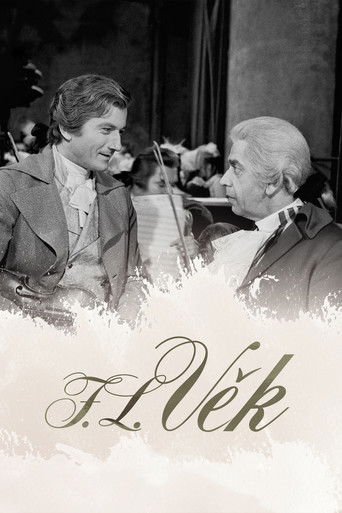
F. L. Věk
1971
 NR
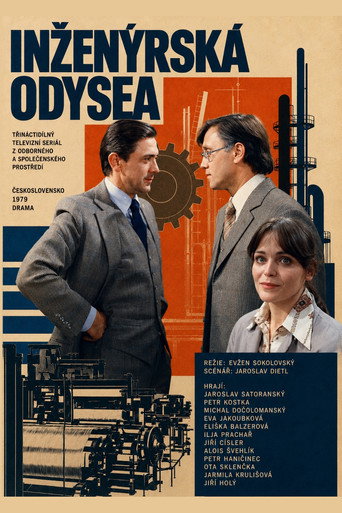
NRInženýrská odysea is a Czechoslovak/Czech TV series about three young students and their lives.
Inženýrská odysea
1980
 7.8
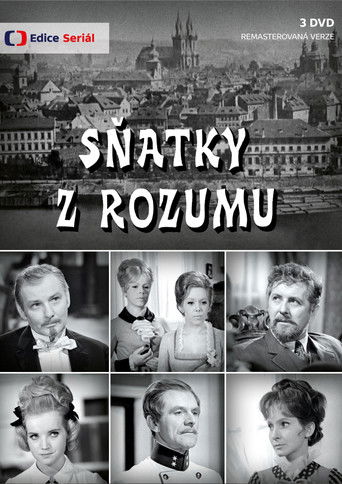
7.8Sňatky z rozumu was a Czechoslovak television programme which was first broadcast in 1968. The programme was directed by František Filip.
Sňatky z rozumu
1968
Film credits
1990s · 13 titles
 7.3
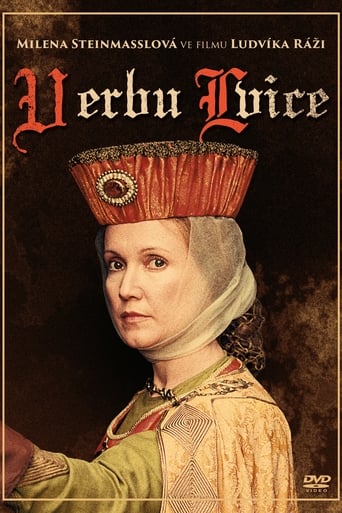
7.3The life story of Blessed Zdislava of Lemberk, about whom legends rather than sparse historical references tell us that she was a deeply religious woman with healing powers who devoted herself entirely to the humble service of her sick and suffering neighbors.
V erbu lvice
1995
No synopsis available yet.
Jeníček a Mařenka
1999
 NR
NRA woman discovers a conspiracy while searching for her missing travel companion.
Strange Airlines
1992
 5.2
5.2Unlike any other opera, the so-called Beggar's Opera is not just one composition, but a lineage of adapted compositions, beginning with the original hugely successful 1728 political satire written by Englishman John Gay. Composers and writers have penned variations on it ever since. The most famous of these was A Threepenny Opera by Bertholt Brecht and Kurt Weill. Some things these compositions share in common is their setting among the poor and criminal classes, and the roguish character Macheath. This production is based on an adaptation of Gay's original by Vaclav Havel the freedom-fighter, writer and philosopher who became the first (and only) president of the united post-communist country of Czechoslovakia, and it retains many traces of its theatrical origins. Film reviewers were not too tolerant of what they called "slavish adherence" to the noted Czech writer's stage production, but theater, philosophy and history buffs may feel otherwise.
The Beggar's Opera
1991
No synopsis available yet.
Vítr na konci léta
1993
No synopsis available yet.
Princ z pohádky
1995
No synopsis available yet.
„Na krásné vyhlídce“
1995
No synopsis available yet.
Pohádka o prolhaném království
1993
No synopsis available yet.
Usmívat se, prosím
1991
The theatre director encounters the disinterest and irresponsibility of the acting troupe, whose members are scheming and looking for side income. The tired and sick artist wants to finish his work at any cost.
Byli jsme to my?
1991
An old English legend about a poor boy who became mayor of London served as the basis for a television adaptation. The orphan Dick Whittington was blessed with nothing more and nothing less than honesty, hard work, sincerity, a sense of honor, and justice. Together with a stroke of luck, it is precisely these character traits that help him become a respected and wealthy young man and a loving husband. And so this charmingly old-fashioned story, in which decency, diligence, and personal effort lead to success and fulfillment in life, retains its appealing and necessary relevance to this day.
Dick Whittington
1993
No synopsis available yet.
Královský život otroka
1992
 6.0
6.0A beautiful maiden lives with her father in an ancient castle. She has rejected all suitors so far. She herself does not yet know if she will ever love. To avoid marriage, she sets a condition that her hand will belong only to the one who wins a contest dressed in nothing but linen. She expects everyone to refuse, as fighting in only a linen shirt means certain death. However, one of the suitors agrees to the condition...
O třech rytířích, krásné paní a lněné kytli
1996
1980s · 25 titles
 8.2
8.2Czechoslovak comedy film directed by Ladislav Smoljak, about the fictional national hero Jára Cimrman (universal genius, inventor, sportsman, criminalist, poet, writer and philosopher).
Jára Cimrman Lying, Sleeping
1983
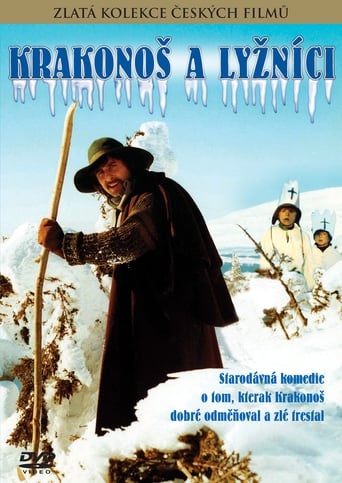 4.8
4.8Matej and Jenda, two of the eight children of the poor Pelc family in the Giant Mountains, help in a glass works where the oldest brother Francek works. They hide into a tub not to be seen by supervisors checking on the ban of children labor. They miss the Epiphany carol (songs and treats door-to-door) and all neighbor village boys again on them in all the neighbor houses. On their way home they are passed by a fast moving big man with a large backpack. The boys send the customs officers, who are pursuing the strange man, to the opposite direction. The man then thanks them and rewards them the next day. Based on fairy-tales and legends the boys think the man is Krakonos (the giant living and ruling in the Giant Mountains).
The Krakonos and the Skiers
1981
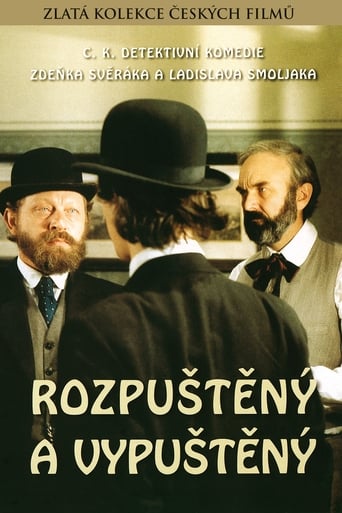 6.9
6.9A police inspector and inexperienced trainee search for a mysteriously disappeared manufacturer of ointments for hair growth.
Dissolved and Effused
1985
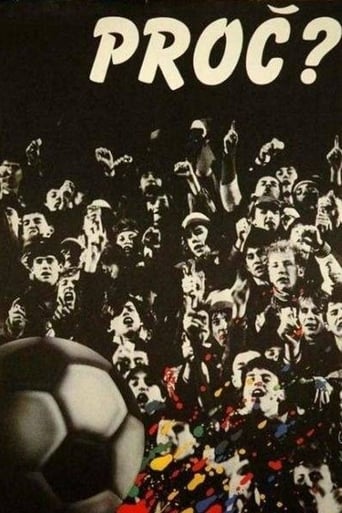 6.2
6.2Why? (Czech: Proč?) is a 1987 Czechoslovak drama film directed by Karel Smyczek. It was screened in the Un Certain Regard section at the 1988 Cannes Film Festival. The film deals with the hooliganism in Czechoslovakia, particularly with the fans of football club Sparta from Prague, whose supporters were the pioneers of the football fan riots in Czechoslovakia, starting with hooligan actions already in the 1960s, like breaking the trains in which they travelled when they went on Sparta's away games. The film deals with one of such episodes
Why?
1987
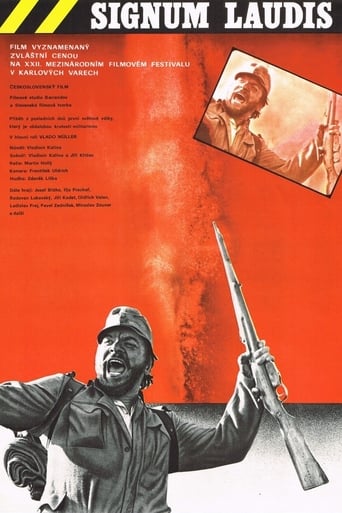 7.0
7.0The trenches of World War I provide for a captivating backdrop to the drama of Corporal Hoferik. In his devotion to the Habsburg Monarchy, he fanatically carries out his military orders, but he ultimately suffers the Empire's disfavor.
The Medal
1980
 6.2
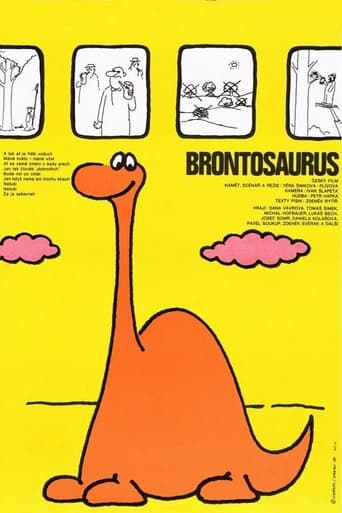
6.2Tomás lives in a very small Czech town and is a nature lover and a birdwatcher. He struggles to keep the forests he loves clean and constantly fights his "archenemy" whose sister and Tomás's classmate is secretly in love with him.
Brontosaurus
1980
The opening image that begins the suspenseful story is marked by a tragic event: an eight-year-old girl is brutally murdered in the forest and the dog that accompanied her is shot. The crime sets in motion an extensive search operation. Time is running out for the murderer, and the detectives have many years of experience and knowledge of local conditions on their side. According to the law of a good detective story, the circle of possible perpetrators is wide. Everyone from the neighborhood of little Stán is a suspect, because the results of the investigation showed that the girl knew her murderer...
Soví hnízdo
1982
No synopsis available yet.
14. patro, 14. rok
1984
A pair of criminals, an escaped prisoner and a young thief, are about to make a joint, obviously illegal, escape across the border. They escape for a long time, even managing to infiltrate Polish territory. They head for the coast, from where they intend to transport themselves to Sweden. But the Polish security authorities are vigilant.
Zátah
1986
No synopsis available yet.
Chceš zabít?
1988
 9.0
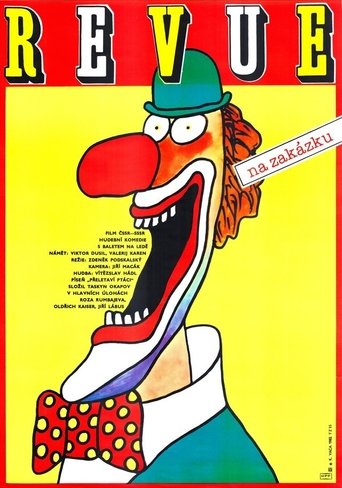
9.0The director and choreographer from Prague are preparing a show performance "Oriental Fairy Tale" - a ballet on ice with the participation of vocal and instrumental ensembles and pop singers. They are shooting their picture in Kazakhstan at the Medeo high-altitude skating rink.
Goodbye, Medeo
1982
After her parents' divorce, Petra lives in her mother's new harmonious family in a small town. However, she feels that she was cheated of a lot when she was unable to spend two years in Cuba with her own father. Therefore, she welcomes her father's offer to move to Prague with him. She is especially attracted by his promise to help her get into art school. However, she misses the warm family atmosphere in Prague very much, even though her father's new wife tries to understand her. Although her father provided for her materially, he did not really care for her. Petra's crisis is compounded by a negative opinion from an expert about her artistic talent...
Jak namalovat ptáčka
1980
In his feature debut, Dneska přišel nový kluk (A New Boy Started Today) from 1981, the director Vladimír Drha set the tone for a number of Czech films, which critically depicted the state of society from the perspective of young protagonists. Although, Drha primarily found scope for his work in television, he returned to the world of a “working youth” in his second film Mezek (The Mulish Victor, 1985) – albeit following him from the point of view of an educator. NFA.CZ
A New Boy Started Today
1981
No synopsis available yet.
Sobota odpoledne, počátek léta
1981
Christmas is approaching and with it comes moments of surprising events and unexpected encounters. For example, such as those experienced by two inseparable friends and bachelors. Saša is looking forward to finally enjoying life and also really forces Karel to go to entertainment venues. But everything changes by chance, because when Karel moves, he discovers that his first love Eva, whom he once lost due to his indecision, lives on the floor above. The meeting on Christmas Eve turns out to be fateful...
O Vánocích už nechci slyšet ani slovo
1982
 6.6
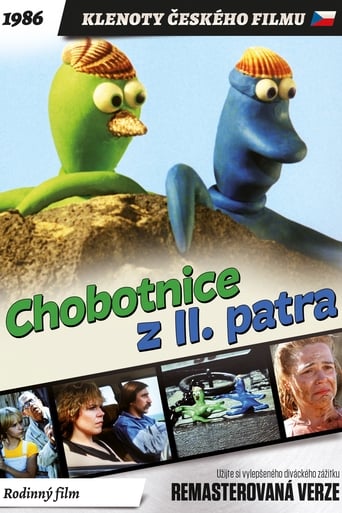
6.6While on vacation with their bickering parents, young Eva and her little brother Johnny find in a polluted lake two strange friendly sentient octopuses made of strange material that attracts electricity. They take them as pets.
The Octopuses from the Second Floor
1987
 5.2
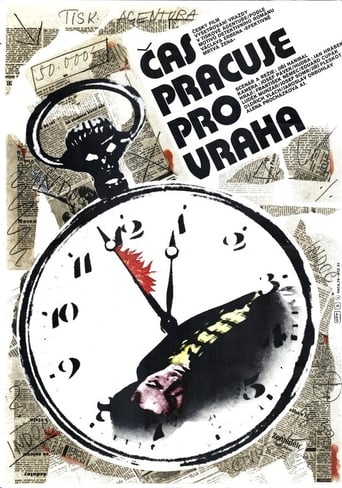
5.2Vera, wife of the plumber Simandl (Josef Somr), is found murdered in the cinema next to the IDOC (Information and Documentation) agency where she worked. Police captain Marha (Frantisek Nemec), who is leading the investigation, is informed by Simandl that on the day of the murder Vera promised to bring home fifty thousand crowns to buy a car. Marha's primary suspects are the three men working at the agency: deputy editor-in-chief Brandl (Jirí Pleskot) and editors Pernata (Eduard Cupák) and Remes (Ludek Munzar, and of course also Simandl.
Čas pracuje pro vraha
1980
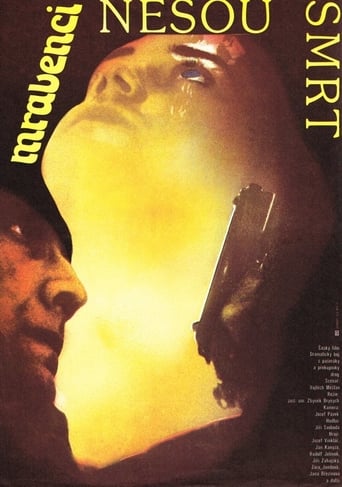 6.5
6.5The biggest threat to a successful crackdown on drug traffickers and consumers is the international hitman Barták, sent to the Czech Republic to eliminate all his collaborators...
Ants Bring Death
1986
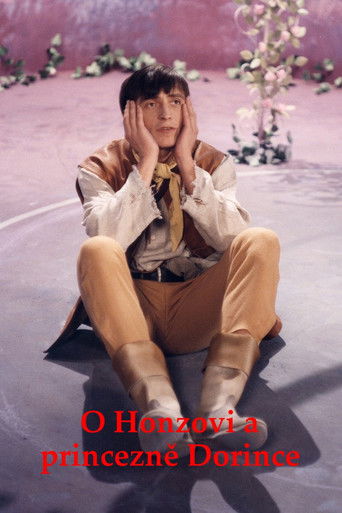 NR
NRNo synopsis available yet.
O Honzovi a princezně Dorince
1986
Anyone who would have guessed from the title that they would see a fairy tale about spinners would not have guessed. In this fairy tale, three godmothers spin the golden thread of fate for a noble prince and a gamekeeper's daughter from the cradle. These cute godmothers, played by Jaroslava Adamová, Stella Zázvorková and Blažena Holišová, can grant three wishes, fly with the help of a magic hat and appear at the sound of a magic bell, but unfortunately they get something mixed up here and there and deliberately mess something up. In the end, however, fate prevails and the prince and Joanna find their happiness together.
Předeme, předeme zlatou nitku
1982
A fairy tale about three princes, enchanted into dog form... The shepherd Jirka is herding sheep when a mysterious hunter with three dogs named Drž, Dech and Vševím passes by. The hunter treats the dogs badly. And because Jirka has a good heart, he exchanges the dogs for three sheep that belong to the farmer. He says goodbye to his girlfriend Anička and goes into the world, arriving in a sad kingdom. There he meets Bětuška, who takes him to the king, whose three sons and daughter have been lost...
Putování za měsíční nitkou
1985
No synopsis available yet.
Navždy do dálek Tichomoří
1984
 NR
NRNo synopsis available yet.
Kinkongova smrt
1987
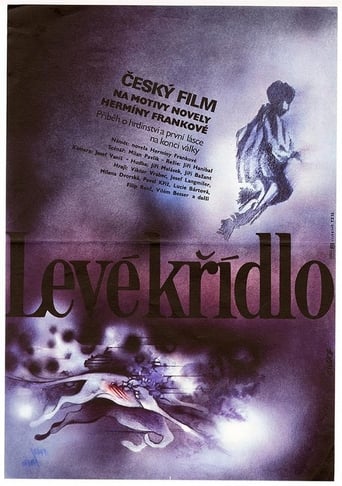 4.0
4.0The war will also affect children's games. The children hide a French boy who has managed to escape from a prison transport. Language differences certainly don't matter when sporting talent is on display. The refugee becomes a welcome addition to the schoolboy football team, which is about to play against the German soldiers.
Levé křídlo
1984
 5.0
5.0No synopsis available yet.
Den velkého ticha
1981
1970s · 20 titles
 7.5
7.5Julie, the youngest daughter of a bankrupt merchant, sacrifices her life in order to save her father. She goes to an enchanted castle in the woods and meets Netvor, a bird-like monster. As Netvor begins to fall in love with Julie, he must suppress his beastly urge to kill her.
Beauty and the Beast
1979
 4.2
4.2The plot begins in the Soviet Union showing first efforts to establish the Czechoslovak legion in 1942. The film also shows the assassination of Heydrich and the subsequent annihilation of Lidice. The main topis of the film is battles with German troops for Sokolovo.
Sokolovo
1975
 8.0
8.0The director of films for kids called Bonzurka together with her loyal assistants Drahuska and Honza are looking for the actors for a new movie "The Knee". Children for this movie should not be afraid and shy and they must have talent for acting. Thus the scouting is quite difficult. The most difficult is to find an actress for a main character who lost her hair after a serious illness and now has to spent the whole holiday in the countryside with a bald head resembling a knee. Although the makeup artist does his best an artificial baldness does not solve anything. From the selected little girls only the self-assertive Rosemary has the guts to let her long hair to be cut and shave off her head.
A Major Role for Rosmaryna
1978
 6.1
6.1Sarcastic comedy about the Czechoslovakia of the seventies. A young gynaecologist can't figure out whether to get serious with a young nurse or to stay casual with his married lover. Things get complicated when both women don't want to play his game anymore.
The Apple Game
1978
 2.3
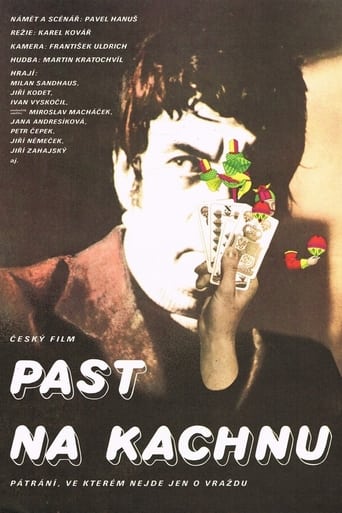
2.3Taxi driver Koukal (Miroslav Machácek) is stopped by the police for a routine traffic check. In the boot of his car the police find the body of a naked man. Koukal is arrested even though he claims he knows nothing about it. The case is assigned to Major Mlynár (Milan Sandhaus). The police identify the corpse as that of an Austrian citizen called Mitrik. Koukal has been regularly driving people interested in gambling to a secret gaming den. The police are put onto the gambling den by another taxi driver, who admits that he drove Mitrik there. Mlynár and officer cadet Pecka (Ivan Vyskocil) feign interest in gambling and visit the gaming den incognito.
Past na kachnu
1978
 4.0
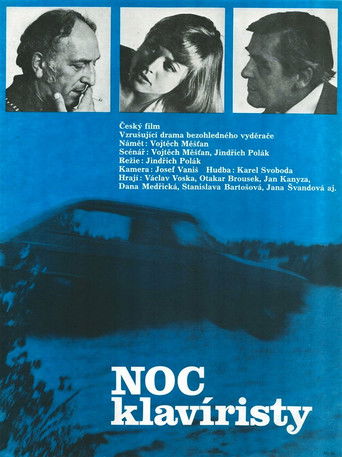
4.0The problematic protagonist is the head designer of a housing association who wants to make a profit at any cost. His unwitting opponent is a bar pianist who accidentally witnesses the murder of a young man and sets out to investigate on his own. An old-world and somewhat comical figure, he poignantly interferes with the cops' work, only to find that he is the one who is credited with catching the perpetrator...
Noc klavíristy
1977
 7.0
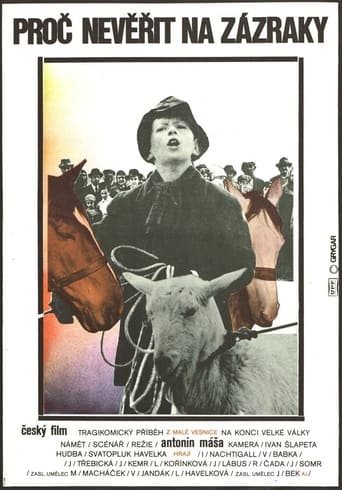
7.0Wartime events from a child's perspective were a popular theme during the previous regime - here it is a twelve-year-old village boy who experiences dangerous situations with retreating Nazi troops in picturesque South Bohemia... Any attempt to achieve a more believable depiction is destroyed by the staging's grandeur, and in the end the result is an awkward piece, suitable at most for celebrating the relevant national holidays. A longer copy with a tragic ending is stored in the NFA. Milda is shot unnoticed by an SS major.
Proč nevěřit na zázraky
1978
 6.5
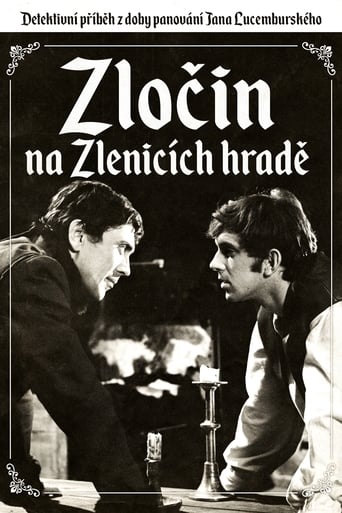
6.5The thrilling story begins in 1318, during the reign of John of Luxembourg, when the Czech nobility rebelled against the king. However, the lord of Zlenice, Oldřich of Zlenice, did not join the resistance. He summoned the surrounding nobles to his castle for negotiations... and in the morning he was found dead. He had been murdered in his chamber, which was locked from the inside!
Zločin na Zlenicích hradě
1972
No synopsis available yet.
Slečna Rajka
1978
 5.2
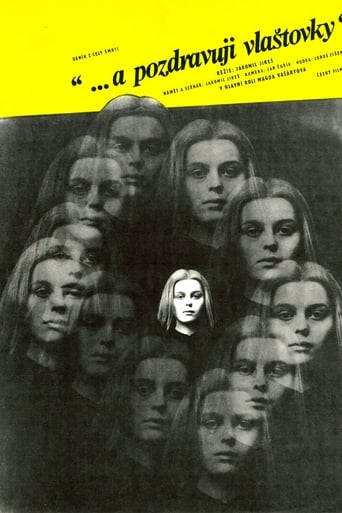
5.2This film, chronicling the last days of Czech resistance fighter Maruska Kuderikova (played by Magda Vasaryova), is based on her diaries. Though she was tortured and eventually executed by the Nazis, her diaries indicate that she was optimistic for the humanity of her captors and did not by any means hate them. Told with simple dignity, this film makes clear why Maruska became a national hero.
And Give My Love to the Swallows
1972
 6.0
6.0An 11-year-old boy is the only survivor of a tragic car accident in which both parents are killed. It's not until he meets a travelling student theatre company that he is able to shake off the long-term shock...
Nechci nic slyšet
1978
No synopsis available yet.
„Psáno na pranýř“
1975
 8.0
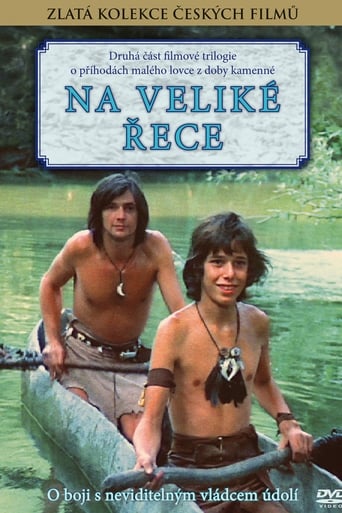
8.0Second movie of the famous Czech adventure trilogy: Osada Havranů Na veliké rece Volání rodu
On the Great River
1978
 6.5
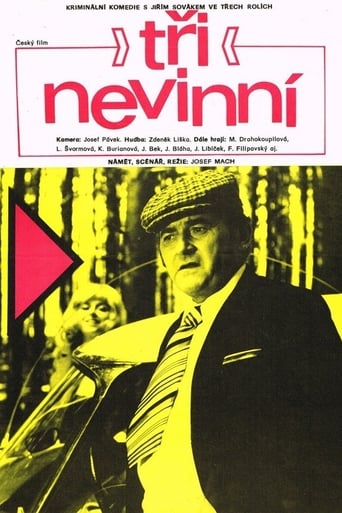
6.5The car thief Halama, the shy groom Poupě, the divorcing jealous Pic and the mustachioed cinema projectionist Vlk are suspected of robbing the cinema box office. They are so similar, however, that the sharp-witted Public Security investigator Doll doesn't know them at all...
Tři nevinní
1974
No synopsis available yet.
Já se vrátím
1978
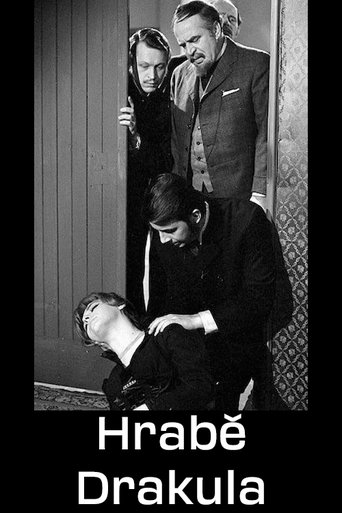 6.3
6.3Czech television production of Dracula that is very faithful to Bram Stoker's novel.
Count Dracula
1971
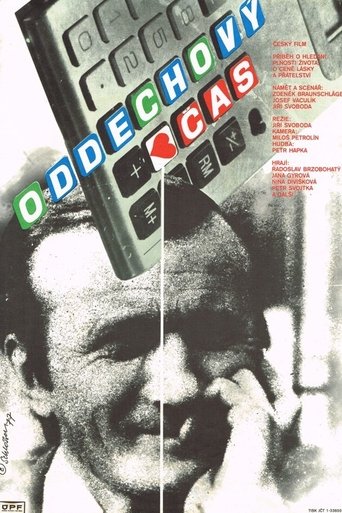 7.0
7.0The drama of a man for whom work has become the only meaning of life. His cold and impersonal manner arouses the disapproval of his colleagues and family members and leads to alienation. Eventually, he realizes the need for "time out" to reflect on his own life...
Oddechový čas
1978
The film was based on the novel "Milión" by Karel Štorkán. The book and the film depict the events surrounding the great construction disaster in Prague in 1928, in which 46 construction workers died. The disaster thrilled the entire republic at the time, yet was never fully explained. The filmmakers focus on the story of Ing. Vondrák, the designer of the construction.
Dům Na poříčí
1977
No synopsis available yet.
Padla kosa na kámen
1974
No synopsis available yet.
Hamernická povídačka
1976
1960s · 2 titles
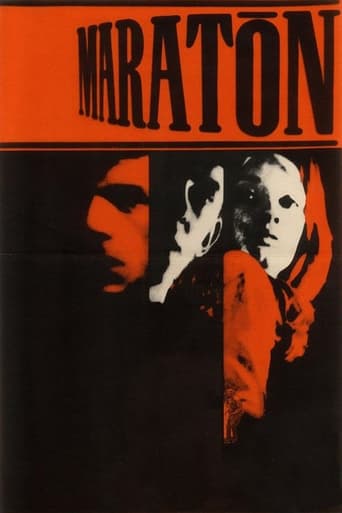 5.6
5.6It is 5 May 1945 and the uprising against the hated German occupiers has broken out in Prague. The Czech guards open the gate of the Pankrác prison to allow the prisoners to escape en masse. Many of them are shot dead by the German guards but young Ruda (Jaromír Hanzlík) manages to run away. He is taken care of by one of the Prague fighters, concierge Kytka. Kytka hides him in the flat of the house's owner where only the young maid Karla (Jana Brejchová) is left, ordering her to take care of Ruda.
Marathon
1968
 6.0
6.0A girl from a dance ensemble from Uherské Hradiště and an amateur jazz musician from Strakonice will meet at the II. National Spartakiada. Life under victorious socialism is presented as a permanent folk festival with mass gymnastic performances, dance and music. The film was said to have been very popular in Cuba at the time.
Valčík pro milión
1961
Series credits
7.0No synopsis available yet.
Bakaláři
1972
7.3Thirty Cases of Major Zeman is a Czechoslovak action-drama television show intended as a political propaganda to support the official attitude of the communist party. The series were filmed in the 1970s. Each episode encompasses one year, and investigations are stylized to that year. Most are inspired by real cases. The series follows the life of police investigator Jan Zeman during his career from 1945 to 1975.
Thirty Cases of Major Zema
1976
8.0No synopsis available yet.
Hříšní lidé města pražského
1969
7.0No synopsis available yet.
F. L. Věk
1971
NRInženýrská odysea is a Czechoslovak/Czech TV series about three young students and their lives.
Inženýrská odysea
1980
7.8Sňatky z rozumu was a Czechoslovak television programme which was first broadcast in 1968. The programme was directed by František Filip.
Sňatky z rozumu
1968
No synopsis available yet.
Laskavý divák promine
1994
No synopsis available yet.
Co teď a co potom?
1991
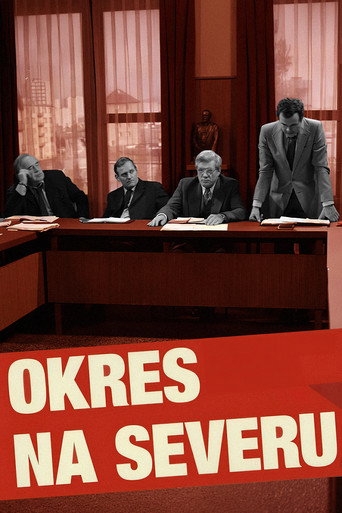 8.0
8.0Okres na severu is a Czechoslovak/Czech TV series filmed by Evžen Sokolovský in 1981.
Okres na severu
1981
No synopsis available yet.
Zákony pohybu
1979
 NR
NRNo synopsis available yet.
Sins for Detective Show Viewers
1995
No synopsis available yet.
Bronzová spirála
1989
 NR
NRNo synopsis available yet.
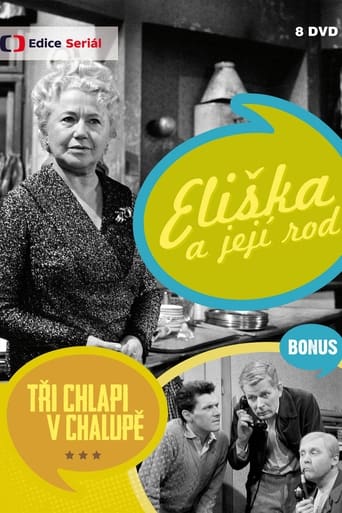
Eliška a její rod
1966
 NR
NRNo synopsis available yet.
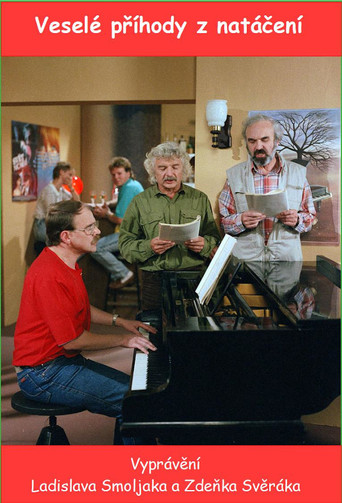
Veselé příhody z natáčení
1988
No synopsis available yet.
Brakýři
1983