

Acting
Kuniko Igawa
Born — Died
1923-10-15 — 2012-10-04
Place of birth
Chiyoda, Tokyo Prefecture, Japan
Known for
Acting
Credits
43 titles
Known for
 7.7
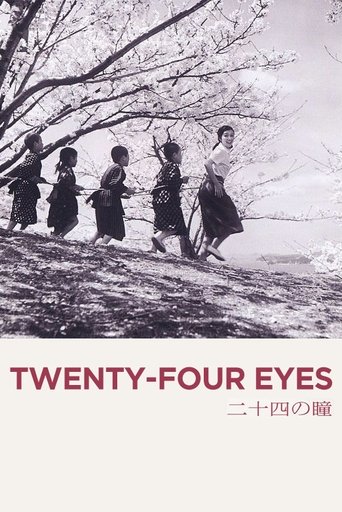
7.7From 1928 to 1946, the lives of 12 young people and their school teacher in a poor Japanese village are profoundly affected by historical events and personal circumstances.
Twenty-Four Eyes
1954
 7.9
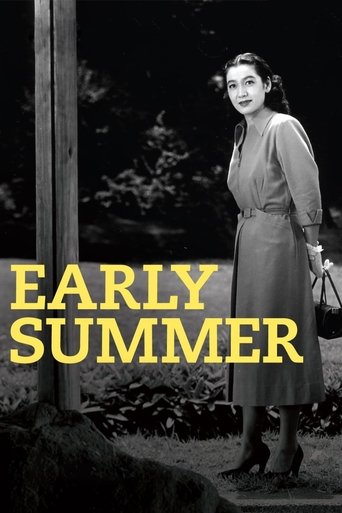
7.9In postwar Tokyo, Noriko lives with her extended family. Although she enjoys her career and her social life, her more traditional family worries about her single marital status at the advanced age of 28. 40-year-old business associate Takako proposes, Noriko's family press her into accepting, but when her widowed childhood friend Kenkichi returns to the neighborhood, she finds her heart leading in another direction.
Early Summer
1951
 7.7
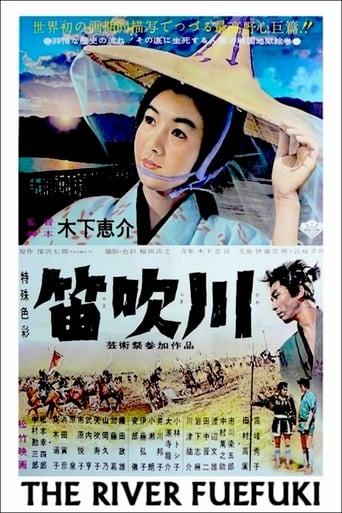
7.7In a time of continuous civil wars ravaging the fields of feudal Japan, the eldest son of a very poor peasant family, living alongside the bridge over the Fuefuki river, decides to serve a warlord to escape his miserable condition, being soon followed by his younger brothers. Although not all the men of the family take this tragic path of death, women of the family will be doomed to endure the pain of loss during the next five generations.
The River Fuefuki
1960
 6.9
6.9After the death of her husband, an elderly woman and her youngest, unmarried daughter are forced to sell their house to cover his debts and decide to move in with one of the former's children, each of whom is scarcely happy to accommodate.
Brothers and Sisters of the Toda Family
1941
 6.9
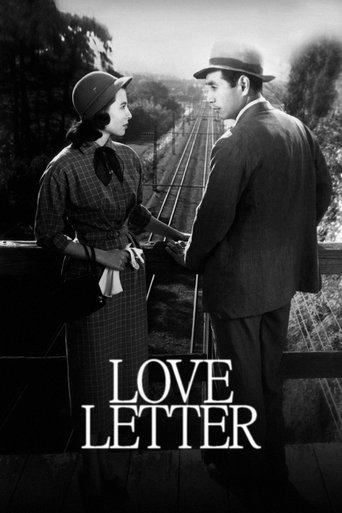
6.9Five years after the end of the Second World War, Reikichi, a repatriated veteran, translates love letters for Japanese women to American GIs, while searching for his lost love, Michiko.
Love Letter
1953
 6.8
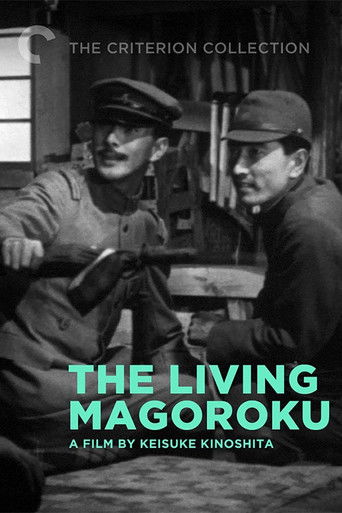
6.8A wealthy family will not allow the military to grow crops on their fields due to their superstitious beliefs about their son's illness.
The Living Magoroku
1943
Film credits
1950s · 29 titles
7.7From 1928 to 1946, the lives of 12 young people and their school teacher in a poor Japanese village are profoundly affected by historical events and personal circumstances.
Twenty-Four Eyes
1954
7.9In postwar Tokyo, Noriko lives with her extended family. Although she enjoys her career and her social life, her more traditional family worries about her single marital status at the advanced age of 28. 40-year-old business associate Takako proposes, Noriko's family press her into accepting, but when her widowed childhood friend Kenkichi returns to the neighborhood, she finds her heart leading in another direction.
Early Summer
1951
6.9Five years after the end of the Second World War, Reikichi, a repatriated veteran, translates love letters for Japanese women to American GIs, while searching for his lost love, Michiko.
Love Letter
1953
 6.3
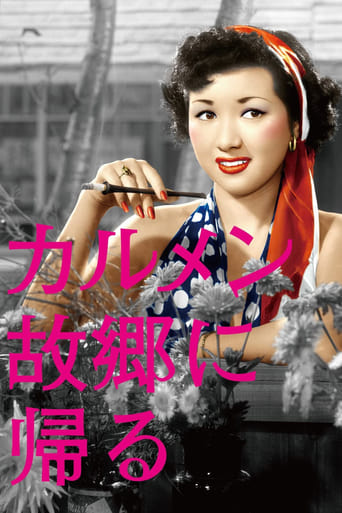
6.3A rural village elder plans an event on the return of a farmer's daughter from the city, unaware that she has become a Westernized burlesque artist.
Carmen Comes Home
1951
 9.0
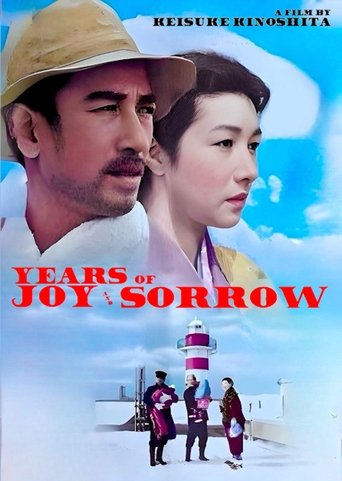
9.0The story of the trials and tribulations of a lighthouse keeper and his wife.
Times of Joy and Sorrow
1957
 6.6
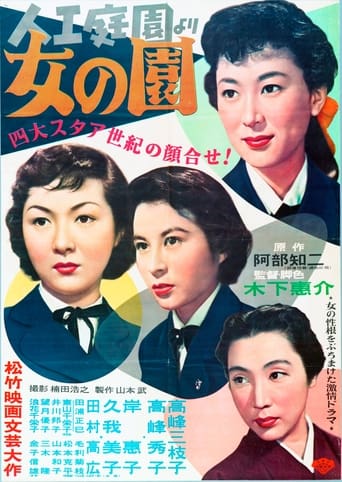
6.6A student at a woman's university takes a controversial action against the school's old-fashioned doctrines.
The Garden of Women
1954
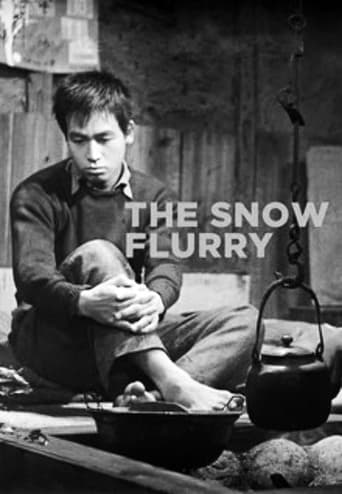 6.9
6.9After surviving the double suicide pact she made with her lover, a woman gives birth to their child.
The Snow Flurry
1959
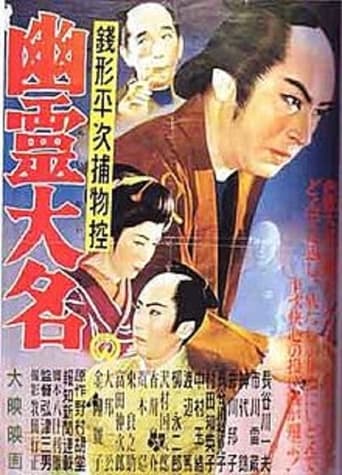 NR
NRNo synopsis available yet.
Case Files of Zenigata Heiji: Ghost Lord
1954
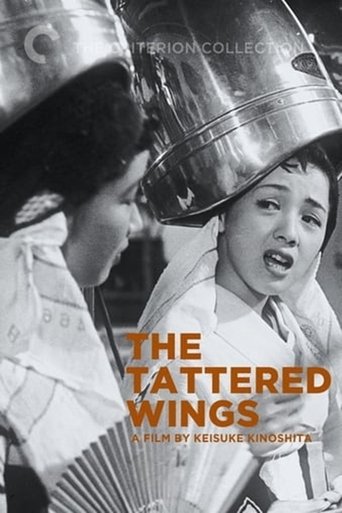 6.2
6.2A young widow, made world weary by her abusive, neglectful husband, finds herself in a minor scandal when she's seen with her intense, no-nonsense childhood sweetheart.
The Tattered Wings
1955
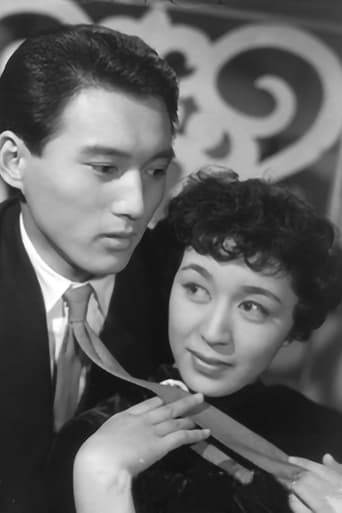 NR
NRNo synopsis available yet.
Haru no Wakakusa
1954
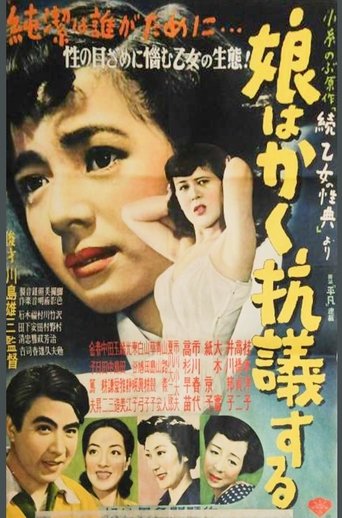 NR
NRA story about a high school sophomore, Uzumi Keiko (Kyoko Kami), in a coastal Japanese city, Keiko’s coming-of-age story centers on her strained relationship with her mother and her entanglement in social misunderstandings at school. Her journey reflects postwar Japan’s evolving attitudes toward youth, gender, and family honor, as personal choices become public matters.
Musume wa kaku kōgi suru
1952
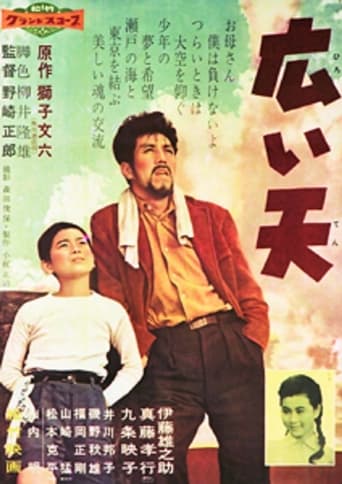 NR
NRA boy, who is separated from his mother in an air raid, endures suffering and grief alongside his kind uncle.
Hiroi Ten
1959
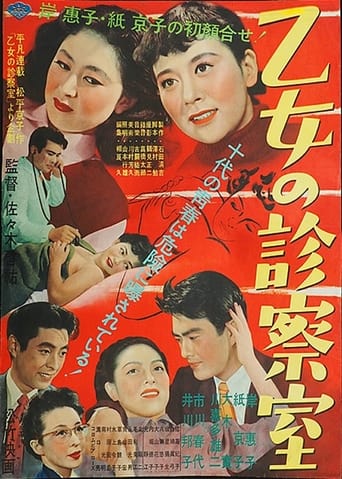 NR
NR1953 Japanese movie
Otome no shinsatsu-shitsu
1953
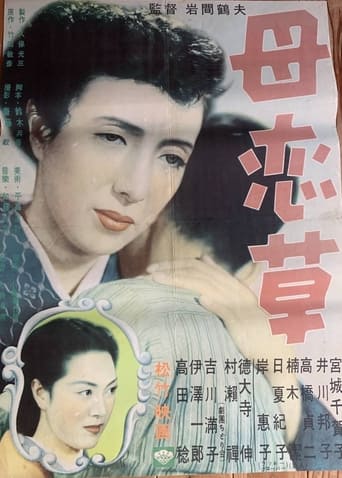 NR
NRNo synopsis available yet.
母恋草
1951
Produced by Shochiku’s all-star cast as a commemorative film to mark the completion of the “Shochiku Kaikan” in Tsukiji, Tokyo, this movie introduces both the Shochiku Ofuna and Kyoto studios. Part One focuses on the studio’s behind-the-scenes staff: set designers, prop masters, and lighting technicians. Part Two presents a digest-style overview of the process surrounding a young woman who auditions for the “New Faces” program, from the auditions to her debut as an actress.
Shochiku Festival: All-Star Lineup – Studio Express / The Birth of an Actress
1956
 NR
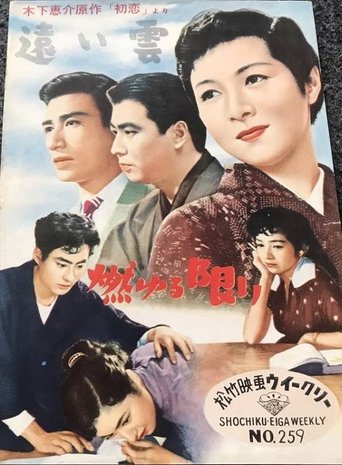
NRThe Nakata family, father, mother, son Hideo, and daughters Taeko and Akiko live in the poorer section of modern Tokyo. Their troubles start when the father leaves with another woman, returns after he is rejected, and leaves again with the family's money.
Next Door to Happiness
1955
 NR
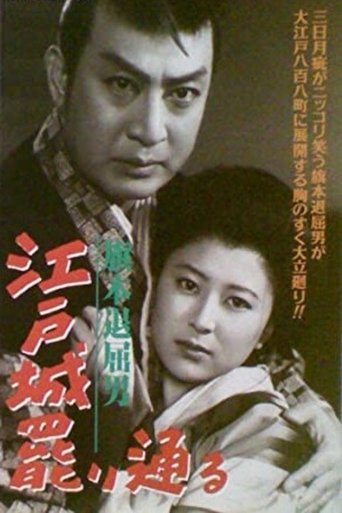
NRAround the Genroku era, there was a man named Saotome Shusui-no-Suke, nephew to the senior councilor Matsudaira Sakon Shogen. He was commonly known as the Bored Samurai of the Hatamoto rank. Just as he was engulfed in boredom, Tokugawa Jo-Kaibo, claiming to be the Shogun's illegitimate child, made a grand entrance into Edo. At the behest of Sakon Shogen, Shusui-no-Suke was tasked to investigate Jo-Kaibo's background and had his young page Kyoya disguise as a woman to infiltrate Jo-Kaibo's gun mansion.
Bored Hatamoto: The Imposter
1952
 NR
NRMariko is an innocent girl who grew up in the highlands of Shinshu. She moves to Tokyo to live with her father who has successfully returned to Japan. Mariko is simply confused by the life in Tokyo, which is different from her own. Only her private tutor Daisuke was an advisor she could tolerate. Mariko develops slight feelings for Daisuke and finally realizes that he is her first love...
Over That Hill
1951
 NR
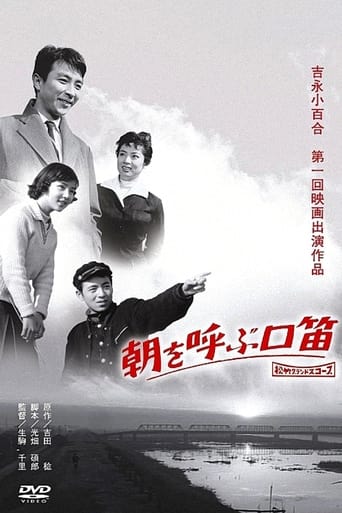
NRMinoru delivered newspapers to earn money for high school, but when his mother came down with illness he decided to use this money for her doctor's bill and gave up going to high school. His friends heard about this, and they donated money to his mother. So, Minoru goes to high school and yet he delivers newspapers cheerfully whistling every morning. A memorable film debut by Sayuri Yoshinaga, a representative of the Japanese film industry.The film adaptation of "Newspaper Delivery" by Minoru Yoshida, who won the Minister of Education Award at the national small and Medium student essay competition.
Whistling in the Morning
1959
A private detective chases a female pickpocket into a film studio and dashes through the sets. With special appearances by a star-studded cast.
The Actress and the Detective
1950
 NR
NROn March 11 in the seventh year of Tenpo (1836), a monk named Bennō, who fell in love with a geisha named Oshima, was publicly exposed at Nihonbashi for committing an illicit act with a woman. While this was happening, an extravagant procession led by another monk named Nikkei passed over the bridge. Nikkei, the head of the Kanouin temple, in collusion with Nakano Harima-no-Kami, had schemed to make his younger sister, Miyoshi, the Shogun's mistress and aimed to transform Kanouin into the Shogun's family temple. To fund the renovations, Nikkei accepted bribes from a corrupt merchant named Koya Bunzo.
快盗三人吉三
1954
No synopsis available yet.
Probation
1950
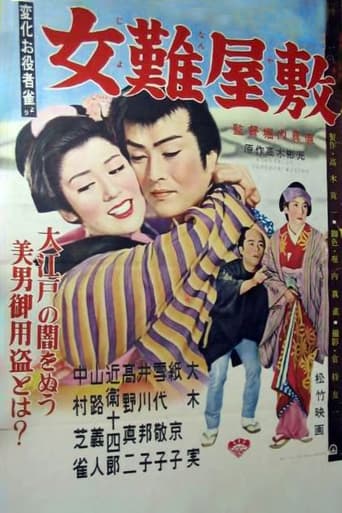 NR
NRNo synopsis available yet.
Jonan Yashiki
1956
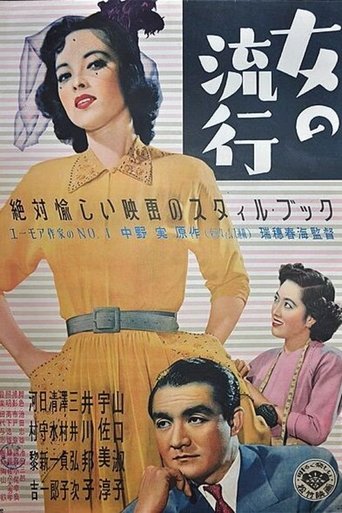 9.0
9.0No synopsis available yet.
Onna no ryūkō
1950
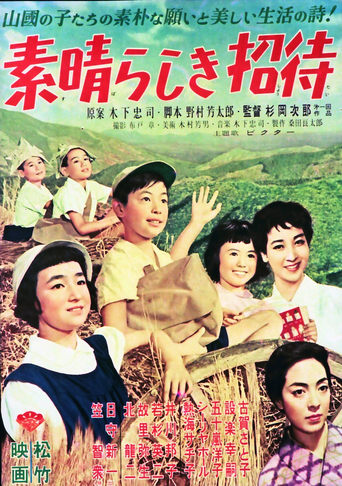 NR
NR1955 Japanese movie
Subarashiki shōtai
1955
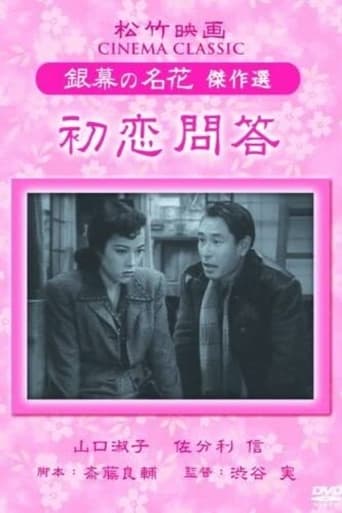 10.0
10.0No synopsis available yet.
First Love Questions and Answers
1950
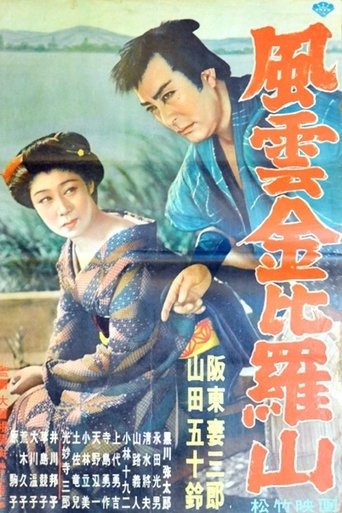 NR
NRNo synopsis available yet.
風雲金毘羅山
1950
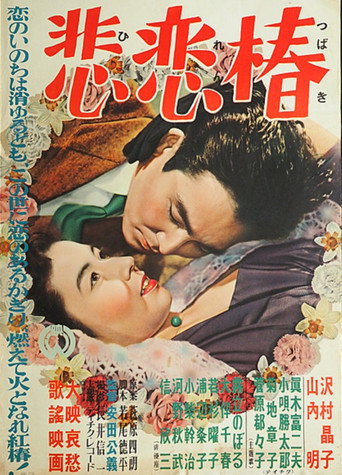 NR
NRA 1950 film by director 原研吉.
Hirenge
1950
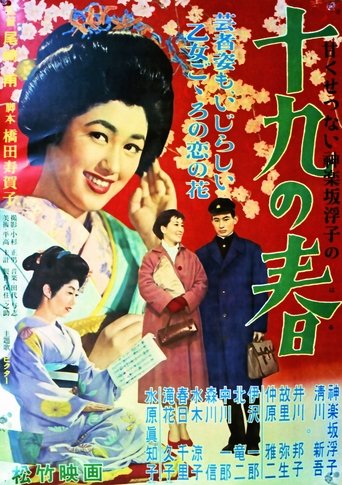 NR
NRNo synopsis available yet.
十九の春
1956
1940s · 13 titles
6.9After the death of her husband, an elderly woman and her youngest, unmarried daughter are forced to sell their house to cover his debts and decide to move in with one of the former's children, each of whom is scarcely happy to accommodate.
Brothers and Sisters of the Toda Family
1941
6.8A wealthy family will not allow the military to grow crops on their fields due to their superstitious beliefs about their son's illness.
The Living Magoroku
1943
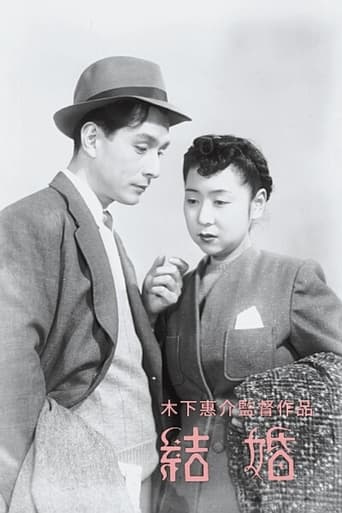 7.7
7.7In postwar Japan a young woman is unable to marry her sweetheart because her family's in difficult circumstances and needs her income to keep afloat.
Marriage
1947
While conducting a crackdown on contraband cigarettes at Ueno Station, inspector Tetsuro Shibuya came across an envelope addressed to Misa Makihara inside an unattended backpack filled with loose tobacco. Misa was ostensibly an employee of Yamagishi Shokai, a real estate firm, but in reality she was the mistress of Yuzo Yamagishi, a cigarette bootlegger. Yamagishi’s contraband cigarettes were made from loose tobacco sourced from Misa’s uncle, Kisaku, in Ibaraki.
Jigoku no fue
1949
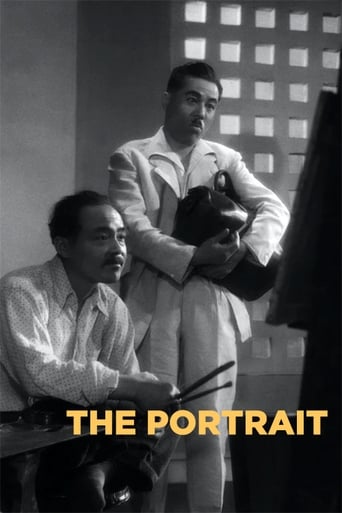 6.7
6.7The mistress of a crook real estate broker comes to terms with her soulless existence after an artist paints her portrait.
The Portrait
1948
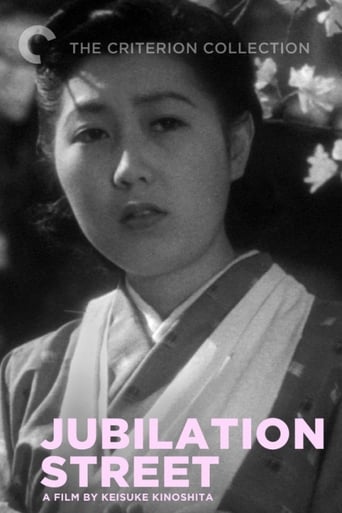 6.1
6.1The few residents left on the streets in Tokyo share their individual stories and come to understand the melancholy of saying goodbye.
Jubilation Street
1944
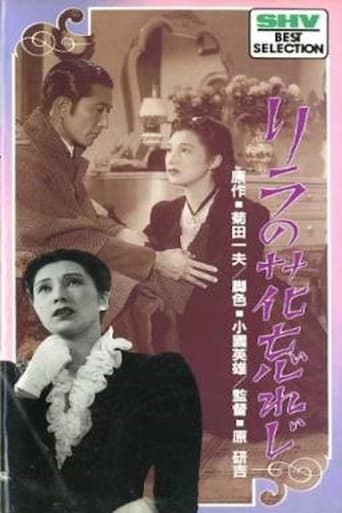 NR
NRIn the 30th year, Nirasaki Den'emon established the Nirasaki Hokkaido Development Company with investment from Sonoi to build railway facilities. However, the endeavor faced criticism for attempting to buy Ainu land at low prices. Tokyo Nippo reporter Toshimasa Matsuzaka, who was actually Nirasaki's son, wants to expose the flawed practices of the company.
Rira no hana wasureji
1947
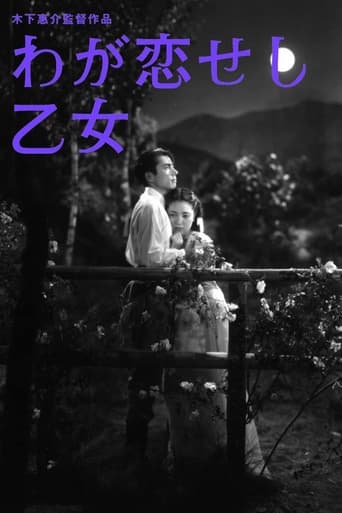 6.3
6.3A young man who is unable to tell his childhood friend how he feels makes a pledge with her to reveal all of their secrets during the upcoming festival.
The Girl I Loved
1946
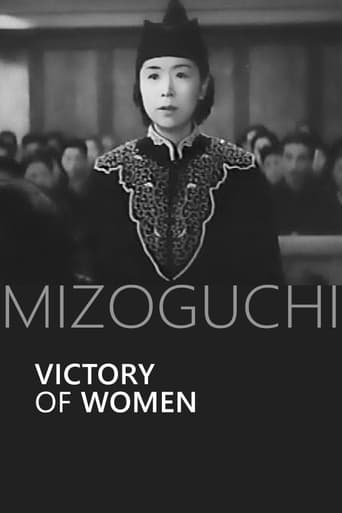 7.1
7.1Representing a destitute mother in an infanticide trial, a female lawyer attempts to convince a conservative prosecutor of the benefits of Japan's democratized post-war legal system.
Victory of Women
1946
 NR
NRHiromasa Nomura World War II era film
Dance of the Capital
1942
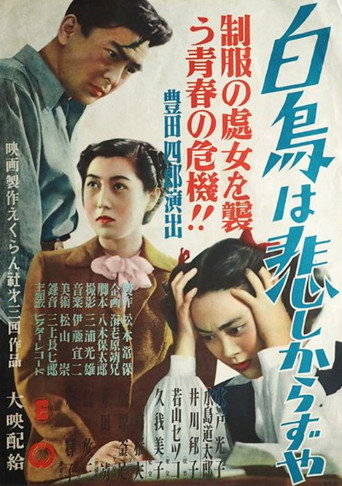 NR
NRReiko Nishida, though she had both parents, felt lonely because she couldn’t fit in with the cold atmosphere at home. A student at Wakaba Academy in Osaka, she eventually succumbed to the allure of a superficial lifestyle and joined a group of delinquents, but Kimiko Kimizuka, a student council member, tried desperately to save her friend from the path of crime.
Hakuchō wa kanashikarazuya
1949
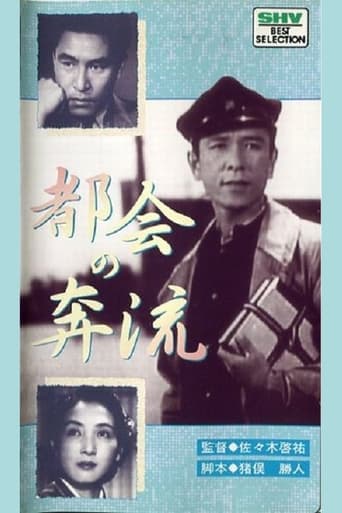 NR
NRA young yakuza student is led back to the straight and narrow path by his uncle.
Torrent of a Big City
1940
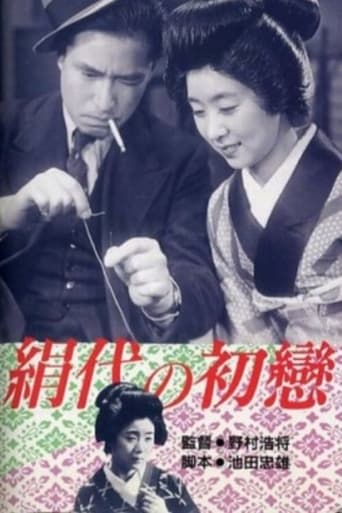 7.5
7.5Kinuyo is a daughter of rice cracker shop in downtown. She fell in love with her sister's boyfriend. It is a story whose theme is warm human relationships in a town of customs and manners.
Kinuyo's First Love
1940