
Directing
Fadhel Jaziri
Place of birth
Tunis, Tunisia
Known for
Directing
Credits
9 titles
Fadhel Jaziri was born in the medina of the Tunisian capital in 1948 to an upper-middle-class family who used to run a fez-making business. He started his career by acting on the stage, cofounding the theatrical group of Gafsa known in French as “Théâtre du Sud”. Later, he became a director of film and television.
Known for
 7.0
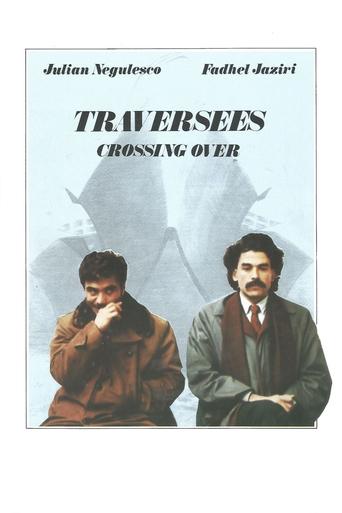
7.0On December 31, 1980, between England and the mainland, two anonymous passengers were fouled by the British and Belgian authorities and found themselves prisoners on board the car ferry connecting the two frontiers.
Crossing Over
1983
 NR
NRHind, a popular television show producer and presenter, falls in love with Lassaad, a police commissioner investigating a murder of a building contractor. In the process, they discover a network of Jihadist smugglers to Syria.
Eclipses
2015
 NR
NRAbu Yazid Ibn Khouadway Kadadadi begins his journey by rebelling against injustice, only to become a bloodthirsty tyrant as his revolution unspools.
Guirra
2019
 NR
NRThis film, which events happened between 1924 and 1934, portrays the struggle of three young Tunisian friends who became true myths in the Tunisian society: Mhamed Ali El Hammi, the founder of the first Tunisian trade union; Tahar Hadded, a rebellious freedom and Human Rights militant, pioneer of the Tunisian Family Code, who in his writings called the whole Muslim world to reform women status in the society; and Belgacem Chebbi who renewed poetry, questioned the poet’s role and commitment, and initiated new language patterns. All three witnessed a tragic fate in an atmosphere of general indifference.
Thirty
2008
The Hadhra is a Sufi tradition practiced since the ninth century, bringing together collective recitation of litanies and devotional poetry, and gathering those present into a state of contemplation before the divine. Through the film, Al Jaziri approaches this tradition as a living heritage rather than a static relic.
Al Hadhra
2001
 NR
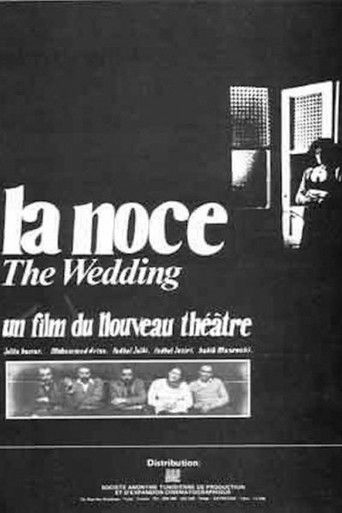
NRThe film emerged from a 1976 play by the same ensemble. It explores the tragicomic lives of newlyweds from the petit-bourgeoisie, capturing their shattered existence with a blend of theatre and cinema. The Nouveau Théâtre members navigate a surreal landscape, suspended between nightmare and reality, with a hyper-presence of bodies accentuated by unchanging lighting.
The Wedding
1978
Film credits
Behind the camera
NRHind, a popular television show producer and presenter, falls in love with Lassaad, a police commissioner investigating a murder of a building contractor. In the process, they discover a network of Jihadist smugglers to Syria.
Eclipses
2015
NRHind, a popular television show producer and presenter, falls in love with Lassaad, a police commissioner investigating a murder of a building contractor. In the process, they discover a network of Jihadist smugglers to Syria.
Eclipses
2015
NRAbu Yazid Ibn Khouadway Kadadadi begins his journey by rebelling against injustice, only to become a bloodthirsty tyrant as his revolution unspools.
Guirra
2019
NRThis film, which events happened between 1924 and 1934, portrays the struggle of three young Tunisian friends who became true myths in the Tunisian society: Mhamed Ali El Hammi, the founder of the first Tunisian trade union; Tahar Hadded, a rebellious freedom and Human Rights militant, pioneer of the Tunisian Family Code, who in his writings called the whole Muslim world to reform women status in the society; and Belgacem Chebbi who renewed poetry, questioned the poet’s role and commitment, and initiated new language patterns. All three witnessed a tragic fate in an atmosphere of general indifference.
Thirty
2008
NRThis film, which events happened between 1924 and 1934, portrays the struggle of three young Tunisian friends who became true myths in the Tunisian society: Mhamed Ali El Hammi, the founder of the first Tunisian trade union; Tahar Hadded, a rebellious freedom and Human Rights militant, pioneer of the Tunisian Family Code, who in his writings called the whole Muslim world to reform women status in the society; and Belgacem Chebbi who renewed poetry, questioned the poet’s role and commitment, and initiated new language patterns. All three witnessed a tragic fate in an atmosphere of general indifference.
Thirty
2008
The Hadhra is a Sufi tradition practiced since the ninth century, bringing together collective recitation of litanies and devotional poetry, and gathering those present into a state of contemplation before the divine. Through the film, Al Jaziri approaches this tradition as a living heritage rather than a static relic.
Al Hadhra
2001
NRThe film emerged from a 1976 play by the same ensemble. It explores the tragicomic lives of newlyweds from the petit-bourgeoisie, capturing their shattered existence with a blend of theatre and cinema. The Nouveau Théâtre members navigate a surreal landscape, suspended between nightmare and reality, with a hyper-presence of bodies accentuated by unchanging lighting.
The Wedding
1978
 7.0
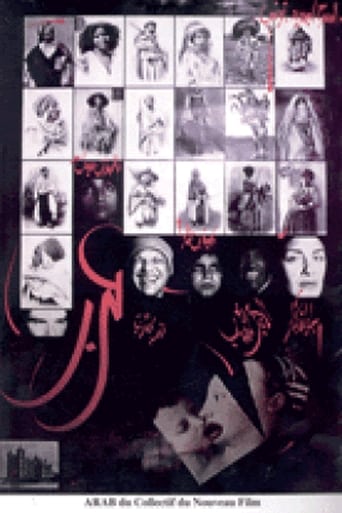
7.0With no news of her companion Seif, a Palestinian fighter who disappeared in Beirut, Houria, a stewardess with an Arab airline, returns to Tunisia in search of Khélil, a war photographer who was the last to meet the missing man. But she finds herself trapped in an environment under siege, transported back several centuries to the era of Arab chivalric epics with their abducted heroines and vengeances of honor.
Arab
1989