
Directing
Paolo Brunatto
Born — Died
1935-07-26 — 2010-09-16
Place of birth
Paris, France
Known for
Directing
Credits
34 titles
Paolo Brunatto (1935, Paris - 2010, Italy) was educated in Painting at the the Accademia di Belle Arti in Florence and studied Architecture in Gevena. Here, he met Ricardo Bofill. After graduating, Brunatto decided to pursue a career in film. In 1960 he made his first documentary, Notes sur l'émigration. Espagne 1960, together with Jacinto Grewe. He was considered to be one of the main exponents of experimental and underground Italian cinema.
Known for
 NR
NRShort film by Paolo Brunatto with Roberto Benigni performing a fake political rally in Capalbio. Shot for the Italian television.
Il comizio
1978
No synopsis available yet.
Provino
1974
 NR
NRIn 1966, Bene presented The Pink and the Black, his successful theatrical adaptation of Matthew Gregory Lewis’ lurid Gothic novel from 1796. Experimental filmmaker Paolo Brunatto filmed some of the play’s rehearsals in a Rome apartment (also frequented also by the Living Theatre). Bene's artistry is encapsulated in one sentence: “One cannot continue to prostitute the idea of theatre, which stands only for a magical, brutal link with reality."
Bis
1966
 NR
NRSeries of documentaries on italian underground cinema through the portrayal of some of the most representative authors - Alfredo Leonardi, Tonino De Bernardi, Romano Scavolini, Piero Bargellini, Gianfranco Baruchello, Alberto Grifi, Paolo Brunatto, Franco Brocani (and Mario Schifano), Paolo Gioli, Anna Lajolo and Guido Lombardi, Annabella Miscuglio, Massimo Bacigalupo - the cinema of the present confronts this movement so vital and courageous, which still remains an example for the new generations.
Splinters of Utopia
2004
 2.0
2.0In the distant future, a spaceship inhabited by a group of young descendants of a "subversive" minority who escaped the destruction of the Earth, recovers a capsule in which the hibernating body of a reactionary warmonger has been preserved, who after having caused war and death, it has abandoned the now unlivable Earth. The visual experimentation aimed at the liberation of the gaze is intertwined with psychedelic visions on the one hand and with the orgone theory of Reichian memory on the other.
Long Live The Orgonauts!
1970
The two friends alternate behind the camera, filming their two principal subjects, their partners Anita and Poupée.
Insomma
1965
Film credits
1970s · 3 titles
2.0In the distant future, a spaceship inhabited by a group of young descendants of a "subversive" minority who escaped the destruction of the Earth, recovers a capsule in which the hibernating body of a reactionary warmonger has been preserved, who after having caused war and death, it has abandoned the now unlivable Earth. The visual experimentation aimed at the liberation of the gaze is intertwined with psychedelic visions on the one hand and with the orgone theory of Reichian memory on the other.
Long Live The Orgonauts!
1970
 8.0
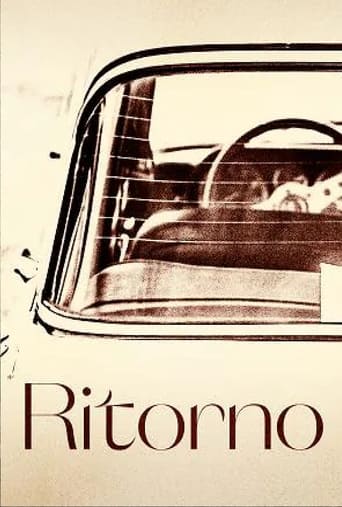
8.0A man receives a telegram that his father is dying, and travels with his wife to his hometown. They discover that the telegram is untrue, and set out to find who sent the message and why.
The Return
1973
 NR
NRThe journey, which began in India two years earlier, comes to an end at a farmhouse in Tuscany. The two travelers—Poupée and Paolo—decide to "rest" in the countryside, where they begin to discover the pleasures of self-analysis and contemplation. Their Indian experience bears fruit, and Taoist wisdom comes to their aid. The two protagonists seek to discover (don't laugh) the meaning of life.
Oserò turbare l'universo?
1972
Series credits
Behind the camera
NRShort film by Paolo Brunatto with Roberto Benigni performing a fake political rally in Capalbio. Shot for the Italian television.
Il comizio
1978
No synopsis available yet.
Provino
1974
NRIn 1966, Bene presented The Pink and the Black, his successful theatrical adaptation of Matthew Gregory Lewis’ lurid Gothic novel from 1796. Experimental filmmaker Paolo Brunatto filmed some of the play’s rehearsals in a Rome apartment (also frequented also by the Living Theatre). Bene's artistry is encapsulated in one sentence: “One cannot continue to prostitute the idea of theatre, which stands only for a magical, brutal link with reality."
Bis
1966
NRIn 1966, Bene presented The Pink and the Black, his successful theatrical adaptation of Matthew Gregory Lewis’ lurid Gothic novel from 1796. Experimental filmmaker Paolo Brunatto filmed some of the play’s rehearsals in a Rome apartment (also frequented also by the Living Theatre). Bene's artistry is encapsulated in one sentence: “One cannot continue to prostitute the idea of theatre, which stands only for a magical, brutal link with reality."
Bis
1966
The two friends alternate behind the camera, filming their two principal subjects, their partners Anita and Poupée.
Insomma
1965
 NR
NRNo synopsis available yet.
Io e... Zanzotto e... il quartiere del Piave
1974
 NR
NRDocumentary focused behind the scenes of the making of the play 'io' by Antonio Rezza and Flavia Mastrella
Gli estremi non si toccano
1997
In a Tunisian village marked by poverty and ruin, fragments of daily life mingle with the desolation. Amidst the rubble, sacred Islamic images abandoned in the dust stand out—a powerful, symbolic vision of faith, decay, and resilience.
Piazza Asfia
1966
Tak is a work composed of 15 pieces, which I called "visual songs." The film's structure mirrors that of a pop music LP. Tak is a tribute to this genre of music, and in that sense, it is stylized and decorative. Its content is subtle, subconscious, and almost unrecognizable. (P.B.)
Tak!
1969
Tak is a work composed of 15 pieces, which I called "visual songs." The film's structure mirrors that of a pop music LP. Tak is a tribute to this genre of music, and in that sense, it is stylized and decorative. Its content is subtle, subconscious, and almost unrecognizable. (P.B.)
Tak!
1969
A documentary on film-maker Bernardo Bertolucci's movie on the icon.
Perché Buddha?
1994
 NR
NRFrom Paolo Brunatto's series "Scheggie Di Utopia".
Ritratto di Piero Bargellini
2005
 NR
NRAn investigation into the motives of Spanish workers who migrated to Switzerland in the late 50s, early 60s turns into a sometimes caustic, sometimes melancholic rumination on the land they left behind. A work in between cultures and cinematic modes, a starting point, an opening statement - a clarion call.
Notes sur l'émigration. Espagne 1960
1960
NRAn investigation into the motives of Spanish workers who migrated to Switzerland in the late 50s, early 60s turns into a sometimes caustic, sometimes melancholic rumination on the land they left behind. A work in between cultures and cinematic modes, a starting point, an opening statement - a clarion call.
Notes sur l'émigration. Espagne 1960
1960
 NR
NRDocumentary about the making of Italian film director Bernardo Bertolucci's The Last Emperor.
Bernardo Bertolucci's Chinese Adventure
1986
 6.5
6.5During the filming of Arabian Nights (1974), Pier Paolo Pasolini talks about his passion for protecting the complete form of ancient cities and shows us Orte and Sabaudia. Part of a TV Series documentary in 8 episodes.
Pasolini and the Form of the City
1974
 NR
NRFrom Paolo Brunatto's series "Scheggie Di Utopia".
Ritratto di Gianfranco Baruchello
—
 NR
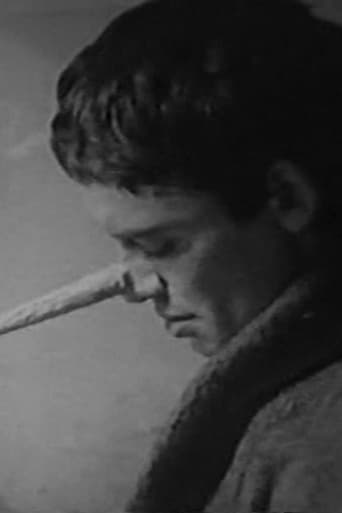
NRBackstage short documentary on Carmelo Bene’s theatre works Amleto and Pinocchio.
Un'ora prima di Amleto, più Pinocchio
1965
No synopsis available yet.
Duepersette - Dove va la poesia?
1976
 NR
NRAntonio Rezza and Flavia Mastrella are two artists that use their bodies like objects. Their works are exaltations of the object compared to the subject. The interpreter is more important than the author. The role of artistic expression is to represent what is not there. Cinema is an improper weapon because it is in the wrong hands. The solution would be - according to the two artists - for cinema as well as all art to be managed by those who have imagination and who are not down to earth.
I clandestini del cinema italiano
2006
No synopsis available yet.
In difesa di: Luigi Malerba e Orvieto
1974
NRThe journey, which began in India two years earlier, comes to an end at a farmhouse in Tuscany. The two travelers—Poupée and Paolo—decide to "rest" in the countryside, where they begin to discover the pleasures of self-analysis and contemplation. Their Indian experience bears fruit, and Taoist wisdom comes to their aid. The two protagonists seek to discover (don't laugh) the meaning of life.
Oserò turbare l'universo?
1972
A short documentary filmed on Super 8 at the remote Tibetan hamlet of Tashi Jong located in the Indian Himalayas during the summer of 1973.
Tashi Jong
1973
 10.0
10.0A journey spanning Turkey, Iran, Afghanistan, Pakistan, India, and Nepal alongside hippies and beatniks of all nationalities. The lives of a group of young Italians captured on the road to Asia.
Vieni, dolce morte (dell'ego)
1968
 10.0
10.0A tribute to the human and artistic greatness of a genius that continues to surprise us.
Leonardo da Vinci: The Origin of the Genius
2007
No synopsis available yet.
La voce di Esta Joy
1972
No synopsis available yet.
Io e... Manlio Cancogni e... Atalanta e Ippomene di Guido Reni
1974
No synopsis available yet.
Io e... Giacomo Devoto e... la Trinità Fiorentina
1974
Film portrait on Sergio Citti, through his impassioned monologues counterpointed by the recollections of Bernardo Bertolucci, Antonio Rezza and Gionata Zarantonello.
Confessioni di un borgataro
2005