
Acting
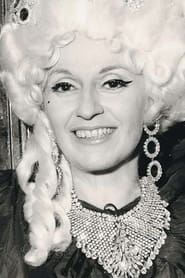
Cathy Berberian
Born — Died
1925-07-04 — 1983-03-06
Place of birth
Attleboro, Massachusetts, USA
Known for
Acting
Credits
7 titles
Catherine Anahid Berberian (July 4, 1925 – March 6, 1983) was an American mezzo-soprano and composer based in Italy. She worked closely with many contemporary avant-garde music composers, including Luciano Berio, Bruno Maderna, John Cage, Henri Pousseur, Sylvano Bussotti, Darius Milhaud, Roman Haubenstock-Ramati, and Igor Stravinsky. She also interpreted works by Claudio Monteverdi, Heitor Villa-Lobos, Kurt Weill, Philipp zu Eulenburg and others. As a recital curator, she presented several vocal genres in a classical context, including arrangements of songs by The Beatles by Louis Andriessen as well as folk songs from several countries and cultures. As a composer, she wrote Stripsody (1966),…
Known for
No synopsis available yet.
Samedi soir
1971
 5.7
In this whimsical fable, Resnais deftly interweaves three story lines: the creation of an early-20th-century utopia; romantic high jinks at a school conference; and a fantasy sparked by F/X pioneer Georges Méliès.
Life Is a Bed of Roses
1983
 3.3
In all of his work, Bussotti makes frequent reference to the body, to sexuality. This to remind musicians — especially classically trained ones — that they are not body-less angels, that they are not just their musical thoughts, that they are still, in the last analysis, flesh and bones. Thus the erotic is not for shocking, but to stress that making music involves the body in a very direct way.
RARA
1969
 NR
Monteverdi's mini-opera, starring Cathy Berberian.
Il Combattimento di Tancredi e Clorinda
1970
 NR
Monteverdi's mini-opera, starring Cathy Berberian.
Il Ballo Delle Ingrate
1975
 NR
In this film, as in all my previous ones, there is a direct connection between inner urges and cinematic rendering. I tried to visualize my present aspiration to recover, through the various ways taught by one’s experience, the easiness, directness and ripeness proper to children’s relationships and affective life. This film is maybe a track of this path backwards. – A. L.
If the Unconscious Revolts
1967
Film credits
1970s · 2 titles
1960s · 3 titles
3.3In all of his work, Bussotti makes frequent reference to the body, to sexuality. This to remind musicians — especially classically trained ones — that they are not body-less angels, that they are not just their musical thoughts, that they are still, in the last analysis, flesh and bones. Thus the erotic is not for shocking, but to stress that making music involves the body in a very direct way.
RARA
1969
NRIn this film, as in all my previous ones, there is a direct connection between inner urges and cinematic rendering. I tried to visualize my present aspiration to recover, through the various ways taught by one’s experience, the easiness, directness and ripeness proper to children’s relationships and affective life. This film is maybe a track of this path backwards. – A. L.
If the Unconscious Revolts
1967
No synopsis available yet.
Après la Passion selon Sade
1968