
Directing
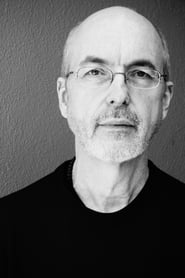
Bill Viola
Born
1951-01-25 (75)
Place of birth
Queens, New York, USA
Known for
Directing
Credits
54 titles
A pioneer in the medium of video art, Bill Viola's work explores the spiritual and perceptual side of human experience. Since 1970 he has created videotapes, architectural video installations, sound environments, electronic music performances and pieces for television. Works include Hatsu Yume (First Dream), The Passing, and installations Room for St. John of the Cross, The Messenger and The Quintet of the Astonished, recently shown at the National Gallery, London in "Encounters, New Art from Old". A 25-year survey exhibition of his work organized by The Whitney Museum of American Art recently traveled to 6 institutions in the USA and Europe. MacArthur Fellow.
Known for
 8.0
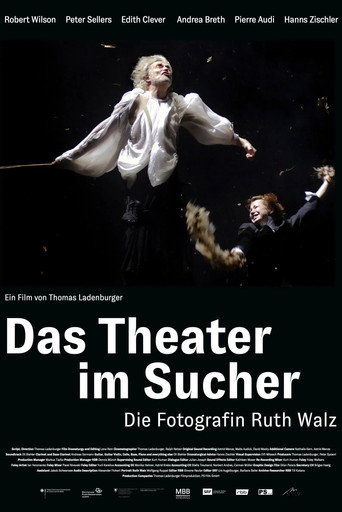
8.0For half a century, photographer Ruth Walz has been immersing herself in Europe’s theaters and opera houses, capturing the action on stage with passion and an unerring eye. Her theater photographs have set the standard for decades. In conversation with her colleagues, the unique stature and role of her photography are confirmed.
Das Theater im Sucher - Die Fotografin Ruth Walz
2026
 NR
NRNo synopsis available yet.
Trovoada
1995
 6.4
6.4Using the words and ideas of great filmmakers, from archival interviews with Alfred Hitchcock and Robert Bresson to new interviews with Mike Leigh, David Lynch, and Jonas Mekas, Oscar-winning filmmaker Chuck Workman shows what these filmmakers and others do that can't be expressed in words - but only in cinema.
What Is Cinema?
2013
 5.2
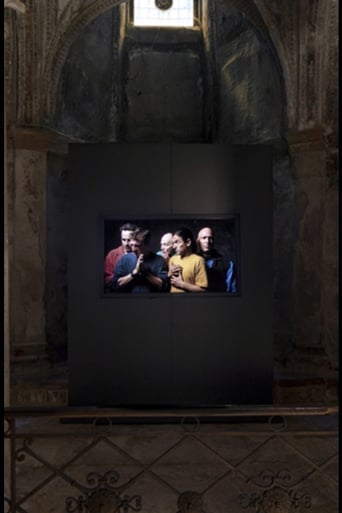
5.2Gerald Fox’s film documents Bill Viola and his wife and close collaborator Kira Perov’s odyssey to create two permanent video installations for London’s St Paul’s Cathedral, Martyrs and Mary, the first art commissions of their kind to be installed in Britain’s most famous religious space.
Bill Viola: The Road to St. Paul's
2017
 7.3
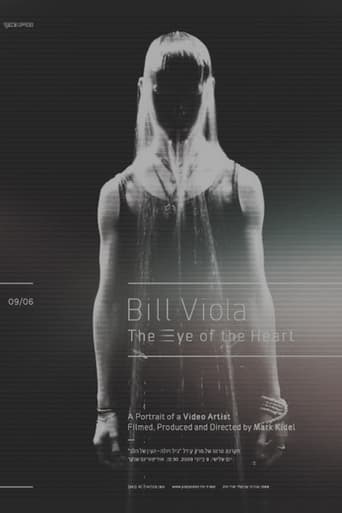
7.3Hailed as the "Rembrandt of the Video Age," renowned American artist Bill Viola became the first contemporary artist ever to be featured in a one-man show at London's prestigious National Gallery. This documentary directed by Mark Kidel features rarely seen footage from Viola's own archive and in-depth interviews with the video maverick. Viola talks passionately about his life and the influences that have driven his artwork from the beginning.
Bill Viola: The Eye of the Heart
2003
 6.4
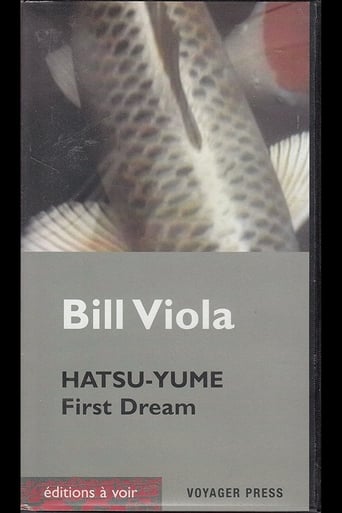
6.4With a title referring to Japanese folklore, wherein things done on the first day of a new year are significant, the film - an ardent dream entirely shot in Japan - stands as a spiritual allegory equating light and dark with life and death.
Hatsu Yume (First Dream)
1981
Film credits
2010s · 2 titles
6.4Using the words and ideas of great filmmakers, from archival interviews with Alfred Hitchcock and Robert Bresson to new interviews with Mike Leigh, David Lynch, and Jonas Mekas, Oscar-winning filmmaker Chuck Workman shows what these filmmakers and others do that can't be expressed in words - but only in cinema.
What Is Cinema?
2013
5.2Gerald Fox’s film documents Bill Viola and his wife and close collaborator Kira Perov’s odyssey to create two permanent video installations for London’s St Paul’s Cathedral, Martyrs and Mary, the first art commissions of their kind to be installed in Britain’s most famous religious space.
Bill Viola: The Road to St. Paul's
2017
2000s · 3 titles
7.3Hailed as the "Rembrandt of the Video Age," renowned American artist Bill Viola became the first contemporary artist ever to be featured in a one-man show at London's prestigious National Gallery. This documentary directed by Mark Kidel features rarely seen footage from Viola's own archive and in-depth interviews with the video maverick. Viola talks passionately about his life and the influences that have driven his artwork from the beginning.
Bill Viola: The Eye of the Heart
2003
 NR
NRThe film is a five-part projection-based installation, which addresses the complexity of human existence through the themes of individuality, society, death and rebirth. Each video is projected directly onto the wall of the exhibition space, just as paint from a fresco adheres to the surface of a plaster wall.
Going Forth By Day
2002
 10.0
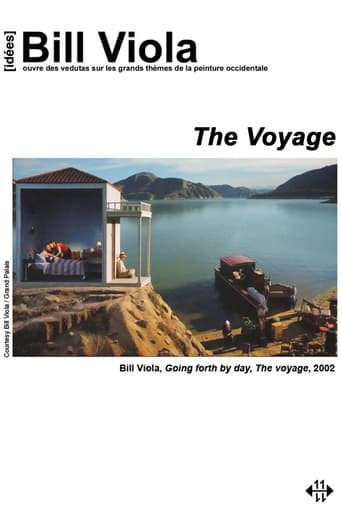
10.0The fourth video in the five-part digital-image cycle project "Going Forth By Day" (2002), "The Voyage" features an elderly man who is dying, surrounded by his family, as a boat below filled with his possessions awaits him.
The Voyage
2002
1990s · 1 titles
1980s · 2 titles
 6.7
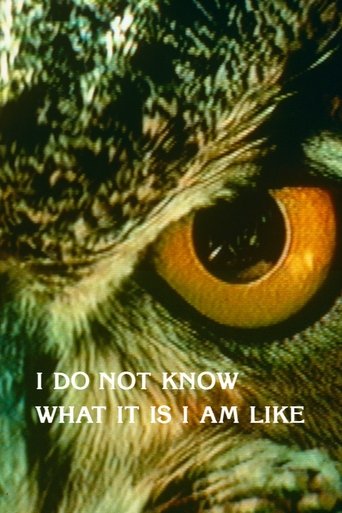
6.7"I Do Not Know What It Is that I Am Like" juxtaposes images of animals, both wild and domestic, and natural environments with human activity as it takes place in an apartment, and during a fire walking ceremony in Fiji. Documentary-style footage is combined with staged events. Despite the piece's lack of a traditional narrative, it bears some relationship to nature works. The segment features material from "Il Corpo Scuro (The dark body)" - animals and natural environments are seen up close and at a distance.
I Do Not Know What It Is I Am Like
1986
 5.2
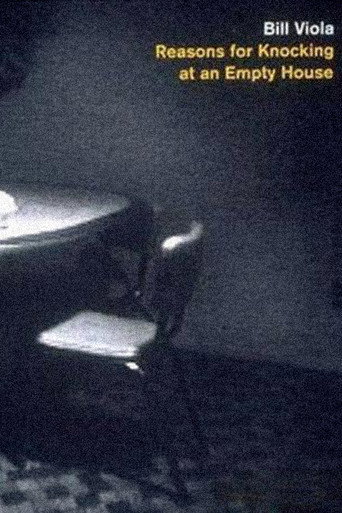
5.2This haunting installment contains a solitary wood chair with headphones attached, facing a television monitor. A man (the artist himself), looking visibly fatigued, appears on the screen, sitting in his own chair. Here, the artist compels viewers into an intimate relationship: they sit at eye level with him, listening to the sound of his breathing through the headphones. —Guggenheim Bilbao Museoa.
Reasons for Knocking at an Empty House
1983
1970s · 3 titles
 6.0
6.0Migration is an analysis of an image, a metaphorical exercise in perception and representation, illusion and reality, microcosm and macrocosm, nature and consciousness.
Migration (for Jack Nelson)
1976
 5.3
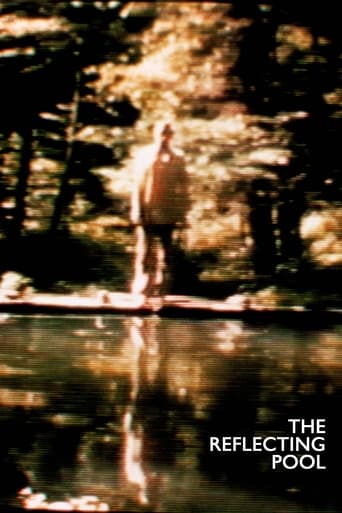
5.3Viola's seminal piece, The Reflecting Pool, was made three decades ago on analogue video tape and yet could easily pass for a contemporary digital piece; in it, Viola emerges as central protagonist from a thick forest into a clearing filled by an artificial pool. As the noise of an aeroplane slowly passes and fades overhead, Viola approaches the edge of the pool, whereby he removes his shoes, squats down yelling and then prepares to make a powerful jump.
The Reflecting Pool
1979
Return is a methodical construction of the approach of an individual towards an unseen goal, which assumes metaphorical significance. Viola moves toward the camera/viewer, pausing every few steps to ring a bell, at which point he is momentarily thrust back to his starting place, and then advanced again. Finally reaching his destination, he is taken through all of the previous stages in a single instant and returned to the source of his journey.
Return
1975
Behind the camera
6.4With a title referring to Japanese folklore, wherein things done on the first day of a new year are significant, the film - an ardent dream entirely shot in Japan - stands as a spiritual allegory equating light and dark with life and death.
Hatsu Yume (First Dream)
1981
6.4With a title referring to Japanese folklore, wherein things done on the first day of a new year are significant, the film - an ardent dream entirely shot in Japan - stands as a spiritual allegory equating light and dark with life and death.
Hatsu Yume (First Dream)
1981
6.4With a title referring to Japanese folklore, wherein things done on the first day of a new year are significant, the film - an ardent dream entirely shot in Japan - stands as a spiritual allegory equating light and dark with life and death.
Hatsu Yume (First Dream)
1981
 6.3
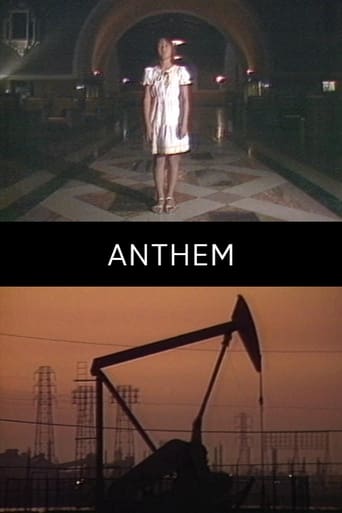
6.3A series of shots depicting "America" are laid over a classic Gregorian Chant recreated through the distortion of a woman's screams.
Anthem
1983
6.3A series of shots depicting "America" are laid over a classic Gregorian Chant recreated through the distortion of a woman's screams.
Anthem
1983
NRThe film is a five-part projection-based installation, which addresses the complexity of human existence through the themes of individuality, society, death and rebirth. Each video is projected directly onto the wall of the exhibition space, just as paint from a fresco adheres to the surface of a plaster wall.
Going Forth By Day
2002
NRThe film is a five-part projection-based installation, which addresses the complexity of human existence through the themes of individuality, society, death and rebirth. Each video is projected directly onto the wall of the exhibition space, just as paint from a fresco adheres to the surface of a plaster wall.
Going Forth By Day
2002
 NR
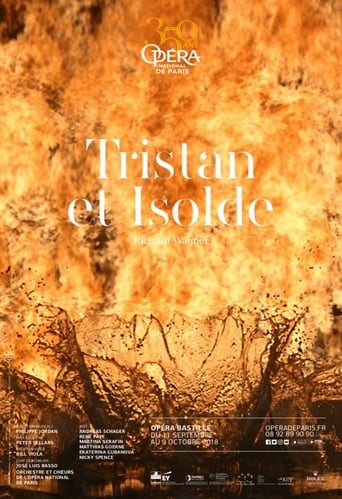
NRMotivated by the love that bound him to Mathilda Wesendonck, Richard Wagner’s composition of Tristan und Isolde goes far beyond any simple operatic gesture. Peter Sellars’ production pours oil onto this troubled sea of emotions in an almost dematerialised setting bared of all earthly contingencies whilst Bill Viola presents the lovers’ initiatory quest for nirvana in videos detached from the stage, suspended like altarpieces.
Wagner: Tristan und Isolde
2018
 7.0
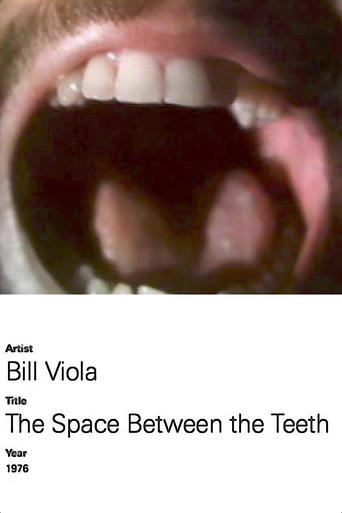
7.0The Space Between the Teeth is based on the structure of acoustic phenomena and the psychological dynamics of a man screaming at the end of a long dark corridor. With each successive scream, the camera point of view hurtles at high velocity along the length of the hallway in decreasing increments. The corridor and the cinematic structuring of the camera's advance act as metaphors for passage and transition between two worlds, bridged by the individual's cathartic screams. Ultimately, the image of the man at the end of the corridor is transformed into a Polaroid still that is literally washed away.
The Space Between the Teeth
1976
6.7"I Do Not Know What It Is that I Am Like" juxtaposes images of animals, both wild and domestic, and natural environments with human activity as it takes place in an apartment, and during a fire walking ceremony in Fiji. Documentary-style footage is combined with staged events. Despite the piece's lack of a traditional narrative, it bears some relationship to nature works. The segment features material from "Il Corpo Scuro (The dark body)" - animals and natural environments are seen up close and at a distance.
I Do Not Know What It Is I Am Like
1986
6.7"I Do Not Know What It Is that I Am Like" juxtaposes images of animals, both wild and domestic, and natural environments with human activity as it takes place in an apartment, and during a fire walking ceremony in Fiji. Documentary-style footage is combined with staged events. Despite the piece's lack of a traditional narrative, it bears some relationship to nature works. The segment features material from "Il Corpo Scuro (The dark body)" - animals and natural environments are seen up close and at a distance.
I Do Not Know What It Is I Am Like
1986
In A Million Other Things (2), changes in light and sound on the edge of a pond during an eight-hour period from day to night are composed in rhythmic variations resembling music. When the sun sets, an individual in the landscape remains the sole visible object, illuminated by a single electric lamp.
A Million Other Things (2)
1975
10.0The fourth video in the five-part digital-image cycle project "Going Forth By Day" (2002), "The Voyage" features an elderly man who is dying, surrounded by his family, as a boat below filled with his possessions awaits him.
The Voyage
2002
A man sinks down rapidly into the watery depths, but his inevitable and extended ascension's entire sequence, which was only a few seconds in real time, is slowed down into seven minutes of extreme duration, as if he is reaching Heaven.
Ascension
2000
 5.5
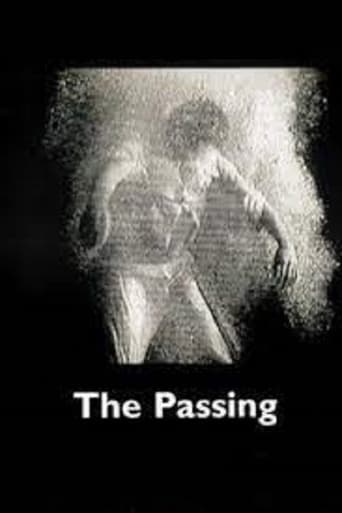
5.5Internationally acclaimed and award-winning video installation artist Bill Viola juxtaposes personal pictures of his mother's death with images of his own son's birth to explore foundational and potent themes of beginnings and endings, the cycle of life and the movement of generations. An evocative exploration of personal and communal spirituality, this deeply felt film is a poetic masterpiece to contemplate time and again.
The Passing
1992
 6.0
6.0"Reverse Television" was created in the mid-1980's by video artist Bill Viola. The 30-second portraits were about portraiture and the idea of a person staring at the viewer (as the viewer stares at the TV screen). Conceived of as a "micro-series," the work features 42 30-second portraits of television viewers in their living rooms. The portraits appear very formally composed, with attention paid to composition, lighting, and color. The viewers sit quietly, only occasionally making a slight shift in position. No external sound score has been added, so that the only sounds heard are sync sounds that have been heightened. These sounds include viewers' clothing when they move, swallowing, and background noises, such as traffic outside the viewer's home or a dog barking in the distance.
Reverse Television - Portraits of Viewers
1984
 8.0
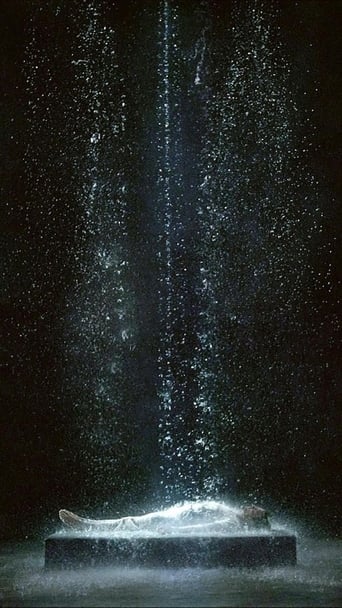
8.0The ascent of the soul in the space after death as it is awakened and drawn up in a backwards flowing waterfall.
Tristan’s Ascension (The Sound of a Mountain Under a Waterfall)
2005
 6.3
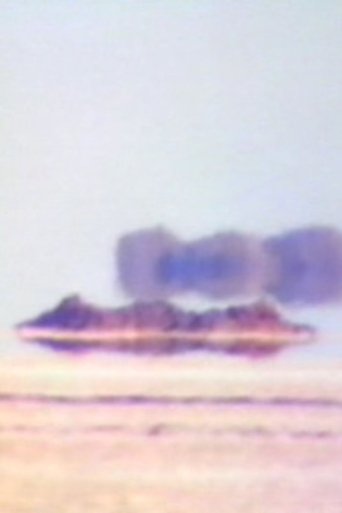
6.3Driven by a quest to capture a landscape reduced to flatness and sky, Viola travels to Chott El-Djerid. The film opens with images of snowy prairies and winter scenes, mirrored by warm, vibrating desert vistas. Through powerful telephoto lenses, shimmering mirages and warped forms emerge under extreme heat and light. These visuals evoke a space where dream and waking reality merge. Viola’s journey transcends documentation, transforming viewing into a reflective exploration of the limits of perception.
Chott el-Djerid (A Portrait in Light and Heat)
1979
 NR
NRA small crowd of people are gathered in wait when they are suddenly struck by a massive onslaught of water.
The Raft
2004
NRA small crowd of people are gathered in wait when they are suddenly struck by a massive onslaught of water.
The Raft
2004
 NR
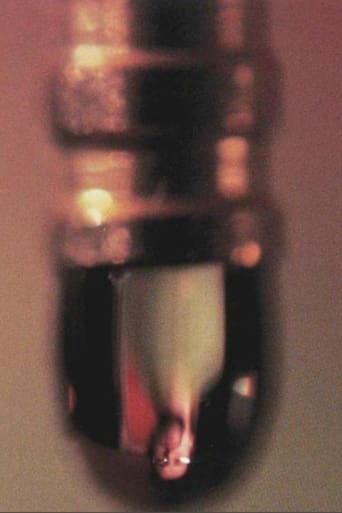
NRA drop of water emerging from a small brass valve is magnified by a video camera and projected on a large screen. The close-up image reveals that the viewer and part of the room where they stand are visible inside each forming drop.
He Weeps for You
1977
 NR
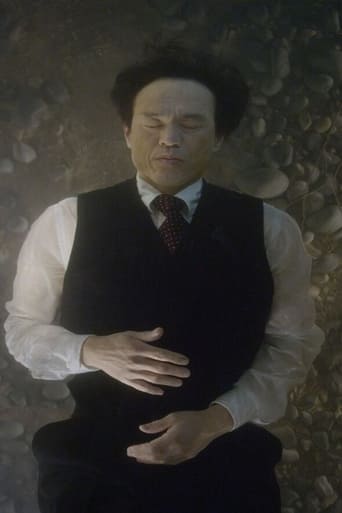
NRSeven vertically mounted screens show seven fully clothed submerged people of different ages, genders and ethnicities floating beneath the surface of a river or lake.
The Dreamers
2013
Playing Soul Music to My Freckles is a minimalist performance in which a bare loudspeaker, playing an Aretha Franklin song, is seen on the artist's exposed back.
Playing Soul Music to My Freckles So They Won't Get Lonely
1975
 NR
NRThe sculptural video installation consists of nine scrims suspended parallel to one another. Projectors at either end of the row of scrims show images of a man and a woman walking towards each other, crossing in the center and moving apart.
The Veiling
1995
 NR
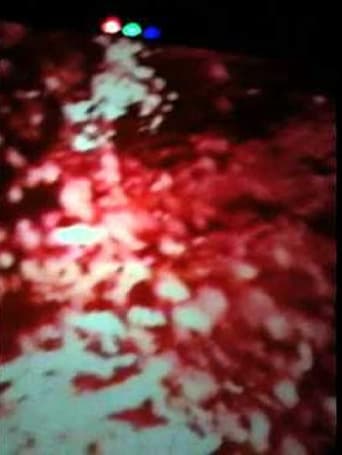
NRThe video installation's alternation between slow and fast-moving images, as well as soft and loud sounds, represents faltering thought processes. A murmuring voice illustrates the installation's effect on the viewer's mind.
The Stopping Mind
1990
 NR
NRInspired by a painting of the Visitation (1528-29) by the Italian artist Pontormo, The Greeting is a video image sequence involving the interactions between three women that is projected onto a screen mounted to the wall of a dark room. In an industrial urban landscape, two women are engaged in conversation when they are interrupted by the arrival of a third woman. The new woman greets the older of the two, apparently her friend, while ignoring the other. She then whispers an urgent message in her friend's ear, further isolating the other woman. With an underlying awkwardness, introductions are made and pleasantries exchanged between the three.
The Greeting
1995
 NR
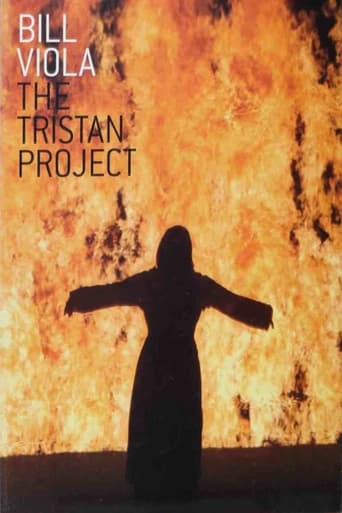
NRA four-hour plus video production inspired by Richard Wagner's oeuvre "Tristan und Isolde" and projected during the opera premiere in Paris, in partnership with Peter Sellars as artistic collaborator, and conductor Esa-Pekka Salonen.
The Tristan Project
2004
 NR
NRIn this artwork, we witness the residue of a life through the objects and structures that surround a solitary older woman: color and black-and-white video triptych on LCD flat panels mounted on wall, 35.5 x 200 x 6 cm.
Poem B (The Guest House)
2006
 NR
NRCreated by Bill Viola and Kira Perov and opened in May 2014, Martyrs shows four individuals, across four colour vertical plasma screens, being martyred by the four classical elements. The work has no sound. It lasts for seven minutes. Martyrs was joined in 2016 by a second piece entitled Mary. The installations have been gifted to Tate, and are on long-term loan to St Paul’s Cathedral. Bill Viola's commission for St Paul’s Cathedral follows the great historical tradition of commissions for spiritual centres that has resulted in a priceless heritage of art around the world. The result of this commission sees St Paul’s Cathedral, which has always spearheaded the engagement of great artists, house a resonant work of art for our times. Martyrs (and later Mary), will play an important role in connecting contemporary issues with the timeless themes embodied in the cathedral.
Martyrs
2014
 NR
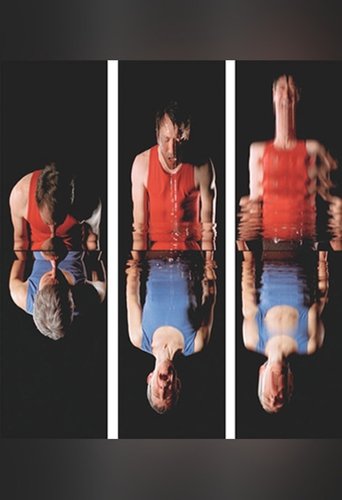
NRInstallation on two screens where the two characters burst into tears, gradually lowering their heads until their faces touch the water.
Surrender
2001
Viola describes A Non-Dairy Creamer as "the eradication of the individual by self-consumption." The artist's face, visible only as a reflected image on the surface of a cup of black coffee, slowly disappears as he consumes the coffee.
A Non-Dairy Creamer
1975
 6.0
6.0Déserts was created to accompany a live performance of the work of avant-garde composer Edgard Varèse (1885-1965). The Ensemble Modern, a contemporary music group based in Frankfurt, commissioned Viola to create a visual score for Varèse's Déserts after discovering notes by the composer referring to an unrealized image component of his composition. The resulting film/videotape was produced with the European television stations ZDF/Arte. In October 1994 Viola's Déserts premiered in a live performance in Vienna with conductor Peter Eötvös and the Ensemble Modern.
Déserts
1994
6.0Déserts was created to accompany a live performance of the work of avant-garde composer Edgard Varèse (1885-1965). The Ensemble Modern, a contemporary music group based in Frankfurt, commissioned Viola to create a visual score for Varèse's Déserts after discovering notes by the composer referring to an unrealized image component of his composition. The resulting film/videotape was produced with the European television stations ZDF/Arte. In October 1994 Viola's Déserts premiered in a live performance in Vienna with conductor Peter Eötvös and the Ensemble Modern.
Déserts
1994
 NR
NRSongs of Innocence, which directly references the visionary Romanticism of William Blake, is haunted with symbolic transformations, as shifting light is charted through the passage of a day. Images of children singing on a school lawn dissolve and reappear, hovering at the edge of perception, illusion and reality, evoking what Viola terms "a visual relationship between memory, the setting of the sun, and death."
Songs of Innocence
1976
The title of The Morning After the Night of Power refers to a passage of the Koran in which angels descend from the heavens to impart the divine inspiration to followers. The central image of the tape is a blue vase standing motionless on a table. This object is framed by a dramatic interplay of light, shadow and movement, which is registered by a fixed camera over an extended period of time. Writes Viola, "As the condensed stillness of pure duration becomes activity, events hover at the edge of awareness until a final culminating action of transcendent liberation."
The Morning After the Night of Power
1977
Moving Stillness: Mount Rainier 1979, by incorporating a large body of water, with video and sound recordings of nature, was pioneering in its use of mixed media. It is a meditation on the fragility of nature and our perception of its changes over time. A screen is suspended above a large shallow pool of water. A projector with three separate beams (one each for red, green and blue light) sends an image of Mount Rainier to the surface of the water that then bounces up to reach the rear projection screen. At periodic intervals, the water’s surface is manually disturbed causing the three beams of color to separate, until finally becoming an unrecognizable pattern of form and color. Slowly the water settles, to once more form a coherent image after the surface vibrations subside.
Moving Stillness: Mount Rainier 1979
1979
Moving through its five parts, the work describes a cycle of birth through to death, depicting both an eternal, universal Mary, and an earthly Mary representing human life on Earth.
Mary
2016
Moving through its five parts, the work describes a cycle of birth through to death, depicting both an eternal, universal Mary, and an earthly Mary representing human life on Earth.
Mary
2016
 NR
NRContinuously running video installation: in a small alcove, a wood column extends from the floor and ceiling, with a gap in the center formed by two exposed video monitors facing each other two inches apart, mounted to upper and lower columns respectively, a black-and-white video image on each monitor. The upper monitor shows a close-up image of an old woman on the verge of death, and the lower monitor shows a close-up image of a new baby only days old. The images are silent. Since the surface of each monitor screen is glass, a reflected image of the screen opposite to it can be seen through the surface of each image, as life and death reflect and contain each other.
Heaven and Earth
1992
 NR
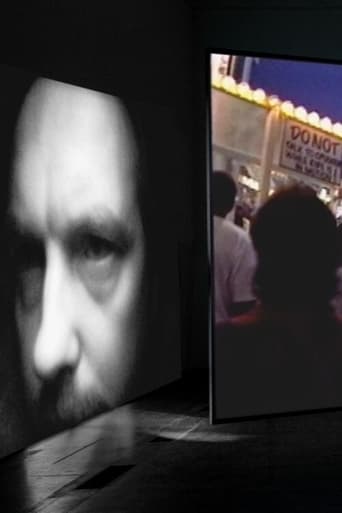
NRSlowly Turning Narrative includes two projections on a large central rotating screen. One presents images of virtually everything that constitutes life, embracing the broadest sweep from birth to death. The other shows a close-up of Viola’s head incanting “the one who lives,” “the one who acts,” “the one who reads,” and more. As this screen rotates, a mirror on the back comes into view, reflecting the image of the viewer in this video evocation of human existence.
Slowly Turning Narrative
1992