
Writing
Ben Caldwell
Place of birth
New Mexico, USA
Known for
Writing
Credits
9 titles
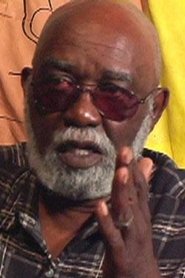
Arts educator and independent filmmaker Ben Caldwell grew up assisting his grandfather, who projected movies at a small theater in New Mexico. His passion for the visual arts lead him to study film at UCLA and reside in the neighborhood of Leimert Park, epicenter for the African American art scene in Los Angeles. After teaching film and video at Howard University in Washington, D.C. from 1981-84, Caldwell returned to Leimert Park and created an independent studio for video production and experimentation that became the KAOS Network, a community arts center that provides training on digital arts, media arts and multimedia. It remains the only organization of its kind in South Central Los Ange…
Known for
 7.0
7.0Ben Caldwell’s Medea, a collage piece made on an animation stand and edited entirely in the camera, combines live action and rapidly edited still images of Africans and African Americans which function like flashes of history that the unborn child will inherit. Caldwell invokes Amiri Baraka’s poem “Part of the Doctrine” in this experimental meditation on art history, Black imagery, identity and heritage.
Medea
1973
Following the Watts Uprising, UCLA’s School of Theater, Film and Television enacted affirmative action policies to increase the enrollment of students of color in its film program—a group that had historically been underrepresented in the student population. The “ethno-communications” initiative to recruit students from Black, Asian, Chicano and Native American communities took on a movement of its own, when a critical mass of Black student filmmakers emerged known as the “L.A. Rebellion.” Includes interviews with Ben Caldwell, Larry Clark, Sandy Osawa, Eddie Wong and more.
LA Rebellion: A Cinematic Movement
—
 6.0
6.0Drawing from Ayi Kwei Armah’s novel, "Two Thousand Seasons," Caldwell meditates on reciprocity and on the concept of “I and I” which postulates no division between people, whereas the splitting of “you” from “I” is an invention of the devil designed to brew trouble in the world.
I & I: An African Allegory
1979
An analysis of black comedy and entertainment in the context of white production.
For Whose Entertainment
1979
Film credits
Behind the camera
7.0Ben Caldwell’s Medea, a collage piece made on an animation stand and edited entirely in the camera, combines live action and rapidly edited still images of Africans and African Americans which function like flashes of history that the unborn child will inherit. Caldwell invokes Amiri Baraka’s poem “Part of the Doctrine” in this experimental meditation on art history, Black imagery, identity and heritage.
Medea
1973
7.0Ben Caldwell’s Medea, a collage piece made on an animation stand and edited entirely in the camera, combines live action and rapidly edited still images of Africans and African Americans which function like flashes of history that the unborn child will inherit. Caldwell invokes Amiri Baraka’s poem “Part of the Doctrine” in this experimental meditation on art history, Black imagery, identity and heritage.
Medea
1973
7.0Ben Caldwell’s Medea, a collage piece made on an animation stand and edited entirely in the camera, combines live action and rapidly edited still images of Africans and African Americans which function like flashes of history that the unborn child will inherit. Caldwell invokes Amiri Baraka’s poem “Part of the Doctrine” in this experimental meditation on art history, Black imagery, identity and heritage.
Medea
1973
6.0Drawing from Ayi Kwei Armah’s novel, "Two Thousand Seasons," Caldwell meditates on reciprocity and on the concept of “I and I” which postulates no division between people, whereas the splitting of “you” from “I” is an invention of the devil designed to brew trouble in the world.
I & I: An African Allegory
1979
6.0Drawing from Ayi Kwei Armah’s novel, "Two Thousand Seasons," Caldwell meditates on reciprocity and on the concept of “I and I” which postulates no division between people, whereas the splitting of “you” from “I” is an invention of the devil designed to brew trouble in the world.
I & I: An African Allegory
1979
6.0Drawing from Ayi Kwei Armah’s novel, "Two Thousand Seasons," Caldwell meditates on reciprocity and on the concept of “I and I” which postulates no division between people, whereas the splitting of “you” from “I” is an invention of the devil designed to brew trouble in the world.
I & I: An African Allegory
1979
An analysis of black comedy and entertainment in the context of white production.
For Whose Entertainment
1979
An analysis of black comedy and entertainment in the context of white production.
For Whose Entertainment
1979