
Directing
Teo Hernández
Born — Died
1939-12-23 — 1992-08-29
Place of birth
Ciudad Hidalgo, Michoacán, Mexico
Known for
Directing
Credits
74 titles
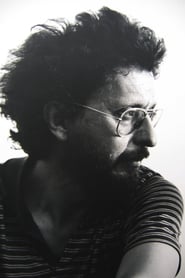
Téo Hernández (23 December 1939 - 29 August 1992) was born in Ciudad Hidalgo, Mexico. After studying architecture, he founded with a friend the CEC (Centro Experimental de Cinematografia), in Mexico City. In 1960, the French Institute of Latin America financed the first project of the group, a documentary that will remain unfinished. He moved to Paris in 1966. From 1968 to 1975, he made films in super 8 in London, Paris, Morocco and Denmark. Then accompanied by Michel Nedjar with whom he turned "Michel là-bas" in Morocco, he traveled for six years in India, Nepal, Greece ... Back in Paris, he realized Salomé (1976) in the spirit of Oscar Wilde. He meets Gaël Badaud, with whom he begins a lo…
Known for
 5.8
5.8A group of disillusioned American expatriate writers live a dissolute, hedonistic lifestyle in 1920's France and Spain.
The Sun Also Rises
1957
 10.0
10.0The tetralogy pieces are dominated by the concept and presence of death, foreclosure, fetal vertigo. As such, CRISTAUX is a real descent into an inner labyrinth, which we do not know if it is organic or cultural. At the same time, the film contains a dialectical break that initiates other semantic directions in Hernandez's work. Under the influence of Michel NEDJAR, the filmmaker abandons his traditional method of editing based on rushes. The operation is now completed inside the camera, filming. This more flexible way of proceeding ("the camera must become a second eye") is already reflected in the clear openings of Lacrima Christi: the Christian myth seems to be on the way to exorcising. The pantheistic intoxication - close to that evoked by Nietzsche - seizes places, objects and participants.
Cristaux
1978
 NR
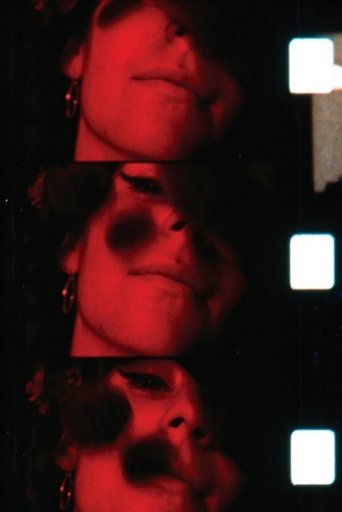
NRHymn to nature, song to the cosmos, Mâyâ builds a world where the camera generates a new type of representation in which the depth of field is reduced to the essential. Everything happens, in a way, on the same surface.
Maya
1979
 NR
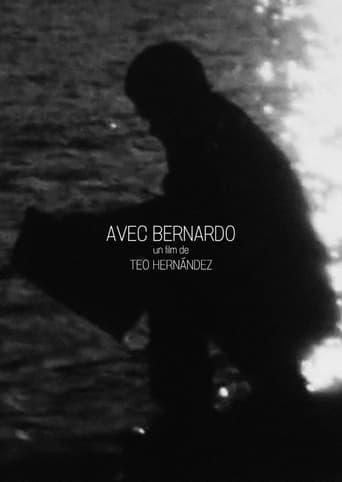
NRPortrait of the contemporary dancer and choreographer, Montet Bernardo.
Avec Bernardo
1991
 5.3
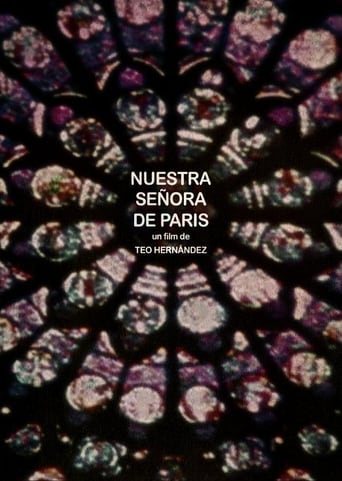
5.3Magical Super-8 (shown on 16mm) single frame portrait of the Notre Dame cathedral featuring luminous light and a dense score incorporating players from the square. - Early Monthly Segments
Our Lady of Paris
1982
 NR
NRNo synopsis available yet.
Proménade
1988
Film credits
2010s · 4 titles
 NR
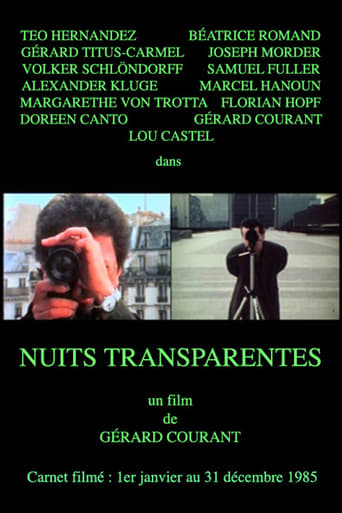
NRStrolling through France (Roanne, Nice and Carcassonne) with some excursions abroad (Munich, Montreal, New York).
Nuits transparentes
2011
 NR
NRNo synopsis available yet.
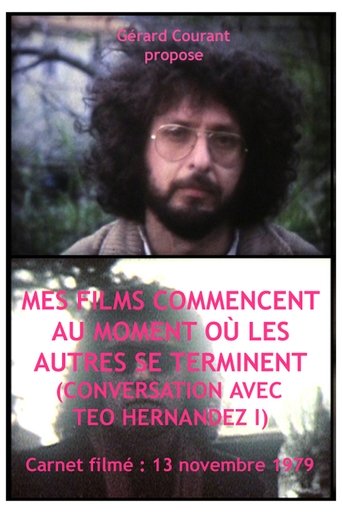
Mes films commencent au moment où les autres se terminent (Conversation avec Teo Hernandez I)
2014
 NR
NRNo synopsis available yet.
Teo Hernandez sur Radio Ark en Ciel
2014
 NR
NRNo synopsis available yet.
Un cinéaste qui ne tient pas la caméra est comme un peintre qui ne tient pas le pinceau (Conversation avec Teo Hernandez II)
2014
2000s · 1 titles
1980s · 14 titles
 NR
NRNo synopsis available yet.
Le printemps
1987
 6.0
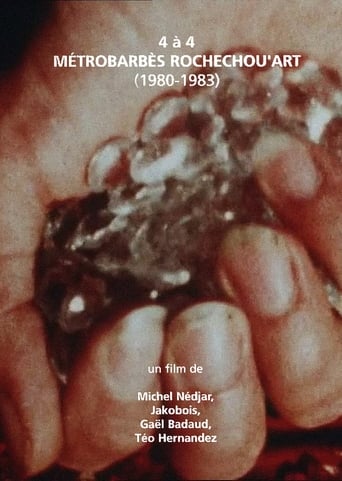
6.0In the early '80s, this collective of artists invented a style of cinema made in 4 hands, where each of the protagonists is also a filmmaker.
4 à 4 Métro-Barbès-Rochechou-Art
1983
 NR
NREyes and ears travel discontinuously through everyday life and the sub-worlds of the city and the body. A fragmented and subjective day-to-day chronicle that outlines a recurring obsession for registering even the most ordinary things, where the least poetic aspects of life, that is to say, the most somber ones, become the eye’s filter.
Fragments
1987
 4.2
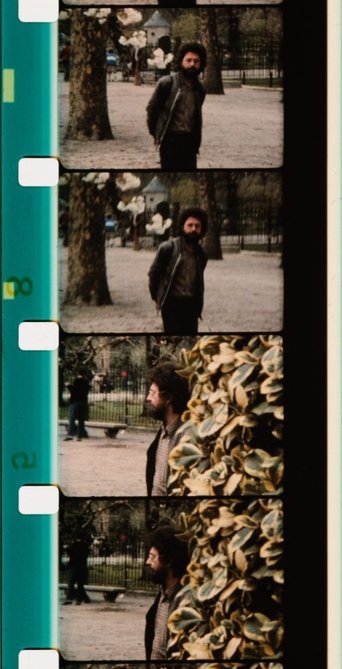
4.2No synopsis available yet.
Sur Graal de T.H.
1981
Joseph Morder's fifth journal film shot from July to December of 1980.
Le lapin rose
1981
No synopsis available yet.
Le chien amoureux
1980
 NR
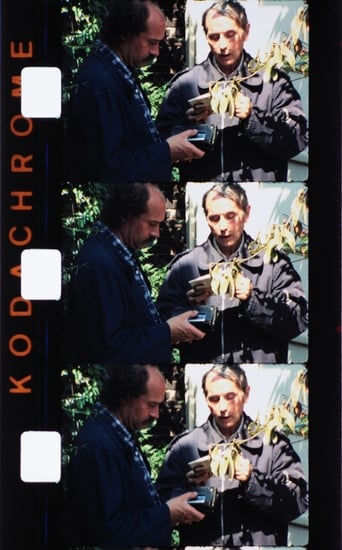
NRNo synopsis available yet.
Le chant de l'âme
1989
No synopsis available yet.
La Femme en vert
1980
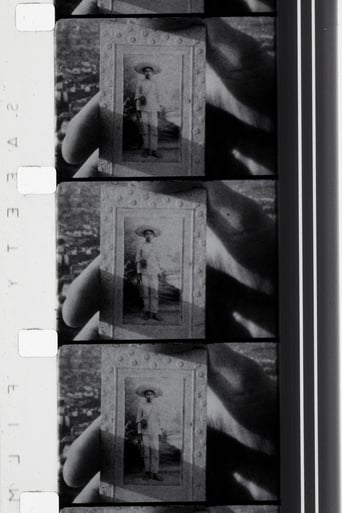 NR
NRAn autobiographical black-and-white short in which Teo Hernández portrays his Purépecha father by holding backlit old photographs atop the Montparnasse Tower while reading a manifesto of sorts on his filmmaking.
Three Drops of Mezcal in a Glass of Champagne
1983
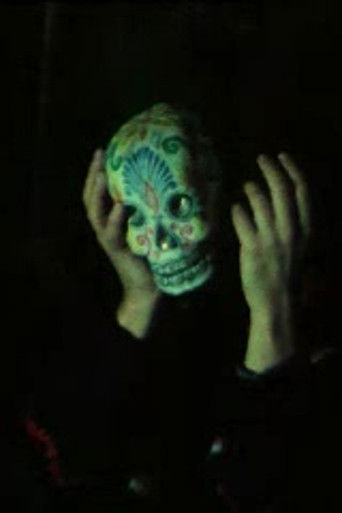 5.0
5.0The song composed by the author modulates the phases of the film and constitutes, in its entirety, the specific form of a call.
Au cœur du cristal
1980
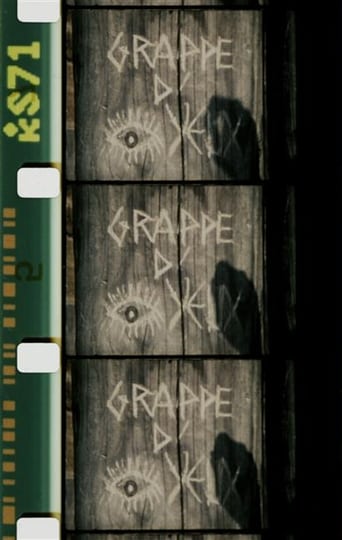 NR
NRThrough the use of portraits, shadow play and reflections, this series of exercises with and from body language compose a "four-handed" look against the notion of authorship: a vindication of the community content (repressed?) in every image.
Bouquet of Eyes
1983
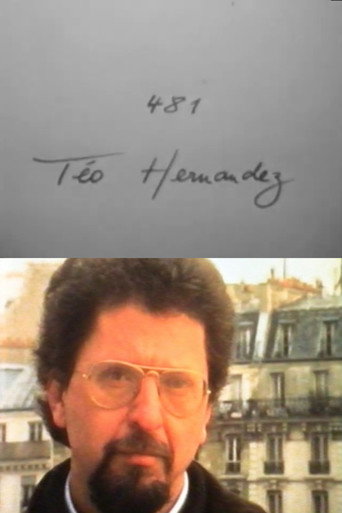 NR
NRNo synopsis available yet.
Cinématon n°481 : Teo Hernandez
1985
 1.0
1.0An autobiographical film that orchestrates the fragments of Michel Nedjar's life, to compose an architecture. The family films shot by his father, pieces of Michel's first films shot in the Balearic Islands and in Athens, contemporary images with Teo Hernandez, to stolen dialogues between his mother and and his aunt, recorded without their knowledge. The author is the spider, at the center of a device that allows him to survive: he has woven the threads of his own web and is now in control of his personal situation.
À quoi rêve l'araignée ?
1982
 NR
NRNo synopsis available yet.
Sara/Teo
1980
1970s · 11 titles
 3.2
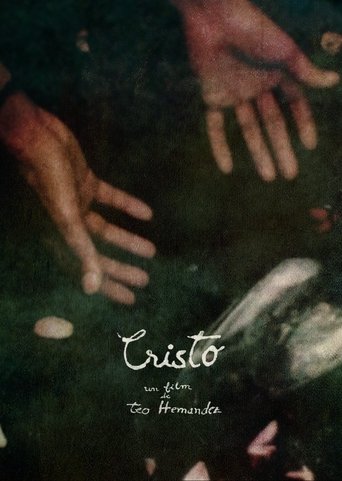
3.2All of history, that of Christ or any other, permeates the world, leaves its mark, modifying and informing history, and all that the human reproduces and creates. The best way for historical interpretation or literary adaptation is to move as far as possible from literal interpretation. That is, it is a contemporary and personal interpretation. The story of Christ is an archetypal story. It has modified and informed a morality and a vision of the human being in the West, it must be taken for what it is and what it has become: matter.
Cristo
1977
 1.0
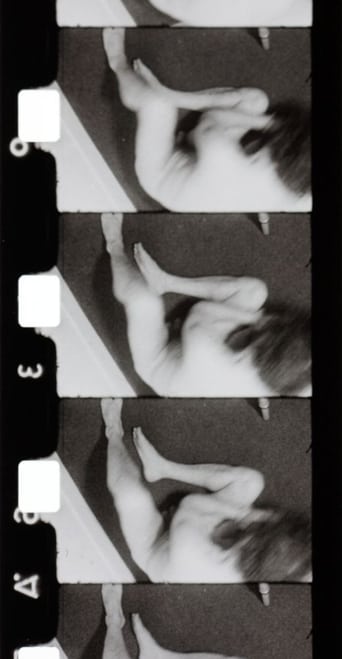
1.0"ANGLE, with its brief black and white shots, almost always plunging and oblique, of naked bodies or parts of bodies, is a film of rupture. Punctuations of black primers break up the filmic continuity, isolating snapshots or brief furtive movements: the body rolling over itself, colliding with the other or falling (these terrible falls, as sharp as a fainting spell, like that of the hero of The Andalusian Dog, whose hand, as he falls, brushes for a moment against the naked back of a beautiful, insensitive woman, and which is, it seems to me, the most striking representation of the link between passion in love and death that can be given). Often these movements are repeated and the actors seem to be the descendants of Muybridge's bonshommes lost in a white room. At the end - this is the longest shot in the film - in a corner of the room, one of the two actors remains crouched, hiding his eyes in his hands. Then the corner reappears, empty."
Angle
1978
 NR
NRReel 2 of Gérard Courant's on-going Cinematon series.
Cinématon II
1978
 NR
NRThe construction of the film outlines the successive steps of a path that, as we move forward, reveals the different stages of its presentation: the moon, the rose, the child, the candle and the skull are linked in a unique picture that gives its internal meaning. Elements connected by the route of the film to lead to the final image: one in which the meaning becomes external.
Ephemeral
1979
 4.9
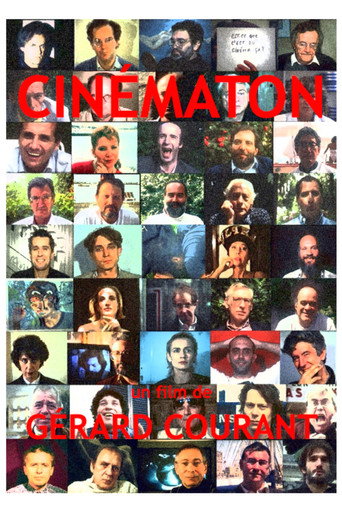
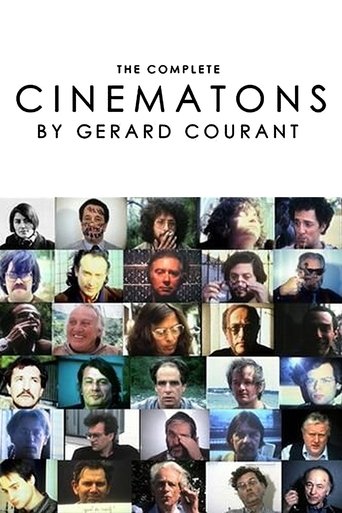
4.9Cinématon is a 156-hour long experimental film by French director Gérard Courant. It was the longest film ever released until 2011. Composed over 36 years from 1978 until 2006, it consists of a series of over 2,821 silent vignettes (cinématons), each 3 minutes and 25 seconds long, of various celebrities, artists, journalists and friends of the director, each doing whatever they want for the allotted time. Subjects of the film include directors Barbet Schroeder, Nagisa Oshima, Volker Schlöndorff, Ken Loach, Benjamin Cuq, Youssef Chahine, Wim Wenders, Joseph Losey, Jean-Luc Godard, Samuel Fuller and Terry Gilliam, chess grandmaster Joël Lautier, and actors Roberto Benigni, Stéphane Audran, Julie Delpy and Lesley Chatterley. Gilliam is featured eating a 100-franc note, while Fuller smokes a cigar. Courant's favourite subject was a 7-month-old baby. The film was screened in its then-entirety in Avignon in November 2009 and was screened in Redondo Beach, CA on April 9, 2010.
Cinématon
1978
 NR
NRNo synopsis available yet.
Désir
1977
 NR
NRNo synopsis available yet.
J'aime
1978
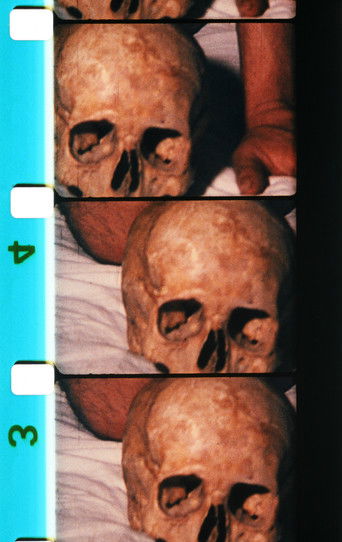 NR
NRNo synopsis available yet.
Teo
1978
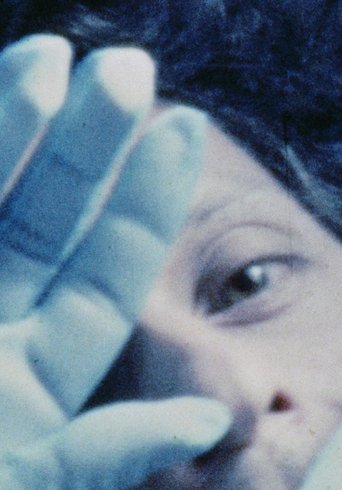 1.7
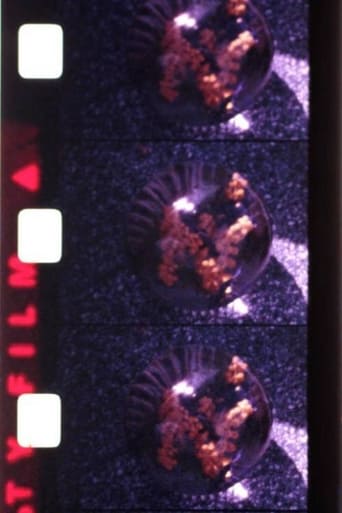
1.7Exploration of bodies. Point, counterpoint. A black glove goes in search of a red glove.
Le gant de l'autre
1977
 6.0
6.0Winter 1978-1979: In his signature style, Hernández films hearty meals, long afternoons and candlelit dalliances inside his residence on rue des Entrepôts.
Tables d'hiver
1979
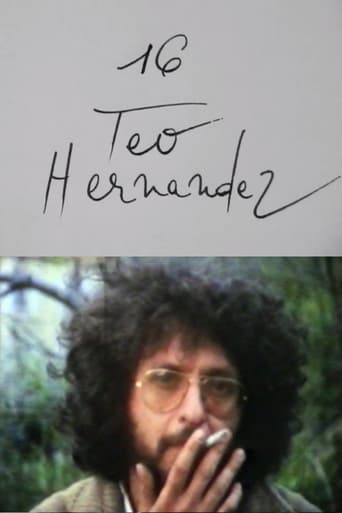 NR
NRNo synopsis available yet.
Cinématon n°16 : Teo Hernandez
1978
1950s · 1 titles
Behind the camera
10.0The tetralogy pieces are dominated by the concept and presence of death, foreclosure, fetal vertigo. As such, CRISTAUX is a real descent into an inner labyrinth, which we do not know if it is organic or cultural. At the same time, the film contains a dialectical break that initiates other semantic directions in Hernandez's work. Under the influence of Michel NEDJAR, the filmmaker abandons his traditional method of editing based on rushes. The operation is now completed inside the camera, filming. This more flexible way of proceeding ("the camera must become a second eye") is already reflected in the clear openings of Lacrima Christi: the Christian myth seems to be on the way to exorcising. The pantheistic intoxication - close to that evoked by Nietzsche - seizes places, objects and participants.
Cristaux
1978
10.0The tetralogy pieces are dominated by the concept and presence of death, foreclosure, fetal vertigo. As such, CRISTAUX is a real descent into an inner labyrinth, which we do not know if it is organic or cultural. At the same time, the film contains a dialectical break that initiates other semantic directions in Hernandez's work. Under the influence of Michel NEDJAR, the filmmaker abandons his traditional method of editing based on rushes. The operation is now completed inside the camera, filming. This more flexible way of proceeding ("the camera must become a second eye") is already reflected in the clear openings of Lacrima Christi: the Christian myth seems to be on the way to exorcising. The pantheistic intoxication - close to that evoked by Nietzsche - seizes places, objects and participants.
Cristaux
1978
NRHymn to nature, song to the cosmos, Mâyâ builds a world where the camera generates a new type of representation in which the depth of field is reduced to the essential. Everything happens, in a way, on the same surface.
Maya
1979
NRPortrait of the contemporary dancer and choreographer, Montet Bernardo.
Avec Bernardo
1991
5.3Magical Super-8 (shown on 16mm) single frame portrait of the Notre Dame cathedral featuring luminous light and a dense score incorporating players from the square. - Early Monthly Segments
Our Lady of Paris
1982
NRNo synopsis available yet.
Proménade
1988
 5.0
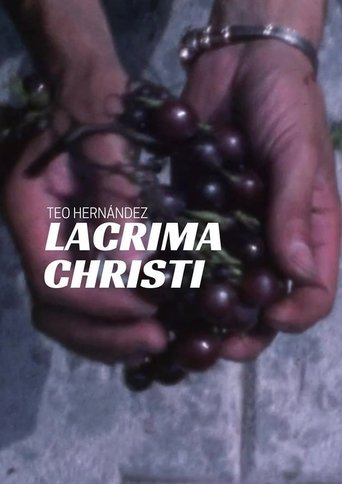
5.0Lacrima Christi is an exploration of the transfer between desire and myth that takes as its starting point a series of objects found in the flea market of Belleville.
Lacrima Christi
1980
5.0Lacrima Christi is an exploration of the transfer between desire and myth that takes as its starting point a series of objects found in the flea market of Belleville.
Lacrima Christi
1980
 NR
NRA gong will never abolish chance? If chance is travesty of desire, and desire movement without measure, cinema is vibration of this desire in fugue.
Gong
1981
 NR
NRFilm Super 8 color, silence
Soirée Kubelka
1990
 7.0
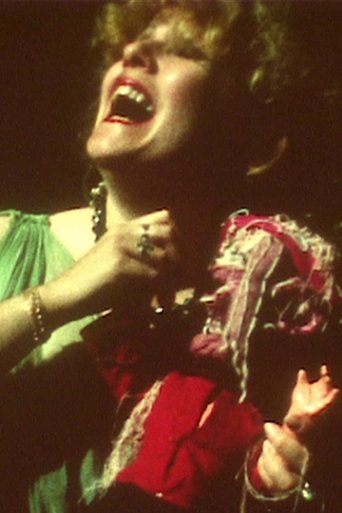
7.0With Esmeralda, Hernandez shifts to the romantic mythology, but this descriptive aspect is secondary in the filmmaker's work, whose purpose is the constitution, by interposed myths, of a baroque cinematographic language. From this point of view, he joins the approaches of other contemporary filmmakers like Bene or Schroeter. In Esmeralda, he introduces masks from his creation to work on the physical and not only the filmic material. But Hernandez adds to his series of aesthetic variations of "stock-shots" of war plans, desolations, genocides, which brutally fall within the visual framework of his film. The filmmaker thus points out the cracks that overflow the myth in its darkest areas: the historical and social reality that obsesses us, that terrorizes us every moment.
Esmeralda
1977
 NR
NRNo synopsis available yet.
Chevaux (Introduction)
1987
 NR
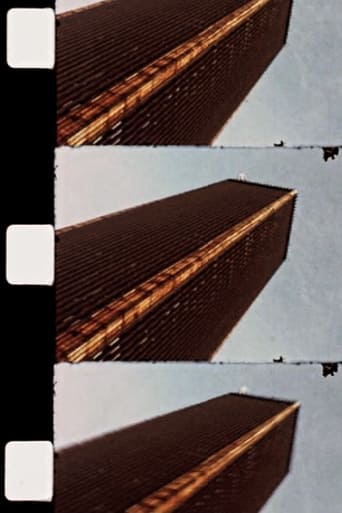
NRExperimental short by Teo Hernández.
Gabriel
1985
 5.4
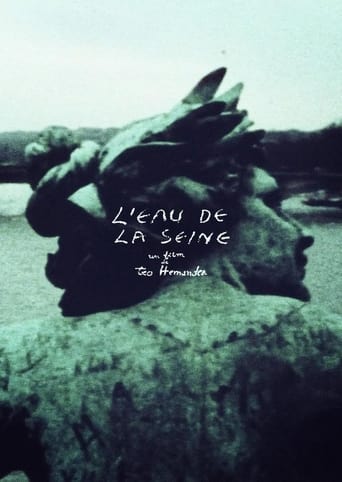
5.4Teo Hernandez films the water of the Seine and its reflections for a film at once material and luminous.
The Water of the Seine
1983
 NR
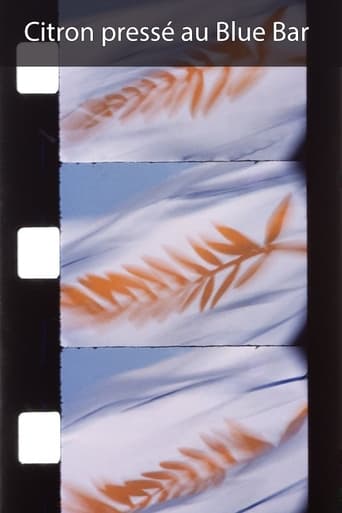
NRThe banner of the Cannes Festival shows its three premises: glory, money and politics. If you film the banal, the naive and the superficial of the atmosphere in Cannes at that time, it is for nothing more than to rescue the beauty of the water of its sea.
Citron pressé au Blue Bar
1984
 NR
NRExperimental short by Teo Hernández.
Kader, Gaël
1989
 3.0
3.0The outcome of Hernández’ friendship with the dancer and choreographer Bernardo Montet, this work, ranging from black-and-white to color, is the vertiginous record of a cross-dressing act, or a therapeutic performance on identity. Presented for the first time in Rouen, on May 26th 1987.
Vloof the Egret: Monkey Bread
1987
 NR
NRFugitive images of the northwestern city of France.
Souvenirs/Rouen
1983
 NR
NRNo synopsis available yet.
Concertino
1990
3.2All of history, that of Christ or any other, permeates the world, leaves its mark, modifying and informing history, and all that the human reproduces and creates. The best way for historical interpretation or literary adaptation is to move as far as possible from literal interpretation. That is, it is a contemporary and personal interpretation. The story of Christ is an archetypal story. It has modified and informed a morality and a vision of the human being in the West, it must be taken for what it is and what it has become: matter.
Cristo
1977
3.2All of history, that of Christ or any other, permeates the world, leaves its mark, modifying and informing history, and all that the human reproduces and creates. The best way for historical interpretation or literary adaptation is to move as far as possible from literal interpretation. That is, it is a contemporary and personal interpretation. The story of Christ is an archetypal story. It has modified and informed a morality and a vision of the human being in the West, it must be taken for what it is and what it has become: matter.
Cristo
1977
 NR
NRNo synopsis available yet.
Chevaux couleur
1988
 NR
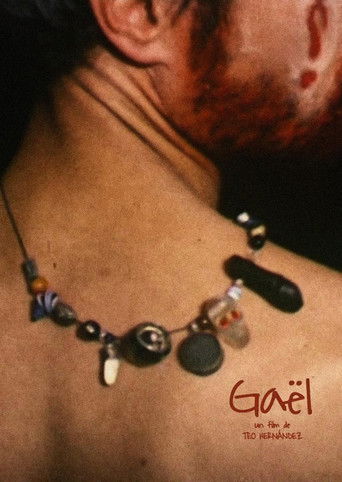
NRAn approach to Gaël Badaud and his activity as a painter: the birth of his paintings and the tight bonds between his work and his personal experience.
Gaël
1978
NRAn approach to Gaël Badaud and his activity as a painter: the birth of his paintings and the tight bonds between his work and his personal experience.
Gaël
1978
 NR
NRExperimental short by Teo Hernández.
Réveillon
1988
 NR
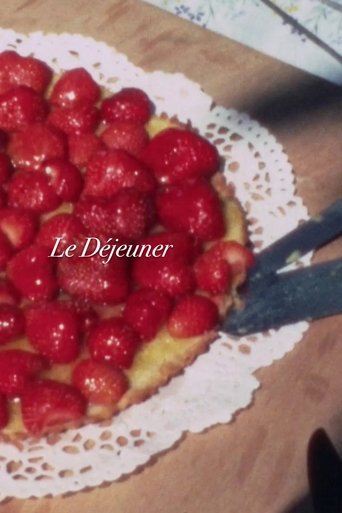
NRFilmed in 1988 on the occasion of the parties at the house of Marie-Noëlle Delorme. Shot with camera in hand to small bursts of frames and almost image by image, but then slowed down.
Le Déjeuner
1988
 NR
NRTéo Hernandez's series of Memories... transcribes perfectly the filmmaker's vertiginous ability to capture a city from a few well-chosen places; the juxtaposition of architecture and people creates a mosaic of sensations, exalted by the syncopation of the zooms and cascading shots, clues to the "manner", the "filmmaker's paw".
Souvenirs/Florence
1981
 4.7
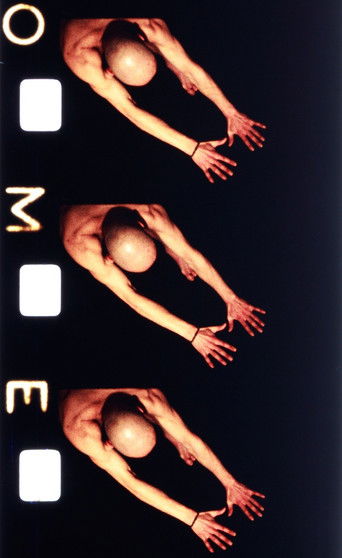
4.7The purpose of the film is to go beyond the notion of the body as a system of functions, symptoms and reflexes that try to delimit the whole body. The body, represented here with all its norms, confronted with itself in a space devoid of causal references, moves towards the abolition of its image and the springing of its inner source: it is the luminous nucleus of the human body.
Corps aboli
1978
 NR
NRTauride reconnects with the myth and the tragic role which it reinterprets. Drawing from this fracture, traversed by the magnitude of its cruelty, Catherine Diverrès prompts reflection that leaves no room for nostalgia or the temptation of prophetism
Tauride
1992
 NR
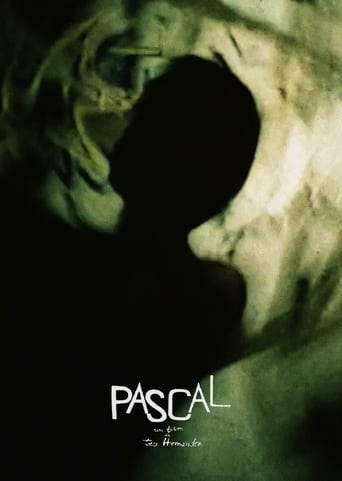
NRFrom the series "Portraits" : Pascal Martin
Pascal
1981
NRFrom the series "Portraits" : Pascal Martin
Pascal
1981
6.0In the early '80s, this collective of artists invented a style of cinema made in 4 hands, where each of the protagonists is also a filmmaker.
4 à 4 Métro-Barbès-Rochechou-Art
1983
 NR
NRShort film by Teo Hernández.
Travaux
1990
 NR
NRImages of the filmmaker's visit to Montpellier.
To Montpellier
1988
 NR
NRExperimental short by Teo Hernández.
Le Canotier
1988
 NR
NRShort film by Teo Hernández.
Le Zoo
1992
 NR
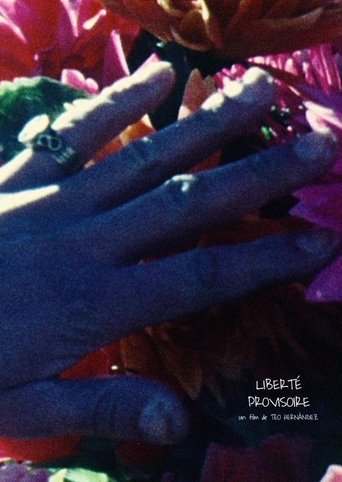
NRLiberté provisoire takes from everyday life, transforming the ordinary into a sensory delight. Walks in the Belleville district, Ménilmontant, leading to Père Lachaise cemetery, to the tombs of Piaf and Sarapo.
Liberté provisoire
1977
 NR
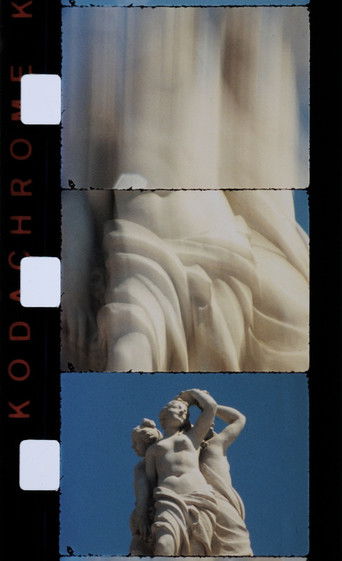
NRAn early Téo Hernandez film exploring the space of a garden. Shot in July 1970 in the Carlsberg Glyptotek garden in Copenhagen, Pause is a 8 mm black‑and‑white silent short in which Téo Hernández roams the museum garden, alternating tight close‑ups of bodies (hands, feet, faces) and textures with sculptures and vegetation; the camera’s halting, scanning movement turns the stroll into a study of matter, framing and rhythm. Featuring Michel Nedjar, Léon Pizano and Sheena Mark, the film dispenses with narration and treats the garden’s statuary and foliage as anchors for a tactile observation of bodies in space.
Pause
1970
 NR
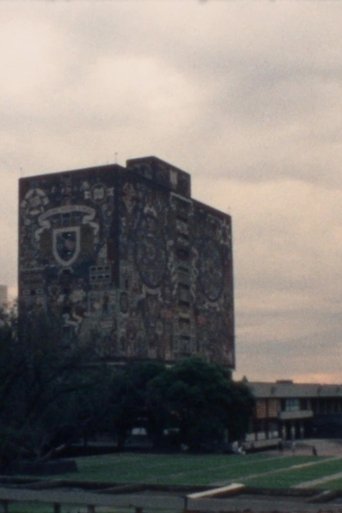
NRPremonition of urban chaos from the images, a counter-reading of the picturesque and a rabidly cosmopolitan vision of the city.
In Mexico
1990
 NR
NRFugitive images of old Paris neighborhoods.
Souvenirs/Paris
1980