
Writing
Auguste Le Breton
Born — Died
1913-02-18 — 1999-05-31
Place of birth
Lesneven, Finistère, France
Known for
Writing
Credits
8 titles
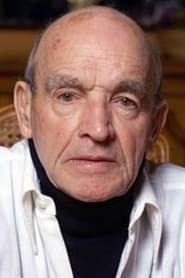
Auguste Le Breton (born Auguste Monfort 18 February 1913 – 31 May 1999) was a French novelist who wrote primarily about the criminal underworld. His novels were adapted into several notable films of the 1950s, such as Rififi, Razzia sur la chnouf, Le rouge est mis and Le clan des siciliens. He wrote the dialogue for the noir film Bob le flambeur. Auguste Le Breton was born in Finistère, Brittany. His childhood name was Auguste Monfort. Tragedy struck early in his life. Before his birth, his father had died in the First World War. His mother then disappeared. Being an orphan, Le Breton acquired the status of ward of the nation and so was housed in state institutions. Growing up in these inst…
Known for
 9.0
9.0Midi Première is a French variety show presented by Danièle Gilbert, directed by Jacques Pierre and broadcast from January 6, 1975 until January 1, 1982 on TF1. The program was generally broadcast between 12:15 p.m. and 12:55 p.m., then giving way to the 1:00 p.m. TV news. However, the broadcast schedule could change, depending on the guests, and the setting where the recording of the program was shot. Certain performances by artists who have become cult like the one where Ringo jostles with a demonstrator in interpretation (1977), that of Dalida with the title There is always a song with the soundtrack that does not start, twice, at the right speed (1978), Claude François and his Clodettes, who, in the provinces, are unable to join "the set" in order to interpret his song, the latter being taken by the crowd of delirious fans (summer 1977) . The group Supertramp performed there with the title "Dreamer" on March 8, 1975.
Midi Première
1975
 8.5
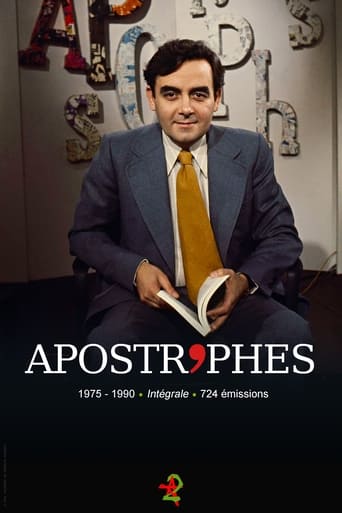
8.5Apostrophes was a live, weekly, literary, prime-time, talk show on French television created and hosted by Bernard Pivot. It ran for fifteen years (724 episodes) from January 10, 1975, to June 22, 1990, and was one of the most watched shows on French television (around 6 million regular viewers). It was broadcast on Friday nights on the channel France 2 (which was called "Antenne 2" from 1975 to 1992). The hourlong show was devoted to books, authors and literature. The format varied between one-on-one interviews with a single author and open discussions between four or five authors.
Apostrophes
1975
No synopsis available yet.
Samedi soir
1971
 7.8
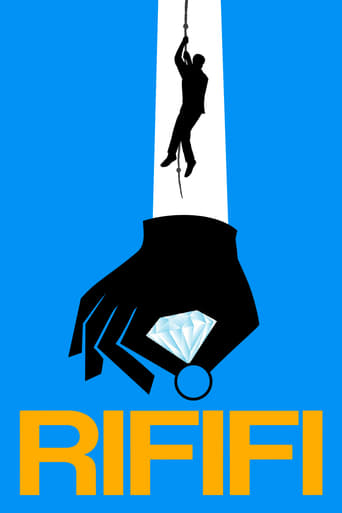
7.8Out of prison after a five-year stretch, jewel thief Tony turns down a quick job his friend Jo offers him, until he discovers that his old girlfriend Mado has become the lover of local gangster Pierre Grutter during Tony's absence. Expanding a minor smash-and-grab into a full-scale jewel heist, Tony and his crew appear to get away clean, but their actions after the job is completed threaten the lives of everyone involved.
Rififi
1955
 6.7
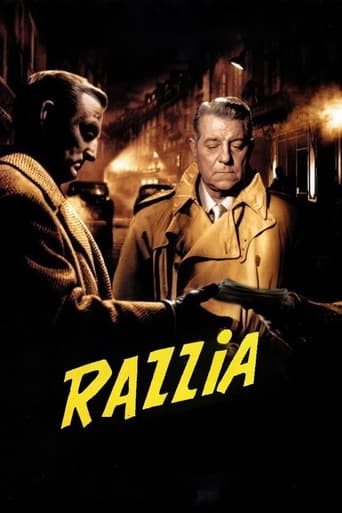
6.7Henri, the Man from Nantes, comes back to his country after a successful stay in the United States, where he was working for Liski, the drug dealer. With the fame of being a tough guy preceding him, he sets himself to the task of knowing why the French operations were not so profitable - and soon he is master of all links of the organization. He can now get it honed to perfection - or destroy it. Only... the Police are following his every step.
Razzia
1955
 7.3
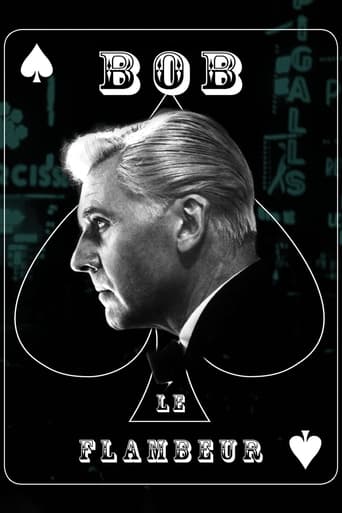
7.3In Paris, Bob Montagne is practically synonymous with gambling -- and winning. He is kind, classy and well-liked by virtually everyone in town, including police inspector Ledru. However, when Bob's luck turns sour, he begins to lose friends and makes the most desperate gamble of his life: to rob the Deauville casino during Grand Prix weekend, when the vaults are full. Unfortunately, Bob soon learns that the game is rigged and the cops are on to him.
Bob le Flambeur
1956
Film credits
Series credits
9.0Midi Première is a French variety show presented by Danièle Gilbert, directed by Jacques Pierre and broadcast from January 6, 1975 until January 1, 1982 on TF1. The program was generally broadcast between 12:15 p.m. and 12:55 p.m., then giving way to the 1:00 p.m. TV news. However, the broadcast schedule could change, depending on the guests, and the setting where the recording of the program was shot. Certain performances by artists who have become cult like the one where Ringo jostles with a demonstrator in interpretation (1977), that of Dalida with the title There is always a song with the soundtrack that does not start, twice, at the right speed (1978), Claude François and his Clodettes, who, in the provinces, are unable to join "the set" in order to interpret his song, the latter being taken by the crowd of delirious fans (summer 1977) . The group Supertramp performed there with the title "Dreamer" on March 8, 1975.
Midi Première
1975
8.5Apostrophes was a live, weekly, literary, prime-time, talk show on French television created and hosted by Bernard Pivot. It ran for fifteen years (724 episodes) from January 10, 1975, to June 22, 1990, and was one of the most watched shows on French television (around 6 million regular viewers). It was broadcast on Friday nights on the channel France 2 (which was called "Antenne 2" from 1975 to 1992). The hourlong show was devoted to books, authors and literature. The format varied between one-on-one interviews with a single author and open discussions between four or five authors.
Apostrophes
1975
No synopsis available yet.
Samedi soir
1971
Behind the camera
7.8Out of prison after a five-year stretch, jewel thief Tony turns down a quick job his friend Jo offers him, until he discovers that his old girlfriend Mado has become the lover of local gangster Pierre Grutter during Tony's absence. Expanding a minor smash-and-grab into a full-scale jewel heist, Tony and his crew appear to get away clean, but their actions after the job is completed threaten the lives of everyone involved.
Rififi
1955
7.3In Paris, Bob Montagne is practically synonymous with gambling -- and winning. He is kind, classy and well-liked by virtually everyone in town, including police inspector Ledru. However, when Bob's luck turns sour, he begins to lose friends and makes the most desperate gamble of his life: to rob the Deauville casino during Grand Prix weekend, when the vaults are full. Unfortunately, Bob soon learns that the game is rigged and the cops are on to him.
Bob le Flambeur
1956
 7.5
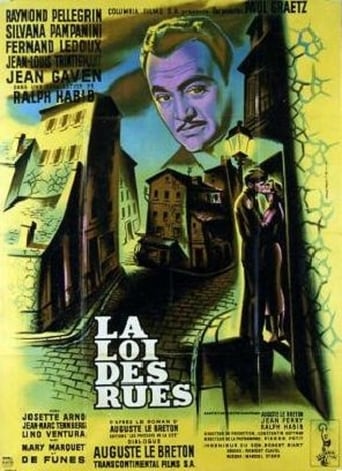
7.5Yves Tréguier, a young orphan, escapes from a reform school in Brittany to join "Dédé la Glace" in Paris, an old-timer with whom he has a sincere friendship. The love of Zette, a young girl he has met, and the benevolent friendship of Father Blain, the bistro owner, give him the desire for regular work. "Jo le Grec", a pimp jealous of Dédé's friendship with Yves, seduces Wanda, a prostitute he loves, and shoots Dédé dead. Blain prevents him from doing the same to Yves, and shoots him in turn. Yves can live an honest life with Zette and the baby she's expecting.
Law of the Streets
1956
 6.5
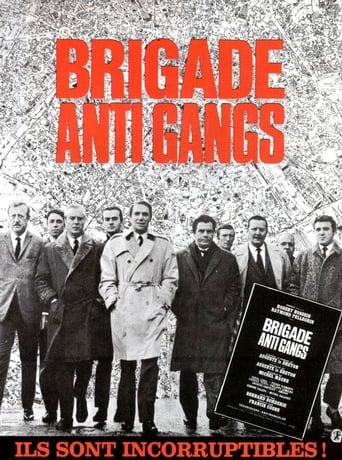
6.5The struggle between a ruthless leader of a bank robbers and the cops who are determined to put him in jail for long.
Brigade Anti Gangs
1966