

Acting
Bliss Milford
Born — Died
1886-04-09 — 1970-07-29
Place of birth
Hope, North Dakota, USA
Known for
Acting
Credits
9 titles
Known for
 NR
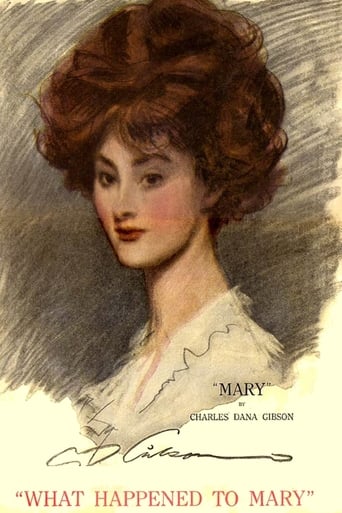
NRThe forerunner of all serials, What Happened to Mary was a series of twelve monthly one reel episodes, each a complete entity in itself, revolving its immediate dramatic and melodramatic problems within the framework of a single episode and designed more for story and suspense situations than action.
What Happened to Mary
1912
No synopsis available yet.
And the Children Pay
1918
 6.1
6.1When a burglar dressed as Santa Claus steals a family's Christmas presents, amateur detective Octavius sets out to recover the loot.
The Adventure of the Wrong Santa Claus
1914
Billie is the "little mother" of the family and cares for the two smaller children. Her father has fallen under the spell of drink. Billie has become hardened by her struggle against the drink demon in her father and treats him with scant consideration.
Billie
1912
Sheltered young Sylvia Fairponts reads about the scandals originating from the Beaulieu Inn and determines to go there at any cost. Anxious to know whether life promises any excitement for her, Sylvia consults clairvoyant Mme. Claire St. Claire, who, for a large fee, predicts that she will soon meet a dashing young lover.
Sylvia on a Spree
1918
 NR
NRBlind Ambrose North is tormented by the suspicion that his wife Constance committed suicide when their crippled daughter Barbara was only two, because she did not love him. Before her death, Constance wrote Barbara a letter to be opened on the girl's twenty-first birthday, but when Barbara opens it and learns that her mother killed herself to escape a doomed love affair with Lawrence Austin, she invents a different story for Ambrose, knowing that the truth would hurt him too deeply.
Flower of the Dusk
1918
Film credits
1910s · 9 titles
NRThe forerunner of all serials, What Happened to Mary was a series of twelve monthly one reel episodes, each a complete entity in itself, revolving its immediate dramatic and melodramatic problems within the framework of a single episode and designed more for story and suspense situations than action.
What Happened to Mary
1912
No synopsis available yet.
And the Children Pay
1918
6.1When a burglar dressed as Santa Claus steals a family's Christmas presents, amateur detective Octavius sets out to recover the loot.
The Adventure of the Wrong Santa Claus
1914
Billie is the "little mother" of the family and cares for the two smaller children. Her father has fallen under the spell of drink. Billie has become hardened by her struggle against the drink demon in her father and treats him with scant consideration.
Billie
1912
Sheltered young Sylvia Fairponts reads about the scandals originating from the Beaulieu Inn and determines to go there at any cost. Anxious to know whether life promises any excitement for her, Sylvia consults clairvoyant Mme. Claire St. Claire, who, for a large fee, predicts that she will soon meet a dashing young lover.
Sylvia on a Spree
1918
NRBlind Ambrose North is tormented by the suspicion that his wife Constance committed suicide when their crippled daughter Barbara was only two, because she did not love him. Before her death, Constance wrote Barbara a letter to be opened on the girl's twenty-first birthday, but when Barbara opens it and learns that her mother killed herself to escape a doomed love affair with Lawrence Austin, she invents a different story for Ambrose, knowing that the truth would hurt him too deeply.
Flower of the Dusk
1918
Mrs Grayson accidentally leaves her baby son at a shop and flies into a panic when she returns home to find him missing.
An Absent-Minded Mother
1914
A young boy aspires to knowledge and higher education but his father, a plain man with narrow goals, is content with an ordinary school education for him and puts him to work despite the principal's protests. The principal even offers the father an opening by which his son could work during the day and attend school at night throughout a season, but the father declines. Disheartened by the life of drudgery, his father’s decision has wrought he travels the wrong road and goes from hopelessness to recklessness, trapped in an unhappy marriage and a life of hopelessness.
The Man He Might Have Been
1913
 6.0
6.0A printer and his young assistant take over a local newspaper while the editor is away.
The Totville Eye
1912