

Directing
Cecilia Mangini
Born — Died
1927-07-31 — 2021-01-21
Place of birth
Mola di Bari, Italia
Known for
Directing
Credits
47 titles
Cecilia Mangini was an italian director and photographer.
Known for
 5.5
5.5Juste wanders the streets of Paris looking for people only he can see. He collects their last memory before helping them into the afterlife. One day Agathe, a young woman, recognizes him. She belongs to his previous life. She is alive and he is a ghost. How will they manage to love each other and seize this second chance?
Burning Ghost
2019
 6.5
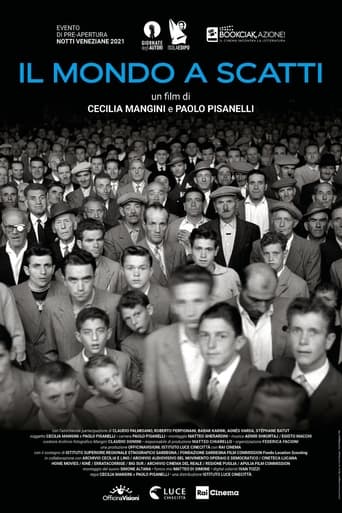
6.5"Il mondo a scatti" is a film that intertwines images of today and yesterday, still images and moving images through a dialogue between two people who reflect on the visible and invisible things of the world: Cecilia Mangini, unstoppable ninety years old, photographer, documentary maker, screenwriter is filmed by Paolo Pisanelli, photographer, director, curator of cultural events.
The World in Shots
2021
 7.0
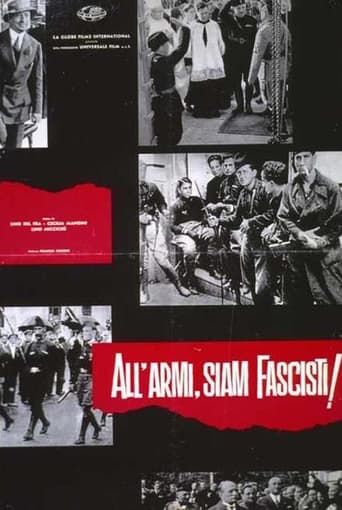
7.0Documentary compiled from archives and accompanied by a poet's commentary, shows the sweep of modern Italian history from 1911 to 1961, centering on the conditions leading to Fascism and the post-WWII reaction to the Fascist experience.
To Arms, We Are Fascists!
1962
 5.5
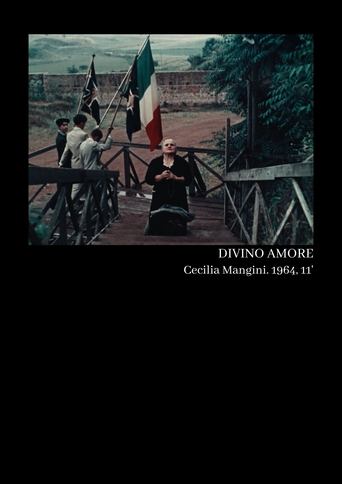
5.5The film begins at night, as parishioners holding lanterns form a series of processions, travelling through the night from Rome, and villages in the Abruzzi and Lazio regions, to make it to the Santuario della Madonna del Divino Amore, 10 miles from the capital, by morning. More than an anthropological study of ecstatic devotion – with its genuflecting disciples, and women who scream desperately at the sky – Divino Amore also speaks to Mangini’s interest in disappearing rituals and communities at risk of extinction. When generations of worshippers pour out of the church at the end of the service, formality dissolves into secular leisure, as families perched on horse carts eat plates of spaghetti and men fall asleep on the grass. The velvet-clad austerity of the church’s interior gives way to a series of pastoral tableaux.
Divine Love
1961
 6.0
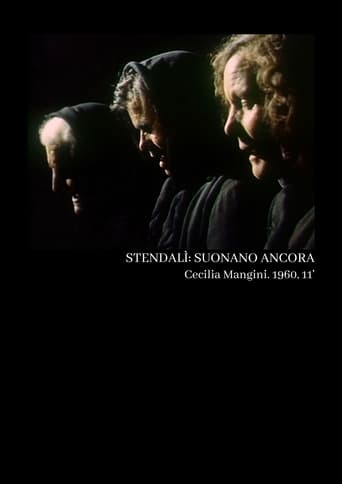
6.0A unique 1960s documentary on the traditional dirge sung by women in Griko, an ancient dialect of Salento, so old that it originates from the ancient Greeks who once colonized that part of southern Italy.
Stendali (Still They Toll)
1960
 6.3
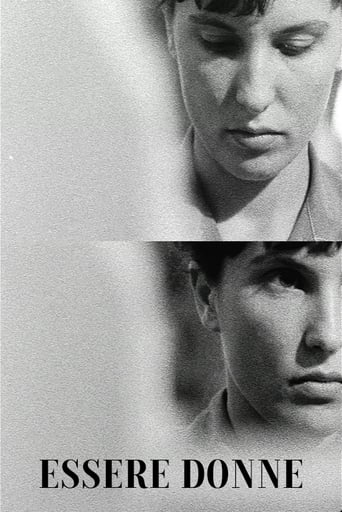
6.3This documentary is one of the earliest film enquiries on women's condition in Italy, seen in its different aspects: social, economic, psychological. Starting from an analysis of the feminine role models proposed by the cultural industry, the film finds its protagonists among all kinds of women.
Being Women
1965
Film credits
2020s · 2 titles
6.5"Il mondo a scatti" is a film that intertwines images of today and yesterday, still images and moving images through a dialogue between two people who reflect on the visible and invisible things of the world: Cecilia Mangini, unstoppable ninety years old, photographer, documentary maker, screenwriter is filmed by Paolo Pisanelli, photographer, director, curator of cultural events.
The World in Shots
2021
 NR
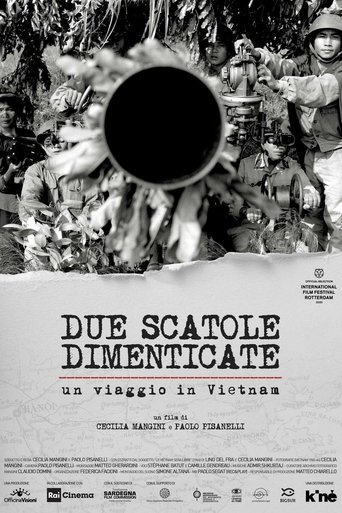
NRBefore becoming a film critic, then a maker mainly of sharply engaged documentaries, usually in tandem with her late husband Lino Del Fra, Cécilia Mangini was a photographer. Taking pictures was something she did all her life, alongside whatever else she was working on. In 1965 Mangini and Del Fra went to war-torn Vietnam to make a film they never finished. More than half a century later, she returned to these images, moving and still, some of which she found again by accident.
Two Forgotten Boxes
2020
2010s · 5 titles
5.5Juste wanders the streets of Paris looking for people only he can see. He collects their last memory before helping them into the afterlife. One day Agathe, a young woman, recognizes him. She belongs to his previous life. She is alive and he is a ghost. How will they manage to love each other and seize this second chance?
Burning Ghost
2019
No synopsis available yet.
My Travels with Cecilia
2013
 6.0
6.0No synopsis available yet.
Lievito madre – Le ragazze del secolo scorso
2017
 NR
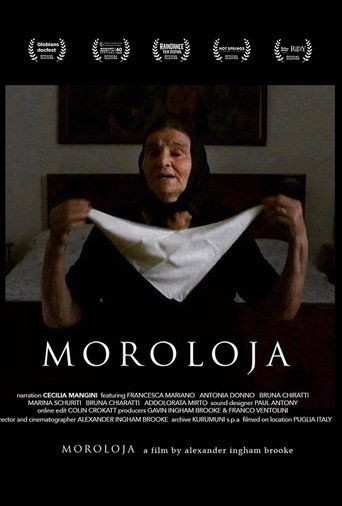
NRIn 1962 Cecilia Mangini, an Italian filmmaker made 'Stendali', a documentary about a group of women who practiced an Ancient Greek funeral rite in the southern Italian town of Martano (Puglia, Lecce). Shortly after the filming of 'Stendali' the women died out, with no one to replace them, the rites disappeared, leaving the town in its silence. In 2011, 50 years later, the film 'Moroloja' looks back upon the site of the funeral, revisiting the town of Martano, revealing that some of the women are still alive. Narration by Cecilia Mangini.
Moroloja
2011
The story of Cecilia Mangini, documentary maker, photographer and intellectual who told thirty years of Italy's history with her films.
Non c'era nessuna signora a quel tavolo. Il cinema di Cecilia Mangini
2010
Behind the camera
6.5"Il mondo a scatti" is a film that intertwines images of today and yesterday, still images and moving images through a dialogue between two people who reflect on the visible and invisible things of the world: Cecilia Mangini, unstoppable ninety years old, photographer, documentary maker, screenwriter is filmed by Paolo Pisanelli, photographer, director, curator of cultural events.
The World in Shots
2021
6.5"Il mondo a scatti" is a film that intertwines images of today and yesterday, still images and moving images through a dialogue between two people who reflect on the visible and invisible things of the world: Cecilia Mangini, unstoppable ninety years old, photographer, documentary maker, screenwriter is filmed by Paolo Pisanelli, photographer, director, curator of cultural events.
The World in Shots
2021
7.0Documentary compiled from archives and accompanied by a poet's commentary, shows the sweep of modern Italian history from 1911 to 1961, centering on the conditions leading to Fascism and the post-WWII reaction to the Fascist experience.
To Arms, We Are Fascists!
1962
7.0Documentary compiled from archives and accompanied by a poet's commentary, shows the sweep of modern Italian history from 1911 to 1961, centering on the conditions leading to Fascism and the post-WWII reaction to the Fascist experience.
To Arms, We Are Fascists!
1962
5.5The film begins at night, as parishioners holding lanterns form a series of processions, travelling through the night from Rome, and villages in the Abruzzi and Lazio regions, to make it to the Santuario della Madonna del Divino Amore, 10 miles from the capital, by morning. More than an anthropological study of ecstatic devotion – with its genuflecting disciples, and women who scream desperately at the sky – Divino Amore also speaks to Mangini’s interest in disappearing rituals and communities at risk of extinction. When generations of worshippers pour out of the church at the end of the service, formality dissolves into secular leisure, as families perched on horse carts eat plates of spaghetti and men fall asleep on the grass. The velvet-clad austerity of the church’s interior gives way to a series of pastoral tableaux.
Divine Love
1961
5.5The film begins at night, as parishioners holding lanterns form a series of processions, travelling through the night from Rome, and villages in the Abruzzi and Lazio regions, to make it to the Santuario della Madonna del Divino Amore, 10 miles from the capital, by morning. More than an anthropological study of ecstatic devotion – with its genuflecting disciples, and women who scream desperately at the sky – Divino Amore also speaks to Mangini’s interest in disappearing rituals and communities at risk of extinction. When generations of worshippers pour out of the church at the end of the service, formality dissolves into secular leisure, as families perched on horse carts eat plates of spaghetti and men fall asleep on the grass. The velvet-clad austerity of the church’s interior gives way to a series of pastoral tableaux.
Divine Love
1961
6.0A unique 1960s documentary on the traditional dirge sung by women in Griko, an ancient dialect of Salento, so old that it originates from the ancient Greeks who once colonized that part of southern Italy.
Stendali (Still They Toll)
1960
6.0A unique 1960s documentary on the traditional dirge sung by women in Griko, an ancient dialect of Salento, so old that it originates from the ancient Greeks who once colonized that part of southern Italy.
Stendali (Still They Toll)
1960
6.3This documentary is one of the earliest film enquiries on women's condition in Italy, seen in its different aspects: social, economic, psychological. Starting from an analysis of the feminine role models proposed by the cultural industry, the film finds its protagonists among all kinds of women.
Being Women
1965
No synopsis available yet.
My Travels with Cecilia
2013
 3.0
3.0An expressionist and hypnotic vision of a disconcerting rural ritual in Lucania, the symbolic slaughter of a goat, a collaboration between Mangini and her husband and partner Lino Del Fra.
The Wheat Passion
1960
 5.7
5.7A day in the life of Maria, an old woman who lives on a farm in Puglia. She is not afraid of death, the gestures and actions that fill her days give meaning to time.
Maria's Days
1960
5.7A day in the life of Maria, an old woman who lives on a farm in Puglia. She is not afraid of death, the gestures and actions that fill her days give meaning to time.
Maria's Days
1960
 NR
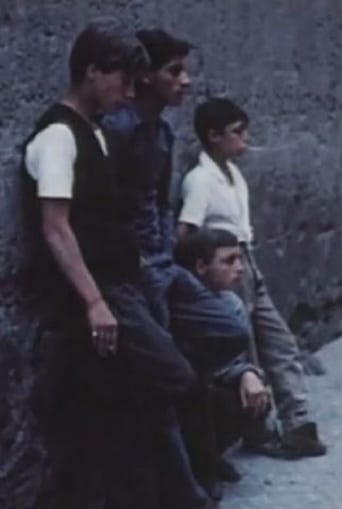
NRThe life, the problems, the hopes of the ragazzi of the suburbs of Rome. Ignored by the city, these young men spontaneously express their vitality, their violence, their willingness to put themselves at risk. They are at the center of "Ragazzi di vita", the first novel by Pier Paolo Pasolini, author of the text of this documentary.
The City’s Unknown
1958
NRThe life, the problems, the hopes of the ragazzi of the suburbs of Rome. Ignored by the city, these young men spontaneously express their vitality, their violence, their willingness to put themselves at risk. They are at the center of "Ragazzi di vita", the first novel by Pier Paolo Pasolini, author of the text of this documentary.
The City’s Unknown
1958
 NR
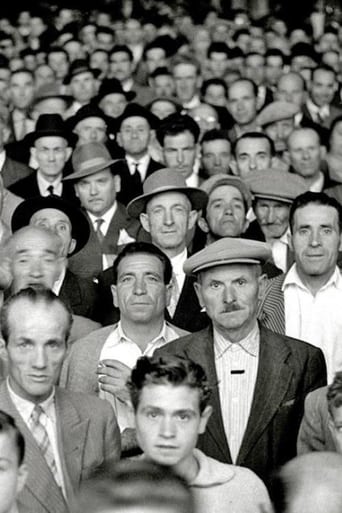
NRAn astonished crowd turns its face to the boldness of a young photographer in 1956, at the Puglia village festival.
Facce
2018
No synopsis available yet.
Happy Christmas
1964
 NR
NRA cinematic journey to discover, through previously unpublished documents and manuscripts, the world of writer and ethnographer Grazia Deledda, the first Italian woman and writer to win the Nobel Prize for Literature in 1926. A revolutionary author, she transcended the confines of male-dominated culture and asserted her creative path as an artist and a woman.
Grazia Deledda, the Revolutionary
2021
Two young militants in love try to link their ideals to their everyday life together. A reflection on the attempt to combine love, intimacy and revolution.
V. & V.
1969
The Italian unification, also known as Risorgimento, took place between 1815 and 1870. During this period, caricature was a privileged medium for political commentary. From Napoleon III to Garibaldi, no one escaped the caricaturists, who also resorted to drawing to talk about the new legal system, the emancipation of women or the freedom of the press.
Vecchio regno
1964
 6.7
6.7On a hot summer day, a group of boys of the Roman suburbs play and laugh in one of the many rivers that surround the city. The camera scrutinizes them, approaches them, reveals the gestures and glances, wraps them in a sort of visual dance, while the words of the commentary (entrusted to the poetic sensibility of Pier Paolo Pasolini) narrate the stories, desires, dreams, the future.
The Marshes' Chant
1961
 NR
NRNo synopsis available yet.
The Decision
1967
 5.5
5.5The industrial city of Brindisi is the setting for this film, the tension between the bright promises of the industrial world and the not-so-bright reality of a young worker, in one of Mangini's most emblematic works.
Tommaso
1965
5.5The industrial city of Brindisi is the setting for this film, the tension between the bright promises of the industrial world and the not-so-bright reality of a young worker, in one of Mangini's most emblematic works.
Tommaso
1965
 6.0
6.0Initial panorama of Brindisi, a city with a peasant tradition. The petrochemical, city within a city. Children in poor neighborhoods, workers' voices: the crisis, the layoffs, the need for the recommendations of the Christian Democrats to enter Montecatini. Wealthy men and women binge at the restaurant. Voices of agrarians, forced to leave the earth to make room for the petrochemical. A ballroom. In a puppet theater, a show is staged in which the worker is addressed as "starved". At a course for foremost workers, various compliant testimonies follow one another: Monteshell is a large industry, and no one has any criticisms against it. But another worker, elsewhere, with his face in the shadows, confesses that everyone is afraid to speak, skilled workers get the same pay as simple ones, 400 colleagues have been fired, union activists are "special supervised", and going on strike is a business. 35mm b/w
Brindisi '65
1966
 7.2
7.2Roman township of San Basilio: Fabio, 7 years old, in Italian a "character", is assigned to a differential class. How the family reacts, what the neighbors say, what the teachers, the principal, the psychologist of the elementary school think: the doubt is that there is no re-education of a child at stake, but the green light for social homologation.
The Bridle On The Neck
1974
 NR
NRA work commissioned by the Ministry of Labour to which Mangini brings an eloquence that transcends any propaganda ambition. It is an accurate portrait of a vision about a land of new highways and factories built on the grounds of shepherds and farmers.
Sardinia
1968
Vietnam will be free is a chamber film that tells of a war, of memory that fades, of a challenge against the passing of time. Two shoeboxes full of 6x6 photographic negatives, forgotten in an old wardrobe in the attic for over fifty years, have been unexpectedly rediscovered. In 1964-65 the directors Lino Del Fra and Cecilia Mangini lived for three months in North Vietnam at war with the U.S.A. to carry out inspections for a documentary film about the struggle of that people determined to conquer unity and independence. From the border with China to the border with the South, the US-based and actually occupied by the Americans, they explored the cities, ports, countries, rice fields, and war fronts. [...] (https://www.filmitalia.org/p.aspx?t=film&l=en&did=121956)
Le Vietnam sera libre
2018
 NR
NRA piece based on Mangini's photographs of a journey that would change her life: the one she took at the age of 25 to the pumice mines of Lipari, a lunar landscape displaying extreme working conditions that she portrayed in 46 images both beautiful and devastating.
Un viaggio a Lipari
2017
Series inspired by Pier Paolo Pasolini’s Comizi d’amore. This time, Italian people are confronted with though questions about sex before marriage, extramarital affairs and homosexuality.
Comizi d’amore ’80 - episode 2
1982
The core values of the Olympic Games are excellence, friendship and respect, with a view to build a better world by promoting sport. Exploring the history of the Games and the relation between sport and the building of a national identity, Mangini exposes the appropriation of these ideals by fascist movements, cultural imperialism and capitalism.
L’altra faccia del pallone
1972
NRBefore becoming a film critic, then a maker mainly of sharply engaged documentaries, usually in tandem with her late husband Lino Del Fra, Cécilia Mangini was a photographer. Taking pictures was something she did all her life, alongside whatever else she was working on. In 1965 Mangini and Del Fra went to war-torn Vietnam to make a film they never finished. More than half a century later, she returned to these images, moving and still, some of which she found again by accident.
Two Forgotten Boxes
2020
NRBefore becoming a film critic, then a maker mainly of sharply engaged documentaries, usually in tandem with her late husband Lino Del Fra, Cécilia Mangini was a photographer. Taking pictures was something she did all her life, alongside whatever else she was working on. In 1965 Mangini and Del Fra went to war-torn Vietnam to make a film they never finished. More than half a century later, she returned to these images, moving and still, some of which she found again by accident.
Two Forgotten Boxes
2020
Twenty years after Pier Paolo Pasolini’s Comizi d’amore, Cecilia Mangini and Lino Del Fra once again investigate what Italians think about sex and gender. They travel through the country and gather opinions and testimonies, resulting in a complex portrait of a society in-between progress and tradition.
Comizi d’amore ’80 - episode 1
1982
A reportage on the “popular walk of Vignola”, a non-competitive and popular race that challenged the rhetoric of competition and the myth of sport as discipline. The joyful interviews to the participants portray an Italy looking for a sense of community and deep social connection.
Dalla ciliegia al lambrusco (La camminata popolare di Vignola)
1973
A commission by the public company responsible for the Italian motorways on the theme of road safety. Irony and drama come together in the narration of the Grande Raccordo Anulare (ring road) of Rome.
Sicurezza Stradale, 1969 – Grande Raccordo Anulare
1964
Second part of the series Mangini dedicated to boxing as a possibility for the social rescue of young Italians. In the south, shepherds train by running after sheep and gyms are improvised. In Rome, young Roma people struggle against discrimination in the ring. In the north, a father trains his son so that he can achieve the victories the father missed.
Domani vincerò (secondo episodio)
1969
 NR
NRNo synopsis available yet.
Italia allo specchio: Sardegna
1968
 NR
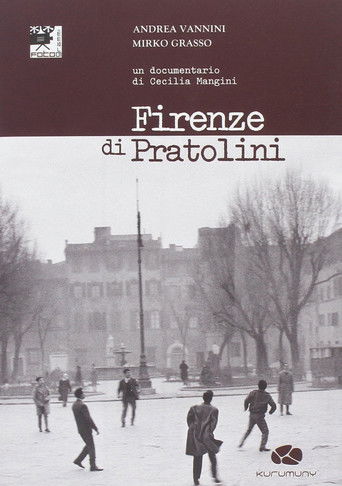
NRThe second film by Cecilia Mangini is based on the words of neo-realist writer Vasco Pratolini. It alternates between documentary and the reconstruction of autobiographical moments to paint an image of the Florence of his youth, and to show us his take on the effort of growing up and the risk of falling in love.
Firenze di Pratolini
1959
Third and last episode by Cecilia Mangini and Lino Del Fra in which they investigate what Italians think about sex and gender. Now, the questions focus on the notion of modesty and on the meaning given to the sacrament of marriage.
Comizi d’amore ’80 - episode 3
1982