

Directing
Michael Kloft
Born
1961-01-01 (65)
Place of birth
Bonn, Germany
Known for
Directing
Credits
38 titles
Known for
 NR
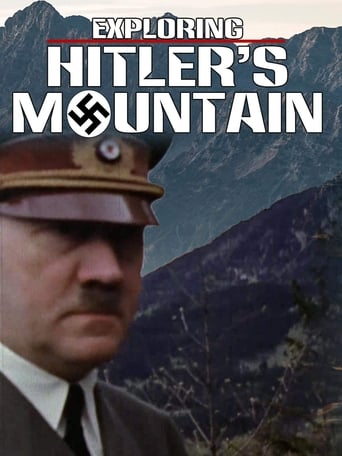
NRAdolf Hitler spent over 1,000 days on the Obersalzberg, his mountain holiday refuge near Berchtesgaden. It was there he made his decisions about war and destruction. The producers, through special permits, explore the abandoned concrete tunnels in search of the relics of history of Hitler’s mountain and to tell almost forgotten tales of the people who lived there, high up in the shadow of power.
Hitlers Berg - Vom Privathaus zur Machtzentrale
2006
 7.1
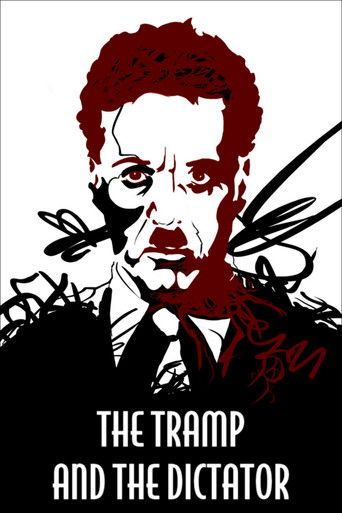
7.1A look at the parallel lives of Charlie Chaplin and Adolf Hitler and how they crossed with the creation of the film “The Great Dictator,” released in 1940.
The Tramp and the Dictator
2002
 NR
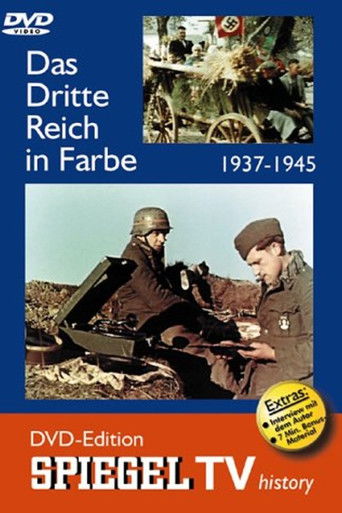
NRNo synopsis available yet.
Das Dritte Reich in Farbe
2020
 8.0
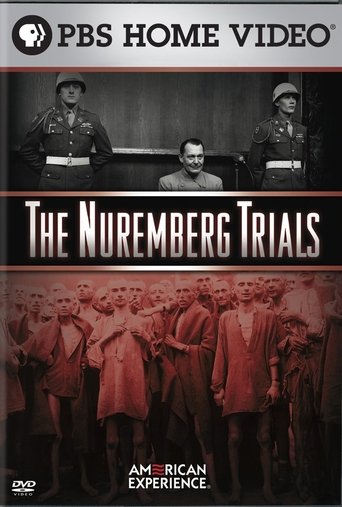
8.0One journalist described it as a chance "to see justice catch up with evil." On November 20, 1945, the twenty-two surviving representatives of the Nazi elite stood before an international military tribunal at the Palace of Justice in Nuremberg, Germany; they were charged with the systematic murder of millions of people. The ensuing trial pitted U.S. chief prosecutor and Supreme Court judge Robert Jackson against Hermann Göring, the former head of the Nazi air force, whom Adolf Hitler had once named to be his successor. Jackson hoped that the trial would make a statement that crimes against humanity would never again go unpunished. Proving the guilt of the defendants, however, was more difficult than Jackson anticipated. This American Experience production draws upon rare archival material and eyewitness accounts to recreate the dramatic tribunal that defines trial procedure for state criminals to this day.
The Nuremberg Trials
2006
 NR
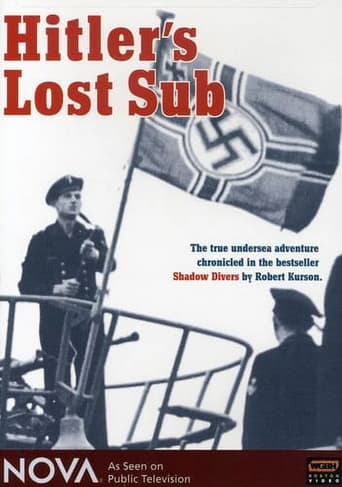
NRIn 1991, professional diver John Chatterton discovered a sunken German U-boat from World War II, lying undetected only 60 miles off the New Jersey shore, its unexploded torpedoes and the bodies of its crew still aboard. This two-hour special follows Chatterton and his dive partners in their dangerous quest to identify the missing U-boat, a pursuit that takes six years and costs three lives. The U-boat's history involves unusual coincidences and a startling twist of fate.
Hitler's Lost Sub
2000
 6.0
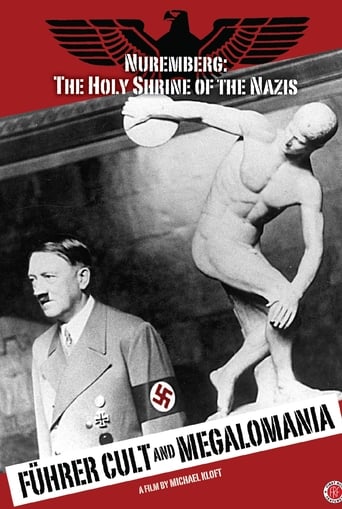
6.0By early in the twentieth century, Nuremberg was regarded as the most anti-Semitic city in Europe. By 1929, Hitler had decided to make Nuremberg the "City of the Party Rallies" and a symbol representing the greatness of the German Empire. Even today, it is possible to see signs in Nuremberg of the megalomaniac proportions that the system was to assume.
Führer Cult and Megalomania
2011
Film credits
Series credits
Behind the camera
NRAdolf Hitler spent over 1,000 days on the Obersalzberg, his mountain holiday refuge near Berchtesgaden. It was there he made his decisions about war and destruction. The producers, through special permits, explore the abandoned concrete tunnels in search of the relics of history of Hitler’s mountain and to tell almost forgotten tales of the people who lived there, high up in the shadow of power.
Hitlers Berg - Vom Privathaus zur Machtzentrale
2006
7.1A look at the parallel lives of Charlie Chaplin and Adolf Hitler and how they crossed with the creation of the film “The Great Dictator,” released in 1940.
The Tramp and the Dictator
2002
8.0One journalist described it as a chance "to see justice catch up with evil." On November 20, 1945, the twenty-two surviving representatives of the Nazi elite stood before an international military tribunal at the Palace of Justice in Nuremberg, Germany; they were charged with the systematic murder of millions of people. The ensuing trial pitted U.S. chief prosecutor and Supreme Court judge Robert Jackson against Hermann Göring, the former head of the Nazi air force, whom Adolf Hitler had once named to be his successor. Jackson hoped that the trial would make a statement that crimes against humanity would never again go unpunished. Proving the guilt of the defendants, however, was more difficult than Jackson anticipated. This American Experience production draws upon rare archival material and eyewitness accounts to recreate the dramatic tribunal that defines trial procedure for state criminals to this day.
The Nuremberg Trials
2006
8.0One journalist described it as a chance "to see justice catch up with evil." On November 20, 1945, the twenty-two surviving representatives of the Nazi elite stood before an international military tribunal at the Palace of Justice in Nuremberg, Germany; they were charged with the systematic murder of millions of people. The ensuing trial pitted U.S. chief prosecutor and Supreme Court judge Robert Jackson against Hermann Göring, the former head of the Nazi air force, whom Adolf Hitler had once named to be his successor. Jackson hoped that the trial would make a statement that crimes against humanity would never again go unpunished. Proving the guilt of the defendants, however, was more difficult than Jackson anticipated. This American Experience production draws upon rare archival material and eyewitness accounts to recreate the dramatic tribunal that defines trial procedure for state criminals to this day.
The Nuremberg Trials
2006
NRIn 1991, professional diver John Chatterton discovered a sunken German U-boat from World War II, lying undetected only 60 miles off the New Jersey shore, its unexploded torpedoes and the bodies of its crew still aboard. This two-hour special follows Chatterton and his dive partners in their dangerous quest to identify the missing U-boat, a pursuit that takes six years and costs three lives. The U-boat's history involves unusual coincidences and a startling twist of fate.
Hitler's Lost Sub
2000
6.0By early in the twentieth century, Nuremberg was regarded as the most anti-Semitic city in Europe. By 1929, Hitler had decided to make Nuremberg the "City of the Party Rallies" and a symbol representing the greatness of the German Empire. Even today, it is possible to see signs in Nuremberg of the megalomaniac proportions that the system was to assume.
Führer Cult and Megalomania
2011
 8.0
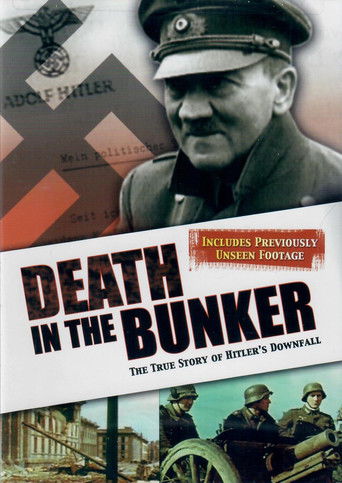
8.0Adolf Hitler spent the last ten days of his life in a bunker underneath the Chancellery of the Reich. Unwilling to face the consequences of defeat, the dictator ended his own life on April 30, 1945 in this fortified underground complex. Featuring exclusive interviews with the last survivor’s of Hitler’s inner circle and extensive archival footage, Death in the Bunker is an illuminating look at the Führer’s final decisions in preparation for his suicide.
Death in the Bunker: The True Story of Hitler's Downfall
2004
 7.2
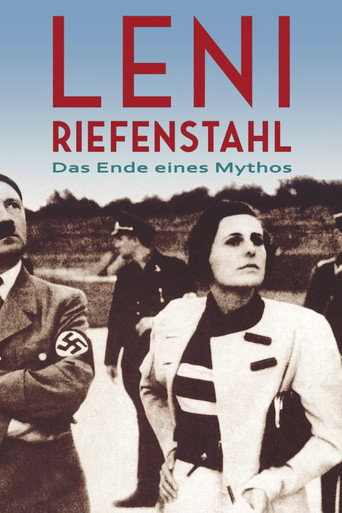
7.2Countless people around the world know the pictures from Leni Riefenstahl's films, even if they have not seen them in their entirety. The work of the German director has burned itself into the collective memory. Even decades after the end of the Nazi era, she showed no remorse and presented herself as an apolitical, naive follower of the Nazi criminal regime. Her artistic service for the cinema was always recognized. But book author Nina Gladitz shows after decades of research that Hitler's favorite filmmaker was not only a follower, but also a perpetrator during the Third Reich, who instrumentalized other filmmakers such as the brilliant cinematographer Willy Zielke in order to gain fame for herself.
Leni Riefenstahl - The End of a Myth
2020
7.2Countless people around the world know the pictures from Leni Riefenstahl's films, even if they have not seen them in their entirety. The work of the German director has burned itself into the collective memory. Even decades after the end of the Nazi era, she showed no remorse and presented herself as an apolitical, naive follower of the Nazi criminal regime. Her artistic service for the cinema was always recognized. But book author Nina Gladitz shows after decades of research that Hitler's favorite filmmaker was not only a follower, but also a perpetrator during the Third Reich, who instrumentalized other filmmakers such as the brilliant cinematographer Willy Zielke in order to gain fame for herself.
Leni Riefenstahl - The End of a Myth
2020
 NR
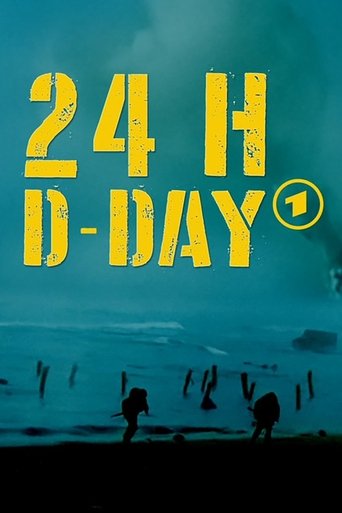
NRD-Day marks the starting point for the liberation of Western Europe from the grip of the Nazi yoke. On June 6th, 1944, Allied soldiers attack German positions at no less than five sectors of the beach in Normandy. The assault takes place from the sea and is considered the largest amphibious landing operation in history. This event now sees its 80th anniversary. But so close, so authentic, this battle has never been shown before. American and British cameramen are at the scene in landing boats, under fire at the beaches, and during the rescue of wounded soldiers. Their original footage, shot in black-and-white, was extensively restored and colourized for this documentary. The historically unique footage appears in motion picture quality. The war gets colour. And thereby a different impact. We look directly in the faces of those, Americans, Canadians, Britons, and Germans, who are often not older than 20. In “24h D-Day”, they tell about their D-Day, the day they never can forget.
24 h D-Day
2024
NRD-Day marks the starting point for the liberation of Western Europe from the grip of the Nazi yoke. On June 6th, 1944, Allied soldiers attack German positions at no less than five sectors of the beach in Normandy. The assault takes place from the sea and is considered the largest amphibious landing operation in history. This event now sees its 80th anniversary. But so close, so authentic, this battle has never been shown before. American and British cameramen are at the scene in landing boats, under fire at the beaches, and during the rescue of wounded soldiers. Their original footage, shot in black-and-white, was extensively restored and colourized for this documentary. The historically unique footage appears in motion picture quality. The war gets colour. And thereby a different impact. We look directly in the faces of those, Americans, Canadians, Britons, and Germans, who are often not older than 20. In “24h D-Day”, they tell about their D-Day, the day they never can forget.
24 h D-Day
2024
 NR
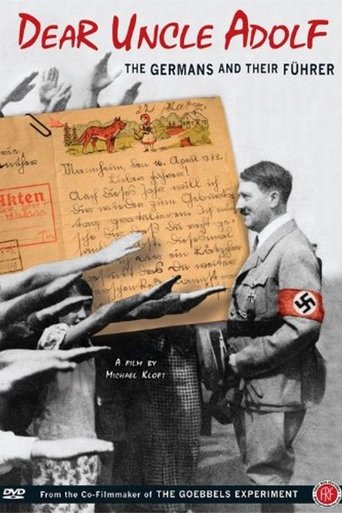
NRMore than any other historical documents, It is the personal private letters written by a people to "their" dictator that provide the most intimate glimpses of the history of the Third Reich. A treasure of more than 100,000 such letters were recently found, hidden in a secret Russian archive. The uncensored letters reveal the true feelings of the German people - their hopes, longings and fears; also love letters, declarations of loyalty, birthday wishes and the occasional word of protest. Like a seismograph, it mirrors the change in mood in Nazi Germany, providing a reflection of the German spirit in the years from 1932 to 1945. A.K.A. Dear Uncle Adolf.
Dear Uncle Adolf: The Germans and Their Führer
2010
His name is synonymous with political propaganda. His legacy is one of maniacal cruelty and unwavering devotion to the Nazi cause. He has been called "the genius of spin" and "Reich Liar-General." The Man Behind Hitler, a portrait of Joseph Goebbels, delivered in words taken directly from the diaries he kept from 1924, when he joined the Nazi party, until his suicide in 1945, read by actor Kenneth Branagh. Featuring never-before-seen footage, this 90-minute documentary from filmmakers Lutz Hachmeister and Michael Kloft offers an insider's view of the rise of the Nazi party.
The Man Behind Hitler
2006
 8.0
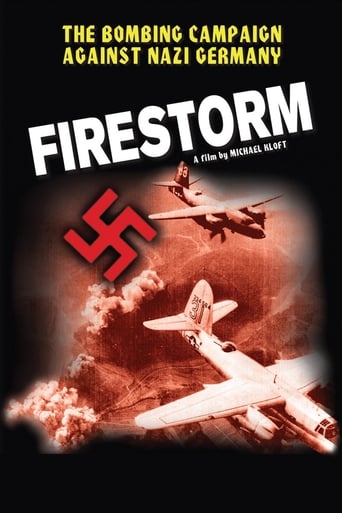
8.0After suffering heavy losses of aircraft during attacks on German factories, Winston Churchill orders cities to be targeted in order to smash German morale and reduce the number of workers available for the Nazi war machine. Hundreds of thousands of German civilians are killed as incendiary bombs turn the center of cities like Hamburg and Dresden into tornados of fire. Sixty years later, a new debate is underway over the reasons for this lethal bombing campaign. Were these relentless aerial attacks on German cities, which killed so many and destroyed so much, a necessary tactic in the war against Hitler? Or was it an act of revenge by the British and Americans? Using rare film footage (much of it in color) and stirring interviews with historians, former bomber pilots and survivors of the destruction, this extraordinary film brings to light the devastating allied air campaign against Nazi Germany.
Firestorm
2003
A documentary about the political entanglement between the Wagner Family and the leadership of the Third Reich.
Hitler und der Wagner Clan
2013
Even high Nazi leaders like Joseph Goebbels and Hermann Göring were almost contemptuous of this party comrad, and yet he was one of the most influential figures in the Third Reich: Julius Streicher, publisher of the anti-Semitic weekly "Der Stürmer", responsible for the worst propaganda and infamous for his corrupt and violent regime as Gauleiter of Franconia. By the Allies he was considered a symbol of Nazi hatred of the Jews. In 1946 he was sentenced to death in Nuremberg and executed.
Der Judenhetzer – Julius Streicher und "Der Stürmer"
2001
Even high Nazi leaders like Joseph Goebbels and Hermann Göring were almost contemptuous of this party comrad, and yet he was one of the most influential figures in the Third Reich: Julius Streicher, publisher of the anti-Semitic weekly "Der Stürmer", responsible for the worst propaganda and infamous for his corrupt and violent regime as Gauleiter of Franconia. By the Allies he was considered a symbol of Nazi hatred of the Jews. In 1946 he was sentenced to death in Nuremberg and executed.
Der Judenhetzer – Julius Streicher und "Der Stürmer"
2001
 6.0
6.0Born into a Bavarian bourgeois family, Heinrich Himmler became the driving force behind the indescribable crimes that made the Nazi regime so unique in modern history.
Heinrich Himmler: Portrait of a Mass Murderer
2008
6.0Born into a Bavarian bourgeois family, Heinrich Himmler became the driving force behind the indescribable crimes that made the Nazi regime so unique in modern history.
Heinrich Himmler: Portrait of a Mass Murderer
2008
 7.2
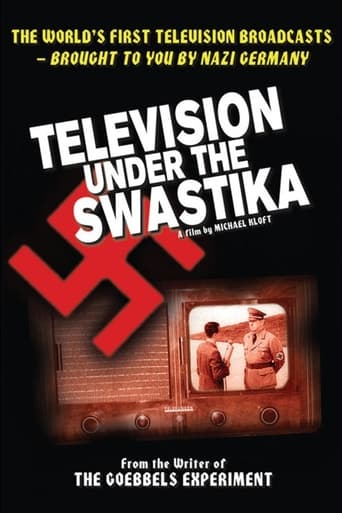
7.2A history of Nazi television programming and technology, from 1935 to 1944.
Television Under the Swastika
1999
 7.0
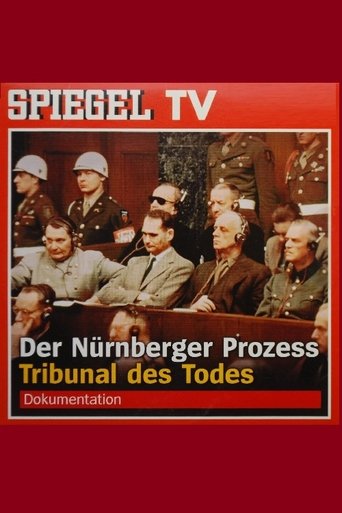
7.0When the Allies realized the full extent of the crimes of the Third Reich at the end of the Second World War, it was clear that they would not be satisfied with a simple capitulation. Those responsible should not get away with it. The result of these deliberations was the International Military Tribunal, whose proceedings have gone down in history as the "Nuremberg Trial" after the venue.
Der Nürnberger Prozess - Tribunal des Todes
2009
 6.2
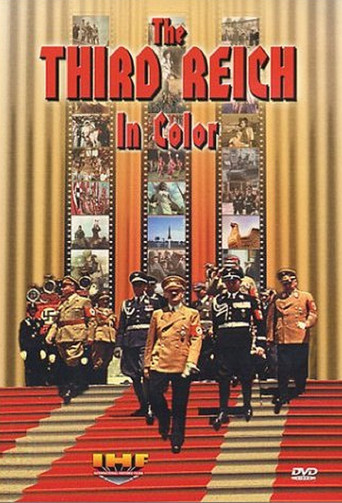
6.2This remarkable trove of color footage, assembled from far-flung private and state collections, presents Hitler's Europe as never seen before. Amateur film enthusiasts - soldiers, tourists, Hitler's own pilot, even Hitler's mistress, Eva Braun - began experimenting with color film in the late 1930s, their camera eye recording the Third Reich from every angle. Some of this film was only recently uncovered in former Soviet-bloc archives, hidden for almost 60 years; all of it, thanks to digital technology, has been newly transferred to video with surprising clarity. (This documentary was produced with two different narratives, both an English and German language version.)
The Third Reich In Color
1998
 6.5
6.5No synopsis available yet.
Innenansichten - Deutschland 1937
2012
No synopsis available yet.
Inside Nazi Germany
2012
No synopsis available yet.
Inside Nazi Germany
2012
 NR
NRAfter the Berlin Wall fell, hidden GDR and Swiss Cold War bunkers surfaced. Author Michael Kloft tours preserved Stasi and NVA shelters, including sealed command centers for Honecker and Mielke, and abandoned missile sites. In Switzerland, “false chalets” and the alpine “Reduit National” fortress reveal underground defenses once kept secret. With exclusive access to military command bunkers, the film exposes relics of a vanished era’s paranoia.
Die geheimen Bunker der DDR und der Schweiz
2013
The War in Color draws on unique color material from German, British, Russian and American archives. For the first time, 35mm color footage of the war in France in 1940, unknown images from the Norway campaign and impressive scenes from the advance in the Soviet Union in 1941/42 are shown here. The whole madness of the Second World War comes frighteningly close with these color recordings, in a way that is hardly possible from the stories of those involved at the time.
The Second World War in Color
1999
No synopsis available yet.
Ruhm in der Niederlage - John Ford und der Zweite Weltkrieg
1998
No synopsis available yet.
Ruhm in der Niederlage - John Ford und der Zweite Weltkrieg
1998
No synopsis available yet.
Hitler privat - Das Leben des Diktators
2010
The second man in the Nazi regime tried in vain to avoid punishment at the Nuremberg trials. On November 20, 1945, an international military tribunal began the trial of twenty-one leaders of the Third Reich. The tribunal indicted fanatical ideologues and ruthless ministers, shameless propagandists and merciless generals. The main figure in the trial was to be Reich Marshal and second-in-command of the Nazi hierarchy Hermann Göring. The first part of the documentary film shows the preparation of the indictment, the gathering of evidence, and at the same time an examination of Göring's life, his career as a soldier and politician. The whole world was waiting for the start of the trial, which was to culminate in the struggle between justice and evil.
Görings letzte Schlacht - Das Tribunal von Nürnberg
2006
No synopsis available yet.
Führerkult und Größenwahn
2011
 NR
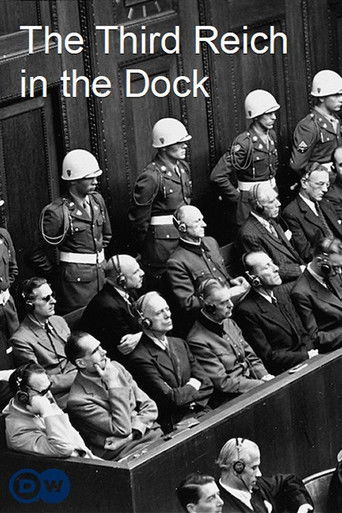
NRThe Nuremberg trials started in 1945 and marked a milestone in the establishment of international law. The images of high-ranking Nazis in the dock are seared into our collective memory. The Nuremberg trials were a series of military tribunals staged by the Allies after World War Two. The first and best-known trial ended in October 1946 with the sentencing to death of 12 high-ranking Nazis.
The Third Reich in the Dock
2020
NRThe Nuremberg trials started in 1945 and marked a milestone in the establishment of international law. The images of high-ranking Nazis in the dock are seared into our collective memory. The Nuremberg trials were a series of military tribunals staged by the Allies after World War Two. The first and best-known trial ended in October 1946 with the sentencing to death of 12 high-ranking Nazis.
The Third Reich in the Dock
2020
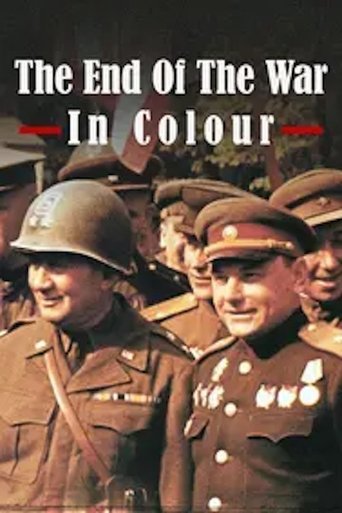
The closing months and weeks of the Second World War are documented in 16mm colour footage.
The End of the War in Colour
—