
Directing
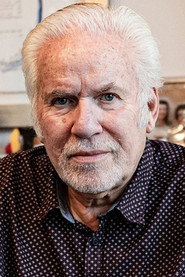
Willy Lindwer
Born
1946-03-18 (80)
Known for
Directing
Credits
40 titles
Wolf "Willy" Lindwer (born 18 March 1946) is a Dutch documentary film producer, director, photographer and author. He is best known for his films on the Holocaust, Israel and the Middle East, Judaism and Christianity.
Known for
 8.5
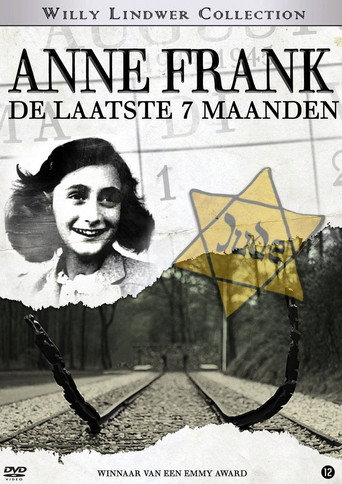
Anne Frank's surviving friends tell the horrifying story that begins where her famous diary leaves off, and for the first time the concentration camp experiences of Anne and her family are recounted. Among the eyewitnesses is Anne Frank's closest friend, Hannah Pick, identified as 'Lies Goosens' in Anne's diary. She was filmed at several locations where she had been with Anne, including the Bergen-Belsen concentration camp.
The Last Seven Months of Anne Frank
1988
Rebellious City is a documentary about the Provo movement and the city of Amsterdam in the sixties.
Rebellious City
2015
 8.0
It tells the unknown story of the Amsterdam city tram that collaborated with the Nazis and deported tens of thousands of Jews to the train stations on their way to the death camps. We experience their last tram ride.
Lost City
2024
 NR
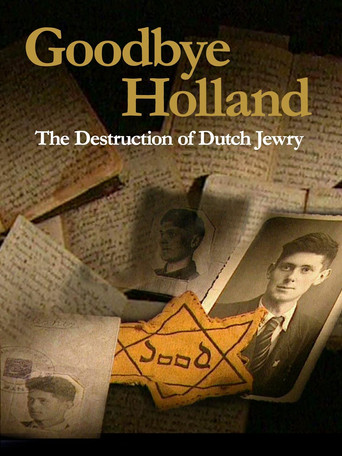
Shocking film, uncovering the painful truth about indifference to, and collaboration with the Nazis in WWII, when 75 percent of the Jews in the Netherlands were annihilated. This investigation into the dark past explains why Anne Frank and 100,000 other Dutch Jews were deported by Dutch officials. Why did the Dutch people allow 78% of the Jews to be deported?
Goodbye Holland: The Destruction of Dutch Jewry
2004
 NR
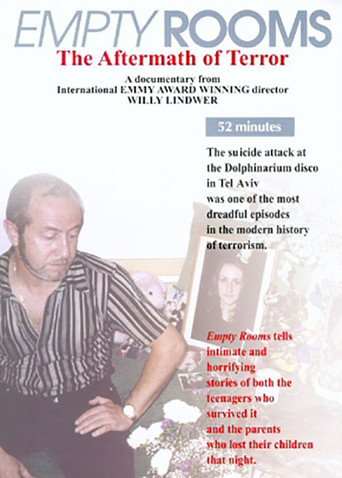
Dutch filmmaker Willy Lindwer and Russian author David Gurevich document the aftermath of the June 1, 2001 suicide bombing of Tel Aviv's Dolphinarium Disco, which killed 21 and wounded 105, many of them teenagers and many recent immigrants from post-Soviet Union states. The bulk of the film consists of the interviews with survivors and the victims' parents, all shot around the Tel Aviv area, including the location outside the Dolphinarium proper. It also makes extensive use of the footage of the night of the disaster and the home videos left behind by the victims.
Empty Rooms: The Aftermath of Terror
2002
A documentary about Jewish war orphans who were raised by Christian families. The film includes the gripping story of Halinka, a baby born in the Warsaw Ghetto whose parents threw her over the Ghetto wall where she was caught by a Polish policeman, and other remarkable stories of hidden children.
Child in Two Worlds: The Story of Jewish War Orphans
1993
Behind the camera
8.5Anne Frank's surviving friends tell the horrifying story that begins where her famous diary leaves off, and for the first time the concentration camp experiences of Anne and her family are recounted. Among the eyewitnesses is Anne Frank's closest friend, Hannah Pick, identified as 'Lies Goosens' in Anne's diary. She was filmed at several locations where she had been with Anne, including the Bergen-Belsen concentration camp.
The Last Seven Months of Anne Frank
1988
Rebellious City is a documentary about the Provo movement and the city of Amsterdam in the sixties.
Rebellious City
2015
Rebellious City is a documentary about the Provo movement and the city of Amsterdam in the sixties.
Rebellious City
2015
8.0It tells the unknown story of the Amsterdam city tram that collaborated with the Nazis and deported tens of thousands of Jews to the train stations on their way to the death camps. We experience their last tram ride.
Lost City
2024
8.0It tells the unknown story of the Amsterdam city tram that collaborated with the Nazis and deported tens of thousands of Jews to the train stations on their way to the death camps. We experience their last tram ride.
Lost City
2024
NRShocking film, uncovering the painful truth about indifference to, and collaboration with the Nazis in WWII, when 75 percent of the Jews in the Netherlands were annihilated. This investigation into the dark past explains why Anne Frank and 100,000 other Dutch Jews were deported by Dutch officials. Why did the Dutch people allow 78% of the Jews to be deported?
Goodbye Holland: The Destruction of Dutch Jewry
2004
NRDutch filmmaker Willy Lindwer and Russian author David Gurevich document the aftermath of the June 1, 2001 suicide bombing of Tel Aviv's Dolphinarium Disco, which killed 21 and wounded 105, many of them teenagers and many recent immigrants from post-Soviet Union states. The bulk of the film consists of the interviews with survivors and the victims' parents, all shot around the Tel Aviv area, including the location outside the Dolphinarium proper. It also makes extensive use of the footage of the night of the disaster and the home videos left behind by the victims.
Empty Rooms: The Aftermath of Terror
2002
A documentary about Jewish war orphans who were raised by Christian families. The film includes the gripping story of Halinka, a baby born in the Warsaw Ghetto whose parents threw her over the Ghetto wall where she was caught by a Polish policeman, and other remarkable stories of hidden children.
Child in Two Worlds: The Story of Jewish War Orphans
1993
Filmed in Botswana, about education in the Kalahari Desert and the Okavango Delta.
People in Development: I am Their Eye
1981
The first feature-length documentary about Israel's prime minister, murdered in 1995. His widow, Leah Rabin, tells of war and peace, duty and family, the life of Yitzhak Rabin and the story of Israel. The film was shot on location in the Middle East and the United States, and includes unique archival material. It is an intimate portrait of an impressive leader, profiled by the people who knew him best, those who loved him and those who fought him, with exclusive appearances by Leah Rabin, Yasser Arafat, Simon Peres, Henry Kissinger, Bill Clinton, General Uzi Narkis and many others.
Yitzhak Rabin: Warrior-Peacemaker
1998
The dramatic story of Mr. Abraham Ascher and Professor David Cohen, the leaders of the Jewish community of Amsterdam. They became the heads of the Jewish Council in 1941 and also an instrument in the hands of the Nazis and their murderous policy in deporting the Dutch Jews.
The Fatal Dilemma: The Jewish Council of Amsterdam 1941-1943
1995
In this documentary, the sole surviving member of the Jewish high command looks back on the Warsaw Ghetto revolt, a unique event in Jewish as well as non-Jewish history: for the first time the Jews took up arms against the Nazis. In 1943 the remaining 50,000 Jews in the Warsaw ghetto realized that there was no hope that any of them would survive the holocaust. Dr. Marek Edelman, who never left Poland, is now a cardiologist in Lodz where in the 1980s he played a leading role in the then underground trade union Solidarity.
The Lonely Struggle: Marek Edelman, Last Hero of the 1943 Warsaw Ghetto Uprising
1988
Simon Wiesenthal, the world's most famous Nazi hunter, tells his life story for the first time: his youth in the Ukraine, his World War II experiences in various concentration camps and the significance of his work in light of today's growing neo-Nazi movement in Europe.
Simon Wiesenthal: Freedom is Not a Gift from Heaven
1994
Mr. Israel, The Shimon Peres Story, produced in 2008, tells the compelling history of the State of Israel through the eyes of Israel's octogenarian president who has been forging Israel's destiny since its founding in 1948.
Mr. Israel, The Shimon Peres Story
2008
 NR
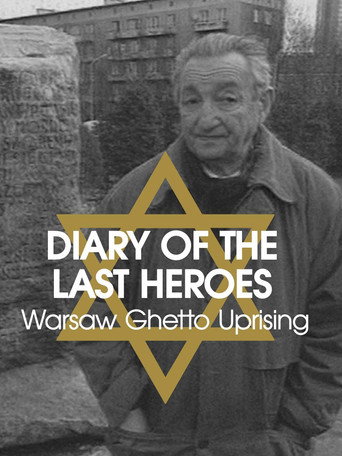
In this historical documentary, the 5 surviving members of the Jewish high command tell in details the gripping story of the Warsaw Ghetto revolt, a unique event in Jewish as well as non-Jewish history. For the first time the Jews took up arms against the Nazies. In 1943 the remaining 50,000 Jews in the Warsaw ghetto realised that there was no hope that any of them would survive the holocaust.
Diary of the Last Heroes: The Warsaw Ghetto Uprising 1943
1993
Produced by Emmy Award-winner Willy Lindwer, this three-volume program examines important events and locations in Christian history, and traces the development of a community that would mark the beginning of Christianity. Delving into 2,000 years of the religion's history, viewers explore Christianity's roots in Bethelem, Jerusalem and the Sea of Galilee, as well as look at the role of Christians in modern society.
Miracle of Faith: 2000 Years Christian Heritage in The Holy Land
1999
A film about the Ashkenazi Jewish Community of Amsterdam, from 1735 until 1985.
The Jews and Their Mokum
1985
In Camp of Hope and Despair, Willy Lindwer documents the tragic history of this infamous site. He sought out some of the few survivors of the camp in the Netherlands, Germany, Israel and the United States. Many of them tell their story for the first time.
Camp of Hope and Despair: Witnesses of concentration camp Westerbork, 1939-1945
1990
Stuart Eizenstat, Undersecretary of State of the United States during the Clinton administration, initiated a wide ranging investigation into the role of the neutral countries during the Second World War. His first 'Eizenstat report', that was published in may 1997 accused Switzerland of having assisted in prolonging the war by its serving as a banker for the Nazi regime. This report caused worldwide upheaval on the role of Switzerland as a neutral country.
Stuart Eizenstat: The Nazi Gold Reports
1998
Information and Communication Technology (ICT) is revolutionizing our society. One cannot think of life without computers, the Internet, satellites and mobile phones. They are turning our world into a global village. One continent is in danger of being left out of this digital revolution: Africa, a continent were peace, security and poverty reduction are amongst the complex issues governments are struggling with. We traveled to four countries in Africa (Rwanda, Uganda, Ethiopia and Ghana) to examine the different approaches and the attempts to bridge the internal and the international digital divide.
Africa Goes Digital: The Building of an Information Society
2005
A short film about the famous Dutch sculptor of the early 20th century.
The Art of Joseph Mendes da Costa
1977
The documentary tells the moving story of the ruined life of Manja Croiset, born in Amsterdam in 1946, and her lifelong journey through psychiatry. Manja is a second generation Dutch Jewish Holocaust survivor and is in therapy since she was 16 years of age. Manja's problem is never understood. She became a chronically ill psychiatric patient, and spent many years in psychiatric hospitals, was 'drugged', got electroschocks, was treated with LSD and uses her lifelong medication. She is constantly living with fears and nightmares. What went wrong at such a young age? Was ever asked for a cause, did she ever had an adequate treatment?
Manja, a life behind invisable bars
2013
About the Turkana and Boran tribes in Kenya. Produced in collaboration with the FAO, the Food and Agriculture Organization of the United Nations.
People in Development: Food for the Future
1980
A film about Jewish life in the Dutch provinces before WWII.
I am from the Mediene
1984
This film tells the incredible story of the unique cooperation during WWII of Arnold Douwes, a Christian, and the Jewish Max Leons. Together they saved hundreds of Jewish children in the eastern part of the Netherlands between 1942 and 1944. Mr. Douwes was awarded with the Yad Vashem medal.
Saved for Life
1997
Film about people in Cameroon that have no access to finance. The basic aim is to support the socio-economic development of groups. This is put into practice both in the form of financial assistance and in the form of technical assistance, to stimulate financial self-reliance and to create a sustainable civil society. The film shows this unique approach in various parts of Cameroon including a fascinating sequence with the Pygmy in the Eastern part of Cameroon.
Cameroon: Working on Credit
2002
About environmental problems in Senegal, Ghana, Burkina Faso and Ivory Coast. Produced in collaboration with UNEP, the United Nations Environment Program.
People in Development: The Breaking Chain
1983
A film about the Dutch National Ballet and its three world famous choreographers.
Live-Life
1979
The first documentary about the life and achievements of Teddy Kollek, mayor of Jerusalem for 28 years (1965 - 1993). Kollek tells his fascinating life story from his youth in Vienna to his active involvement in the creation and development of the State of Israel, especially the establishment of close ties with the U.S. The documentary profiles a unique man, whose passion and determination made Jerusalem what it is today.
Teddy Kollek: From Vienna to Jerusalem
1994
Film commissioned by the Portuguese Jewish Community of Amsterdam.
Esnoga: The Portuguese Jewish Community of Amsterdam
1988
A shocking documentary about the heroism of a handful of eye witnesses who brought the first devastating reports about the Nazi atrocities in the concentration camps to the West, only to find a cold shoulder, indifference, and even obstruction in London and Washington. The film contains gripping interviews with the famous Jan Karski (his last) and Gerhart Riegner.
Messengers Without an Audience
2003
The film is based on the book In Memoriam by Guus Luijters. The gripping film Remembering a Murdered Child tells the story of 9 anonymous Dutch children who were deported from the Netherlands and murdered.
Remembering a Murdered Child
2012
A moving short documentary film about the story of the Dutch painter Max Bueno de Mesquita and his survival of seven concentration camps. The film shows a series of dramatic paintings made by Max Bueno de Mesquita during his therapy to cure him from Concentration Camp-Syndrome.
What have they done to our girls?: The story of the painter Max Bueno de Mesquita
1977
 NR
The fascinating story of Hasidism and Jewish mysticism in Israel, featuring rarely seen footage inside a world unknown to many people.
D'vekut: Hasidism and Jewish Mysticism
2000
1.5 Million Jewish children were killed during the Holocaust. Many of those who survived were traumatized as the war changed their lives dramatically. This film tells the story of children during the Holocaust, some hidden and some survivors of concentration camps and their post-war traumatic experiences. A gripping account of 8 orphan child survivors: Itta Ben Haiem-Keller, Shewach Weiss, David de Levita, Haim Dasberg, Ruth Tatarko, Channa Cohen Harounoff-de Bock, Rachel Hollander and Haim Peles-Vleeschhouwer.
Children of the War
1995
Eleven minutes of rare film footage of a Jewish wedding that took place in Nazi-occupied Amsterdam in 1942 was recently discovered and entrusted to Willy Lindwer to produce this film. This documentary tells the touching story of the ill-fated couple and many of the wedding guests. Only a handful survived the war, one of whom was an 8-year old boy who attended the wedding with his parents. He relates his feelings on seeing them and the others again after so many years.
Married with a Star: A Jewish Wedding in Amsterdam in 1942
1991
Filmmaker Willy Lindwer traveled with his father Berl Nuchim and his daughter Michal to Galicia (now Poland & Ukraine) to retrace the route his father had taken six decades earlier, escaping from he Nazis and to see how the area and its inhabitants had changed. This film contains unique historic footage of pre-war life in the shtetls.
Return to my Shtetl Delatyn
1992
This film shows 16 moving interviews with Dutch non-Jewish citizens who maintained their position and helped the Nazis. The film also includes five interviews with Dutch Jewish survivors of the Holocaust. The Nazi's aim was to murder all Jews. In order to achieve this goal they were able to gain much assistance from the local populations throughout Europe. That happened also in Holland. Dutch police, civil servants, tram and train drivers and many others, all ordinary people, turned out to be of great help for the Nazi's. In this film a series of gripping interviews are shown with ordinary Dutch citizens who cooperated with the Nazi's by simply doing 'their job'. Most of them were no anti-Semites per se, nor pro German, they only 'did their duty'. Also Jewish survivors give their testimonies.
They did their Duty
2000
Presented and narrated by James Mason, the world famous actor and UN ambassador. A film about the fate of Afghan refugees in Pakistan. Film produced in collaboration with UNHCR, the United Nations High Commissioner for Refugees.
House Without Foundation
1984