
Sound
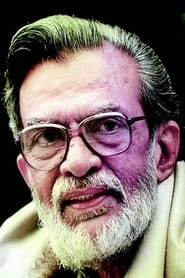
B.V. Karanth
Born — Died
1929-09-19 — 2002-09-01
Place of birth
Manchi, Karnataka, India
Known for
Sound
Credits
9 titles
Babukodi Venkataramana Karanth (19 September 1929 – 1 September 2002) widely known as B. V. Karanth was an Indian film director, playwright, actor, screenwriter, composer, and dramatist known for his works in the Kannada theatre, Kannada cinema, and Hindi cinema. One of the pioneers of the Parallel Cinema, Karanth was an alumnus of the National School of Drama (1962) and later, its director. He received the Sangeet Natak Akademi Award (1976), six National Film Awards, and the civilian honor Padma Shri for his contributions towards the field of art.
Known for
 10.0
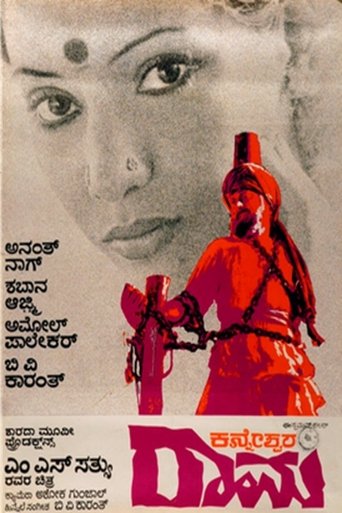
10.0Set in 1920s India, the story follows Kanneshwara Rama, a defiant peasant who becomes a legendary outlaw after confronting local injustice. After a prison stint where he encounters Gandhi’s followers, he joins and eventually leads a group of bandits, becoming a Robin Hood-like figure who aids the poor and challenges feudal authority. His journey is complicated by his relationship with Malli, a former bandit’s mistress, and his growing ambition to establish his own principality.
Kanneshwara Rama
1977
 6.6
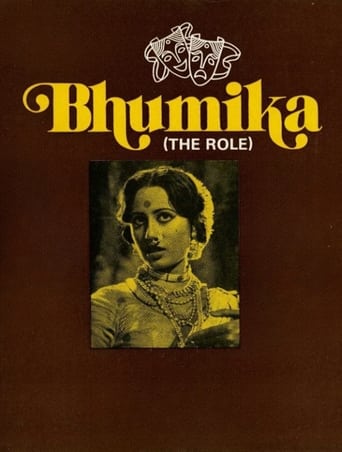
6.6In a world that both glamorizes and patronizes her, a successful film star begins to unravel under the weight of the roles imposed upon her, drifting between studios and her personal life as she spirals into an identity crisis.
Bhumika
1977
 8.0
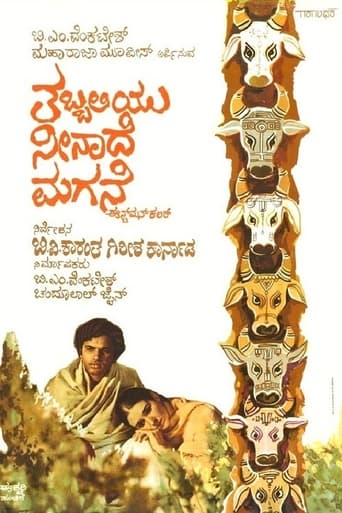
8.0The movie explores the cultural problems experienced by an American woman, newly married to an Indian, adjusting to Indian norms and customs. It depicts a modern man who studies agriculture in the United States, returns to India with an American wife with their different views. The theme is one alienation from the fellow human beings.
Tabbaliyu Neenade Magane
1977
 7.0
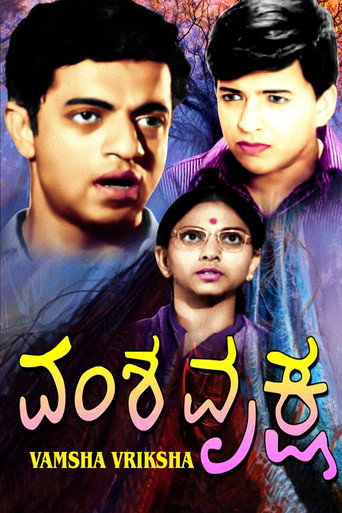
7.0Through the story of a young widow who is devoted to her father-in-law but also desires to remarry the film portrays evolving Indian attitudes towards women's roles in society.
Vamsha Vriksha
1971
 8.0
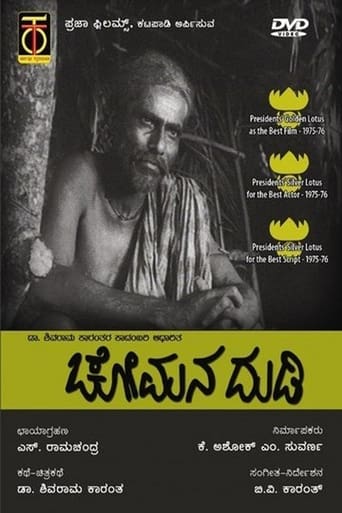
8.0Choma is an untouchable bonded-labourer in a village who is working along with his family for a landlord, as he belongs to a backward class. Due to his social status, he is not allowed to till his own land, something that he desires most. Though he managed to rear a pair of bullocks that he found straying in the forest, he cannot use them to till the land. He comes in contact of Christian missionaries who try to convert him giving him the lure of the land, but Choma does not want to let go of his faith. He releases the fury that fate has beset on him, by beating his drum.
Chomana Dudi
1975
 NR
NR1987 Kannada political drama film directed and co-produced by Krishna Masadi and is based on the novel written by the acclaimed writer U. R. Ananthamurthy. The film starred Anant Nag in the lead role along with a host of real-time politicians like J. H. Patel, D. B. Chandre Gowda, M. P. Prakash and B. K. Chandrashekar in the key roles.[1] Other pivotal roles were played by B. V. Karanth, M. Bhaktavatsala, Chandrashekhara Kambara, Archana and Bhargavi Narayan. The film's score and songs were composed by Vijaya Bhaskar. The film upon release was critically acclaimed and won multiple awards at the Karnataka State Film Awards for the year 1987–88.
Avasthe
1987
Film credits
1970s · 4 titles
10.0Set in 1920s India, the story follows Kanneshwara Rama, a defiant peasant who becomes a legendary outlaw after confronting local injustice. After a prison stint where he encounters Gandhi’s followers, he joins and eventually leads a group of bandits, becoming a Robin Hood-like figure who aids the poor and challenges feudal authority. His journey is complicated by his relationship with Malli, a former bandit’s mistress, and his growing ambition to establish his own principality.
Kanneshwara Rama
1977
6.6In a world that both glamorizes and patronizes her, a successful film star begins to unravel under the weight of the roles imposed upon her, drifting between studios and her personal life as she spirals into an identity crisis.
Bhumika
1977
7.0Through the story of a young widow who is devoted to her father-in-law but also desires to remarry the film portrays evolving Indian attitudes towards women's roles in society.
Vamsha Vriksha
1971
 8.0
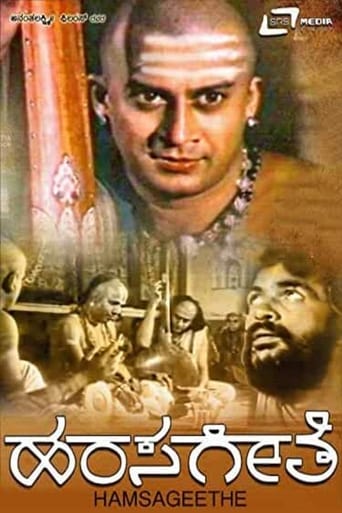
8.0Venkatasubbaiyya's master asks him to compose a musical masterpiece before his death. However, Venkatasubbaiyya's failure to handle fame lands him in trouble.
Hamsageethe
1975
Behind the camera
8.0The movie explores the cultural problems experienced by an American woman, newly married to an Indian, adjusting to Indian norms and customs. It depicts a modern man who studies agriculture in the United States, returns to India with an American wife with their different views. The theme is one alienation from the fellow human beings.
Tabbaliyu Neenade Magane
1977
8.0The movie explores the cultural problems experienced by an American woman, newly married to an Indian, adjusting to Indian norms and customs. It depicts a modern man who studies agriculture in the United States, returns to India with an American wife with their different views. The theme is one alienation from the fellow human beings.
Tabbaliyu Neenade Magane
1977
7.0Through the story of a young widow who is devoted to her father-in-law but also desires to remarry the film portrays evolving Indian attitudes towards women's roles in society.
Vamsha Vriksha
1971
8.0Choma is an untouchable bonded-labourer in a village who is working along with his family for a landlord, as he belongs to a backward class. Due to his social status, he is not allowed to till his own land, something that he desires most. Though he managed to rear a pair of bullocks that he found straying in the forest, he cannot use them to till the land. He comes in contact of Christian missionaries who try to convert him giving him the lure of the land, but Choma does not want to let go of his faith. He releases the fury that fate has beset on him, by beating his drum.
Chomana Dudi
1975