
Known for
 8.6
No synopsis available yet.
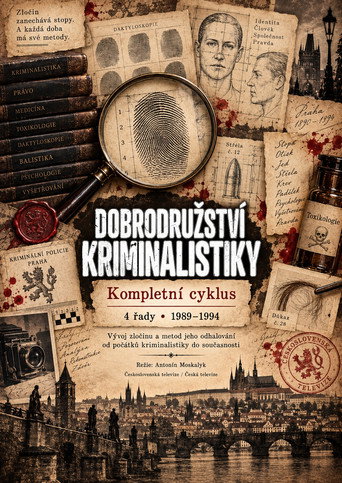
Dobrodružství kriminalistiky
1989
 8.0
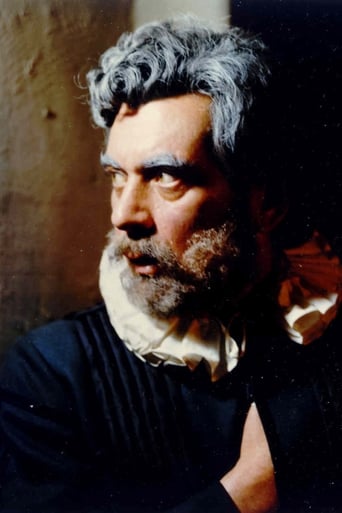
Series about the life of Renaissance anatomist, scholar and politic Johannes Jessenius. Already legendary series today, was produced by Czechoslovak Television Bratislava, directed by Slovak director Miroslav Luther in the first half of 80's in Barrandov Studios in Prague. The story and screenplay of the series wrote Czech writer Vladimír Körner. Five-episodes epic historical narration is a biographical story of distinguished Renaissance scholar, anatomist and politic of Slovak origin, Johannes Jessenius (Ján Jesenský, 1566–1621). It displays his life from the first studies and successes. In 1594 he became professor of surgery and anatomy on Wittenberg University, which he had attended years before. From that moment, his life went through social and personal wins and losses, to the sad end on the Prague Old Town Square gallows, among 27 noblemen, knights and burgenses, after lose Bohemian Revolt in 1621. His destiny was coupled with key events of Czech history in the break of 16th and 17th century, when Renaissance and European humanism slowly fade out.
The Physician of a Dying Time
1984
 NR
No synopsis available yet.
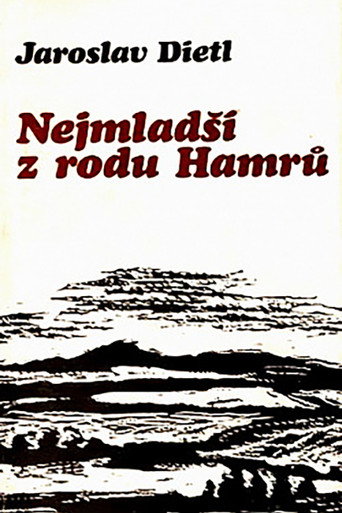
Nejmladší z rodu Hamrů
1975
 8.0
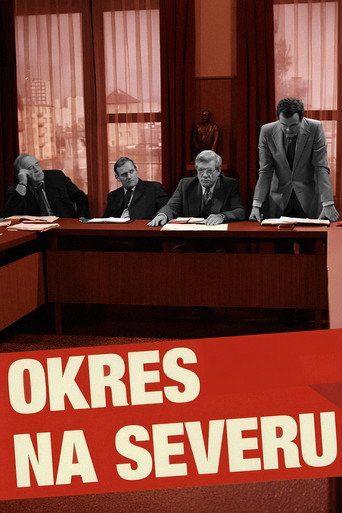
Okres na severu is a Czechoslovak/Czech TV series filmed by Evžen Sokolovský in 1981.
Okres na severu
1981
No synopsis available yet.
Had z ráje
1981
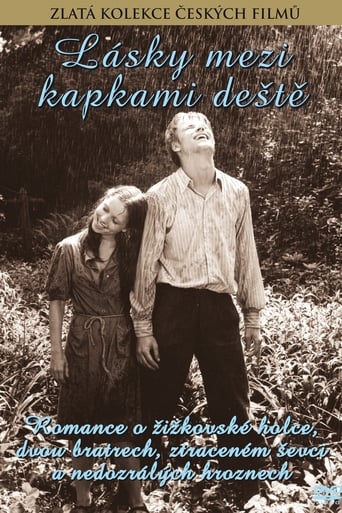 6.4
Set in Prague during the years leading up to World War II, this family saga tells the story of a cobbler named Vincenc Bursik (Vladimir Mensik), who uproots his clan from the country to the city, only to suffer the loss of his wife and the failure of his shoe business within months. When his daughter moves away to go live with a wealthy businessman as his mistress, Vincenc is left to take care of his two sons, who spend their days in a secret garden vying for the affections of a teenage girl.
Love Between the Raindrops
1980
Film credits
1990s · 8 titles
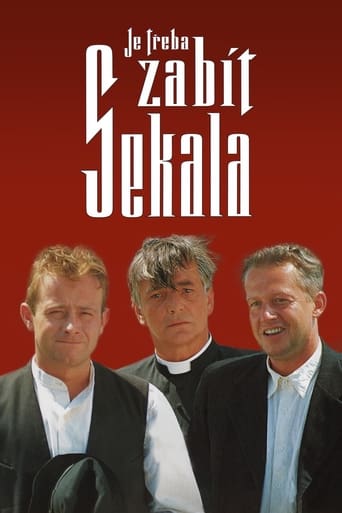 6.5
ComiBaran, a protestant blacksmith arrives in the little village of Lakotice to kill Sekal, a cruel Nazi collaborator.
Sekal Has to Die
1998
At the beginning was the Slovak television series Lekár umierajúceho czasu (Doctor of Dying Time), dedicated to the Rudolphine-era scientist Jan Jesenius. He ended up on the scaffold along with other gentlemen after losing the anti-Habsburg uprising. When director Miloslav Luther conceived the idea of making an abridged version of the footage for cinema, he had to not only rebuild the storyline but also dub it into Czech. However, the result was only an illustrative puzzle, describing the various stages of the hero's turbulent life.
Svědek umírajícího času
1991
The theatre director encounters the disinterest and irresponsibility of the acting troupe, whose members are scheming and looking for side income. The tired and sick artist wants to finish his work at any cost.
Byli jsme to my?
1991
A story inspired by true events, the fate of a multiple juvenile murderer, takes place in an apprentice boarding school. "A series of sexual murders! A real case that could happen again at any time."
Silnější než já
1991
 6.5
A story about a man overly influenced by the women in his life, which is unique in many ways, including the fact that he somehow turned out to be "straight" in spite of his ordeals with women, which started at birth.
The Bed
1998
The common denominator of the five stories, preceded by a brief prologue by Artem Benki, is the setting of a giant open-pit mine in the Podkrušnohoří region in northwestern Bohemia and its surroundings, including the dominant feature of the landscape, the ruined Jezeří Castle.
Měsíční údolí
1994
A tragicomic story about the "hug" that all the characters long for, especially sociologist Oskar, an indecisive loser whose daily bizarre encounters with old people in nursing homes lead to feelings of futility, emptiness, and loss of vital energy, which reinforce his refusal to bring a child into this meaningless world. However, his wife's desire for motherhood grows.
Skús ma objať
1991
 5.0
Symbols and political analogies abound in this dramatically frustrating first work by a recent film-school graduate. In the story, Vojtech has survived World War II in a Czech prison following an unjust sentence. Now he is free, and the world is full of possibilities.
Vojtech, Called the Orphan
1990
1980s · 26 titles
6.4Set in Prague during the years leading up to World War II, this family saga tells the story of a cobbler named Vincenc Bursik (Vladimir Mensik), who uproots his clan from the country to the city, only to suffer the loss of his wife and the failure of his shoe business within months. When his daughter moves away to go live with a wealthy businessman as his mistress, Vincenc is left to take care of his two sons, who spend their days in a secret garden vying for the affections of a teenage girl.
Love Between the Raindrops
1980
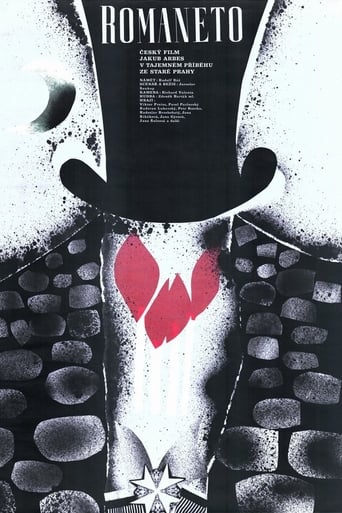 7.0
A frightening atmosphere, full of chilling dampness and darkness, follows the fate of a desperate searcher who tries in vain to unravel the supposed secret of the altarpiece...
Romaneto
1981
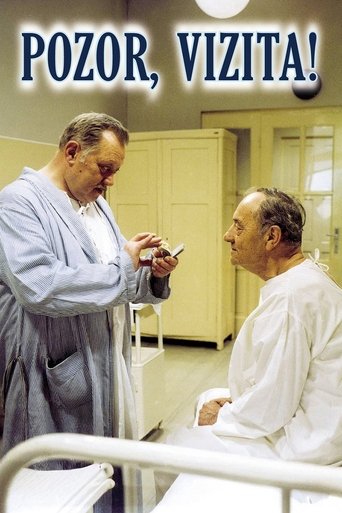 6.8
A story about an everyday life of an inflectional department of Prague hospital.
Attention, Rounds!
1982
 8.0
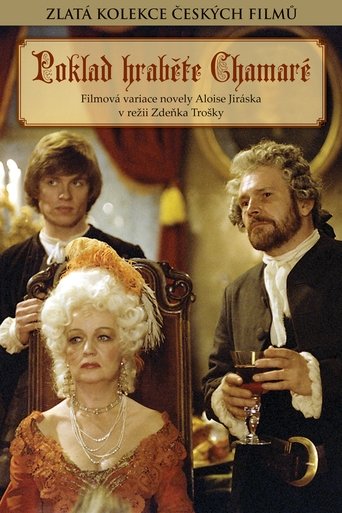
In 1781, Countess Marie Karolina shelters an influential Abbé, a former Jesuit who vehemently opposes progress. Only Dr. Kamenický dares challenge him, restoring the countess’s zest for life. Her husband, obsessed with finding a hidden treasure, neglects the estate and seduces her ward Renáta. Meanwhile, returning exile Václav’s secret reunion with Frantina in cave hideouts is betrayed by jealous suitor Tomáš, who, with the Abbé’s help, unleashes a violent manhunt.
The Treasure of Count Chamaré
1985
No synopsis available yet.
Větrná setba
1983
 8.0
This downbeat, grim drama about three brothers who are reunited at their mother's funeral is actually visually as dark as its story, making it difficult at times to clearly distinguish a scene. These brothers are not particularly exceptional as people go, but at least they have branched out into separate vocations in their lives. One brother is a doctor, another is a criminal, and the third is a bus driver. Like others in Europe, they suffered through World War II, yet no matter what their backgrounds and experiences, their interpersonal relationships are not exactly gripping drama.
Noc smaragdového měsíce
1985
 7.0
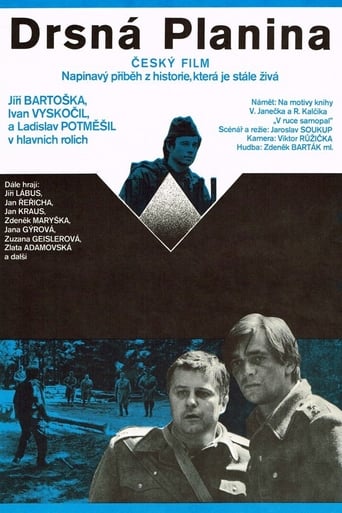
Chronicle of frontier division Czech police (SNB) in the years 1946 - 1949.
Drsná Planina
1980
 9.0
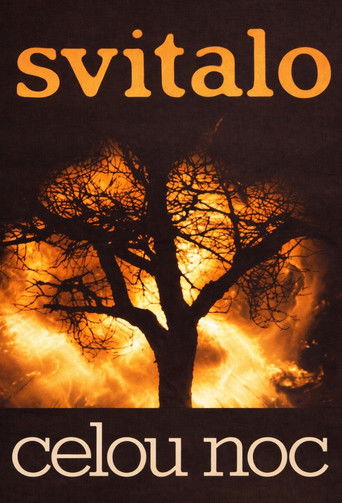
The Czech film Svítalo All Night was made to commemorate the 35th anniversary of the liberation of Czechoslovakia by the Soviet Army and is dedicated to all those who fought and gave their lives in Prague in the May Uprising of 1945. Behind the historical events, the creators see mainly their simple, unassuming participants. Thus, we are presented with a number of apt portraits, whether it is the central hero Dr. Soukup and nurse Daniela on the side of the fighting Czechs, or a captain and a simple private in a Red Army unit coming to the aid of the fighting Prague, or an old, war-weary German major, who only realises the senselessness of the war at the sight of a fanatical, cynical lieutenant for whom Nazi ideology represents the meaning of life.
Svítalo celou noc
1980
 4.3
Antony is obsessed with the idea of a happy family life, but his young daughter has to be cared for by the parents of his wife, who died in a car accident. Unfortunately, Martha, whom Antony has somewhat recklessly married, has a fundamentally different vision of her future than he does.
Antonyho šance
1986
March 1945. It is already quite obvious to the Nazis that they cannot win the war. So it is time to think about the future after the war and to cover their tracks. One concentration camp must be completely cleared out and the prisoners buried in the mines. Only the mine-hunters remain - among them Ernest, a veteran of the Spanish Civil War from Vienna, and Kim, a resistance fighter from Prague. One day they decide to escape with the other prisoners, but they are betrayed and most of the escapees are shot. The pair of heroes are not alone, however, and on the way they are joined by a guard dog from the camp that Kim used to feed. In the coming days, Ernest leads young Kim through the unrelenting cold on his journey to freedom, teaching him that there is only one rule to follow in this time - kill or be killed.
...nebo být zabit
1986
A political drama dealing with the issues of contemporary construction and highlighting the various relationships within the party apparatus.
Na koho to slovo padne...
1980
 10.0
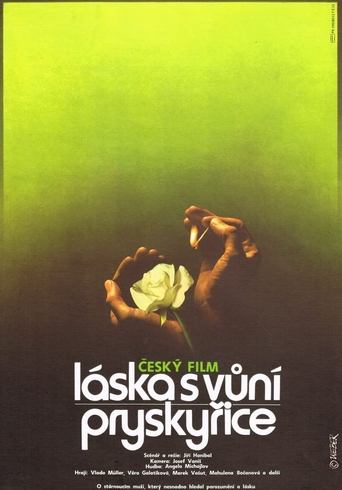
The forest worker František Hrubý, a poor, hard-working man, lives with his granddaughter in a lonely cottage. Despite being in his sixties, he is still a furiant who does not let anyone talk to him, but talks to everyone himself. His desire to interfere in the lives of his companion, daughter, granddaughter or friends is rooted in his fear of loneliness and death. He also can't accept that the work he has loved all his life has become too much of a strain...
Láska s vůní pryskyřice
1985
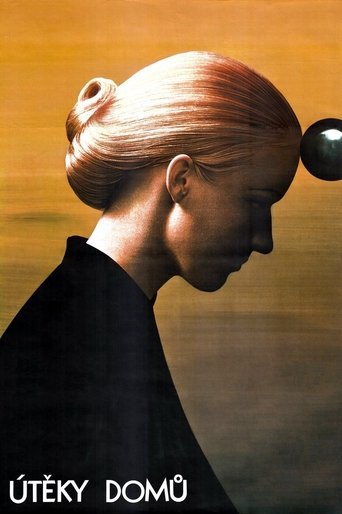 8.0
A twelve-year-old is looking for his biological parents after discovering the fact that he was adopted.
Escape Home
1980
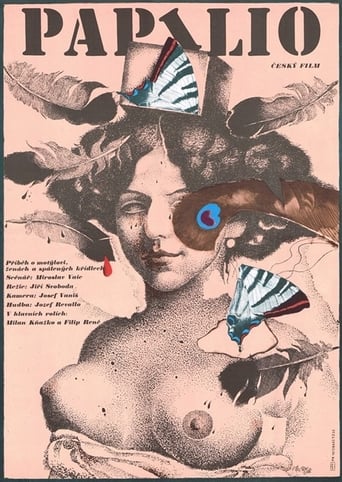 4.3
František Cepl is a young man from a simple family. He graduated from a real school and was going to study technology. When the occupation came, he had to work as a factory assistant. There he meets an older man named Telec, whom everyone knows as Hrabě. He impresses František with his ostentatious disdain for work and his shameless flirtation with women. František, whom the Count calls Papilio (butterfly butterfly), is filled with youthful ideals, while the Count, on the other hand, is an extract of the crudest individualism. He has worked his way up from a student at a business academy and a theatre actor to a member of a pre-war gallery. He blackmails, steals, drinks, abuses women and, in a way, Papilio himself.
Papilio
1987
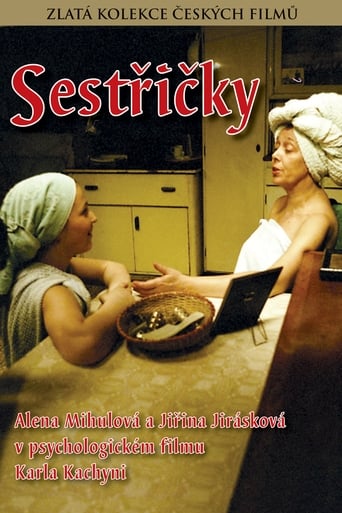 5.9
A Czech psychological film about the school of life, its sorrows and beauties. The main character is a young aspiring nurse Marie Sahulová, who, after a trouble in the hospital - she secretly brought a boy to her boarding school - is transferred to a rural health centre, where together with an old doctor and a peculiar nurse she has to travel around twenty-five villages and a number of solitudes in the harsh environment of the neglected villages of the 1950s. The nurse, a wise and experienced woman whom no one calls anything other than "babi", becomes her guide, who introduces her to the practice and the pitfalls of private life in a distinctive way. In the mosaic of everyday worries and more or less serious medical interventions, Marie matures and finds the meaning of her work and life.
Sestricky
1984
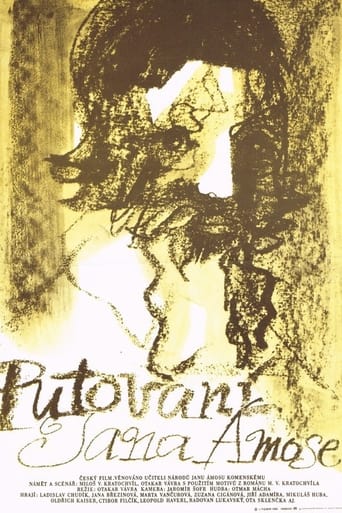 5.5
The distressing fate of the Czech great Jan Amos Komenský, forced to leave his homeland after the White Mountain disaster. It depicts his encounters with various European personalities of the 17th century - the Queen of Sweden, artists and scientists. It emphasises the hero's nobility, but also his inner resilience, which allowed him to overcome many personal and professional tragedies. The parable of The Labyrinth of the World and the Paradise of the Heart becomes part of the story. However, Comenius's concept is sculpturally lifeless and, in particular, the religious dimension is "erased" from it. The simplistic biography therefore does not avoid schoolboyish dryness.
Putování Jana Amose
1983
Based on a real event - the shooting of a group of working-class children on 20 April 1930 in Radotín. Thirteen-year-old Boženka‘s mother works as a laundress, and Boženka and her two younger siblings are not living on a bed of roses.
Zakázaný výlet
1981
No synopsis available yet.
V hlavní roli Oldřich Nový
1980
It is 1883 and Josef Hibes, a social democrat, is organising a strike of textile workers. The main demand is a reduction in working hours...
Hodina života
1981
 8.5
The life of cabaret and theater actress Xena Longenová.
Každému jeho nebe
1982
Josef Laufer portrays Egon Erwin Kisch in two daring journalistic adventures: in “Zuřivý reportér,” Kisch goes undercover in a poverty lodging house, uncovers a tattoo’s dark backstory and deciphers a secret telegram hinting at war via the legend of the black rose; in “Lovci senzací,” he pursues sensational leads and exposes hidden truths, proving why he was rightly called “the raging reporter.”
Zuřivý reportér
1988
 6.2
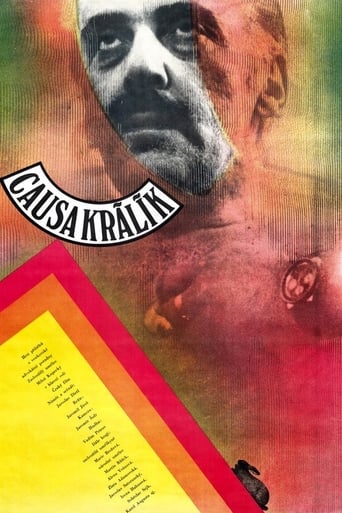
In an unusual, apolitical approach, director Jaromil Jires has fashioned a standard drama that features an older lawyer with failing health who goes to practice in the countryside. His series of odd court cases reveals more about the human condition than about law. In one of these litigations a wayward nephew has cheated his elderly aunt out of her savings. In court, the nephew insists the money was a gift, but his aunt explains she only gave him the money as a loan. Although the lawyer technically wins the case, everything of value seems lost in the meantime. His services are paid for in rabbits because the aunt has no currency, and in the end, the nephew cons his aunt into parting with her savings anyway. Other cases expose similar types of petty corruption.
Payment in Kind
1980
Three short stories about the people and folk around the shaft.
Figurky ze šmantů
1988
Even ideology permeated the children's stories: the beginnings of forced collectivisation in the village are seen through the eyes of a young boy. As the son of an honest and deliberate communist official, there is no shortage of informed insight, even if it is lightened slightly by the occasional wacky idea. However, childhood friendships or even loves run up against the conflicts of an excited age, especially when the protagonist's best friends come from families of class enemies.
Náhodou je príma!
1988
No synopsis available yet.
Hlava plná slunce
1987
Getting out of prison doesn't mean being free. After the bloody suppression of the Prague Revolution in 1848, one of its participants, the writer František Vinický, spent eight years in prison. Returning to Prague in 1857, he tries to make contact with his former friends. The main one is his former comrade-in-arms Antoš. Of course, the man's steps also lead him to his former love Ida, who has been married to the councillor Mayer for several years. Vinicky is followed at practically every turn by the secret police, who will not allow him to get a decent job, let alone publish his new book. Police Councillor Berger makes it clear to the writer that a lot could be arranged if Vinicky would commit to cooperating...
Záchvěv strachu
1984
1970s · 21 titles
 6.4
The heroes of this absurd comedy, full of confusion and humor are Dzharda Zemanek and Frantisek Liska.
A Nice Plate of Spinach
1977
 5.9
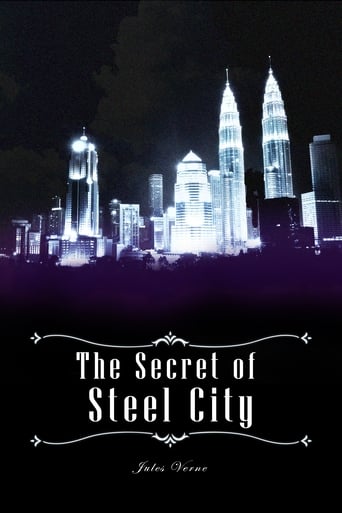
The film is a metaphor for the Cold War. It depicts two neighbouring nations: peace loving Fortuna and the not so peaceful land of the Steel City.
The Secret of Steel City
1979
 10.0
Three detective stories from industrial Ostrava. Police search in vain for a missing 16-year-old girl, but succeed in finding a mentally disturbed infant kidnapper. In a case of robbery, at the cost of injuring one of the investigators, they manage to apprehend a lover fleeing with stolen money across the border to Poland...
Město nic neví
1976
 6.0
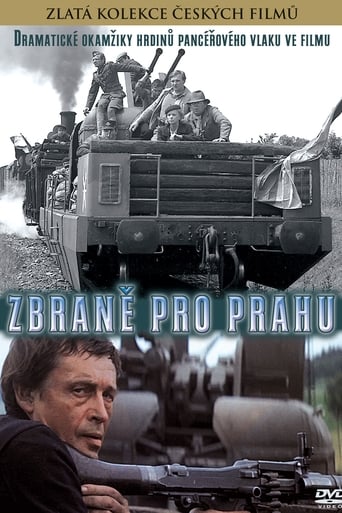
In May 1945, Czech revolutionaries used several armoured trains in the fighting - partly captured, partly assembled from whatever the railway brought. One of them was commanded by the shunter Jan Chýň, who managed to bring weapons from the ammunition depot in Libčice to help the fighting in Prague.
Zbraně pro Prahu
1975
 6.7
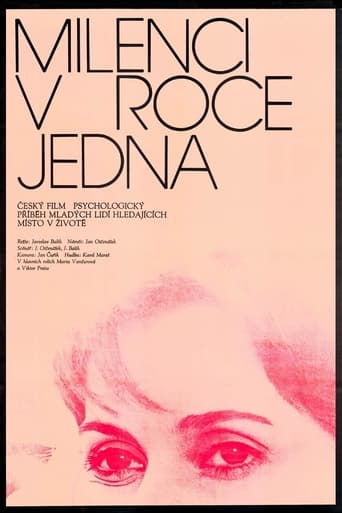
It is the summer of 1945. A party of young people are enjoying the beginning of a new life to the full. For them this is the year one. One of them, law student Pavel, is more attracted to film than to law. With his eight-millimeter camera, he films everything that catches his attention. One day he captures an interesting face on film, a girl with an air of mystery. Pavel visits the girl, whose name is Helena, and meets hers and her elder energetic sister Olga. From Olga, he learns that the girls have spent the years of German occupation in a concentration camp and cannot forget the horrors they have lived through.
Lovers in the Year One
1974
 5.3
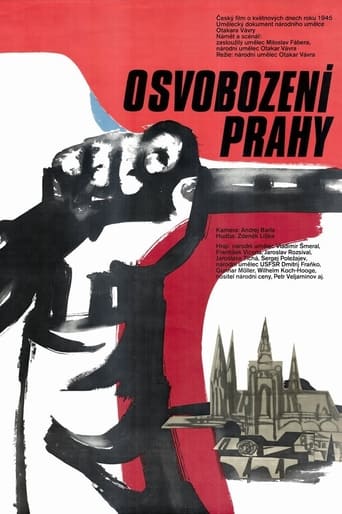
On 20th of April 1945 the Soviet army launches its attack on Berlin. The end has come for Nazi Germany and Hitler decides to commit suicide. In Prague K.H. Frank (Nazi Secretary of State and Chief of police in the Protectorate of Bohemia a Moravia) discusses with his commanders how to transform the city into an impregnable fortress, but the Praguers do not intend to wait any longer. From the early hours of 4th of May people start assembling in the streets and tearing down German signs. On the next day, the 5th of May, the uprising begins.
The Liberation of Prague
1977
No synopsis available yet.
Ohnivý máj
1975
 8.5
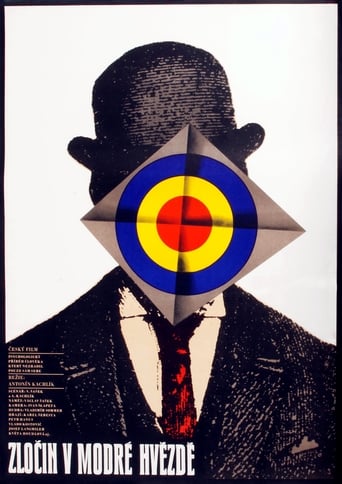
It is 1920, political unrest is growing in Prague and the Social Democrats are about to betray their historic mission by prioritising their own selfish interests instead of those of the working class. An extortionist scandal falls on the Social Democratic deputy Jandák, forcing him to renounce his convictions. Under these circumstances, the seriously ill Hungarian revolutionary Kerekes, who had to flee his homeland, is hiding in Prague...
Zločin v Modré hvězdě
1974
 5.6
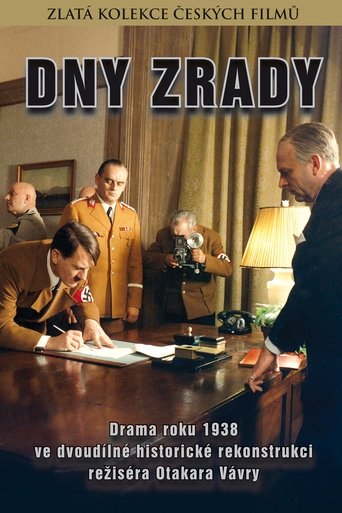
This feature film based on the events of 1938 is a chronicle of the futile efforts of the Czechoslovak president Edvard Benes (Jirí Pleskot), politicians and ordinary citizens, to save the independence and the territorial integrity of the state from the advance of Hitler's Germany. On the 29th of March 1938 the leader of the Sudeten Germans Henlein (Werner Ehrlicher) has a meeting with Hitler (Gunnar Möller). Hitler orders him to intensify pressure on the Czechoslovak government. On the 24th of April in Carlsbad, the Sudetendeutsche Partei (Sudeten German Party) decides upon eight demands that are unacceptable to the Czechoslovak President, since they would ultimately lead to the break-up of the Republic. Benes still shows a certain willingness to negotiate, and Henlein resents this. The Germans are determined to make further negotiations impossible through incidents and violence.
Days of Betrayal
1973
No synopsis available yet.
Bratranec Pons
1973
 4.3
Captain Záruba investigates after an anonymous tip flags the seemingly extravagant lifestyle of Chemotex technician Dagmar Králová. Summoned to discuss the matter, Králová’s quarrel with engineer Vaněček, who secretly runs a suburban bootleg alcohol factory, triggers panic among the illicit network led by hotelier Černý. When Králová is found dead near the site of a murdered hitchhiker, autopsy reveals a different killer, launching parallel murder investigations. Forensic teams uncover the clandestine distillery, and gradually piece together motives and perpetrators behind both deaths.
Zatykač na královnu
1974
 3.7
A quarrel between divorced waitress Mája and her fifteen-year-old son Petr ends with the boy physically attacking his mother, and he is sent to an institution for juvenile delinquents.
Pomerančový kluk
1976
 7.0
During World War II, dogs were trained in special centres for guard duty in concentration camps. However, one of the prisoners domesticates a female German Shepherd, which saves his life during his escape.
Počkám, až zabiješ
1973
 4.0
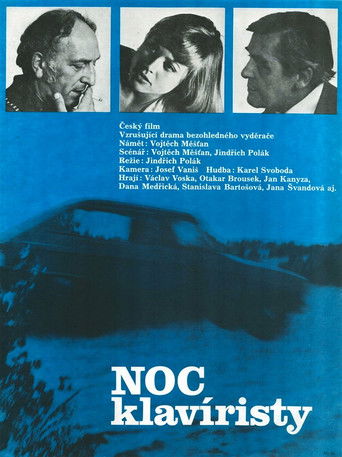
The problematic protagonist is the head designer of a housing association who wants to make a profit at any cost. His unwitting opponent is a bar pianist who accidentally witnesses the murder of a young man and sets out to investigate on his own. An old-world and somewhat comical figure, he poignantly interferes with the cops' work, only to find that he is the one who is credited with catching the perpetrator...
Noc klavíristy
1977
The historical television play was written based on Vančura's Pictures from the History of the Czech Nation and takes place against the backdrop of the European situation at the beginning of the thirteenth century. Přemysl Otakar I., father of Agnes of Přemyslid, sought recognition of the Czech lands as a hereditary kingdom. And what about his love and fickleness? The story will answer this, in which poetry and truth diverge only in the degree of emotional movements, in the tremors of souls, which lead to love as well as to hatred.
Vrtkavý král
1975
 6.5
In May 1945, a woman in Marienbad reports a murder - committed in 1933 against the German emigrant Professor Lessing. She also names the murderer. Against the wishes of his superior, who does not feel responsible for this case - it was a fascist femicide - Inspector Šedý picks up the trail and arrests the murderer, the German Eckert. Eckert was a fugitive at the trial in 1933, and now the evidence is no longer available. Nevertheless, Šedý does everything he can to convict him. He finds witnesses who support him - anti-fascists, but also former collaborators who want to clear themselves. Reconstructing the case at the crime scene, Šedý is able to prove that Eckert was at least an accessory. He is convicted. After his release from prison, Eckert goes to West Germany, where he demands compensation from his former clients.
Gunshots in Mariánské Lázně
1974
 6.0
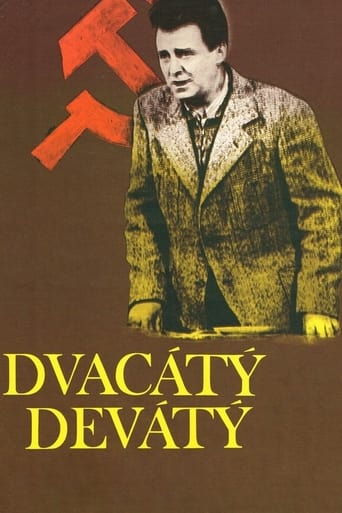
In the era of normalisation, a number of (pseudo)historical films were made, even described as reconstructions, which glorified the world-building mission of the Communist Party and attributed to it exclusively humanitarian intentions ("Days of Betrayal", "Sokolovo", "Liberation of Prague", "The Victorious People"). In 1929, when its fifth congress met, Klement Gottwald, who had taken the line of the Russian Bolsheviks, took over the leadership of the Communists...
Dvacátý devátý
1975
 5.2
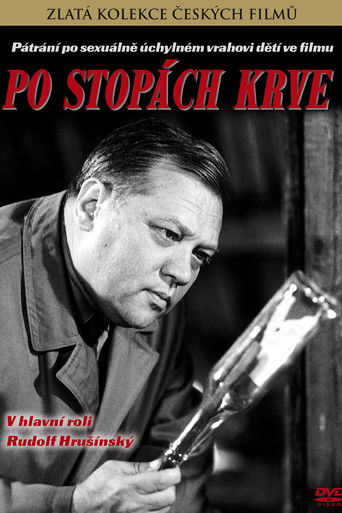
Major Kalas from the Prague criminal intelligence service has been sent to a small town of Dubá in North Bohemia to help with the investigation of the puzzling death of a child. A gypsy boy has been killed three weeks ago and his body found under a rock. As the investigation continues, another dead boy is found. The boy has bled to death after someone cut his artery with a handsaw. Both deaths are obviously the work of a murderer - a perverted pedophile, sadist who gets sexual satisfaction from the sight of a young boy's blood.
On the Trail of Blood
1970
Maryša, a peasant daughter, is forced by her greedy parents to marry a rich miller, a widower with three children. But she loves the village scoundrel Franck, who has no hope against Vávra. Francek goes to the army and Maryša and Vávra go to catechism with the priest. Maryša and Vávra's marriage is unhappy. The parents also realize their mistake, especially Lízal, who offers his daughter to return home. Maryša refuses and also rejects the proposal of Franck, who has returned from the army and asks her to run away to Brno with him. She chooses a tragic solution...
Maryša
1972
No synopsis available yet.
Čekání
1974
 5.0
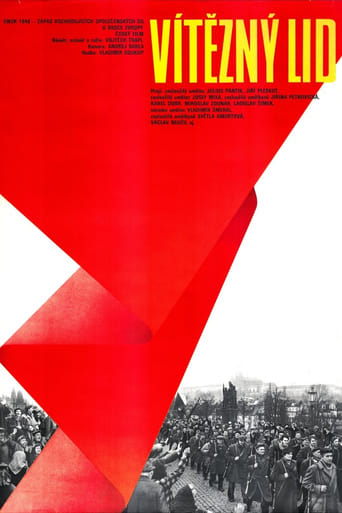
February 1948. The struggle of decisive social forces for the heart of Europe.
Vítězný lid
1978
1960s · 2 titles

1950s · 2 titles
 7.0
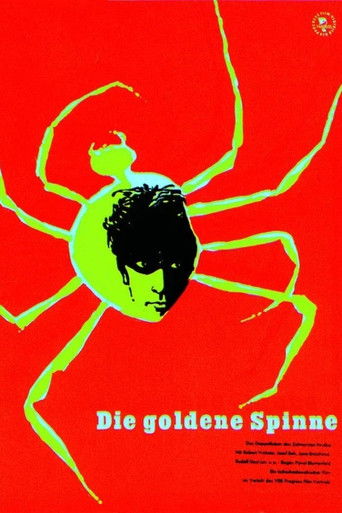
A man was killed while trying to leave Czechoslovakia. One and a half kilograms of gold was found on him - not in coins, not in jewelry, not in bars - but in the form of plates used to make teeth...
Zlatý pavouk
1957
Thirteen-year-old Jenda, whose father is the leader of an illegal movement in a small town at the end of World War II, proves his bravery and sense of duty when, despite all the dangers, he delivers an important message to the partisans.
Malý partyzán
1951
Series credits
8.6No synopsis available yet.
Dobrodružství kriminalistiky
1989
8.0Series about the life of Renaissance anatomist, scholar and politic Johannes Jessenius. Already legendary series today, was produced by Czechoslovak Television Bratislava, directed by Slovak director Miroslav Luther in the first half of 80's in Barrandov Studios in Prague. The story and screenplay of the series wrote Czech writer Vladimír Körner. Five-episodes epic historical narration is a biographical story of distinguished Renaissance scholar, anatomist and politic of Slovak origin, Johannes Jessenius (Ján Jesenský, 1566–1621). It displays his life from the first studies and successes. In 1594 he became professor of surgery and anatomy on Wittenberg University, which he had attended years before. From that moment, his life went through social and personal wins and losses, to the sad end on the Prague Old Town Square gallows, among 27 noblemen, knights and burgenses, after lose Bohemian Revolt in 1621. His destiny was coupled with key events of Czech history in the break of 16th and 17th century, when Renaissance and European humanism slowly fade out.
The Physician of a Dying Time
1984
NRNo synopsis available yet.
Nejmladší z rodu Hamrů
1975
8.0Okres na severu is a Czechoslovak/Czech TV series filmed by Evžen Sokolovský in 1981.
Okres na severu
1981
No synopsis available yet.
Had z ráje
1981