
Directing
Claudio Caldini
Born
1952-02-27 (74)
Place of birth
Buenos Aires - Argentina
Known for
Directing
Credits
46 titles
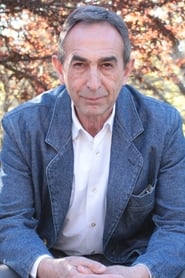
Claudio Caldini was born in Buenos Aires in 1952 and has been making super 8 experimental films since 1970. In 1971 he began his studies at the Centro Experimental del Instituto Nacional de Cinematografía (Buenos Aires) and attended film seminars with Alberto Fischerman (1977), Werner Nekes (1980) and Werner Schroeter (1983) at the Goethe-Institut (Buenos Aires). He studied Modern and Audioperceptive Dance with Rolf Gelewski in São Salvador da Bahía and São Paulo (Brazil), in 1978 and 1982, respectively. Caldini worked as a lighting designer and operator for theater and rock concerts and as a programmer of electronic instruments, in association with Jorge Haro (1989–90). He was the film and …
Known for
 NR
NRA film about friendship. A portrait of Claudio Caldini.
Bajo tierra
2007
Experimental film by Claudio Caldini
Heliografía
1993
 9.0
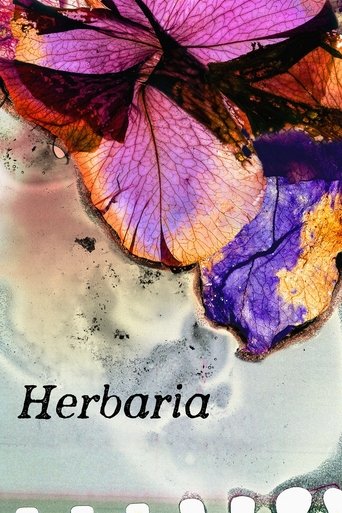
9.0In his second feature film, Leandro Listorti establishes a parallel between two worlds he seems to know well: that of plants and that of cinema. This delicate cinematographic work, full of beautiful images—both archival and current—gives an account of the immense work of classification and preservation, and generously invites us to think about forms of representation and memory.
Herbaria
2022
 NR
NRSuper 8 film - U-MATIC Video hybrid. Music By Jorge Haro & Alejandro Fiori. 1990.
Simulacro
1990
 7.5
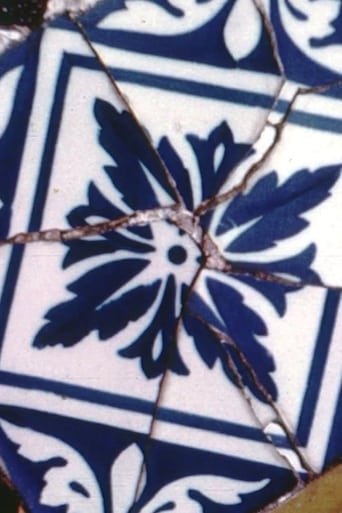
7.5When I first arrived in Barcelona in 1974 I decided to make a film about architect Antoni Gaudi's Park Guell. I found a film already conceived in the 1914 design; it was enough to follow the trajectories traced by Gaudi, imagine them as a labyrinth, reproduce the bursting of the mosaics through an analogous fracture of linear temporality. In the editing I tried to avoid showing passers-by. No human figure should get in the way of the appearance of that fantastic architecture. The stop-motion technique applied to the position and parameters of the camera still seems suitable for representing the undulating space of the park.
Film Gaudí
1975
The stone staircase of a temple in Gingee, Tamil Nadu, India, painted with geometric designs, filmed frame by frame during an ascent.
Templo Cerrado
1982
Film credits
2020s · 2 titles
9.0In his second feature film, Leandro Listorti establishes a parallel between two worlds he seems to know well: that of plants and that of cinema. This delicate cinematographic work, full of beautiful images—both archival and current—gives an account of the immense work of classification and preservation, and generously invites us to think about forms of representation and memory.
Herbaria
2022
 NR
NRA brief documentary focused on the history of experimental Super 8mm filmmaking. Prominent figures of the "s8" boom of the 1970s discuss their work and their first encounters with the medium.
A (possible) trip around the world in super 8
2021
2010s · 2 titles
"Life is a latency that as time and space becomes visible as a figure. But never eat at all, there are other possible lives. Making a life is difficult, filming the impossible itself . with this imago-auto-bio-graphy is an attempt to talk about this ambiguity, where what could be is the possibility of a memory, where what was and what was not, can be remembered in the same way, . always I lived with mixing the imagined thing is chosen in this chancy; go left on the road the other films that might have emerged" -Narcisa Hirsch
El Mito de Narciso
2011
Argentina feature film.
Hachazos
2011
Behind the camera
Experimental film by Claudio Caldini
Heliografía
1993
NRSuper 8 film - U-MATIC Video hybrid. Music By Jorge Haro & Alejandro Fiori. 1990.
Simulacro
1990
7.5When I first arrived in Barcelona in 1974 I decided to make a film about architect Antoni Gaudi's Park Guell. I found a film already conceived in the 1914 design; it was enough to follow the trajectories traced by Gaudi, imagine them as a labyrinth, reproduce the bursting of the mosaics through an analogous fracture of linear temporality. In the editing I tried to avoid showing passers-by. No human figure should get in the way of the appearance of that fantastic architecture. The stop-motion technique applied to the position and parameters of the camera still seems suitable for representing the undulating space of the park.
Film Gaudí
1975
The stone staircase of a temple in Gingee, Tamil Nadu, India, painted with geometric designs, filmed frame by frame during an ascent.
Templo Cerrado
1982
 NR
NRA child plays on the beach; we are in home-movie territory. For years I thought I had made a film-poem, without knowing how to explain it, until Gilles Deleuze created the concept of "perception-image": A character acts on the screen and it is assumed to see the world in a certain way. But simultaneously the camera sees him, and sees his world from another point of view which thinks, reflects, and transforms the viewpoint of the character [...]. In short, perception-image finds its status, as free indirect subjective, from the moment that it reflects its content in a camera-consiousness which has become autonomous ('cinema of poetry'). (Gilles Deleuze, Cinema I: The Movement-Image).
Baltazar
1975
 NR
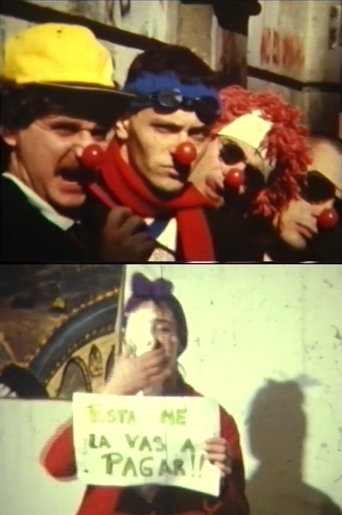
NRFilm of "El Clú del Claun", directed by Claudio Caldini, which opened the show "I'll make you pay for this...!", from 1987. Shot at the Centro Parakultural, Buenos Aires, Argentina.
I'll make you pay for this
1986
 6.2
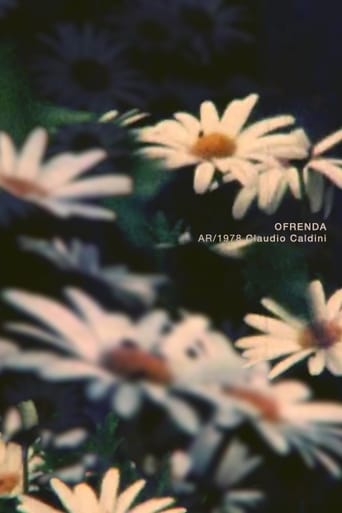
6.2Short film that shows daisies throughout the day with music as an accompaniment.
Offering
1978
6.2Short film that shows daisies throughout the day with music as an accompaniment.
Offering
1978
6.2Short film that shows daisies throughout the day with music as an accompaniment.
Offering
1978
 4.3
4.3Aspiraciones is the beginning of a series in which Vadi-Samvadi is the second film. The grammar of Indian music suggests a micro-interval in a cinematic space-time.
Vadi-Samvadi
1981
 5.0
5.0Super 8, B&W in color, approximately 25 minutes. Triple projection, sound in digital file. Music by Claudio Caldini. "Chromatic Ghosts operates through the primitive system of color photography, not to reconstruct its result but to decompose it, suggesting in the images a critique of the omnipresence of the automobile and an impossible escape into the natural world."
Chromatic Phantoms
2012
Single 8, edited in camera, 2005. Made at The Glenfiddich Distillery Artist in Residence Programme, Dufftown, Scotland. Distillery sounds recorded by Claudio Caldini with Andy Fairgrieve. Processing assisted by Martín Pavlovsky. Synth Programming by Caldini, remix assisted by Pablo Dominguez.
Prisma
2005
 6.0
6.0Branches, leaves, and flowers overlap and mingle. The film closes with a passage from philosopher Zhuang Zhou.
Cuarteto
1978
 NR
NRVideo: Caldini, 2016.
trío 1990
2016
 NR
NRMade as a Visiting Artist at Liaison of Independent Filmmakers of Toronto (LIFT).
Deadline
2015
 NR
NRSecond collaboration with the composers Haro/Fiori. The images refer to the crisis of the representation of reality which emerges with the mass diffusion of electronic images on television and on video in the last decade of the 20th century. The piece also illustrates the discussion relevant at the time (1991-92), and still so today, on the replacement of experimental cinema with video art. The title alludes to a quote from Heinrich Rudolf Hertz, "The consequences of images will be images of consequences."
Consequence
1992
 5.0
5.0Using observation as a starting point, the filmmaker constructs a dystopian science fiction chronicle in La República. Ironic observations on the trans-Platonic republic.
The Republic
2008
The filming of Ventana began as a test of the rewind and superimposition functions of the Single 8 camera: a crescendo of added layers. The space is a camera obscura in which the cameraman's movements convert a line of light into multidirectional rays. Toward the end there are up to eight unique superimpositions and single frames. The music was added in 1989, with an anaogue synthesizer and digital delay.
Ventana
1975
 NR
NRS/T (sin título) (untitled) 2007. Super 8, Silent. Transfer by Framediscreet. Made as a Visiting Artist at Liaison of Independent Filmmakers of Toronto (LIFT). Supported by The Canada Council For The Arts.
S/T
2007
 4.3
4.3Complete version in three parts. Reconstructed from VHS transfers of the original Super-8. Music and film by Claudio Caldini, 1988.
The Evolution of the Stones
1988
Documentary about Tomás Sinovcic, filmmaker murdered by the Argentinean military dictatorship in 1976.
A New Day
2016
 NR
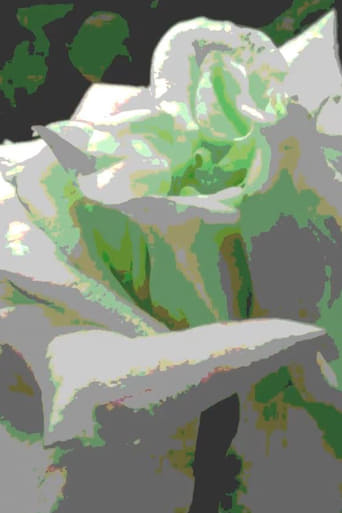
NRA moving painting of a flower, which takes advantage of the metamorphosing capacity of the digital image and the flatness of electronic colour.
Rosoideae
2018
 NR
NRA planet populated by disoriented beings. Camera, editing, music: Claudio Caldini
La Tierra Plana
2026
 8.0
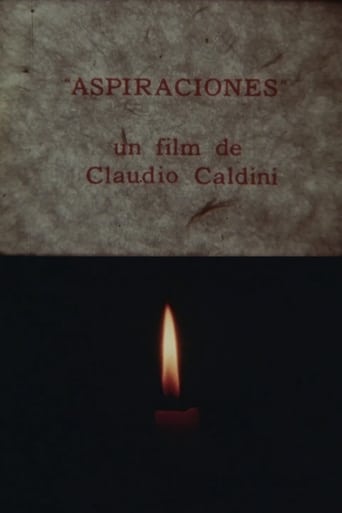
8.0The slow rhythm of regular breathing determines an analogous rhythm in the image: the fugue of a candle flame toward a virtual infinity generated by a lens with variable focal length. Each appearance of this vector (successive fixed positions of the zoom) corresponds to an equivalent interval of darkness, an identical number of unexposed stills. An attempt at metric cinema. The position of the flame varies slightly with each successive apparition and the displacement seems to stop for just a few seconds in order to introduce alternating stills in reverse order.
Aspiraciones
1976
 NR
NRSequences of a spontaneous dance recital by Rolf Gelewski, born in Berlin but based in Brazil, solo dancer from the expressionism school, and disciple of Mary Wigman.
Rolf Gelewski, spiritual dancer
2016
 NR
NR"The title (how important is a good title) is perfect because, in effect, the video is that: a promise of something that is announced and does not materialize (because the image is always "coming undone") but that has the happiness and fulfillment of imminence. And I think, now, then, in that definition of Adorno about art: "a promise of happiness". This video is a promise of happiness that is all the happier to the extent that it continually remains ahead, in the future." - David Oubiña.
PROMISE
2022
 6.0
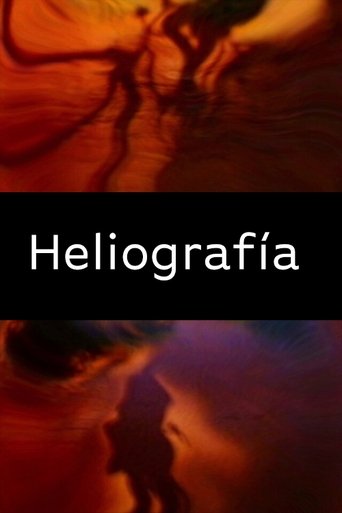
6.0Digital edition of the original 1993 video-tape. Dedicated to Dr. Albert Hofmann and his famous bicycle trip.
Heliografía (remix)
2021
 NR
NRChinese ink is the powder or soot that is collected from the fumes produced by the combustion of resinous materials, called carbon black, dissolved in water.
Señales de humo
2022
Creating a garden is a process of action. Ephemeral joy of the sight.
El jardín vislumbrado
2022
 6.8
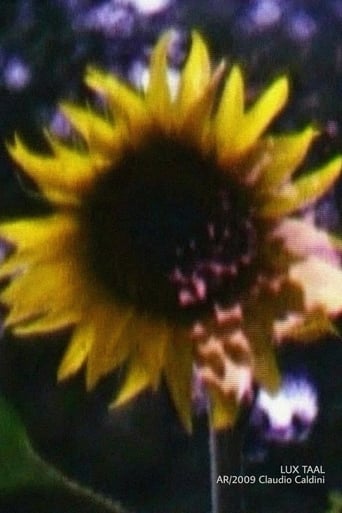
6.82006-2009 / 8mm / color / sound / 1S / 8'
Lux Taal
2009
 NR
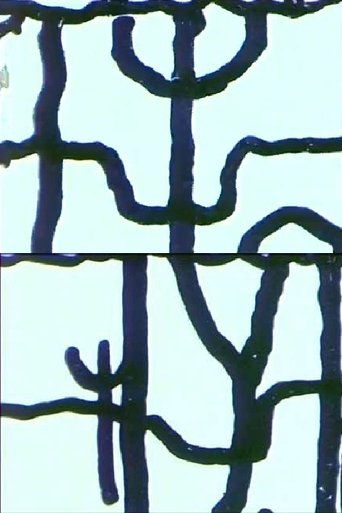
NR"indian ink on 16mm film" -CC
Animación dibujada
1966
 NR
NR"Rain is a thing that surely happens in the past" Borges
Calendario de lluvias
2019
 6.0
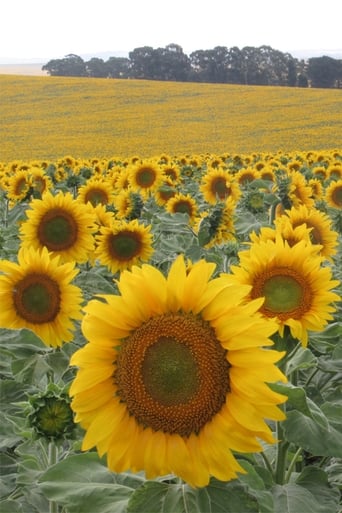
6.0Solar meditation in the middle of a field of sunflowers, where vision and touch complement each other in a sensory immersion experience.
Poilean
2020
 NR
NRThe camera as the operator's satellite describes a circular path around it, making visible the forces that hold it in orbit. Radius and tangent signal the direction of vision. At times a stroboscopic illusion is created and the movement seems to be inverted.
Gamelan
1981
 5.7
5.7To film without looking trough the viewfinder; to emulate a tactile, subconscious vision. This was the intention of "A traves de las ruinas", made during the Falklands War (April-May 1982). The camera is a vacillating gaze that moves about in the darkness or is blinded by flickering. At the beginning, it delves into the sea, later it represents aerial bombardments through urban lights. Silhouettes of human figures appear that never manage to connect with each other. Scarcely lit places, photographed on the "threshold or exposure"; wintry, generalized interaction of spaces, distances and dynamics. A continual present made up of intuitions and imprecise memories.
Through the Ruins
1982
 NR
NRExperimental short film.
4:3
2010
 4.0
4.0A man receives a haircut before meeting with his love.Outdoor night camera exercise.
May Avenue
2012
4.0A man receives a haircut before meeting with his love.Outdoor night camera exercise.
May Avenue
2012
 3.0
3.0The title Un enano en el jardin is an allusion to the Super 8 format and the setting where the actions that comprise the film unfold. A catalogue of extreme experiments with the mobility of the camera coordinated with brief improvisations by the Brazilian dancer Alice Bloch. It was mostly filmed with an Instamatic m22 camera (possibly the simplest and lightest Super 8 camera, with a fixed lens and manual diaphragm), so resistant that it functioned in conditions that would be unthinkable with a more complex camera, rotating at high speed around the optical axis or tied to a 35mm reel rewinder.
A Dwarf in the Garden
1981
 9.0
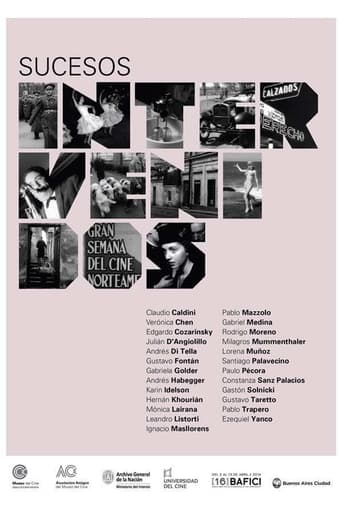
9.0The omnibus feature SUCESOS INTERVENIDOS consists of shorts by a who’s who of Argentine documentary and experimental-film giants, including Edgardo Cozarinsky and Gustavo Fontán but also Claudio Caldini, Andrés Di Tella and Gabriela Golder. Each one of them created a piece of a few minutes in length using archival footage from SUCESOS ARGENTINOS (“Argentine Events”), a popular newsreel series from 1938 to 1972 whose episodes have recently begun to be digitized by Buenos Aires’s “Pablo C. Ducrós Hicken” Film Museum.
Intervened Events
2014