
Acting
Graham Leaman
Born — Died
1920-08-09 — 1985-06-14
Place of birth
Wandsworth, London, England, UK
Known for
Acting
Credits
25 titles
Known for
 7.9
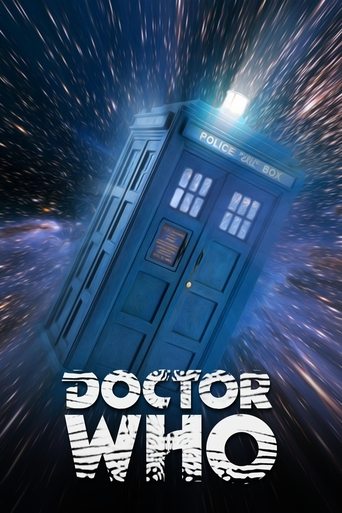
The adventures of The Doctor, a time-traveling humanoid alien known as a Time Lord. He explores the universe in his TARDIS, a sentient time-traveling spaceship. Its exterior appears as a blue British police box, which was a common sight in Britain in 1963 when the series first aired. Along with a succession of companions, The Doctor faces a variety of foes while working to save civilizations, help ordinary people, and right many wrongs.
Doctor Who
1963
 5.2
An anthology series of television plays which aired on BBC1 from October 1964 to May 1970. The plays were usually written for television, although adaptations from other sources also featured.
The Wednesday Play
1964
 7.2
Theatre 625 is a British television drama anthology series, produced by the BBC and transmitted on BBC2 from 1964 to 1968. It was one of the first regular programmes in the line-up of the channel, and the title referred to its production and transmission being in the higher-definition 625-line format, which only BBC2 used at the time.
Theatre 625
1964
 7.8
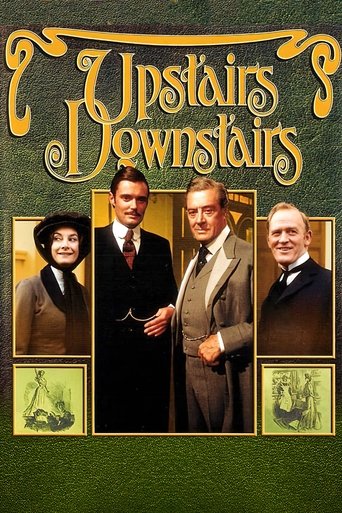
Upstairs: the wealthy, aristocratic Bellamys. Downstairs: their loyal and lively servants. For nearly 30 years, they share a fashionable townhouse at 165 Eaton Place in London’s posh Belgravia neighborhood, surviving social change, political upheaval, scandals, and the horrors of the First World War.
Upstairs, Downstairs
1971
 7.4
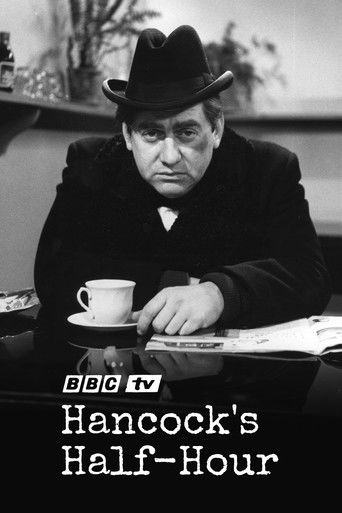
Hancock's Half Hour is a BBC television comedy series of the 1950s and 60s written by Ray Galton and Alan Simpson. The series starred Tony Hancock with Sid James. The final series, renamed simply Hancock, starred Hancock alone. Comedian Tony Hancock starred in the show, playing an exaggerated and much poorer version of his own character and lifestyle, Anthony Aloysius St John Hancock, a down-at-heel comedian living at the dilapidated 23 Railway Cuttings in East Cheam. The series was influential in the development of the situation comedy, with its move away from radio variety towards a focus on character development.
Hancock's Half Hour
1956
 7.3
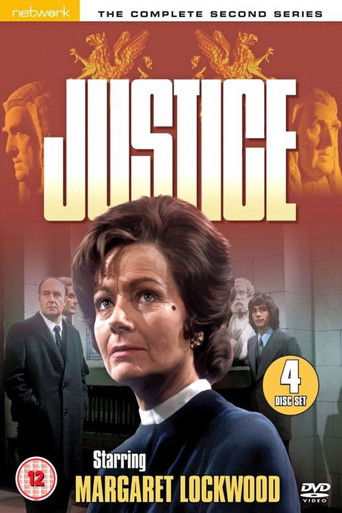
Justice is a British drama television series which originally aired on ITV in 39 hour-long episodes between 8 August 1971 and 16 October 1974. Margaret Lockwood stars as Harriet Peterson a female barrister in the North of England. It was made by Yorkshire Television and was based loosely on Justice Is a Woman, an episode of ITV Playhouse broadcast in 1969 in which Lockwood had previously also played a barrister. The theme music was Crown Imperial by William Walton.
Justice
1971
Film credits
1970s · 3 titles
 6.6
When the Master steals the Time Lords' secret file on the Doomsday Weapon, they grant the Doctor a temporary reprieve from his exile on Earth to deal with the crisis. He and Jo arrive on the planet Uxarieus and become enmeshed in a struggle between an agrarian colony and a powerful mining corporation.
Doctor Who: Colony in Space
1971
 7.4
Through a series of real and imagined encounters with angels, demons, and England's pagan past, a pastor's son begins to question his religion and politics, and comes to terms with his sexuality.
Penda's Fen
1974
 7.4
Time itself is in peril! The Time Lords and UNIT find themselves besieged by a mythic figure from the Time Lords' past hell-bent on destruction. The only way to defeat him is to break the First Law of Time and let the Doctor help himself — literally...
Doctor Who: The Three Doctors
1973
1960s · 7 titles
 8.7
The TARDIS brings the Doctor, Jamie and Victoria to the present-day North Sea coast. Something nasty is lurking in the gas pipelines of the North Sea, and before long the nearby refinery is under attack. The Doctor discovers that a form of living seaweed is at work, and that a number of the base personnel have been possessed. Can he and his friends work in time to prevent an entire take-over of Earth?
Doctor Who: Fury from the Deep
1968
 8.0
When the Second Doctor, Polly, Ben and Jamie visit a human colony that appears to be one big holiday camp, they think they have come across a truly happy place. Yet a shadowy presence soon makes them realise that the surface contentment is carefully controlled.
Doctor Who: The Macra Terror
1967
 10.0
Dramatisation of the failed plot to assassinate Adolf Hitler in July 1944 by a conspiracy of high-ranking German Army officers.
The July Plot
1964
 7.8
The TARDIS lands in a space museum on Earth in the late 21st century, where the Second Doctor, Jamie and Zoe learn that contact has been lost between Earth and the Moon. In this era, instant travel — T-Mat — has revolutionised the Earth. Its people have lost interest in space travel. The Doctor and his companions travel to the Moon in an old-style rocket and reach the Moonbase, control centre for T-Mat, only to find a squad of Ice Warriors have commandeered the base and plan to use the T-Mat network to their advantage.
Doctor Who: The Seeds of Death
1969
 5.7
British crime film directed by Peter Duffell and starring Bernard Lee, Moira Redmond and John Van Eyssen, loosely based on the 1918 novel "The Man Who Knew" by Edgar Wallace.
Partners in Crime
1961
Spike stars with Bob Todd, Bill Kerr, Graham Stark, Valentine Dyall, and Sheree Winton & a final TV outing for moustachioed 'token Italian' comedy actor Mario Fabrizi, who died 18 months later, aged just 38.
Spike Milligan: A Series of Unrelated Incidents at Current Market Value
1961
 6.6
In Imperial Russia, Anna, wife of the officer Karenin, goes to Moscow to visit her brother. On the way, she meets charming cavalry officer Vronsky, to whom she's immediately attracted. But in St. Petersburg’s high society, a relationship like this could destroy a woman’s reputation.
Anna Karenina
1961

Series credits
7.9The adventures of The Doctor, a time-traveling humanoid alien known as a Time Lord. He explores the universe in his TARDIS, a sentient time-traveling spaceship. Its exterior appears as a blue British police box, which was a common sight in Britain in 1963 when the series first aired. Along with a succession of companions, The Doctor faces a variety of foes while working to save civilizations, help ordinary people, and right many wrongs.
Doctor Who
1963
5.2An anthology series of television plays which aired on BBC1 from October 1964 to May 1970. The plays were usually written for television, although adaptations from other sources also featured.
The Wednesday Play
1964
7.2Theatre 625 is a British television drama anthology series, produced by the BBC and transmitted on BBC2 from 1964 to 1968. It was one of the first regular programmes in the line-up of the channel, and the title referred to its production and transmission being in the higher-definition 625-line format, which only BBC2 used at the time.
Theatre 625
1964
7.8Upstairs: the wealthy, aristocratic Bellamys. Downstairs: their loyal and lively servants. For nearly 30 years, they share a fashionable townhouse at 165 Eaton Place in London’s posh Belgravia neighborhood, surviving social change, political upheaval, scandals, and the horrors of the First World War.
Upstairs, Downstairs
1971
7.4Hancock's Half Hour is a BBC television comedy series of the 1950s and 60s written by Ray Galton and Alan Simpson. The series starred Tony Hancock with Sid James. The final series, renamed simply Hancock, starred Hancock alone. Comedian Tony Hancock starred in the show, playing an exaggerated and much poorer version of his own character and lifestyle, Anthony Aloysius St John Hancock, a down-at-heel comedian living at the dilapidated 23 Railway Cuttings in East Cheam. The series was influential in the development of the situation comedy, with its move away from radio variety towards a focus on character development.
Hancock's Half Hour
1956
7.3Justice is a British drama television series which originally aired on ITV in 39 hour-long episodes between 8 August 1971 and 16 October 1974. Margaret Lockwood stars as Harriet Peterson a female barrister in the North of England. It was made by Yorkshire Television and was based loosely on Justice Is a Woman, an episode of ITV Playhouse broadcast in 1969 in which Lockwood had previously also played a barrister. The theme music was Crown Imperial by William Walton.
Justice
1971
 6.4
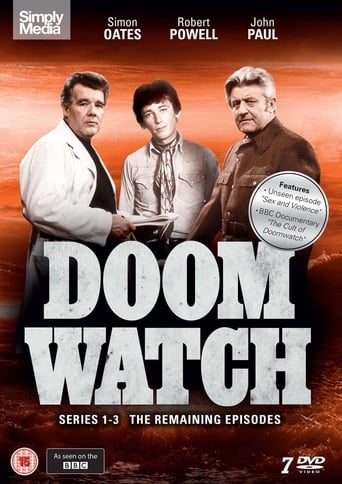
Doomwatch is a British science fiction television programme produced by the BBC, which ran on BBC 1 between 1970 and 1972. The series was set in the then present-day, and dealt with a scientific government agency led by Doctor Spencer Quist, responsible for investigating and combating various ecological and technological dangers. The series was followed by a film adaptation produced by Tigon British Film Productions and released in 1972, and a revival TV film was broadcast on Channel 5 in 1999.
Doomwatch
1970
 7.1
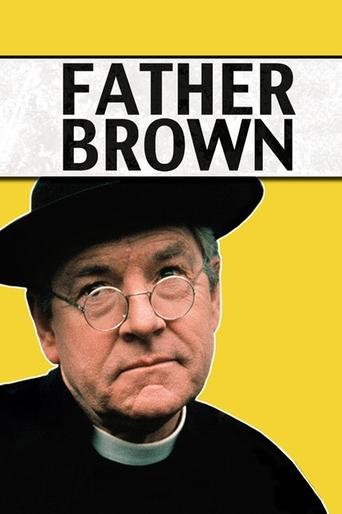
Based on the short stories by G. K. Chesterton, Father Brown is a Roman Catholic priest and amateur detective.
Father Brown
1974
 5.8
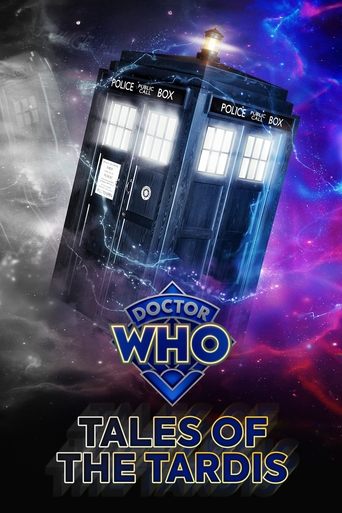
Classic Doctor Who duos are reunited as they board a very special TARDIS on a nostalgic voyage through space and time.
Tales of the Tardis
2023
 8.0
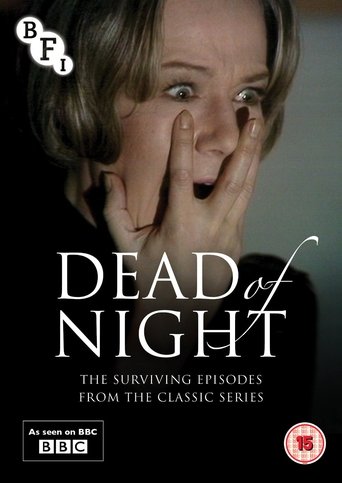
Dead of Night is a British television anthology of supernatural fiction, produced by the BBC and broadcast on BBC2 in 1972. It ran for a single series; of its seven 50-minute episodes, only three—'The Exorcism', 'Return Flight', and 'A Woman Sobbing'—are known to survive in the Archives. Another programme made by the same production team under Innes Lloyd, 'The Stone Tape', intended to be the eighth episode, does survive in the Archives but was not broadcast under the Dead of Night banner.
Dead of Night
1972
Georges Duroy cynically exploits women - and his position as a journalist - to gain power in 19th-century France.
Bel Ami
1971
 8.3
Anthony Newley stars as an actor who walks off the set of a banal sit-com and into a fantasy world of his own imagination in this surreal odyssey through one man's personal alternative reality.
The Strange World of Gurney Slade
1960