
Directing
Carole Roussopoulos
Born — Died
1945-05-25 — 2009-10-22
Place of birth
Lausanne, Switzerland
Known for
Directing
Credits
43 titles
Known for
 6.4
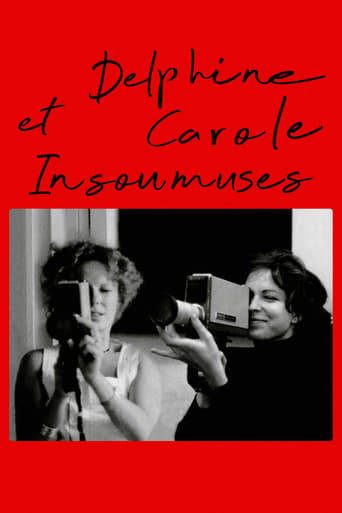
6.4In the 70s, actress Delphine Seyrig and director Carole Roussopoulos, both militant feminists, were the pioneers of video activism in France. They documented the demonstrations of French feminists and used the new technologies to counter the poor representation of women in the public media.
Delphine and Carole
2020
 7.0
7.0Four women farmers working in the Champagne-Ardennes region talk about their working conditions, the part they play in running the farm, the distribution of jobs between husband and wife and the lack of status of their work... They emphasise how denial of the essential role they play in running the farm has led them to demand specific recognition of their job. Presentation of the Women's Association for Agricultural Development (AFDA).
Profession : Agricultrices
1982
 NR
NRIn September 1972, a Palestinian commando called the Black September took the Israeli delegation hostage at the Munich Olympics. This film, which denounces the hypocrisy of this illusory "Olympic peace", is a montage of images from official television and images filmed in the Palestinian refugee camps of Jordan in September 1971 (Black September), in full repression of the Palestinian people by the armies of King Hussein.
Munich
1972
 5.4
5.4The year 1975 is declared “year of the woman”. On this occasion Bernard Pivot invited Françoise Giroud on television, then Secretary of State for Women. Faced with statements, a group of women filmmakers parody the issues in a provocative way.
Maso and Miso Go Boating
1976
The “Journal Annales” consists of almost 2.000 hours of video footage collected by filmmaker Lionel Soukaz since 1991. For “Carottage”, the idea was to take a random sample from this vast volume, like a geological core sample. The result is a condensed history of political struggles and radical cultural experimentation spanning two decades.
Carottage
2013
 5.2
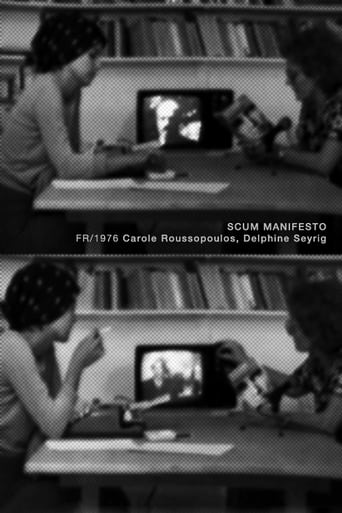
5.2Delphine Seyrig reads passages from a Valerie Solanas’s SCUM manifesto.
Scum Manifesto
1976
Film credits
Behind the camera
7.0Four women farmers working in the Champagne-Ardennes region talk about their working conditions, the part they play in running the farm, the distribution of jobs between husband and wife and the lack of status of their work... They emphasise how denial of the essential role they play in running the farm has led them to demand specific recognition of their job. Presentation of the Women's Association for Agricultural Development (AFDA).
Profession : Agricultrices
1982
7.0Four women farmers working in the Champagne-Ardennes region talk about their working conditions, the part they play in running the farm, the distribution of jobs between husband and wife and the lack of status of their work... They emphasise how denial of the essential role they play in running the farm has led them to demand specific recognition of their job. Presentation of the Women's Association for Agricultural Development (AFDA).
Profession : Agricultrices
1982
NRIn September 1972, a Palestinian commando called the Black September took the Israeli delegation hostage at the Munich Olympics. This film, which denounces the hypocrisy of this illusory "Olympic peace", is a montage of images from official television and images filmed in the Palestinian refugee camps of Jordan in September 1971 (Black September), in full repression of the Palestinian people by the armies of King Hussein.
Munich
1972
5.4The year 1975 is declared “year of the woman”. On this occasion Bernard Pivot invited Françoise Giroud on television, then Secretary of State for Women. Faced with statements, a group of women filmmakers parody the issues in a provocative way.
Maso and Miso Go Boating
1976
5.2Delphine Seyrig reads passages from a Valerie Solanas’s SCUM manifesto.
Scum Manifesto
1976
 NR
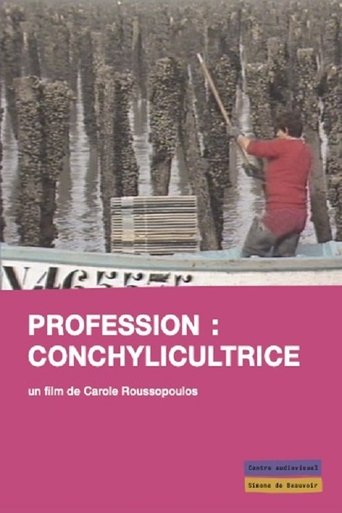
NRThe film portrays six women oyster farmers in the Marennes-Oleron Bay (Charentes-Maritimes). It explores their working and living conditions, the hardships of the profession, the division of tasks between men and women and the professional status of female farmers. Several women in the oyster-farming bay form a professional association.
Profession: Conchylicultrice
1984
 NR
NRGabrielle Nanchen, the first Swiss woman socialist deputy to the National Council is interviewed on the very day that women obtain the right to vote in Switzerland and in her canton, Valais. The film also collects the reactions of the Valais peasants.
Gabrielle Nanchen
1971
 8.0
8.0In the aftermath of the arrest of Angela Davis, Jean Genet reads a text denouncing racist US policy, supporting the Black Panthers party and Angela Davis for a television show that will be completely censored.
Angela Davis Is at Your Mercy
1970
Two friends meet up to talk about themselves, about the violence perpetrated on women, the assaults they have suffered and rape as well as their own alienation. They talk about justice and repression with three lawyers.
Le Viol : Anne, Corinne, Annie, Brigitte, Josyane, Monique et les autres…
1978
Two friends meet up to talk about themselves, about the violence perpetrated on women, the assaults they have suffered and rape as well as their own alienation. They talk about justice and repression with three lawyers.
Le Viol : Anne, Corinne, Annie, Brigitte, Josyane, Monique et les autres…
1978
No synopsis available yet.
La Mort n’a pas voulu de moi – Portrait de Lotte Eisner
1984
Documentary about women screen directors from 1900 to 1960, produced with the support of archival photographs and uotations selected from the following dictionaries of the cinema: Dictionnaire du cinéma by Jean Talard, published by Robert Laffont and Dictionnaire des cinéastes by Georges Sadoul, published by Seuil. Carole Roussopoulos uses pictures and quotes from Movie Dictionaries in this tribute to women filmmakers from 1900 to 1960.
Pionnières et dictionnaires du cinéma - 1900-1960
1984
 7.0
7.0Documentary about the Lyon sex workers who occupied the church of St. Nizier on June 3, 1975.
The Prostitutes of Lyon Speak
1975
 NR
NRA young woman talks about the "Young Lord", the Puerto Ricans who are living in the United States but do not have the necessary diploma to find work. The movie tracks back the story of the movement, born in 1969. Inspired by the american black fights, it is at first a very political movement. it gets more social around 1970. The movie makes us discover a place of refuge for the junkies. They talk about the difficult life conditions of the minorities, about drogue problems and about the initiatives that are meant to help them. They denounce a governmental plan which is supposed to get ride of the blacks and Puerto Ricans by using drogues: the methadone substitution program, legal and provided by the government, holds the junkies into a mental slavery, which drives them to their death. They also talk about the whole propaganda system and the mental conditioning of society.
Young Lord
1975
 NR
NRAfter two months of a hard-fought strike, accompanied by a day-and-night occupation of the premises, Jeune Afrique's workers were the victims of a court order authorizing their CEO, Bechir Ben Yahmed, to have them removed by the police. If they resisted, they risked falling foul of the law against rioters. To avoid the African comrades being deported from France, the strikers decided to leave. But before leaving, they organized a demonstration of solidarity with hundreds of journalists from the traditional and revolutionary press.
Grève à Jeune Afrique
1972
This documentary is about the solidarity march supporting the workers on strike at Lip (September 1973). Strikers, including Charles Piaget, talk about the action committee and its relationship to the union structure. Images of the march alternate with shots taken at various meetings.
La marche de Besançon - LIP II
1973
 10.0
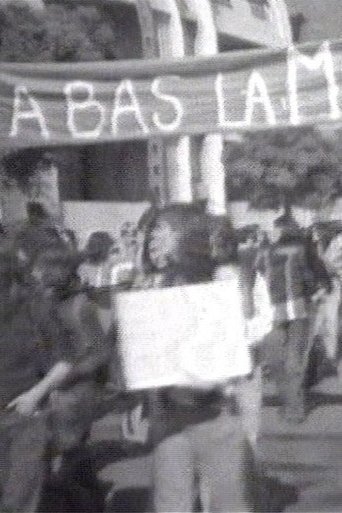
10.0Women walk in protest against executions of Basque militants by Franco regimen.
La marche des femmes à Hendaye
1975
28 June 1984. A day in the life of Yvette Roudy, Minister for the Women Rights. She goes to Franche-Comté. We mostly will eard of professional formation for women. Since the 1983 law about professional equality, Yvette Roudy insists on going in all these regions. She wants to check if her politic is well taken into account and wishes to accelerate this process.
Madame Yvette Roudy : voyage à Besançon
1984
Margo Jefferson, a journalism lecturer in New York, and Ti-Gracen Atkinson, a writer and feminist theoretician, talk to Flo Kennedy, a Black American lawyer, about racism, minorities' rights and the E.R.A. (constitutional amendment to garantee women's rights).
Flo Kennedy, portrait d'une féministe américaine
1982
 4.9
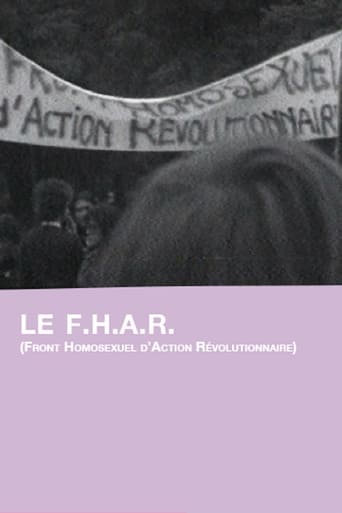
4.9Demonstration by FHAR, the Homosexual Revolutionary Action Front, the 1st of May 1971. People discuss at the University of Vincennes and show a common determination to break prejudice and open minds. They refuse to hide anymore, and talk about this revolution of desire.
F.H.A.R.
1971
 NR
NRThe documentary shows the living and working conditions of two categories of women working in the fishing port of Lorient in Brittany. Close on 800 women work there in conditions that have barely changed in 50 years. They are on their feet all the time, carrying heavy loads and working with ice in the cold and the damp. At night, women sort the fish, by day others filet the fish (tidal and processing workers).
Les Travailleuses de la mer
1985
 3.3
3.3A documentary about the feminist movement in France and Switzerland in the 1970s, retracing the history, the struggles, the achievements, and the upheavals.
Stand Up! A History of the Women's Liberation Movement
1999
The medical staff of two hospitals speaks for the first time of its suffering when it is facing the pain and the death of their patients. People express their difficulties, their helplessness, their sadness towards the patients, the families, the colleagues and the doctors. They also talk about their need for a real formation.
Mort des malades, souffrance des soignants
1991
 8.0
8.0The film presents a series of portraits of women working in traditional male jobs in the transport industry: the SNCF, the RATP, Air France and Air Inter, and at Paris airports. Each woman talks about her professional choice, her training, what responsibilities she holds, where she fits within the company, and her work relationships. They all underline the need to be organised to manage personal and professional lives, and the growing number of women who choose these jobs. They are on the whole positive and their views often inspiring.
L'Égalite professionnelle : ça avance dans les transports
1987
Claudine, Monique, Emmanuelle and Anne talk about incest rape, which they suffered during their childhood. They meet through the “Rape-Women-Information” help line. They remember how helpless they felt, and how they tried to make their father or grandfather stop. They talk about the signals they made and words they spoke in the hope of getting help from those around them.
L'inceste, la conspiration des oreilles bouchées
1988
 NR
NRWith the support of delegations of women from all around the world, Cypriot women march peacefully to try to obtain the application of the United Nations resolution, ordering refugees to return home.
La marche du retour des femmes à Chypre
1975
 NR
NRDocument on the struggle of immigrant workers on strike for rent in Sonacotra homes with the support, in terms of legal defense, of Jacques Verges, lawyer, and judge Bidalou.
Le Juge et les immigrés
1980
In two parts, it documents the litigation of Brigitte Fontaine, Monique Piton, Mireille and Erin Pizzey with Éditions de femmes in 1976 and those of Catherine Leguay and Brigitte Fontaine in 1977.
Il ne fait pas chaud
1977
 5.0
5.0Documentary about the practice of abortion in France in the early seventies, at a time when it was still illegal.
Just Don't Fuck!
1971
5.0Documentary about the practice of abortion in France in the early seventies, at a time when it was still illegal.
Just Don't Fuck!
1971
 NR
NRA new prison at Mauzac (Dordogne), built in 1985, opens in 1986. It is designed for 240 prisoners. Its concept and modus operandi are inspired by the liberal tradition of the old Mauzac camp to which it is linked by a bridge.
Les clés de Mauzac
1987
 3.7
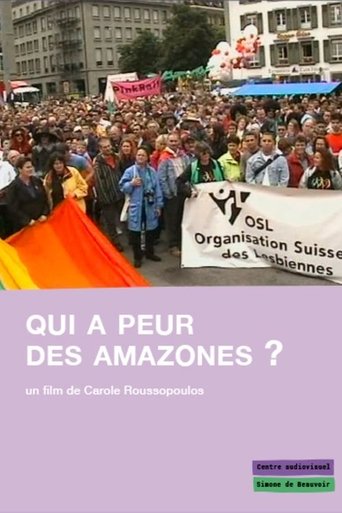
3.7The lesbian community of Geneva wears its name well - Lestime - as an affirmation of pride, openness, and also of strength. This film offers numerous testimonies on being a lesbian today, with Catherine Gaillard's show, Les Amazones, as a common thread. The direct testimonies of those who are in the front line to defend the rights of lesbians, their representativeness, their visibility are their contribution to change mentalities within the family, the school, and the working world, so that lesbians can live without fear.
Qui a peur des amazones?
2003
Carole Roussopoulos shoots the life of under-priviledged families living on a model estate at Herblay (Val d’Oise), where volunteers of the ATD Fourth World movement also live with their families.
Y'a vraiment des gens qui vivent avec très peu
1985
No synopsis available yet.
Pour vous les filles !
2006
 NR
NRIn this two conferences about Vietnam, people denounce the violence of the american government. Veterans speak about their experience, the control of the media over the representation of the war and establish a link between what happens in Vietnam and how black people are treated in the United States.
Vétérans Du Vietnam (Les)
1972
Monique (an advertising assistant) and Christine (a semi-skilled worker) talk about how difficult it is for a woman working in a struggling factory (Lip), about issues of internal democracy within the trade union and the end of work in the current situation.
Christiane et Monique - LIP V
1976
January 2002. About sixty transplanted children from fourteen different countries were invited by Liz Schick to spend a week in Anzère, a swiss ski resort. They talk about their heavy interventions, but also about the pleasure they have to meet each others , and to live the same things than the other young children of their age.
Donner c'est aimer
2002
August 1973, after the police move into the Lip factory in Besançon, one of the female workers, Monique Piton, talks about the four months of struggle, the place of women and the lessons she has learnt. She is also critical of the role of television.
Monique - LIP I
1973
Pupils in Year 9 at Mondoubleau High School discuss in depth female and male roles and gender equality.
Ça bouge… à Mondoubleau
1982
The Swiss Intenational Solidarity Association "Idées’Elles" and the Not for Profit Mali organization "Prométhée" are working together on the realisation of a sustainable development project. The project supports the business activities of women’s rural associations in the region of Mopti, in Mali, by providing microcredits. These are small sums of money lent to people from the disadvantaged classes in developing countries in order to create micro-businesses. After a year’s experience, the film, which was shot in the summer of 2003, reports on the use of these microcredits by showing the women’s activities (breeding, market gardening, fishing...) and follows Lalia, a member of the Not For Profit organisation "Prométhée" and president of "Debo Association".
Le jardin de Lalia
2004