
Directing
Billy Roisz
Place of birth
Vienna, Austria
Known for
Directing
Credits
36 titles
Billy Roisz is a multidisciplinary artist lives and works in Vienna. She does video and sound experiments in performance, installation and cinema. She executes her projects solo or in collaboration with experimental musicians.
Known for
 NR
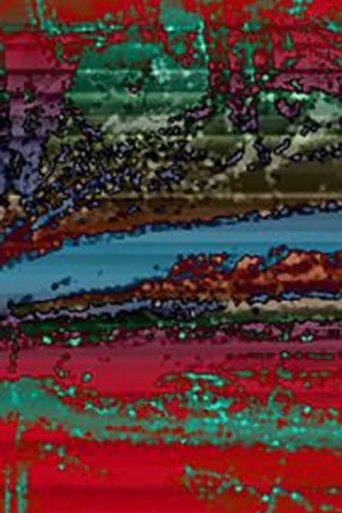
‘Surge’ places us somewhere between figuration and abstraction: its displayed forms defy full visual comprehension, as they stretch and snap in strict accordance with the complex beats and sheets of sound created by schtum.
Surge
2019
 NR
Film by Billy Roisz and Dieter Kovacic
Hidden Layers
2026
A work by Billy Roisz.
Lunar Dust
—
A green shape hops across a shaded red background, to the three-beat rhythm produced by the alternating sound of an increasingly muffled high-pitched tinkle and a deeply resonant low note. At the same time, the color green turns turquoise and gradually spreads. Something awakens and stretches, the image's center of gravity shifts from the vertical to the horizontal plane...
Afflux
2021
 NR
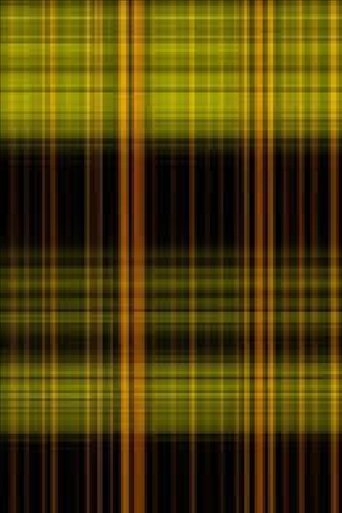
A video which exudes a great deal of freshness, all of it in yellow/ black/white and possessing the flair of a research project, an undertaking which seems to demonstrate unfamiliarity with both conventions and norms, not to mention fashions. Occupied primarily with itself and all attention concentrated on it - how the setting will develop itself - a dance of symbols and sounds, refreshingly unintentional and without any kind of obligation to arrive at a predefined aesthetic goal. And to the extent that familiar paths are avoided, a fascinating dialogue between sounds and images is in a sense born of itself, from the material.
Broadway
2004
Billy Roisz's TILT presents for us to see one example of such a state where something is out of whack and out of order, a constant source of new degrees of intensity. At first, there are four vertical gray elements: pulsing tubes, rods or wires that divide up the black picture. At the very beginning a kind of afterimage separates from the bundle to the far left, a bright-red vibrating shadow that then moves from one rod to the next. This feedback process continues until, after a kind of explosive overload, three flickering columns of red begin to settle between the gray tubes.
TILT
2008
Behind the camera
NR‘Surge’ places us somewhere between figuration and abstraction: its displayed forms defy full visual comprehension, as they stretch and snap in strict accordance with the complex beats and sheets of sound created by schtum.
Surge
2019
NRFilm by Billy Roisz and Dieter Kovacic
Hidden Layers
2026
A work by Billy Roisz.
Lunar Dust
—
A green shape hops across a shaded red background, to the three-beat rhythm produced by the alternating sound of an increasingly muffled high-pitched tinkle and a deeply resonant low note. At the same time, the color green turns turquoise and gradually spreads. Something awakens and stretches, the image's center of gravity shifts from the vertical to the horizontal plane...
Afflux
2021
NRA video which exudes a great deal of freshness, all of it in yellow/ black/white and possessing the flair of a research project, an undertaking which seems to demonstrate unfamiliarity with both conventions and norms, not to mention fashions. Occupied primarily with itself and all attention concentrated on it - how the setting will develop itself - a dance of symbols and sounds, refreshingly unintentional and without any kind of obligation to arrive at a predefined aesthetic goal. And to the extent that familiar paths are avoided, a fascinating dialogue between sounds and images is in a sense born of itself, from the material.
Broadway
2004
Billy Roisz's TILT presents for us to see one example of such a state where something is out of whack and out of order, a constant source of new degrees of intensity. At first, there are four vertical gray elements: pulsing tubes, rods or wires that divide up the black picture. At the very beginning a kind of afterimage separates from the bundle to the far left, a bright-red vibrating shadow that then moves from one rod to the next. This feedback process continues until, after a kind of explosive overload, three flickering columns of red begin to settle between the gray tubes.
TILT
2008
When Billy Roisz’s images and dieb13’s sound (remix: gnu) are brought together in this way, oberflach.avi becomes a unique experience.
oberflach.avi
1999
A road trip in the truest sense: shifts, irritations, motion at the levels of image and sound, in all directions. Like a distillate of a “best-of” road movie, Billy Roisz and Dieter Kovačič condense cinema to pure trip – moving past colorful image surfaces that fluctuate between abstraction and depiction.
TOUTES DIRECTIONS
2017
While working on his list in the bathroom, Santa Claus is murdered by an evil and all-powerful entity, known only as THE. Can it be stopped before its evil spreads and more victims fall?
The
2015
 10.0
The "liquefaction of the liquid" is taken to such extremes that as soon as the guttural singing of Mopcut begins, the image space is overcome with spectral flutters and untenable fluctuations.
Aquamarine
2020
Images of the formation of the Austrian government in spring 2000 and the demonstrations against the newly formed black-blue coalition, found and compiled by Billy Roisz, Sabine Marte, and Dieter Kovacic.
Sprung 2000
2000
«Ragtag» - in the sense of impenetrable, a colorful mixture - is the title of a joint work by Billy Roisz (visuals) and Toshimaru Nakamura (sound) which was created under the project name AVVA after a 2004 tour in England.
AVVA:RAGTAG
2006
 NR
Whenever there´s music The Devil kicks He don´t allow music By the river Styx
styx
2019
 NR
This video was released at erstwhile record in 2006 on the DVD AVVA - gdansk queen AVVA is Toshimaru Nakamura on No-Input-Board & Billy Roisz on Video-Mixing-Boards.
AVVA: huitzilopochtli
2006
“Eight short 30-second sequences punctuated by black frames. smokfraqs, a serial work, is made compelling in part by its structural clarity and formal simplicity.” –Isabella Reicher
smokfraqs
2001
 NR
The random choreography of colorful, flashing screen signals that sink back into black has its appeal.
zounk!
2012
 5.0
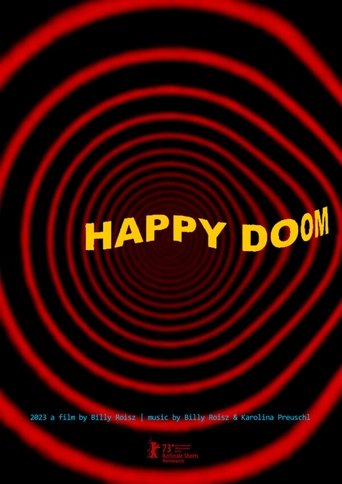
Flickering and pulsating, spitting and swallowing at the same time. The screen becomes a vibrating membrane; colours, shapes, beats and sounds a psychedelic whirlpool. A short, fast-paced audiovisual ode to the hypnotic power of colour and vertigo.
Happy Doom
2023
Several interior spaces are illuminated and sculpted through light projections and sonic accumulations. Isolated details emerge from a sea of darkness.
Darkroom
2014
In their film Bring Me The Head of Henri Chrétien!, Billy Roisz and Dieter Kovačič explore the world of cinematic formats based on the genre that experimented with and exploited the width of the screen to display spectacular landscapes: Western movies.
Bring Me the Head of Henri Chrétien
2013
brRRMMMWHEee II has electrons chasing through the cathode ray tube of an old television set, the circuit boards of an analogue VCR, the circuits of a computer, the grooves of a record, and through a modified tuna can … round and around … and back again.
brRRMMMWHEee II
2010
Voices, noise, beats, shouts—acoustic waves. Those of the sea are the starting material for Billy Roisz’s and Dieter Kovačič’s “picture track” for the composition AQUAMARINE by the group MOPCUT. Images like sounds, as great, wavelike arcs, which wind organically and proliferate, branch out and clump together—and at the same time, refer to the tools and circuits that they’re based on.
AQUAMARINE
2019
 NR
In film and related audiovisual forms according to Michel Chion the relationship between sound and image is primarily vertical, and the former tends to play a secondary role. This same applies, though inversely, to music videos, in which the musical structure sets the rhythm of the editing and all motion in general, regardless of the freedom of the images themselves. blinq questions such audio-visual relationships in a radical way. Billy Roisz had 10 musicians from Austria, Germany and Japan produce short electronic sound files. These fragments, some lasting only a few seconds, were then transformed into visual patterns by means of feedback loops which function as electro-acoustic impulses and then further manipulated.
blinq
2002
NOT STILL forms an abstract visual landscape in shades of monochrome colors, from green to red, in which found footage on celluloid flares up like a quotation from the nether world. Alienated classical film scores howl in NOT STILLs minimalist techno soundscape, overlapping with the main motif of the record in all of its varied visual structures. VJ Roisz mistreats this just as uninhibitedly as the DJ mistreats his records. Roisz shows brief shots of film macros, tracks of animated films and a horror movie, to then unexpectedly have the leaping picture strip swallow them again. As though in a séance in all degrees of its intensity, flaring up are scraps of memory of a pop culture media history. NOT STILL enacts a clash of media in gruesome disquiet and poetic ambiance.
NOT STILL
2008
For sources the solo soundchecks of eight musicians were recorded sounds and video were saved seperately. Roisz followed the paths of musical creation processes (and their corresponding visual techniques) and developed a video, starting with soundcheck-footage, to a complex result.
sources
2004
 NR
An experimental audiovisual collaboration using audio and video mixing boards.
Gdansk Queen
2006
 NR
Billy Roisz taps into our sensual pleasures with this experimental interpretation of Hieronymus Bosch’s iconic triptych The Garden of Earthly Delights. The largely abstract landscape, stemming from both analogue equipment and ‘deep dreaming’ – a generative AI technique based on neural networks – ranges from paradisiacal to hellish. Combined with the chirping, ticking and pounding soundtrack, in which field recordings have also been incorporated, the temptation is almost impossible to resist.
The Garden of Electric Delights
2025
NRBilly Roisz taps into our sensual pleasures with this experimental interpretation of Hieronymus Bosch’s iconic triptych The Garden of Earthly Delights. The largely abstract landscape, stemming from both analogue equipment and ‘deep dreaming’ – a generative AI technique based on neural networks – ranges from paradisiacal to hellish. Combined with the chirping, ticking and pounding soundtrack, in which field recordings have also been incorporated, the temptation is almost impossible to resist.
The Garden of Electric Delights
2025
The material's esthetics collide with the soundtrack, which evokes the sluggish nature of the mechanical. One material screeches into another, this becomes a kind of tentative probing which is superimposed with layers of electronic noises. The spectrum of acoustic atmospheres ranges from long before the record album was invented to its current renaissance. Vaudeville shot through with elements of contemporary electronic noise. Earthy sounds, swelling and subsiding movements, gradual stops, standstills, returns and repetitions. Looped audio messages from the loudspeaker's horn which are brought into the present. Billy Roisz has on this acoustic foundation erected a visual monument to the disk which has fascinated several generations with both its contents and its form.
-2.20
2003
 NR
MY KINGDOM FOR A LULLABY # 4 Basic musical material such as feedback, various sound spectrums, etc. and a live performance of »visual music,» translated into digital images.
My Kingdom for a Lullaby #4
2002
 NR
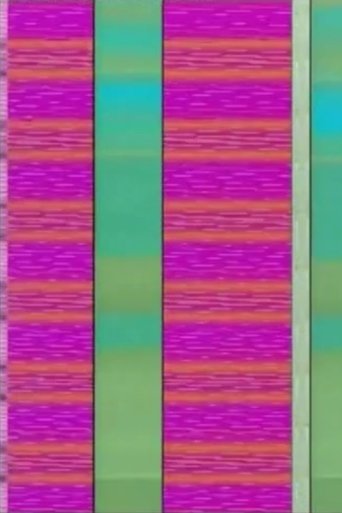
elesyn 15.625 goes back to the fundaments of electronic sound and image synthesis—the electromagnetic signals, their frequencies, amplitudes which are the basis for colours, lines, tone pitch, movement and dynamics. Moving images and music are generated by "simple" forms of signal routing like acoustical and optical feedback, radio waves, bended circuits. The result is a very colourful - in the visual as well as in the the aural sense of the meaning - diorama of "electric synaesthesia" or the idea thereof.
elesyn 15.625
2007
Sound/intoxication (Rauschen) is what the music video is about, say the artists, and the ecstatic (Rauschhaft). The German play on words actually makes sense in MY KINGDOM FOR A LULLABY #2; it suits a piece, in which electronically generated sounds and images are modulated and combined in a thoroughly sensorial or even ecstatic manner. The term «white noise» refers to both visual and acoustic elements. It is a prevailing theme in this video, an abstract piece, which requires that the viewer look and listen with utmost attention. On a white screen appear horizontal and vertical lines in delicate gray. First they alternate, then overlap, fade, then become more intense. The soundtrack plays a primary role, is equally as powerful (and elusive) as the images: a composition of crackling, noises (Rauschen), and whirring begins to emerge; music comprised of subtle electronic tones and high frequency distortion.
My Kingdom for a Lullaby #2
2004
A window, complete with blinds, marks the beginning of the visual trip that is this experimental film – a trip taken by performance artist Billy Roisz. Inspired by the hallucinogenic experiences of the painter and writer Henri Michaux, real surroundings quickly dissolve into a succession of abstract images. Stark black and white is followed by psychedelic patterns. Can I almost see a herd of pink hippos there?
close your eyes
2009
In their sci-fi Billy Roisz and Dieter Kovacic pose a question if we will ever be able to communicate across the time and space. Inspired by the communication of cephalopods, they experiment with conveying messages using lights, colours, pheromons, sounds and movements instead of words, and they demand that we receive the signals by our whole bodies, just like octopuses.
do they speak color ?
2022
In 2009 Billy Roisz and her friends and fellow musicians Angelica Castello, Burkhard Stangl and Dieter Kovacic took a trip to Mexico. After starting in Mexico City, they traveled through Michoacán to the peninsula of Yucatán. And the film Chiles en Nogada, about the journey, was created as a result.
Chiles en Nogada
2011
 6.0
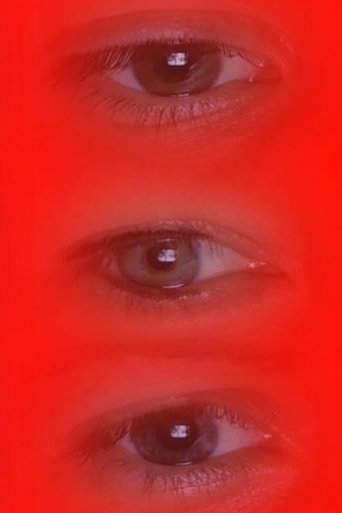
Who’s Afraid of RGB can be interpreted as a condensation of the romantic movie, drama, and melodrama. The black-and-white film Who’s Afraid of Virginia Woolf? is mirrored in nine eyes and superimposed with the colors red, green, and blue. Paralleling her previous treatment of the horror film and the road movie, Who's Afraid Of RGB subjects the genres of romantic movies, dramas, and melodramas to Roiszian compression.
Who's Afraid of RGB?
2019