

Directing
Anthony McCall
Known for
Directing
Credits
28 titles
Known for
 NR
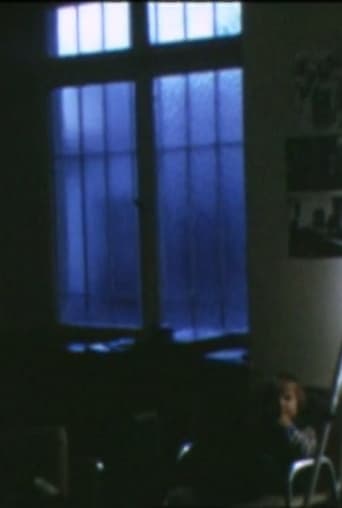
NRHome movies shot on Super 8mm by W+B Hein over 10 years.
Home Movies 1971-81
1985
 7.0
7.0Jonas Mekas assembles 160 portraits, appearances, and fleeting sketches of underground and independent filmmakers captured between 1955 and 1996. Fast-paced and archival in spirit, the film celebrates the avant-garde as its own “nation of cinema,” a vital community existing outside the dominance of commercial film.
Birth of a Nation
1997
 NR
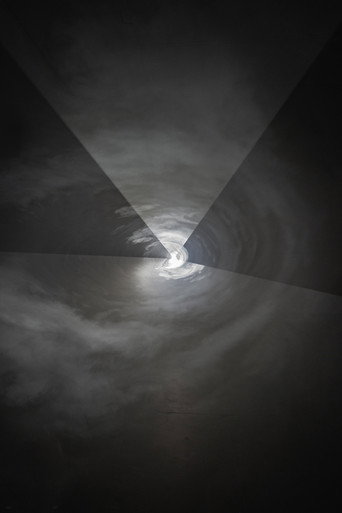
NRSwarm, 2026, McCall’s most recent work, premiering in the exhibition, draws on the rising significance of drones as an increasing presence in daily life. The installation is composed of two conical-light volumes that rotate slowly in opposite directions, one clockwise and the other counterclockwise, over a duration of fifteen minutes. Accompanying the mesmerizing visuals is a rich soundscape that gradually intensifies as a powerful auditory experience. The dramatic, progressive soundtrack serves as a continuation of the ongoing collaboration between McCall and Grubbs.
Swarm
2026
 NR
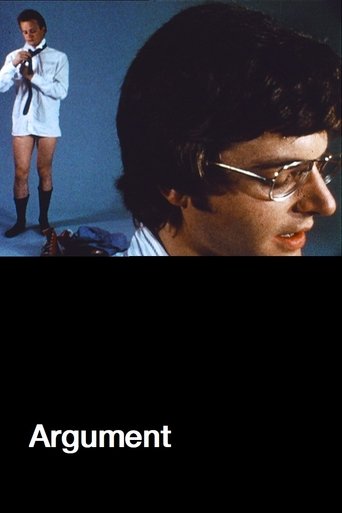
NRThree male voices dissect one edition of The New York Times through a series of locked-off shots, revealing the prejudice and latent content of news and advertisements, reading images as texts and presenting text as an image.
Argument
1978
 NR
NRNo synopsis available yet.
Coupla White Faggots Sitting Around Talking
1981
 NR
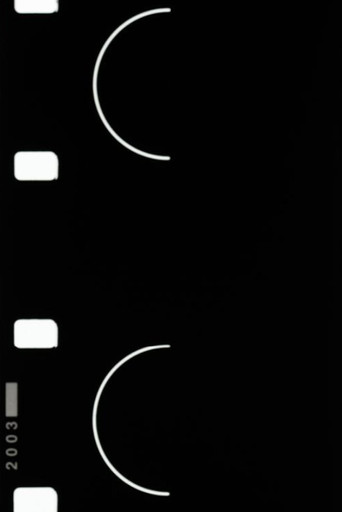
NRThe film is screened in a completely dark, smoke-filled room with no seats or screen; the projector must be visible
Partial Cone
1974
Film credits
1980s · 2 titles
Behind the camera
NRSwarm, 2026, McCall’s most recent work, premiering in the exhibition, draws on the rising significance of drones as an increasing presence in daily life. The installation is composed of two conical-light volumes that rotate slowly in opposite directions, one clockwise and the other counterclockwise, over a duration of fifteen minutes. Accompanying the mesmerizing visuals is a rich soundscape that gradually intensifies as a powerful auditory experience. The dramatic, progressive soundtrack serves as a continuation of the ongoing collaboration between McCall and Grubbs.
Swarm
2026
NRThree male voices dissect one edition of The New York Times through a series of locked-off shots, revealing the prejudice and latent content of news and advertisements, reading images as texts and presenting text as an image.
Argument
1978
NRThe film is screened in a completely dark, smoke-filled room with no seats or screen; the projector must be visible
Partial Cone
1974
 NR
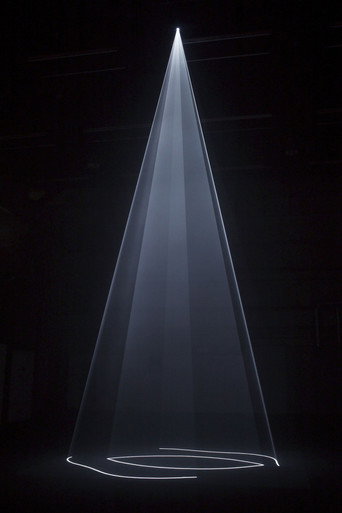
NRVertical video installation by Anthony Mccall.
Skirt (I)
2010
 NR
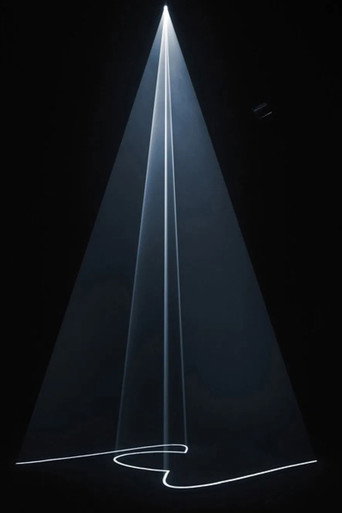
NRA vertical (standing), deeply folded traveling wave passes through and around an only partly visible cone at its center which vigorously and repeatedly expands and contracts.
Breath (III)
2005
A flat blade of light rotating from a fixed central axis.
Conical Solid
1974
 NR
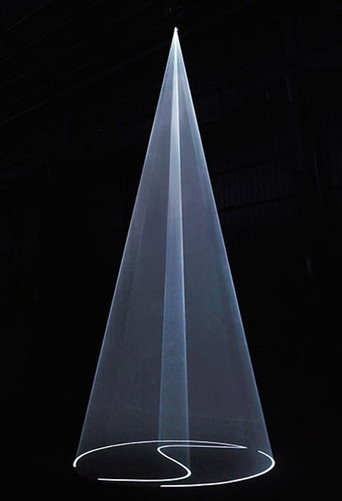
NRBreath (2004) was especially fascinating in how the light was used to create an architectural like enclosure that is 10 meters tall with a 4-meter base.
Breath
2004
This key work of the late 1970s, now digitally restored, is a unique attempt to combine contemporary debates around formalism, feminism and psychoanalysis in film. Implicitly engaged in a critical dialogue with filmmakers like Yvonne Rainer and Jean-Luc Godard, as well as the theorists of 'Screen' magazine, Sigmund Freud's Dora is a milestone in the evolution of structuralist film strategies into broader questions of representation.
Sigmund Freud's Dora
1979
This key work of the late 1970s, now digitally restored, is a unique attempt to combine contemporary debates around formalism, feminism and psychoanalysis in film. Implicitly engaged in a critical dialogue with filmmakers like Yvonne Rainer and Jean-Luc Godard, as well as the theorists of 'Screen' magazine, Sigmund Freud's Dora is a milestone in the evolution of structuralist film strategies into broader questions of representation.
Sigmund Freud's Dora
1979
 NR
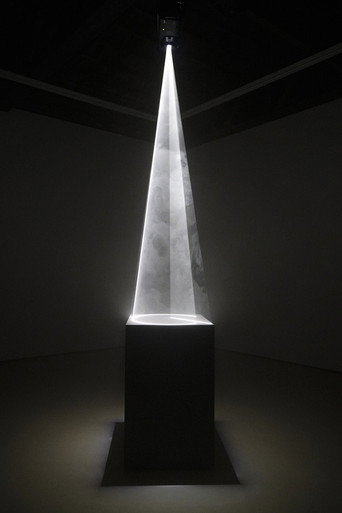
NRA vertical solid-light installation that extends McCall’s investigation of perception through an intricate dialogue between light and sound. Projected from above onto a plinth, the work produces a slowly shifting cone of light that can be experienced from every angle. Accompanied by an original score by acclaimed composer David Grubbs, SKYLIGHT evokes the gradual approach and recession of an imagined thunderstorm through distant rumbles, flashes of lightning, and the steady rhythm of falling rain. The work belongs to a series of works in which McCall explores the dynamic relationship between visual form, silence, and sound.
Skylight
2020
Split Second consists of two separate points of light projected at different heights. The two projections – one elliptical, one flat – meet and combine to form a single slowly changing line-drawing. The projections expand to reveal a flat blade and an elliptical cone, which combine in space to create a complex field of rotating, interpenetrating planes.
Split Second
2018
 NR
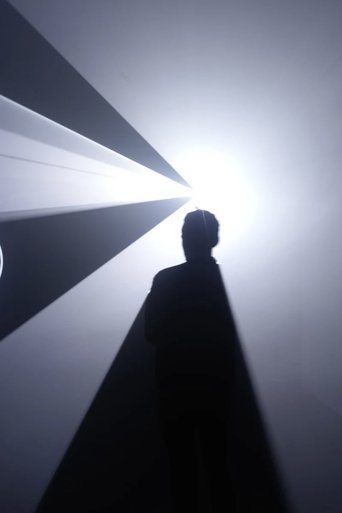
NREvolving beams are projected in two directions at once.
Face to Face IV
2013
 NR
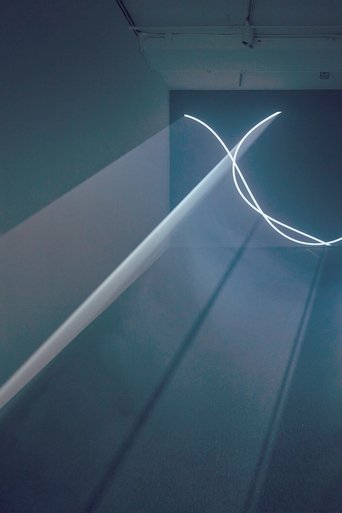
NRThe first in the new Solid Light film series. Like Four Projected Movements almost thirty years earlier, the installation is projected against a wall; the piece was constructed from back waves that pass imperceptibly through one another to create a mutable series of interior spaces.
Doubling Back
2003
 NR
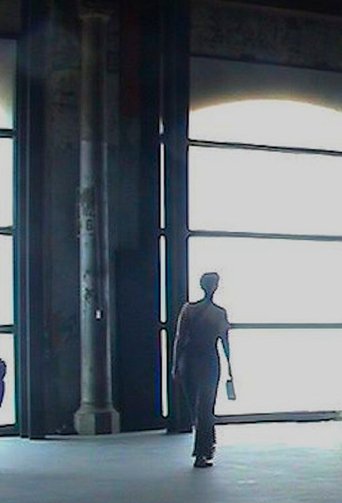
NRThis experimental "film" consists of an empty room with a bare lightbulb, and windows covered with a translucent material, for a duration of 24 hours. It is not necessary for visitors to stay for the entire duration - they can come and go as they please. Created by Anthony McCall, it is based on the architectural framing of time and light. It came at the end of a series of works in which McCall was stripping back cinema to its absolute minimum - light, time, and human experience/perception.
Long Film for Ambient Light
1975
 NR
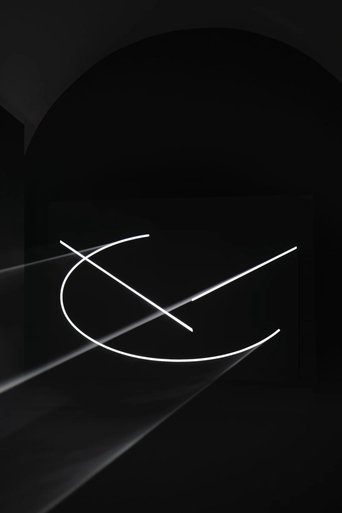
NRIn Raised Voices, there are two competing and intersecting forms within the horizontal projection; an incomplete ellipse that varies in its diameter, and a straight diagonal line that splinters in two as it turns through 180 degrees. The forms develop according to a precise durational structure, shifting at a pace that can sometimes be indiscernible, yet presenting itself continuously within the conical field of light.
Raised Voices
2020
 7.3
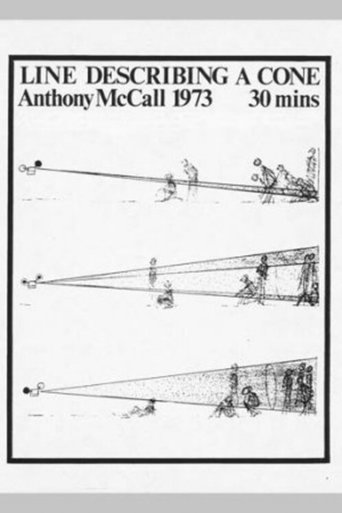
7.3LINE DESCRIBING A CONE is what I term a solid light film. It deals with the projected light beam itself, rather than treating the light beam as a mere carrier of coded information, which is decoded when it strikes the flat surface (the screen). It is projected in the normal way, on a 16mm film projector. Though inevitably there will be a wall that limits the length of the beam, a screen is not necessary. The viewer watches the film, by standing with his, or her, back towards what would normally be the screen, and looking along the beam towards the projector itself. The film begins as a coherent line of light, like a laser beam, and develops through the 30 minute duration, into a complete, hollow cone of light. Line Describing a Cone deals with one of the irreducible, necessary conditions of film: projected light. It deals with this phenomenon directly, independent of any other consideration. It is the first film to exist solely in real, three-dimensional, space.
Line Describing a Cone
1973
 NR
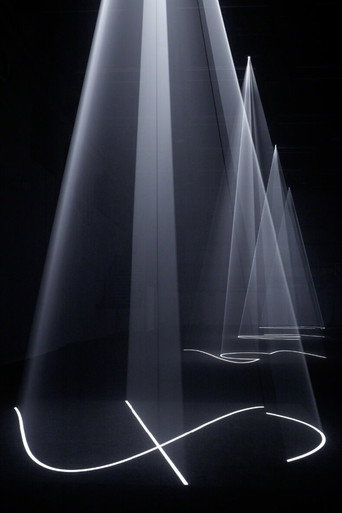
NRVertical video installation by Anthony Mccall.
You and I (II)
2010
 NR
NR“Cone of Variable Volume was a conical form, which expanded and contracted in volume, like a lung. The rhythmic movement is imperceptible at first, and progressively accelerates in speed.”
Cone of Variable Volume
1974
A digital re-make and reinterpretation of McCall’s landmark 1973 thirty-minute film installation Line Describing a Cone.
Line Describing a Cone 2.0
2011
 NR
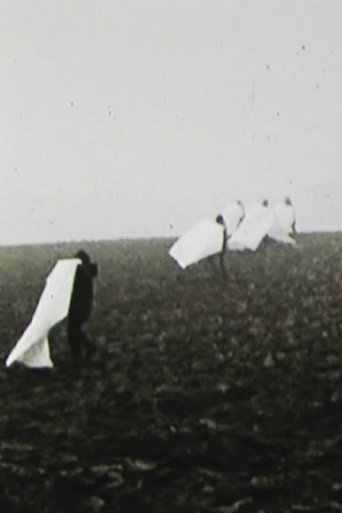
NRLandscape for White Squares features individuals emerging out of a dense fog, carrying large, square, white sheets.
Landscape for White Squares
1972
 5.5
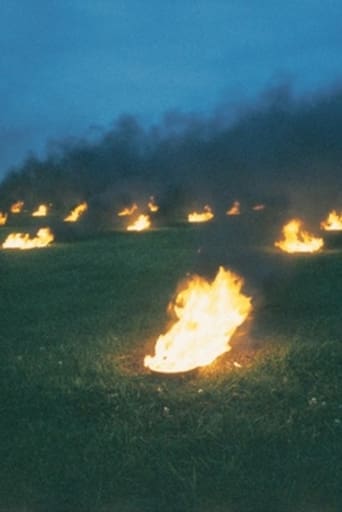
5.5For Landscape for Fire, Anthony McCall and members of the British artist collaborative Exit followed McCall’s pre-determined score to torch containers of flammable material across a field. McCall describes it: "Over a three-year period, I did a number of these sculptural performances in landscape. Fire was the medium. The performances were based on a square grid defined by 36 small fires (6 x 6). The pieces, which usually took place at dusk, had a systematic, slowly changing structure." The work brought the grid — a conceptual focus for many artists in the 1970s and after — into a natural landscape, merging it with the vagaries of outdoor space and fire.
Landscape for Fire
1972
A single fifteen minute quarter of a triangular edge of light through 90 degrees, along one wall, becomes four distinct architectural interventions through the intervention of the projector.
Four projected movements
1975
McCall’s digital animation presents a slowly shifting beam of “solid light” whose physical properties become outlined within the haze-filled space of the gallery and are further enhanced through viewer interaction. Exploring light across space and time, this immersive presentation complements CAM’s concurrent exhibition Place is the Space through the encounter between projection and architecture.
You and I, Horizontal
2005
 NR
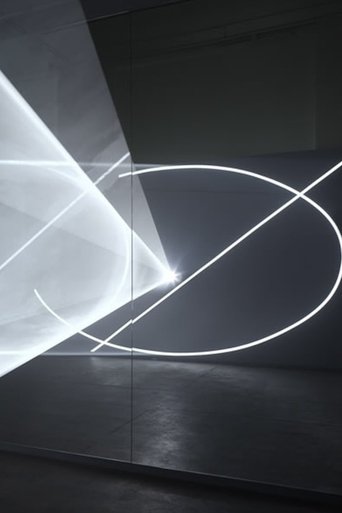
NRA single projection in which the “split” is created by interrupting the throw of light with a wall-sized mirror. The plane of light is reflected back onto itself, creating a shifting volumetric cone, which exists seamlessly both in real space and as a reflected object. (Sean Kelly)
Split Second (Mirror)
2018