
Directing
Tom Chomont
Known for
Directing
Credits
48 titles
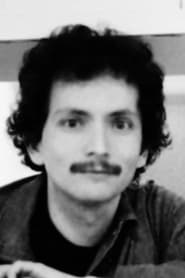
Tom Chomont was a prominent figure of the New York underground film world, and made films for over 40 years. Tom Chomont was a longtime HIV and Parkinson’s Disease survivor and sadly died on June 28, 2010. “Tom Chomont’s films are at once highly poetic and carefully controlled personal statements, and so private both in form and subject matter that they become almost hermetic…the instability of human existence, the poles of all -encompassing imagination on the one hand and nothingness and death on the other, are the notions underlying these works.” – Fred Camper From 1962 through 1989, Tom Chomont made over 40 films. All but two of his films are silent and all are short, ranging from less …
Known for
 NR
NRThird part of a trilogy.
Storm Warning
—
 7.0
7.0Jonas Mekas assembles 160 portraits, appearances, and fleeting sketches of underground and independent filmmakers captured between 1955 and 1996. Fast-paced and archival in spirit, the film celebrates the avant-garde as its own “nation of cinema,” a vital community existing outside the dominance of commercial film.
Birth of a Nation
1997
Whimsical variations suggested by the minute cracks in a print of Leonardo's famous portrait.
Mona Lysa
1966
 10.0
10.0My Hand Outstretched to the Winged Distance and Sightless Measure is a film cycle by American avant-garde filmmaker Robert Beavers. It consists of eighteen films in three parts. The films were made from the late 1960s through the early 2000s in different European countries. Most of the works in the cycle are radically re-edited, condensed versions of the original films. The cycle premiered in its entirety in 2005.
My Hand Outstretched to the Winged Distance and Sightless Measure
2005
 NR
NRWith abda I was processing black and white film myself in buckets . . . I wanted to destroy my own image." – T.C. (An interview in Afterimage, Summer 1981.)
abda/Rebirth
1975
 NR
NR"I intended to make a film about food and spiritual nourishment, but this was punctuated by two visits from a friend (upon entering the us army and the birth of his daughter)..."
Minor Revisions
1979
Film credits
2000s · 3 titles
10.0My Hand Outstretched to the Winged Distance and Sightless Measure is a film cycle by American avant-garde filmmaker Robert Beavers. It consists of eighteen films in three parts. The films were made from the late 1960s through the early 2000s in different European countries. Most of the works in the cycle are radically re-edited, condensed versions of the original films. The cycle premiered in its entirety in 2005.
My Hand Outstretched to the Winged Distance and Sightless Measure
2005
Portrait of gay filmmaker and Parkinson's sufferer Tom Chomont.
Tom
2002
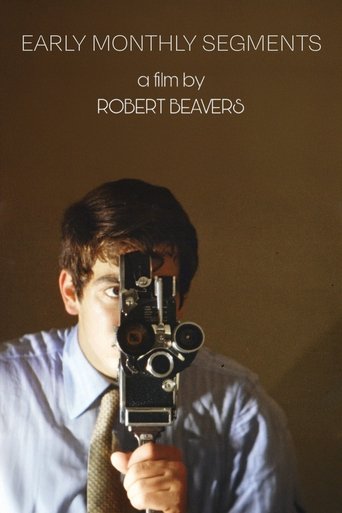 8.0
8.0Early Monthly Segments, filmed when Beavers was 18 and 19 years old, now forms the opening to his film cycle, “My Hand Outstretched to the Winged Distance and Sightless Measure.” It is a highly stylized work of self-portraiture, depicting filmmaker and companion Gregory J. Markopoulos in their Swiss apartment. The film functions as a diary, capturing aspects of home life with precise attention to detail, documenting the familiar with great love and transforming objects and ordinary personal effects into a highly charged work of homoeroticism.
Early Monthly Segments
2003
1990s · 2 titles
7.0Jonas Mekas assembles 160 portraits, appearances, and fleeting sketches of underground and independent filmmakers captured between 1955 and 1996. Fast-paced and archival in spirit, the film celebrates the avant-garde as its own “nation of cinema,” a vital community existing outside the dominance of commercial film.
Birth of a Nation
1997
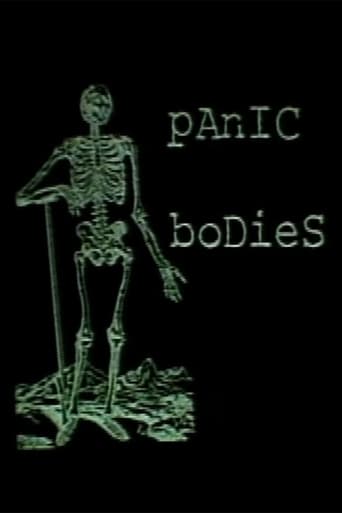 9.0
9.0"Panic Bodies is a 70-minute, six-part exploration of the ways we experience the body's betrayals: disease, decline and death. The film is a panorama of emotionally charged recollections of strange relatives and estranged siblings, staged recreations of fast-fading pasts and personal mythologies, and reflections on the anxious states created by the body's fragile claims on time and space. It's about being a stranger in your own skin. Panic Bodies perfects the phantom quality of any good work about mourning, but it is not reducible to that. It is also enlivened by the intimacy that comes from having made a spectacle of personal secrets." (Kathleen Pirrie Adams, Xtra)
Panic Bodies
1998
1960s · 2 titles
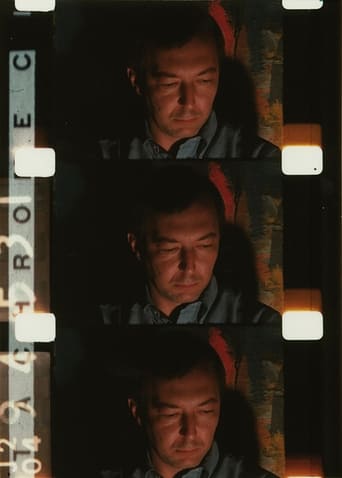 10.0
10.0In March and April of 1966, Markopoulos created this filmic portrait of writers and artists from his New York circle, including Parker Tyler, W. H. Auden, Jasper Johns, Susan Sontag, Storm De Hirsch, Jonas Mekas, Allen Ginsberg, and George and Mike Kuchar, most observed in their homes or studios. Filmed in vibrant color, Galaxie pulses with life. It is a masterpiece of in-camera composition and editing, and stands as a vibrant response to Andy Warhol's contemporary Screen Tests. Preserved by the Academy Film Archive in 2001.
Galaxie
1966
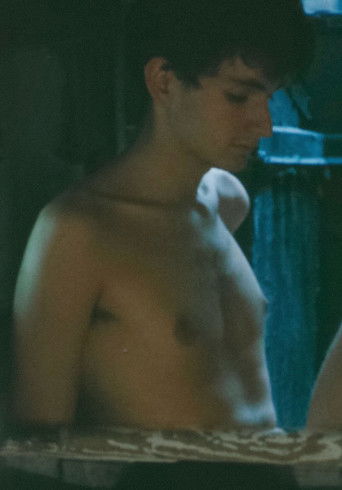 NR
NRPortrait studies of Mrs. Hodges, Gail Beavers (the filmmaker’s sister) and Gregory J. Markopoulos.
Spiracle
1967
Behind the camera
NRThird part of a trilogy.
Storm Warning
—
Whimsical variations suggested by the minute cracks in a print of Leonardo's famous portrait.
Mona Lysa
1966
NRWith abda I was processing black and white film myself in buckets . . . I wanted to destroy my own image." – T.C. (An interview in Afterimage, Summer 1981.)
abda/Rebirth
1975
NR"I intended to make a film about food and spiritual nourishment, but this was punctuated by two visits from a friend (upon entering the us army and the birth of his daughter)..."
Minor Revisions
1979
Lijn II is a tiny portrait of a friend made on a contact printer from scraps of a film that was lost
Lijn II
1972
Video Art by Tom Chomont
Inner Sanctum
—
Flashing lights illuminate black faces and dark eyes, oscillating between darkness and inverted lightness.
Earth
1978
 2.0
2.0“Approximately thirty images comprise Oblivion. Most obsessively repeat themselves. Although the images appear to be solarized, the film was actually contact-printed, combining high contrast black and white negative with a colour positive of the same image. The high contrast accounts for the tendency of shots to flood. Images in the film swell and contrast, often disappearing into pure colour… Oblivion employs extremely rapid cutting. Some of the images last as briefly as two frames. The fact that we see so few frames, that a shot is representationally ambiguous, or shown upside down and sideways, often causes the viewer to project his/her own fantasies… When Jean Genet was asked to what end he was directing his life he responded, “To oblivion.” (J.J. Murphy, “Reaching for Oblivion”) (mikehoolboom.com)
Oblivion
1969
A Berlin diary.
Re: Incarnation
1973
A portrait of Eric de Kuyper.
Portret
1970
 NR
NR"The Heavens"–Symmetrical chaos envelops a lone, topless man, whose symmetrical abstractions conjure up a psychadelic version of DaVinci's Vitruvian Man.
The Heavens
1977
A portrait of polymorphous lovers that references the Medieval parable of Les Noces du Roi et Reine and the marriage of opposites... dichotomy resolved in unity.
Love Objects
1971
"The first experimental films I saw were mostly trance films or reactions to trance films. [My] first films, like Anthony (1966), are rather like trance films; that’s part of the reason I didn’t think of them as my own." (Tom Chomont)
Anthony
1966
 5.0
5.0A portrait inspired by reading about John Millais' painting Ophelia.
Ophelia
1969
 NR
NRShort experimental film made in 1994.
Aquarium
1994
A film by Tom Chomont
Research
1972
 NR
NRShort video by Tom Chomont, features Robert Beavers and his mother during the filming of Pitcher of Colored Light. Consists of sections titled Bathed in Light, Going For a Ride. Mother Garden, Robert's Mother's Flowers, Time Taken, and Brief Visit.
Mother's Day
2006
 NR
NRTwo portraits paired, one warm, one cold.
Epilog/Siam
1968
 NR
NRVideo Art by Tom Chomont
Twilight
1998
"I would say that the films of Mike Kuchar interest me very much. Also, some footage by a young film-maker in Boston, Tom Chomont, his footage (unedited) for Night Blossoms. I was particularly impressed with Mr. Chomont’s footage because it reminded me of the painting (form and color) of Odilon Redon. Too often, the young new American film-maker will leave too many things to chance, thus avoiding that most import ant principle that, I fear, is lacking today in not only the amateur fields, but also in the professional, and that is arete, or excellence." (Gregory J. Markopoulos)
Night Blossoms
1965
For R. B. and G. M. Filmed in Diesntis, Switzerland.
Aria
1970
The film began as a record of the painter Joseph Glin and his series of paintings inspired by "La Maison Des Mortes" by Guillaume Apollinaire. After filming Joe destroyed the paintings and closed his gallery, Shekhina, where the paintings were filmed.
Joe's Maison
1984
 5.5
5.5“A portrait of Carla Liss, evoking the atmosphere of the old horror films we both loved.”
The Cat Lady
1969
No synopsis available yet.
Flames
1965
Made in 1969. 1min. 16mm. Black and White
Untitled
1969
Echoes in time of a lost moment.
Penguin Pool
—
 NR
NROne man shaves another in this highly charged erotic performance.
Razor Head
1984
"De eevwigheid duurt een oogwenk./ De ti jd duurt maar door." – A. Roland Holet. "This film is in several short sections. Most are set in a single location or 'space'; the editing introduces a temporal element into that space. In the third section, for example, the setting is a European cafe; Chomont cuts between different shots that seem to be adjacent to each other in this single space, but various cues–such as the change in characters' positions–tell us that the shots were taken at different times. Chomont is exploring here a fundamental paradox of cinema: that time and space are interdepent, that one camera can film space in a way that make different parts of it seem simultaneously present, cut this simultaneity is an illusion – the time of the filming and of the strip of film in projection is always moving forward." – Fred Camper, The Chicagoan, March, 1978.
Space Time Studies
1977
 NR
NRThe story of Jacob wrestling the angel at the stream called Jabbok.
Jabbok
1967
 NR
NRFirst part of a trilogy.
Wizard of Light
—
The film frame sometimes seems to function as a rug-like rectangle into or onto which the lover steps. Filmed in Orselina, Switzerland after reading the 'The Sufis' by Indries Shaf.
A Persian Rug
1969
 NR
NRShort experimental film made in 1994.
Spider Jan.16.91
1994
Made in 1994 with Clark Coleman. Short experimental film.
A Faustian Knot
—
1 minute, color, silent 16mm
Gloria in the Glass
1969
Made in 1997. Short experimental film.
The Cat Music
—
Made in 1990. Short experimental film.
The Hidden Staircase
—
Made in 1998. Short experimental film.
Head Shot
—
 NR
NR“I usually avoid the term ‘film poem,’ because it was overused in the ‘40s and ‘50s. But somehow it fits Phases of The Moon; it is a film poem and nothing else. A small, miniature film poem, a jewel, if the word masterpiece is too stuffy.” (Jonas Mekas, 1973)
Phases of the Moon: The Parapsychology of Everyday Life
1968
"I, Prolugue, II, The Angel Morpheus/The Major Arcana, III, Jeu de la main. The title refers to (a) quote attributed to Stan Brakhage regarding the avant-garde artist: 'Orpheus has been too long in Hell.' Part II alludes both to the sixth strophe of the Third Song of 'Les Chants du Maldoror' by le Comte de Lautréamont (Isador Ducasse) and to 'Sirius Remembered' by Brakhage. Occult imagery and romantic narrative are reformed by repetition and the element of chance." (Tom Chomont)
Morpheus In Hell
1967
 NR
NRA romantic and lyric study of a young friend and readings he encouraged, especially Mallarmé.
The Mirror Garden
1967